客服机器人

Search documents
对话式AI,我们斩获“亚太领导者”!
Xin Lang Cai Jing· 2025-12-18 14:26
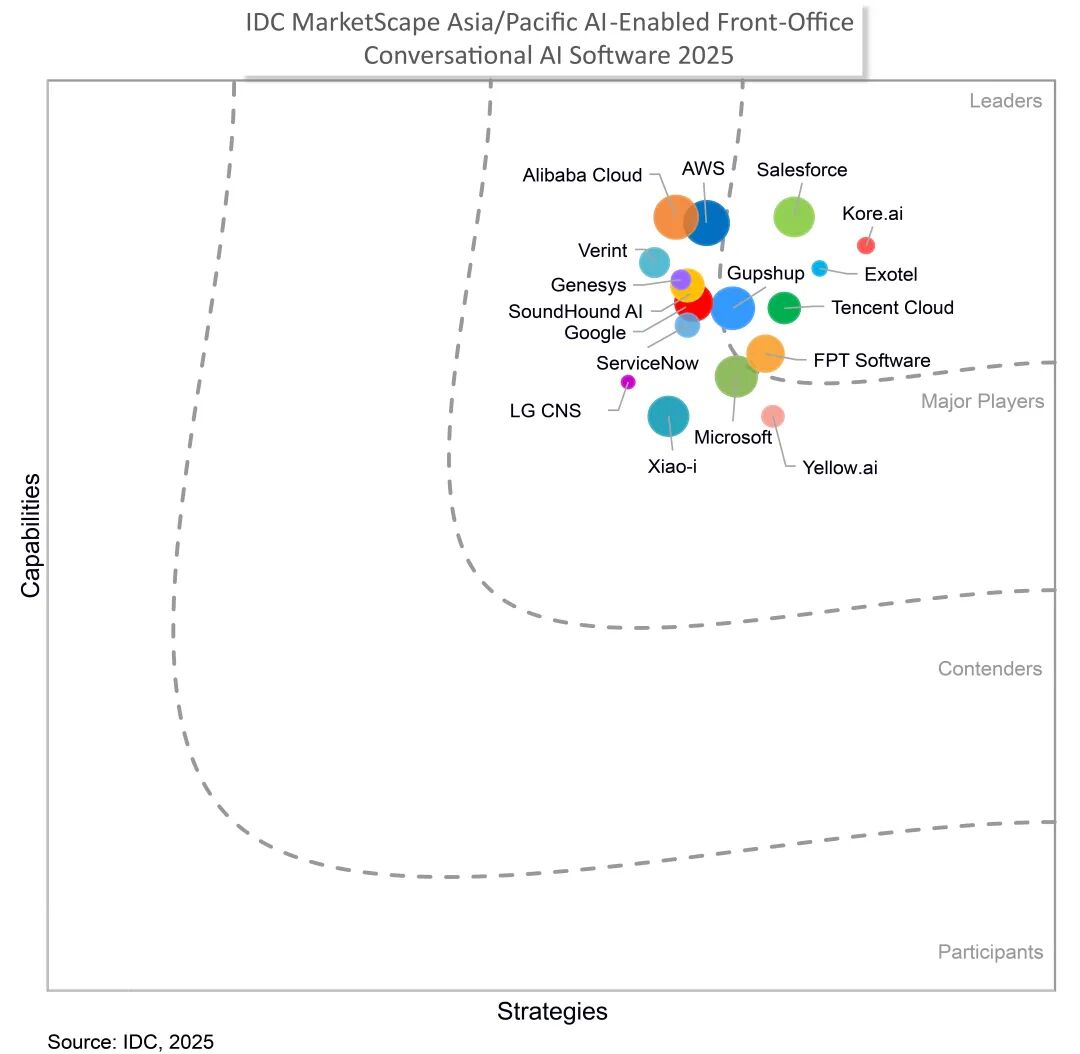
Core Insights - Tencent Cloud has been recognized as a "Leader in the First Quadrant" by IDC, making it the only Chinese company in this category, surpassing many global competitors [1][17]. Group 1: Conversational AI Applications - Conversational AI is highlighted as a key application of generative AI, enhancing customer service externally and improving employee efficiency internally [4][19]. - The Asia-Pacific region presents significant challenges for the deployment of conversational AI due to its linguistic diversity, cultural variety, and complex regulations [4][19]. - Tencent Cloud's conversational AI products have demonstrated improved efficiency, such as a 5% increase in the resolution rate of customer service queries for DHL, reducing the need for human agents by 200 per day [4][19]. Group 2: Industry Collaborations - Tencent Cloud has partnered with Huazhu Group to create a "24-hour digital concierge" app, enhancing customer service across various hotel operations [9][22]. - An intelligent investment assistant developed in collaboration with a leading brokerage firm has processed nearly 2 million user inquiries, tripling user penetration rates [9][23]. - A specialized automotive agent created with FAW Toyota provides detailed maintenance guidance, significantly improving service interaction and problem resolution rates [9][24]. - Collaboration with Yili Group has led to a smart shopping assistant that increased click-through rates by 15.7% and order numbers by 26%, with a 39% rise in conversion rates for direct orders [9][27]. Group 3: Regional Expansion and Impact - Tencent Cloud's conversational AI applications have expanded across regions including Hong Kong, Macau, Singapore, and Indonesia, impacting various industries such as automotive manufacturing, cross-border logistics, pharmaceutical retail, and financial insurance [4][15][29].


商界领袖认同人工智能是未来,但盼其当下就能派上用场
Xin Lang Cai Jing· 2025-12-16 11:55
Core Insights - The article discusses the challenges and limitations faced by companies in effectively implementing generative AI technologies, despite the initial hype and expectations surrounding them [1][2][14]. Group 1: AI Implementation Challenges - A survey by Forrester Research revealed that only 15% of executives reported AI improving profit margins in the past year, while only 5% believed AI provided widespread value to businesses [14]. - Companies are reassessing the speed at which generative AI can be effectively integrated into their operations, with predictions that about 25% of AI budgets will be delayed until 2026 [2][14]. - The tendency of AI models to cater to user preferences, known as "flattery bias," can undermine their ability to provide quality recommendations, as seen in the case of CellarTracker's wine recommendation feature [3][16]. Group 2: Human-AI Interaction - Companies like Klarna and Verizon are finding that while AI can handle simple tasks, complex customer interactions still require human involvement, with a significant percentage of consumers preferring to interact with human agents [19][20]. - AI's lack of empathy is identified as a key barrier to fully integrating AI into customer service roles, as customers often seek human interaction for more nuanced issues [22]. Group 3: Investment and Market Outlook - OpenAI's CEO indicated that the market for enterprise AI systems could reach $100 billion, highlighting the ongoing investment interest in AI technologies across various sectors [2][14]. - Experts warn that the current wave of investment in AI infrastructure could lead to a crisis similar to the early 2000s internet bubble if companies fail to find effective ways to leverage AI for revenue growth and innovation [15]. Group 4: AI Development and Support - Companies are increasingly focusing on developing tailored AI solutions for specific industries, as opposed to generic models, to create greater value [26]. - OpenAI is working on new products and support teams to help businesses effectively implement AI technologies, emphasizing the need for practical guidance in transforming AI tools into productive assets [26][12].
机器人总动员!40余款是南京的!
Nan Jing Ri Bao· 2025-06-12 00:28
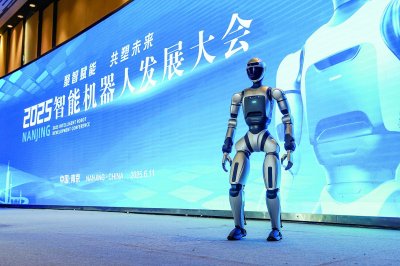
Core Viewpoint - The 2025 Intelligent Robot Development Conference showcased over 40 robotic products from 29 companies, highlighting advancements in humanoid, industrial, service, and special robots, as well as key components in the robotics industry [8]. Group 1: Product Innovations - The second-generation humanoid robot Codroid 02 was launched by the well-known intelligent robot company Estun [2]. - The "Goldfish" bionic robot, developed by Nanjing Gongdao Water Conservancy Technology Co., mimics the swimming motion of real goldfish and can dive up to 30 meters for water quality monitoring [8][9]. - The snake-shaped pipeline inspection robot from Nanjing Jiugao Yuntian Intelligent Technology Co. can navigate through pipes as small as 8 centimeters in diameter, suitable for municipal engineering and natural gas pipeline maintenance [9]. Group 2: Automation and Efficiency - A tile-laying robot from Nanjing Zhuling Technology can lay a tile in just 2 minutes, utilizing a laser for height measurement and AI for precise placement [10]. - The intelligent grass-cutting robot from Nanjing Quan Feng Technology can autonomously avoid obstacles while adjusting cutting height at 15 different positions [11]. Group 3: Service Robots - A customer service robot from Jiangsu Nanda Electronic Information Technology Co. can efficiently handle customer transactions in banks [12]. - The first intelligent coffee robot from Jiangsu Jicui Intelligent Manufacturing Technology Research Institute offers high-quality coffee with autonomous delivery capabilities, operating 24/7 without human supervision [12]. Group 4: Key Components - The event featured a dedicated area for key components, showcasing products like the CasiaHand dexterous hand from Zhongke Silicon-based and rolling arc guide rails from Nanjing Craft Equipment [12].