小信号二极管/三极管芯片

Search documents
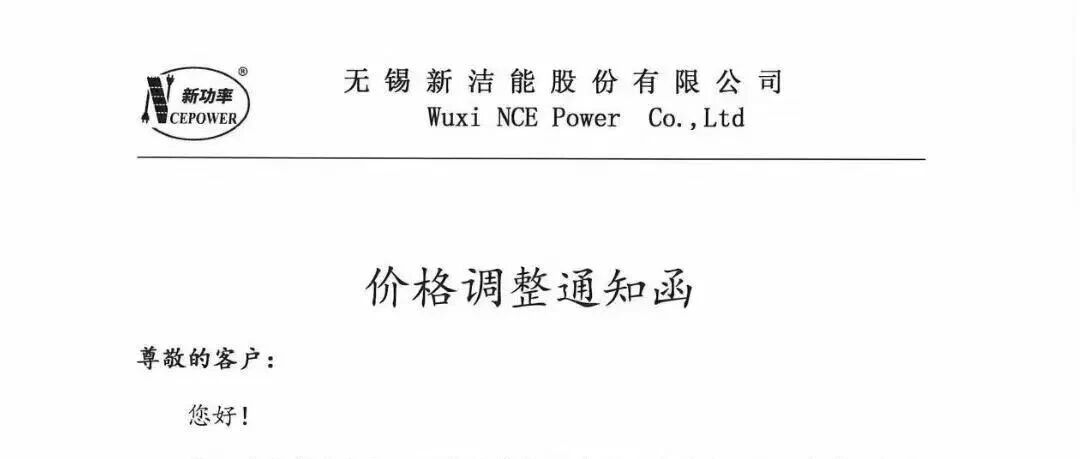
功率半导体厂商新洁能,传涨价!
芯世相· 2026-02-25 10:03
我是芯片超人花姐,入行20年,有50W+芯片行业粉丝。 有很多不方便公开发公众号的, 关于芯片买卖、关于资 源链接等, 我会分享在朋友圈 。 扫码加我本人微信 刚刚, 传 无锡新洁能 股份有限公司发布涨价函, 因上游原材料及关键贵金属价格大幅攀升,导 致晶圆代工及封测成本持续上涨。新洁能将 对 MOSFET 产品进行价格上调,上调幅度 10%起 ,本次价格调整自 2026年3月1日起 发货正式生效。 网传涨价函如下: 来源 :读者朋 友圈,以官宣为准 无锡新洁能股份有限公司成立于2013年1月,拥有新洁能香港、电基集成、金兰功率半导体、国 硅集成电路、Singapore Eruby 五家子公司以及深圳分公司和宁波分公司。公司成立以来即专注 于MOSFET、IGBT等半导体芯片和功率器件的研发、设计及销售,产品优质且系列齐全,广泛应 用于新能源汽车及充电桩、智能机器人、AI 服务器和数据中心、无人机、工控自动化、光伏储 能、消费电子、5G 通讯、智能家居等领域。 近期,还有多家功率器件企业传出涨价消息。 2月24日, 传 国内功率半导体厂商 江苏宏微科技 股份有限公司 向客户发出涨价函,将对IGBT 单管及模块 ...


华润微、士兰微、英飞凌等多家半导体厂商涨价!
Xin Lang Cai Jing· 2026-02-14 05:12
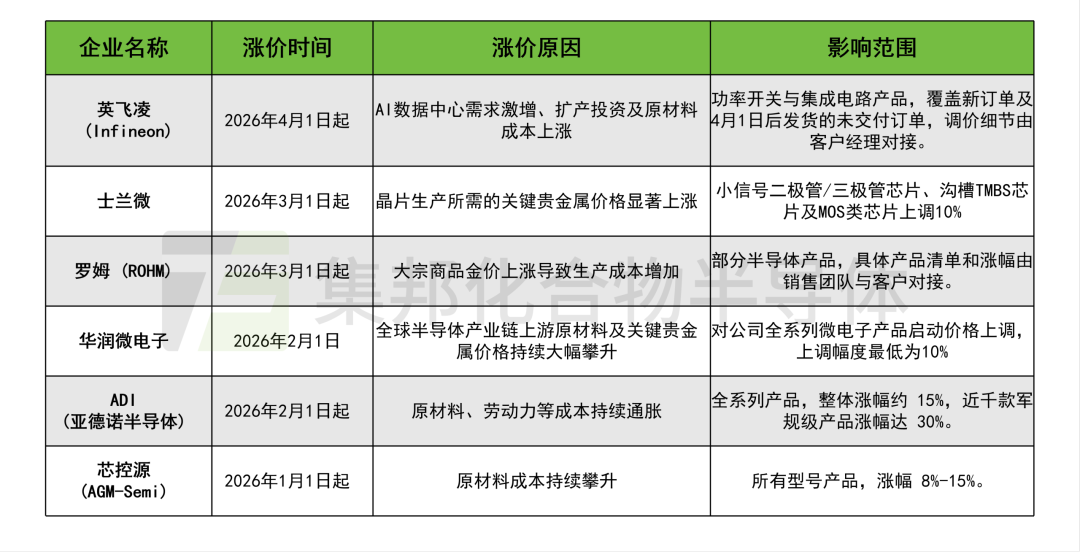
Core Viewpoint - The recent price increase announcements from multiple power semiconductor companies, including Silan Micro, Infineon, and China Resources Microelectronics, have drawn significant industry attention, indicating a broader trend of rising costs and demand in the semiconductor sector [1][14]. Price Increase Details - Infineon will raise prices for power switches and integrated circuit products starting April 1, 2026, due to surging demand from AI data centers, expansion investments, and rising raw material costs [2][19]. - Silan Micro will implement a 10% price increase on small signal diodes, transistors, trench TMBS chips, and MOS chips effective March 1, 2026, driven by significant increases in key precious metal prices [2][17]. - ROHM will also increase prices for certain semiconductor products starting March 1, 2026, due to rising commodity prices [2]. - China Resources Microelectronics will raise prices for its entire range of microelectronic products by at least 10% starting February 1, 2026, citing significant increases in upstream raw material prices [2][20]. - Analog Devices (ADI) will increase prices by approximately 15% across its entire product range, with some military-grade products seeing increases of up to 30% starting February 1, 2026 [2]. - AGM-Semi will raise prices by 8%-15% for all models starting January 1, 2026, due to rising raw material costs [2]. Reasons for Price Increases - The primary driver for the price increases is the sustained pressure on production costs, influenced by rising commodity prices, particularly precious metals, and increased costs in wafer manufacturing and packaging [10][23]. - The tightening of wafer foundry capacity, as leading foundries shift focus away from mature processes, has further exacerbated cost pressures [10][23]. - Demand for power semiconductors is structurally increasing due to rapid growth in sectors such as AI data centers, electric vehicles, energy storage, and industrial control [10][24]. Market Dynamics - The value of power components in AI servers has increased significantly, with the price per server component rising from $6-7 to $30-50, a nearly fivefold increase, which has driven demand for power switches and power management chips [11][24]. - The ongoing development in automotive electronics and energy storage is further amplifying the demand gap for power semiconductors, supporting price increases [10][25]. Impact on Third-Generation Semiconductors - The price increases from major power semiconductor manufacturers may facilitate a shift towards third-generation semiconductors, as the price gap between traditional silicon-based devices and SiC/GaN devices narrows [12][25]. - As traditional power device prices rise, downstream companies may reconsider their cost structures, potentially favoring SiC devices for their efficiency and reduced thermal management needs [12][26]. - In the AI server power market, rising traditional silicon power prices may drive manufacturers to adopt more efficient GaN solutions to lower operational costs [12][26]. Conclusion - The price increase trend among power semiconductor companies is a reflection of supply-demand imbalances, rising costs, and technological advancements, marking a significant phase of structural adjustment in the global power semiconductor industry [13][27]. - This trend not only accelerates the domestic substitution process for silicon-based power semiconductors but also acts as a catalyst for the cost-effective application of third-generation semiconductors, promoting a transition towards high-efficiency, energy-saving, and miniaturized high-end fields [13][27].

涨!涨!涨!半导体行业掀涨价风暴
Xin Lang Cai Jing· 2026-02-11 10:16
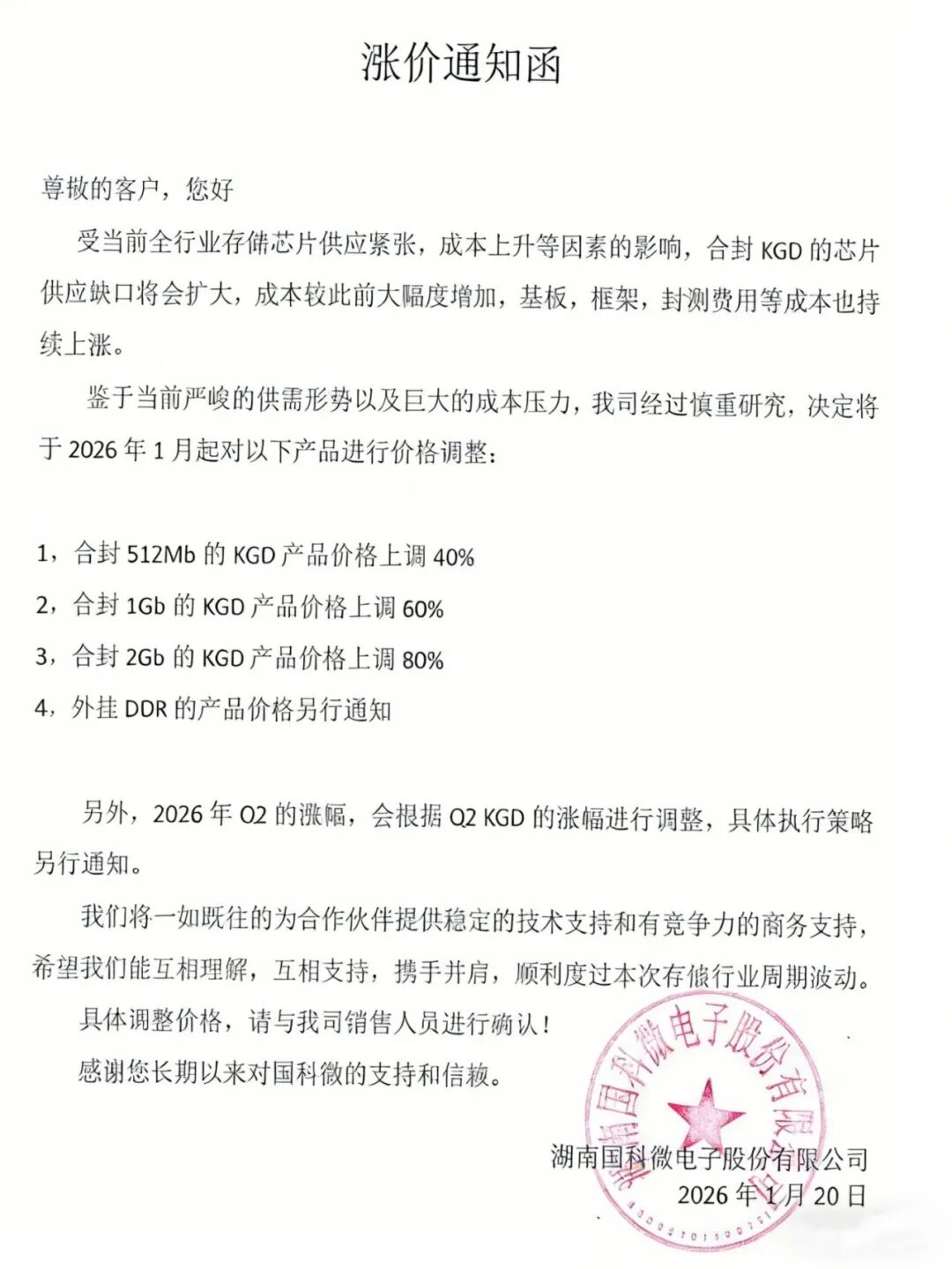
Core Viewpoint - The global semiconductor industry is experiencing a new wave of price increases across the entire supply chain, driven by surging AI demand and rising raw material costs [1][3][61]. Group 1: Price Increases in Domestic Semiconductor Companies - Over 20 semiconductor companies have officially announced price increases [2][62]. - Domestic chip manufacturers are significantly raising prices, with increases as high as 80% for certain products [4][63]. - Guokewai announced price hikes for its KGD storage products, with increases of 40% to 80% [6][66]. - Zhongwei Semiconductor is raising prices for MCU and NOR Flash products by 15% to 50% due to supply chain pressures [9][73]. - Biyiwei has also announced price increases across its entire product line, citing rising raw material costs [17][76]. Group 2: Price Increases in International Semiconductor Companies - International semiconductor giants are also raising prices, with ADI increasing prices by 15% to 30% starting February 1, 2026 [21][81]. - Infineon plans to raise prices for power switches and IC products due to increased demand from AI data centers [24][83]. - Texas Instruments is expected to raise prices by over 30% across nearly all categories due to rising costs [21][81]. Group 3: Price Increases in Wafer Foundry and Packaging - Wafer foundries are increasing prices, with TSMC raising advanced process prices by 3% to 10% [25][85]. - Packaging and testing services are seeing price increases of up to 30%, driven by high demand and capacity constraints [27][86]. Group 4: Impact of Raw Material Costs - The prices of precious metals like gold, silver, and copper are rising, significantly impacting chip manufacturing costs [57][116]. - The increase in raw material costs is leading to a ripple effect across the semiconductor supply chain, prompting many companies to raise their product prices [57][116]. Group 5: Effects on End Markets - The price increases in storage chips are affecting end markets, with PC manufacturers like Dell and Lenovo planning price hikes of 10% to 30% [59][118]. - In the smartphone sector, rising storage costs are pressuring new product pricing, particularly for low-end models [59][118]. - The automotive electronics sector is also feeling the impact, with companies like Xiaomi and NIO reporting cost pressures due to rising semiconductor prices [59][119].


头部 IDM 发函:3月1日涨价 10%
是说芯语· 2026-02-10 23:47
近日,杭州士兰微电子股份有限公司(以下简称 "士兰微")向客户发布《价格调整通知函》,宣布因全球金属市场价格波动、关键贵金属成本持续攀 升,将对部分器件类产品价格进行上调,调整幅度为 10%,自 2026 年 3 月 1 日起正式生效。 通知中明确,本次价格调整涉及三类核心产品:小信号二极管 / 三极管芯片、沟槽 TMBS 芯片及 MOS 类芯片。士兰微表示,近期全球金属市场价格波动 剧烈,尤其是晶圆生产所需的关键贵金属价格显著上涨,导致公司晶圆制造成本持续攀升。尽管公司已通过提升内部运营效率、优化生产工艺等方式积极 消化成本压力,但仍难以完全抵消原材料上涨带来的影响,因此决定对相关产品价格进行适度调整。 "我们深知当前市场环境对所有客户均带来一定挑战,此次价格调整并非轻易决定。" 士兰微在通知中强调,公司始终致力于在成本压力与客户需求之间 寻求平衡,未来将继续通过与客户的深入沟通,优化合作模式,确保供应稳定与产品质量。后续,公司客户经理将与客户逐一联系,就本次价格调整进行 详细说明并解答疑问。 杭州士兰微电子股份有限公司(股票代码:600460)成立于 1997 年,是中国本土规模最大的综合性半导体 IDM ...