
半导体涨价潮

Search documents
芯片涨价潮,来势汹汹
半导体芯闻· 2026-03-23 10:24
Core Viewpoint - The global semiconductor industry is experiencing a significant price increase driven by supply-demand imbalances and rising costs, with major companies like Texas Instruments, Infineon, NXP, and others leading the charge [1][5]. Group 1: Price Increases by Major Companies - Texas Instruments (TI) announced a price increase of 15%-85% across all product lines, with the highest increases in industrial control and automotive electronics, reflecting tight capacity and rising costs [2][3]. - Infineon is raising prices for power switches and related chips by 5%-15%, driven by surging demand from AI data centers and increased manufacturing costs [3][4]. - NXP has also announced price adjustments due to significant increases in costs across the supply chain, although specific product categories and price ranges were not disclosed [4][5]. Group 2: Broader Industry Trends - Other companies such as ON Semiconductor, Analog Devices, and Vishay are also implementing price increases, indicating a widespread trend across the semiconductor industry [5][6]. - The price adjustments are largely attributed to rising costs of raw materials, energy, and logistics, which have become unsustainable for manufacturers [10][11]. - The semiconductor industry is witnessing a shift from a price war to a value war, as companies seek to maintain profitability amid rising costs [9][21]. Group 3: Supply Chain Dynamics - The semiconductor supply chain is under pressure due to rising costs of key materials, particularly precious metals, which are critical for chip production [10][11]. - The demand for semiconductors is surging in sectors such as AI, electric vehicles, and industrial automation, exacerbating supply shortages and enabling manufacturers to raise prices [12][13]. - The collective price increases from semiconductor manufacturers are expected to have a cascading effect throughout the supply chain, impacting downstream industries [20][21]. Group 4: Foundry Price Increases - Foundries are also raising their prices, with major players like TSMC and Samsung adjusting their pricing strategies due to increased operational costs and capacity constraints [15][16]. - The price hikes in wafer fabrication are further tightening the profit margins for chip designers, reinforcing the necessity for price adjustments across the board [15][19]. - The shift in focus from mature to advanced process nodes by leading foundries is contributing to a structural shortage in 8-inch wafer capacity, which is critical for many semiconductor applications [18][19].







芯片,涨价潮!
半导体行业观察· 2026-03-22 02:42
Core Viewpoint - The global semiconductor industry is experiencing a significant price increase driven by supply-demand imbalances and rising costs, with major companies like Texas Instruments, Infineon, and NXP leading the charge [2][3][4]. Group 1: Price Increases by Major Companies - Texas Instruments (TI) announced a price increase of 15%-85% across all product lines, with the highest increases in industrial control and automotive electronics, reflecting tight capacity and rising costs [3]. - Infineon is raising prices for power switches and related chips due to surging demand from AI data centers, with increases expected to be 5%-15% for mainstream models and potentially higher for premium products [4][5]. - NXP is also adjusting prices due to significant cost increases across the supply chain, although specific product categories and price ranges have not been disclosed [6]. Group 2: Broader Industry Trends - Other companies such as ON Semiconductor, Analog Devices, and Vishay are joining the price increase trend, indicating a widespread adjustment across the semiconductor sector [6][7]. - The price adjustments are largely attributed to rising costs of raw materials, energy, and logistics, which are affecting all players in the industry [8][12]. Group 3: Cost Pressures and Supply Chain Dynamics - The surge in prices is primarily driven by skyrocketing costs of key raw materials, particularly precious metals, which are essential for semiconductor manufacturing [12][13]. - The semiconductor industry is facing a structural shift in demand, particularly from AI servers and electric vehicles, which is exacerbating supply constraints and allowing manufacturers to raise prices [15][16]. Group 4: Impact of Foundry Price Increases - The collective price increases from wafer foundries are further pressuring chip manufacturers to adjust their pricing strategies, as foundries raise their rates due to increased operational costs [18][19]. - Major foundries like TSMC and Samsung are shifting focus to advanced processes, leading to a reduction in capacity for older nodes, which is tightening supply for essential components [21][22]. Group 5: Domestic Market Response - Domestic semiconductor companies in China are also raising prices in response to global trends, with many following suit to address rising costs and maintain profitability [9][10]. - The price adjustments among domestic firms reflect a shift from a price war to a value-driven approach, indicating a potential recovery in profit margins [11][24].



半导体最高涨价80%,正蔓延至家电、汽车
21世纪经济报道· 2026-03-17 13:47
Core Viewpoint - The ongoing semiconductor price increase is affecting consumer electronics, leading to price adjustments by major brands like OPPO and vivo, with the root cause being the rising costs of semiconductors and storage components [1][3]. Group 1: Price Increases in the Semiconductor Industry - The current price surge in semiconductors began with storage chips and has spread to various sectors, including power devices and wafer foundries, with price increases ranging from 10% to 80% among A-share companies [3]. - Major foundries like UMC and World Advanced are expected to raise their prices by up to 10% starting in April 2026 due to rising costs in equipment, raw materials, and labor [3][4]. - The price adjustments are driven by three main factors: explosive growth in AI server demand, structural tightness in 8-inch wafer capacity, and rising upstream material costs [4][5]. Group 2: Impact on Consumer Electronics - The price increases are now affecting consumer electronics, with brands like OPPO and vivo announcing price hikes for their products due to the sustained rise in semiconductor costs [1][6]. - Honor's CEO indicated that the memory price increase is a widespread industry issue, expected to persist for 2 to 3 years, impacting not just smartphones but also home appliances and automobiles [8]. - The cost of DRAM in televisions has risen from 2.5%-3% of the BOM cost to 6%-7%, putting pressure on brand profitability, especially for smaller companies [8]. Group 3: Future Outlook - The semiconductor price increase is anticipated to continue affecting the market, with IDC predicting that the structural shortage caused by competition between AI infrastructure and consumer electronics will last until at least 2026, possibly extending into 2027 [8][9]. - Companies across the supply chain, from chip suppliers to end brands, need to prepare for this long-term structural adjustment in pricing and supply dynamics [9].



涨!涨!涨!半导体行业掀涨价风暴
Xin Lang Cai Jing· 2026-02-11 10:16
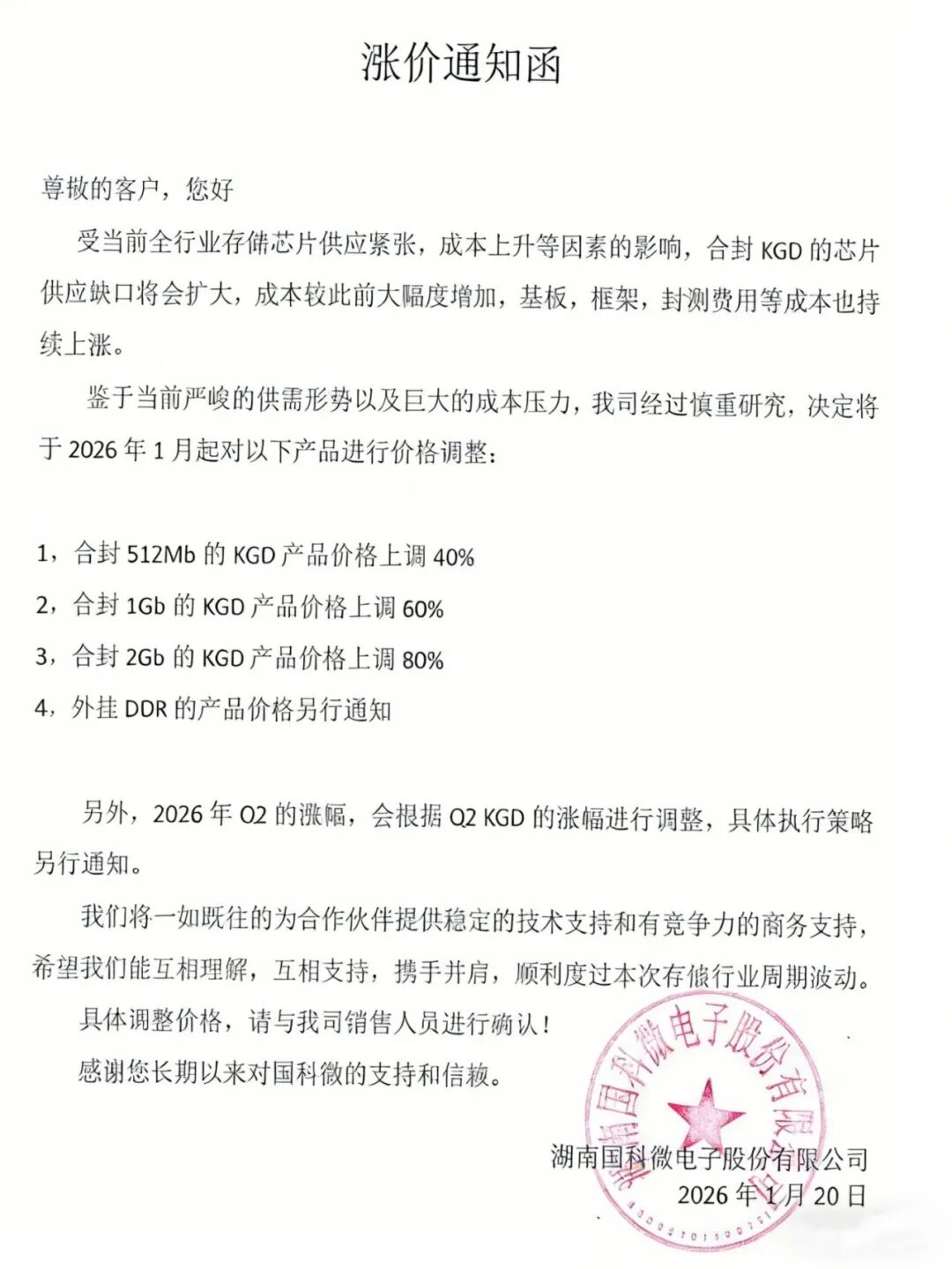
Core Viewpoint - The global semiconductor industry is experiencing a new wave of price increases across the entire supply chain, driven by surging AI demand and rising raw material costs [1][3][61]. Group 1: Price Increases in Domestic Semiconductor Companies - Over 20 semiconductor companies have officially announced price increases [2][62]. - Domestic chip manufacturers are significantly raising prices, with increases as high as 80% for certain products [4][63]. - Guokewai announced price hikes for its KGD storage products, with increases of 40% to 80% [6][66]. - Zhongwei Semiconductor is raising prices for MCU and NOR Flash products by 15% to 50% due to supply chain pressures [9][73]. - Biyiwei has also announced price increases across its entire product line, citing rising raw material costs [17][76]. Group 2: Price Increases in International Semiconductor Companies - International semiconductor giants are also raising prices, with ADI increasing prices by 15% to 30% starting February 1, 2026 [21][81]. - Infineon plans to raise prices for power switches and IC products due to increased demand from AI data centers [24][83]. - Texas Instruments is expected to raise prices by over 30% across nearly all categories due to rising costs [21][81]. Group 3: Price Increases in Wafer Foundry and Packaging - Wafer foundries are increasing prices, with TSMC raising advanced process prices by 3% to 10% [25][85]. - Packaging and testing services are seeing price increases of up to 30%, driven by high demand and capacity constraints [27][86]. Group 4: Impact of Raw Material Costs - The prices of precious metals like gold, silver, and copper are rising, significantly impacting chip manufacturing costs [57][116]. - The increase in raw material costs is leading to a ripple effect across the semiconductor supply chain, prompting many companies to raise their product prices [57][116]. Group 5: Effects on End Markets - The price increases in storage chips are affecting end markets, with PC manufacturers like Dell and Lenovo planning price hikes of 10% to 30% [59][118]. - In the smartphone sector, rising storage costs are pressuring new product pricing, particularly for low-end models [59][118]. - The automotive electronics sector is also feeling the impact, with companies like Xiaomi and NIO reporting cost pressures due to rising semiconductor prices [59][119].


半导体全链涨价催生业绩回暖,非存储芯片板块有望迎价值重估
Di Yi Cai Jing· 2026-02-03 12:49
Core Viewpoint - The current semiconductor cycle is experiencing a price surge that is expanding from memory chips to non-memory sectors such as power chips and analog chips, driven by the explosive demand for AI computing power [1][2]. Group 1: Price Surge Dynamics - The price increase in memory chips is leading to a chain reaction across the semiconductor industry, affecting various segments including LED drivers, analog chips, power devices, and MCUs [2][4]. - Multiple A-share semiconductor companies have issued price increase notices, indicating a widespread trend of price hikes across the industry [1][2]. - The price adjustments range significantly, with some companies like Zhongwei Semiconductor increasing prices by 15% to 50% for certain products, while others have reported increases as high as 80% [3][4]. Group 2: Causes of Price Increases - The primary reasons for the price surge include a significant rise in costs across the entire supply chain, driven by increasing prices of raw materials and higher manufacturing costs due to price hikes from wafer foundries and packaging/testing services [4]. - The allocation of upstream capacity is increasingly focused on higher-margin products like memory chips, leading to a squeeze on traditional products such as analog chips and power semiconductors [4]. Group 3: Market Impact and Performance Outlook - The price surge is expected to lead to a recovery in performance for non-memory chip companies, with several firms already forecasting significant profit increases for 2025 [5][6]. - For instance, Silan Microelectronics anticipates a net profit increase of 50% to 80% for 2025, while Zhongwei Semiconductor expects a revenue growth of 23.07% and a net profit increase of 107.55% [6][7]. - Analysts suggest that the return of pricing power due to supply-demand dynamics will benefit companies with strong market positions and pricing capabilities, particularly in segments tied to AI and new energy [6][7].
芯片涨价潮来了!台积电被曝2nm价格至少上调50%,三星、SK海力士已先行涨价
华尔街见闻· 2025-09-24 04:27
Group 1 - TSMC's 2nm process pricing has increased by at least 50% compared to the 3nm process, with the last generation 3nm CPU prices rising by approximately 20% [1][2] - TSMC's latest 2nm process is set to begin mass production this quarter, but due to high capital expenditures, the company is not offering discounts or negotiation strategies [1][2] - The flagship chips using the 2nm process are expected to have a unit price of around $280 [1] Group 2 - Samsung has significantly raised prices for memory and flash products, with DRAM prices increasing by up to 30%, and NAND flash prices rising by 5-10% due to supply constraints and surging demand from cloud enterprises [5][6] - Micron and SanDisk have also announced similar price increases, with Micron's prices rising by 20-30% and halting new orders [5] - The current price surge reflects the deep impact of AI applications on the semiconductor supply chain, with data center construction driving up storage procurement [6] Group 3 - Apple has increased its reservation share for TSMC's 2nm capacity from nearly 50% to over 50%, contributing 22% of TSMC's revenue in 2024, amounting to $19.4 billion [2] - Qualcomm and MediaTek plan to launch their first 2nm chip products by the end of 2026, but Apple's capacity monopolization may create supply constraints for these competitors [3]

美股异动 | 部分芯片股走高 台积电(TSM.US)涨3.3%
智通财经网· 2025-09-23 16:00
Group 1 - The semiconductor industry is experiencing a new wave of price increases, with TSMC's 2nm process prices rising at least 50% compared to the 3nm process [1] - The last generation of 3nm CPUs has seen a price increase of approximately 20% compared to the previous generation [1] - Major memory chip manufacturers like Samsung and SK Hynix have already raised their product prices, contributing to accelerating semiconductor inflation [1] Group 2 - TSMC shares rose by 3.3% to $281.63 [1] - Intel shares increased by over 3.8% to $29.86, while Micron Technology and Broadcom saw gains of over 2% and 1.4% respectively [1]