小劲酒

Search documents
酒行业周度市场观察-20260125
Ai Rui Zi Xun· 2026-01-25 03:02
Investment Rating - The report does not explicitly provide an investment rating for the industry Core Insights - The Australian wine market is reshaping the Chinese imported wine market after a year and a half of absence, with a significant initial increase in imports followed by a decline in sales due to inventory issues and economic pressures [2] - The low-alcohol beverage category is rapidly growing, appealing to younger consumers, but faces challenges such as brand homogenization and declining repurchase rates [2] - The white liquor industry is experiencing a shift in market dynamics, with top brands competing fiercely and some companies facing their first quarterly negative growth in nearly a decade [4] - New beverage products are emerging, with brands like Xiaojin Wine and Guoli Fang successfully capturing market share through innovative approaches [5] - The industry is expected to return to rationality in 2026, focusing on consumer needs and product quality, while smaller companies may face elimination [6] Industry Environment - The Australian wine market is seeing a resurgence in China due to the removal of anti-dumping taxes, but initial sales have not met expectations, leading to inventory issues and price reductions [2] - The low-alcohol market is projected to grow from 20 billion yuan in 2020 to 57 billion yuan by 2024, but faces challenges in brand differentiation and consumer loyalty [2] - The white liquor market is undergoing structural changes, with companies like Shanxi Fenjiu surpassing others in revenue, indicating a competitive landscape [4] - The introduction of innovative products is crucial for the industry's transformation, with a focus on low-alcohol and health-oriented offerings [5] - The industry is moving towards a more rational approach, emphasizing product quality and consumer experience, as it transitions from a bubble phase to a healthier growth period [6] Top Brand Dynamics - Guizhou Zhenjiu is upgrading its "Dazhen" product to enhance quality and market positioning, aiming to compete with top brands like Moutai [8] - Wuliangchun is celebrating its 30th anniversary with a marketing campaign that deepens emotional connections with consumers [9] - Xifengjiu is focusing on quality and cultural empowerment to drive its revival in the competitive white liquor market [10] - Moutai is launching a new product structure to meet diverse consumer needs and stabilize its market presence [14] - Niulanshan is evolving its product strategy to maintain its position in the mass market while enhancing emotional connections with consumers [18]






2026年第3周:酒行业周度市场观察
艾瑞咨询· 2026-01-21 00:07
Industry Environment - After a year and a half, Australian wine is reshaping the Chinese imported wine market as China terminates anti-dumping and countervailing duties on Australian imported wine starting March 29, 2024, leading to an initial surge in imports, followed by a significant decline in sales due to inventory buildup and economic pressures, with declines ranging from 20% to 70% [2][3] - Despite challenges, Australian wine is seen as having product strength, prompting the industry to streamline brands and enhance promotions to reshape market dynamics [3] Low-Alcohol Beverage Market - The low-alcohol beverage market has rapidly grown, increasing from 20 billion yuan in 2020 to an expected 57 billion yuan by 2024, with global market projections surpassing 740 billion yuan by 2025, driven by young consumers and a trend towards "tipsy enjoyment" [4] - Traditional liquor companies and retail brands are entering the low-alcohol space, but the market faces challenges such as brand homogenization and declining repurchase rates, indicating a need for innovation to establish long-term competitiveness [4] New Product Innovations in Alcohol Industry - In 2025, leading liquor companies are leveraging product innovation to navigate challenges, with notable new products like Moutai's 1935 premium version and Wuliangye's youth-oriented design gaining market traction [5] - The industry is witnessing a trend towards low-alcohol and youth-oriented products, with a focus on value reconstruction across all price ranges, indicating a shift in consumer preferences and competitive dynamics [5] Changing Landscape of Baijiu Industry - The baijiu industry is undergoing significant changes, with Shanxi Fenjiu surpassing Luzhou Laojiao and Yanghe in revenue, marking a competitive shift among leading brands [6] - The overall industry is under pressure, with many mid-sized companies experiencing declines, while top brands like Moutai and Fenjiu show slight growth, indicating a potential gradual recovery in 2026 [6] New Beverage Trends - The new beverage sector is experiencing growth, with brands like Xiaojinjiu and Guolifang successfully filling market gaps through innovative products that cater to younger consumers and diverse consumption scenarios [7] - The success of these new products is attributed to their ability to meet specific consumer needs and drive emotional consumption, positioning them as mainstream options in the market [7] Marketing Strategies of Leading Brands - Major liquor companies are optimizing inventory and enhancing marketing strategies to adapt to the current industry adjustment period, focusing on consumer-centric approaches and diversified consumption scenarios [9] - Companies are employing a pyramid product structure to solidify core offerings while exploring niche markets, indicating a shift from scale expansion to refined operations [9] Brand Dynamics - Guizhou Zhenjiu is upgrading its "Dazhen" product to enhance quality and packaging, aiming to establish it as a classic product in the market [10] - Wuliangchun is deepening emotional connections with consumers through its 30th-anniversary marketing activities, showcasing a shift towards more profound brand engagement [11] Value Competition in Baijiu Industry - The baijiu industry is entering a phase of value competition, with brands like Xifengjiu focusing on quality and cultural empowerment to drive their revival [12][13] - The emphasis on quality and innovation is seen as essential for long-term success in a competitive market [12][13] Retail Innovations - Sam's Club is restructuring its display of aged baijiu by grouping products by production year, aiming to enhance value perception and broaden consumption scenarios [23] - This adjustment reflects a collaborative effort between distributors and retailers to address market challenges and improve product value expression [23]


小劲酒冲刺百亿的幕后推手是谁?
Sou Hu Cai Jing· 2025-08-16 11:55
Core Insights - The article discusses the rising popularity of "Xiao Jin Jiu" (Little Jin Liquor) among young consumers, highlighting a significant 50% year-on-year growth in sales for the first half of the year, with projections suggesting it could reach 10 billion yuan in annual sales [5][6]. Group 1: Market Trends - Major liquor companies like Wuliangye and Luzhou Laojiao are attempting to attract younger consumers by launching lower-alcohol and innovative products, but these efforts have not generated significant impact [4]. - The success of Xiao Jin Jiu is attributed to its ability to tap into a new consumer base, which is larger than its existing market, a feat that many traditional liquor brands have struggled to achieve [6][8]. Group 2: Consumer Engagement - A viral video on Douyin (TikTok) portraying Xiao Jin Jiu as "China's own whiskey" sparked interest among younger audiences, leading the company to establish a dedicated content marketing team to sustain this momentum [7]. - The appeal of Xiao Jin Jiu among young consumers is largely due to its sweeter taste compared to traditional liquor, making it more palatable, especially among female consumers [7][8]. Group 3: Sales Strategy - Xiao Jin Jiu's sales growth is supported by a high market penetration rate, ensuring availability from urban to rural areas, which enhances consumer convenience [8]. - The company adopts a flexible inventory strategy, allowing distributors to adjust stock levels based on actual sales performance, which helps maintain a healthy supply chain [8]. - Changes in consumer behavior, influenced by policies like the "Eight Regulations," have led to a shift towards more casual dining settings, where Xiao Jin Jiu is favored for its affordability and lower health impact [8][9]. Group 4: Long-term Strategy - The growth of Xiao Jin Jiu is seen as a result of the company's long-term operational strategies rather than a sudden surge in popularity, emphasizing the importance of understanding consumer lifestyles [9].
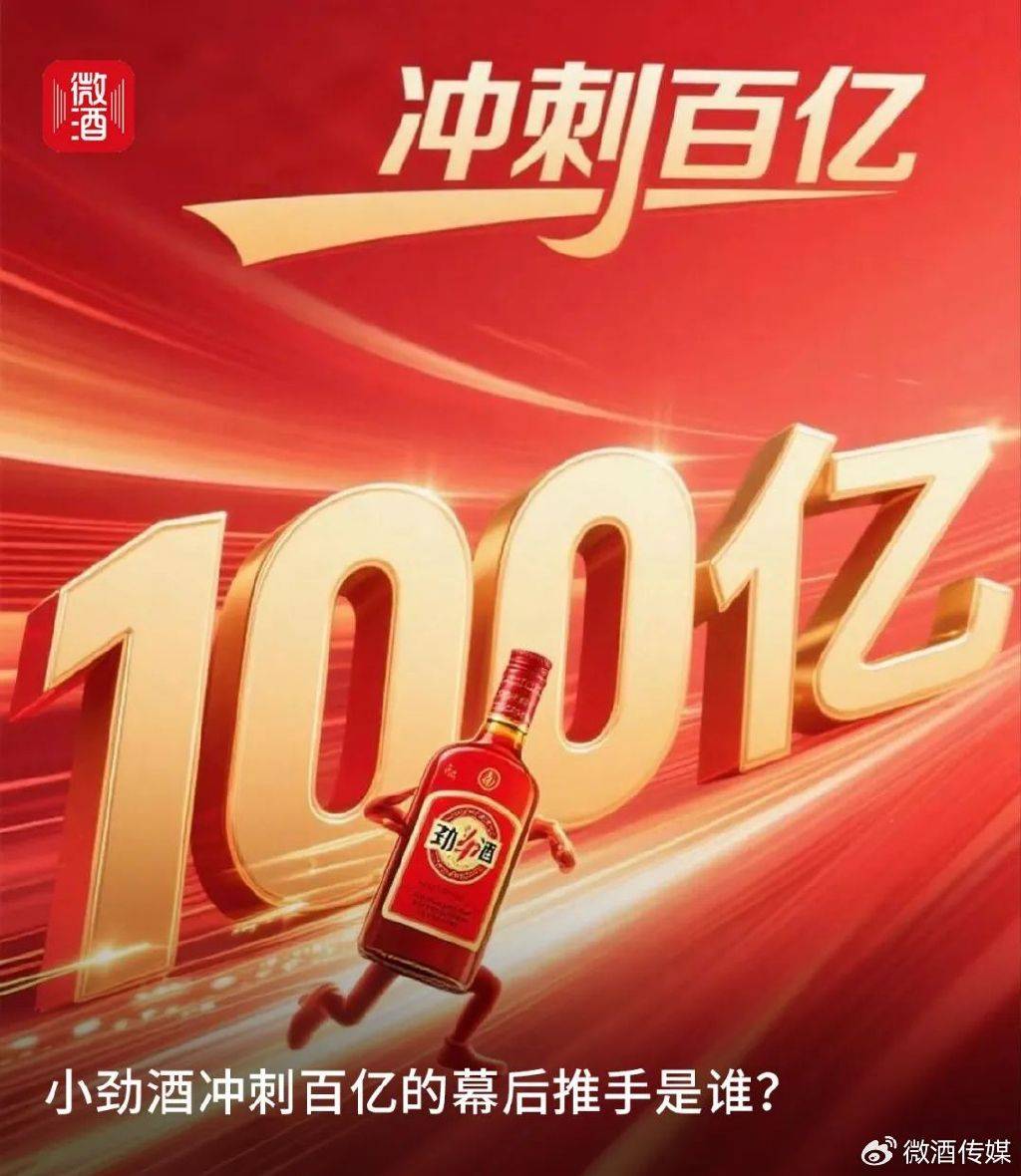
小劲酒单品冲百亿,白酒的未来是“不做白酒”?
阿尔法工场研究院· 2025-08-05 00:06
Core Viewpoint - The rise of the small Jinjiao brand reflects a shift in the white liquor industry towards younger consumers, emphasizing the need for brands to adapt without losing their core values [2][39] Group 1: Sales Performance and Market Dynamics - The claim of "100 billion sales" for small Jinjiao is based on a linear extrapolation from a sales increase of 42.45% in the first half of 2024, with actual sales of 31.1 billion yuan in the same period [10][11] - The sales of small Jinjiao have been influenced by social media trends, leading to increased attention and temporary spikes in sales, but sustainability remains uncertain [9][12] - The company has not surpassed its historical sales peak of 80 billion yuan since 2017, indicating fluctuations in growth rather than a consistent upward trajectory [11] Group 2: Consumer Trends and Product Innovation - The creative mixing of small Jinjiao with childhood beverages like AD calcium milk reflects a new consumption logic that resonates with younger consumers seeking both enjoyment and health [15][20] - The company has adjusted its product offerings, including lowering the alcohol content from 35% to 28% and introducing sugar-free versions to align with health trends [21][22] - The marketing strategy has shifted to target younger demographics, including women and high-net-worth individuals, moving away from traditional male-centric marketing [25][26] Group 3: Marketing and Channel Strategies - The establishment of a dedicated content marketing team has allowed the company to effectively engage with younger audiences through social media platforms [26] - The sales model has transitioned from a focus on inventory pressure to creating value for end-users, enhancing the authenticity of sales data [27][28] - The brand's differentiation from traditional high-end liquor is a key factor in attracting younger consumers, as it emphasizes social enjoyment over formal occasions [23][24] Group 4: Industry Challenges and Future Outlook - The competition in the health-oriented liquor segment is intensifying, with established brands launching similar products, posing a threat to small Jinjiao's market share [36][38] - The inherent conflict between new consumption trends and the traditional aging process of liquor presents a challenge for brands to innovate while maintaining quality [34][35] - The ability of small Jinjiao to maintain its current popularity will depend on continuous innovation and the preservation of its brand identity amidst changing consumer preferences [32][39]