小型堆

Search documents
中国工程院院士汤广福:以高水平能源科技自立自强,筑牢能源强国建设根基
Xin Lang Cai Jing· 2026-02-12 09:28
Group 1 - The core viewpoint emphasizes the importance of energy technology innovation as a fundamental driver for building a new energy system and achieving energy independence in the context of global competition [1][2][12] - The 2026 National Energy Work Conference outlines seven tasks, with a focus on accelerating energy technology innovation as a key priority [1][12] Group 2 - Since the 18th National Congress, China's energy sector has implemented an innovation-driven development strategy, achieving significant advancements in energy technology, transitioning from "catching up" to "keeping pace" and in some areas "leading" [2][13] - In 2024, China's primary energy production and consumption are projected to reach 4.98 billion and 5.96 billion tons of standard coal, accounting for 26.8% and 27.7% of global totals, respectively [2][13] - The total installed power generation capacity in China has surpassed 3.7 billion kilowatts, maintaining the world's leading position [2][13] Group 3 - Technological innovations have accelerated the green transition, establishing the world's largest renewable energy system, with renewable energy installations exceeding thermal power for the first time [2][13] - The "West-East Power Transmission" project has a transmission capacity of approximately 340 million kilowatts, with over 20% of the electricity transmitted being renewable energy [2][13] Group 4 - The construction of an energy powerhouse is a historic leap, with China facing challenges in energy transition and security under dual constraints of supply and carbon reduction [4][15] - Energy consumption has increased by approximately 98 million tons of standard coal during the first four years of the 14th Five-Year Plan, with continued rigid growth expected during the 15th Five-Year Plan [4][15] - The reliance on coal is shifting from a foundational energy source to a regulatory one, with a declining proportion of coal-fired power generation [4][15] Group 5 - The transformation of the energy system is profound, with challenges in the green transition due to the inherent variability of renewable energy sources [5][16] - The need for energy technology innovation is critical to address these challenges, focusing on breakthroughs in fundamental theories, key materials, and core equipment [5][16] Group 6 - The construction of a new energy system must focus on high-efficiency power generation technologies and the development of non-fossil energy sources, with predictions indicating that by 2060, non-fossil energy consumption will exceed 80% [6][17] - Key areas for technological breakthroughs include clean coal utilization, new oil and gas development technologies, and the establishment of a robust energy supply system [6][17] Group 7 - The new power system is essential for accommodating a high proportion of renewable energy, requiring advancements in grid integration and stability analysis methods [7][18] - Hydrogen energy is projected to become a significant component of future energy consumption, necessitating breakthroughs in hydrogen production and storage technologies [7][18] Group 8 - The 14th Five-Year Plan period is crucial for accelerating energy structure adjustments and transitioning to new energy sources, emphasizing the need for a strong innovation ecosystem [8][19] - Recommendations include enhancing national strategic tasks, improving major scientific infrastructure, and fostering collaboration among research institutions and leading enterprises [8][19][20]
合肥“十五五”规划建议:推进氢能、氨能等技术迭代应用,布局小型堆等先进核能技术
Zheng Quan Shi Bao Wang· 2026-01-08 01:31
Core Viewpoint - The Hefei Municipal Committee emphasizes the development of future industries with a focus on "quantum intelligence" and aims to drive innovation in sectors with technological advantages and development foundations [1] Group 1: Quantum Technology Industry - The plan includes promoting breakthroughs and applications in quantum communication, quantum computing, and quantum precision measurement [1] - There is a focus on accelerating the research and industrialization of key materials, devices, and equipment [1] - The initiative aims to expand "quantum+" demonstration projects in government, finance, energy, and meteorology sectors [1] Group 2: Nuclear Fusion and Hydrogen Energy Industry - The development of compact fusion energy experimental devices is highlighted as a key infrastructure project [1] - The plan aims to accelerate the development of superconducting materials, equipment, and smart sensors [1] - There is an emphasis on advancing the application of hydrogen and ammonia energy technologies and laying out advanced nuclear energy technologies like small reactors [1] Group 3: Biomanufacturing Industry - The focus is on biobased chemicals and materials, new food products, bio-agriculture, and non-food biomass raw materials [1] - The initiative aims to expand large-scale applications in these areas [1] Group 4: Embodied Intelligence Industry - The plan promotes the integrated development of intelligent decision-making systems, high-precision control systems, and innovative structural design [1] - It aims to construct a full-chain innovation ecosystem encompassing precision processing, data training, evaluation, and competitive testing [1] Group 5: Emerging Technologies - The strategy includes tracking and laying out plans in niche areas such as brain-computer interfaces, sixth-generation mobile communication, and deep space and deep sea exploration [1] - The goal is to promote more technological research and industrialization to achieve "parallel running" and "leading" positions in these fields [1]
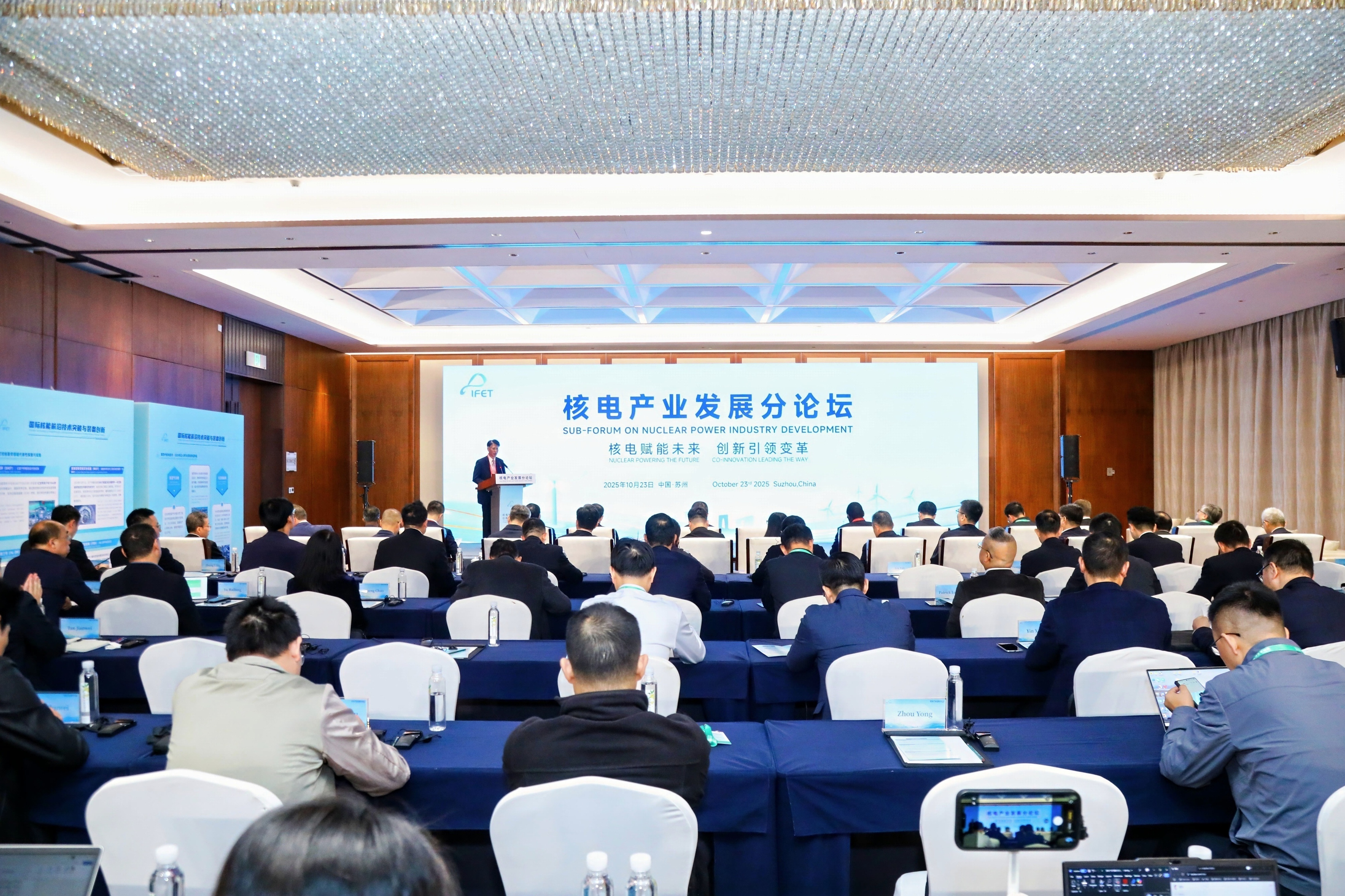
国家能源局:抓住机遇期,积极安全有序推进核电发展
Xin Hua Cai Jing· 2025-10-23 05:51
Core Viewpoint - The current period presents a significant opportunity for the development of nuclear power, emphasizing the need for safe and orderly advancement in the sector [1][5]. Group 1: Nuclear Power Development Strategy - The National Energy Administration aims to scientifically and reasonably determine the layout of nuclear power plants while maintaining a steady construction pace [1][5]. - There is a focus on accelerating the demonstration of advanced nuclear technologies and promoting the comprehensive utilization of nuclear energy [5][6]. - A development framework is proposed that includes "building a batch, reserving a batch, protecting a batch, and demonstrating a batch" [5]. Group 2: Technological Innovation and Safety - The global nuclear power sector is entering an active innovation era, with advancements in small reactors, fourth-generation reactors, and cutting-edge materials [5]. - Safety is highlighted as the lifeline of nuclear power development, with China maintaining a safety level that is on par with global standards [6]. - The country has 59 operational nuclear units with a total installed capacity of 62.48 million kilowatts and 53 units under construction with a capacity of 62.93 million kilowatts, making a total of 112 units and 125 million kilowatts, the largest scale globally [6]. Group 3: International Cooperation - China aims to enhance international collaboration in the nuclear sector, promoting a philosophy of equality, mutual benefit, and shared development [6].

能源高质量发展专家谈丨积极安全有序发展核电,助力实现“双碳”目标
国家能源局· 2025-09-05 13:30
Core Viewpoint - The article emphasizes the importance of actively, safely, and orderly developing nuclear power in China to support the achievement of the "dual carbon" goals, highlighting significant historical achievements during the 14th Five-Year Plan period [3][4]. Group 1: Achievements in Nuclear Power Development - China's nuclear power safety performance ranks among the world's best, with no significant incidents reported, and an average operational index of 97.61 points, leading globally [4]. - The installed capacity of nuclear power has reached 125 million kilowatts, making China the world's largest nuclear power country, with 112 operational and approved units [4]. - New nuclear power plants have been constructed, providing heating to over 400,000 residents and supplying steam to industrial parks, showcasing the dual-use capability of nuclear energy [4]. Group 2: Technological Advancements - Significant improvements in nuclear technology have been made, with the successful commissioning of the Hualong One reactors and advancements in fourth-generation nuclear technology [5]. - The domestic nuclear equipment manufacturing capacity has increased, achieving a 90% localization rate for new projects, and the ability to construct over 40 nuclear units simultaneously [5]. Group 3: Supply Chain and Regulatory Framework - A comprehensive uranium supply security system has been established, including domestic production and overseas mining, ensuring the sustainability of nuclear power development [6]. - The regulatory framework for nuclear power has been enhanced, with new standards and management measures implemented to ensure quality and safety in nuclear projects [6]. Group 4: Future Directions and Strategic Importance - The global nuclear power sector is entering a new growth phase, with many countries recognizing nuclear energy as a key component of their energy strategies amid climate change concerns [8]. - Domestically, nuclear power is crucial for energy security, achieving carbon reduction goals, driving technological innovation, and stimulating economic growth through significant investments in related industries [9]. Group 5: Safety and Innovation Focus - Emphasis on maintaining the highest safety standards in nuclear power development, with a commitment to advanced technology and rigorous oversight [10]. - Continued investment in nuclear technology innovation, including the development of next-generation reactors and participation in international nuclear fusion projects [11].