能源强国建设

Search documents
中国能建(601868):盈利能力承压,回款改善
Guolian Minsheng Securities· 2026-03-30 10:08
Investment Rating - The report maintains a "Buy" rating for the company [3] Core Views - The company reported a revenue of 452.9 billion yuan for 2025, representing a year-on-year growth of 4%, while net profit attributable to shareholders decreased by 30% to 5.84 billion yuan [1] - The company’s revenue growth shows resilience, but profitability is under pressure due to increased competition and higher effective tax rates [8] - The company is focusing on new energy sectors such as energy storage and hydrogen energy, which are showing strong growth potential [8] Financial Performance Summary - Revenue for 2025 is projected at 452.93 billion yuan, with a growth rate of 3.7% for the year [2] - Net profit attributable to shareholders is expected to be 5.84 billion yuan, with a significant decline of 30.4% [2] - The company’s gross margin for 2025 is reported at 12.2%, a slight decrease of 0.2% year-on-year [8] - The company’s cash flow management has improved, with operating cash flow increasing by 5 billion yuan to 11.55 billion yuan [8] - The projected earnings per share for 2026 is 0.15 yuan, with a price-to-earnings ratio of 20 times [2] Business Segment Performance - The company’s design consulting, engineering construction, investment operation, and industrial manufacturing segments reported revenue growth of 6% each, indicating stable performance across major business lines [8] - The company’s installed power capacity increased by 5.9 GW year-on-year to 23.5 GW, with significant contributions from wind and solar energy [8] - The company has successfully acquired additional renewable energy indicators, increasing its total to 82 GW, reflecting its strategic focus on energy and new energy sectors [8]

国家能源局党组书记、局长王宏志:锚定能源强国建设目标 推动“十五五”时期能源市场化改革
中国有色金属工业协会硅业分会· 2026-03-16 02:17
Core Viewpoint - The article emphasizes the importance of accelerating the construction of a new energy system and building an energy powerhouse as a strategic decision by the Chinese government to adapt to global energy trends and ensure energy security [6][7]. Group 1: Energy Market Reform - Since the 18th National Congress, significant progress has been made in energy system reforms, leading to a series of landmark achievements in the structure, market system, and pricing mechanisms [7]. - The energy system framework of "controlling the middle and liberating both ends" has been established, marking the start of a new round of market-oriented reforms in electricity and oil and gas sectors [8]. - The national unified electricity market has been initially established, with over 1 million registered market entities and electricity market transactions accounting for 64% of total electricity consumption [9]. Group 2: Pricing Mechanism Improvements - The electricity pricing reform has made significant strides, with market-based pricing for coal and renewable energy, reflecting supply and demand dynamics [10]. - The oil and gas pricing mechanisms have been improved, with over 80% of natural gas market pricing now market-based, and a new pricing mechanism for oil and gas pipeline transportation has been established [11]. Group 3: Challenges and Opportunities - The "14th Five-Year Plan" period is crucial for achieving carbon peak goals and constructing a new energy system, facing both new challenges and opportunities in the global energy landscape [12]. - The need for a robust energy market mechanism is highlighted to ensure high-level energy supply security and to facilitate the transition to a green energy system [13]. Group 4: Future Directions - The article outlines the need to establish a unified, open, and competitive national energy market system, enhancing the interconnection between different energy markets [17]. - A new energy pricing system that reflects diverse values and responsibilities is essential for adapting to the characteristics of the new energy system [18]. - Strengthening market regulation and improving the legal framework for energy markets are necessary to ensure effective governance and stability [19].

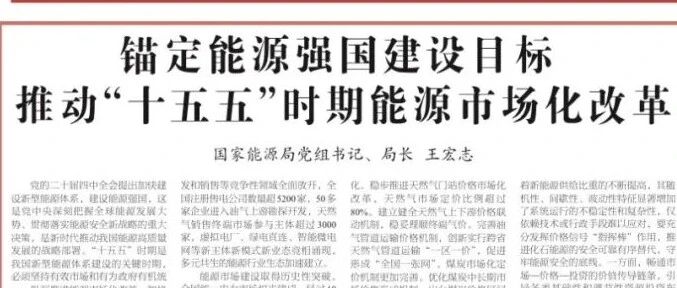
署名文章丨国家能源局党组书记、局长王宏志:锚定能源强国建设目标 推动“十五五”时期能源市场化改革
国家能源局· 2026-03-13 00:43
Core Viewpoint - The article emphasizes the importance of accelerating energy market reforms during the "14th Five-Year Plan" period to build a strong energy nation, aligning with the new energy security strategy and high-quality development goals [3][4]. Group 1: Energy Market Reform Achievements - Since the 18th National Congress, significant progress has been made in energy system reforms, establishing a framework that emphasizes "regulating the middle and liberating both ends" [5][4]. - The national unified electricity market has been initially established, with over 1 million registered market participants and 64% of total electricity consumption traded in the market [6][4]. - The coal trading market system has been improved, with a nationwide coal trading platform established to ensure stable market operations [7][4]. Group 2: Price Mechanism Improvements - The electricity pricing reform has advanced, with market-based pricing for coal and renewable energy, reflecting supply and demand dynamics [8][4]. - The oil and gas pricing mechanisms have been enhanced, with over 80% of natural gas prices now determined by market forces [8][4]. - A more refined coal market pricing mechanism has been established, including policies to guide coal prices within reasonable ranges [8][4]. Group 3: Challenges and Strategic Focus - The "14th Five-Year Plan" period is critical for achieving carbon peak goals and constructing a new energy system, facing both domestic and international challenges [9][4]. - The article highlights the need for a market-driven approach to resource allocation and price signaling to achieve energy security, green transformation, and economic efficiency [10][4]. Group 4: Future Directions for Energy Market Mechanisms - The article calls for the establishment of a unified, open, and competitive national energy market system to support the construction of a strong energy nation [14][4]. - It emphasizes the need for a new energy pricing system that reflects diverse values and responsibilities among market participants [16][4]. - Strengthening market regulation and enhancing the legal framework for energy markets are essential for ensuring effective governance and stability [17][4].

两会经济观察|加快推进能源强国建设
国家能源局· 2026-03-12 09:00
Core Viewpoint - The article discusses the advancement of China's energy strategy, emphasizing the construction of a clean, low-carbon, safe, and efficient energy system as part of the national goal to become an energy powerhouse, which is now included in the 14th Five-Year Plan [3][4]. Group 1: Energy Security and Innovation - The "artificial sun" project, which focuses on nuclear fusion energy, is highlighted as a significant area of research, with advancements in artificial intelligence aiding in plasma control and stability, potentially leading to breakthroughs in fusion energy generation [6][7][8]. - The development of the "Ocean Oil 696," a large-scale fracturing vessel, is noted for its ability to enhance oil and gas production efficiency by nearly 40%, addressing previously difficult-to-access resources [11][12]. - The "Deep Sea No. 1" gas field, which is China's most challenging offshore gas field, is projected to produce over 4.5 million tons of oil equivalent by 2025, showcasing advancements in deep-sea exploration technology [13]. Group 2: Renewable Energy Development - The article mentions the establishment of the world's largest and most complete renewable energy industry chain, with wind and solar power now exceeding the share of coal-fired power in total installed capacity [9]. - Suggestions to address the "involution" in the photovoltaic sector include implementing mandatory standards for component safety and reliability, as well as establishing efficiency thresholds for solar cells [9]. - The integration of solar thermal power, which combines peak shaving and energy storage capabilities, is proposed as a solution to the challenges of renewable energy consumption [9]. Group 3: Energy Market and Infrastructure - By 2025, China's total electricity consumption is expected to exceed 10 trillion kilowatt-hours, marking a new high for any single country, supported by declining production costs and a robust national power grid [17]. - The share of market-based electricity transactions is projected to reach 64% of total electricity consumption by 2025, indicating a significant shift towards market-driven energy solutions [18]. - Major projects in the 14th Five-Year Plan include the development of integrated hydropower and wind-solar bases, offshore wind farms, and new nuclear power layouts, aimed at ensuring the safe and reliable operation of the new energy system [18].
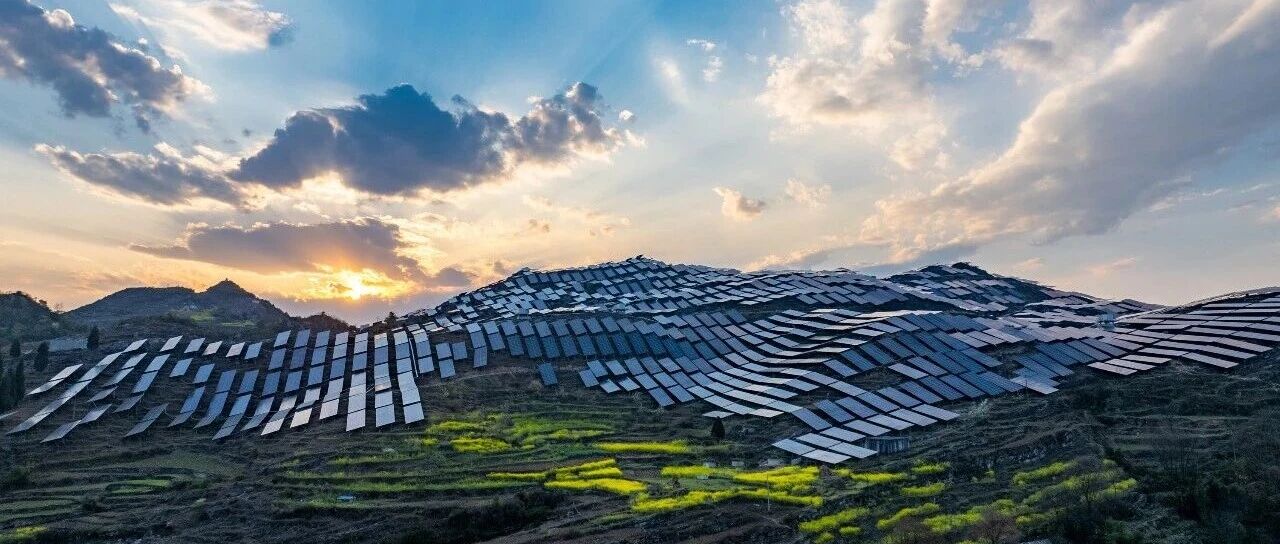
全国政协委员温枢刚:加快建设新型能源体系,提高能源资源安全保障能力
中国能源报· 2026-03-09 12:04
Core Viewpoint - The article emphasizes the need to accelerate the construction of a new energy system in China to enhance energy resource security, addressing current challenges and proposing actionable recommendations for the 14th Five-Year Plan [2][3]. Group 1: Current Challenges in Energy Security - The chairman of China Huaneng Group identifies three main challenges to energy security: the coexistence of traditional and non-traditional energy security issues, risks from energy trade routes and green barriers, and the intertwined problems of balancing and stabilizing the new power system [3]. Group 2: Recommendations for Energy System Development - The first recommendation is to ensure high-level energy security through high-quality development of renewable energy, aiming for a 25% share of non-fossil energy consumption by 2030, with a focus on multi-dimensional integration of wind, solar, hydro, and nuclear energy [4]. - The second recommendation involves enhancing fossil energy continuity to provide a safety net, advocating for a balanced approach to oil and gas resource development and promoting clean and efficient use of fossil energy [4]. - The third recommendation focuses on improving electricity safety through the construction of a new power system, aiming for a national electrification rate of around 35% by 2030 and enhancing the resilience of power grids [4]. - The fourth recommendation stresses the importance of building an energy powerhouse to achieve essential energy security, emphasizing the synergy between renewable and traditional energy, technological innovation, and market-driven reforms [5].

国家能源局召开安全生产工作领导小组会议
国家能源局· 2026-03-09 08:53
Core Viewpoint - The National Energy Administration emphasizes the importance of safety production in the energy sector, aligning with national policies and directives to ensure a stable and secure energy environment for the construction of a strong energy nation [2]. Group 1 - The meeting held on March 6 focused on implementing the State Council's safety production committee's requirements and responsibilities for 2026 [2]. - The National Energy Administration aims to integrate safety production requirements into key policy documents, including the energy strong nation construction plan and the new energy system construction "14th Five-Year" plan [2]. - The meeting highlighted the need to prevent and mitigate major safety risks and accidents in the energy and electricity sectors to maintain a stable safety production situation [2].
读懂中国能源下一个五年
中国能源报· 2026-03-09 02:59
Core Viewpoint - The article emphasizes the importance of energy development in China's "14th Five-Year Plan" and the upcoming "15th Five-Year Plan," highlighting the country's advancements in renewable energy and the strategic planning for future energy projects [1][20]. Group 1: Energy Development Achievements - During the "14th Five-Year Plan," China's energy self-sufficiency rate increased from approximately 80% to over 84%, maintaining the largest energy scale globally [3]. - The cumulative installed capacity of renewable energy, particularly wind and solar, reached 3.4 times that of 2020, with the share of electricity from these sources increasing by over 12 percentage points [3]. - By 2025, China is projected to add 315 GW of new solar capacity, with significant potential for further capacity utilization [3]. Group 2: Future Energy Projects - The "15th Five-Year Plan" includes 109 major energy-related projects, focusing on new infrastructure such as super-large-scale computing clusters and future energy development [1]. - Key projects include controlled nuclear fusion, major hydropower and integrated wind-solar bases, zero-carbon parks, and zero-carbon transport corridors [1]. Group 3: Rural Energy Initiatives - The government aims to promote rural revitalization through solar energy projects, with a target of expanding coverage to 1,000 villages [4]. - Solar energy initiatives in rural areas not only enhance green electricity supply but also support rural electrification and economic benefits for local farmers [4]. Group 4: Hydrogen Energy Development - Hydrogen energy has been increasingly recognized as a key industry, with plans for 860 hydrogen production projects by 2025, targeting a production scale of approximately 10 million tons per year [6]. - The integration of hydrogen energy into high-energy-consuming industries is expected to support industrial decarbonization and provide flexible load support for the power grid [6]. Group 5: Coal and Oil & Gas Industry - By 2025, China's coal production is expected to reach 4.85 billion tons, with coal consumption accounting for 51.4% of total energy consumption [8]. - The oil and gas sector is projected to see significant production increases, with crude oil output reaching approximately 215 million tons and natural gas production exceeding 260 billion cubic meters [10]. - Innovations in deep drilling and unconventional oil and gas exploration are crucial for enhancing domestic production capabilities [10]. Group 6: International Cooperation and Trade - China's energy sector is increasingly involved in international cooperation, with investments in energy infrastructure in countries like Portugal and Australia [13]. - The export of high-tech products, including electric vehicles and solar batteries, is becoming a new growth point for China's foreign trade [13]. - The "new three samples" of products, services, and capital are expected to significantly enhance the internationalization of the RMB and reshape the global energy landscape [14].
【基化】政府工作报告聚焦安全发展与“双碳”,关注新兴产业需求及“AI+”——行业周报(0302-0306)(赵乃迪/周家诺/蔡嘉豪/王礼沫)
光大证券研究· 2026-03-08 00:08
Core Viewpoint - The article discusses the key objectives and tasks outlined in the government work report presented at the National People's Congress, emphasizing energy security, agricultural production, carbon emission control, and the promotion of emerging industries such as semiconductors and artificial intelligence in the chemical industry [4][5][6][7][8][10]. Group 1: Energy Security - The report introduces the "Energy Power Construction Plan," aiming for a comprehensive production capacity of 5.8 billion tons of standard coal during the 14th Five-Year Plan period, significantly up from the previous target of no less than 4.6 billion tons [5]. - The ongoing geopolitical risks, including the Russia-Ukraine conflict and tensions in the Middle East, highlight the importance of domestic energy supply security, prompting major oil companies to maintain high capital expenditures in exploration and development [5]. Group 2: Agricultural Production - The report sets a target for comprehensive grain production capacity at 14.5 trillion jin by 2026, with a focus on quality over quantity in agricultural inputs [6]. - Domestic companies are innovating in the field of new composite fertilizers and accelerating the replacement of high-toxicity pesticides, which may benefit leading firms with complete supply chains and R&D capabilities [6]. Group 3: Carbon Emission Control - The report aims for a cumulative reduction of 17% in carbon dioxide emissions per unit of GDP during the 14th Five-Year Plan, marking a shift from energy consumption control to carbon emission control [7]. - Measures to combat "involution" in competition will include capacity regulation, standard guidance, price enforcement, and quality supervision [7]. Group 4: Emerging Industries - The semiconductor industry is expected to see increased demand for key materials such as photoresists and electronic chemicals due to the booming AI industry and expanding wafer production capacity [9]. - The low-altitude economy will drive demand for lightweight materials like PEEK and carbon fiber, which are essential for high-performance structural components [9]. Group 5: AI Integration in Chemical Industry - The integration of "Artificial Intelligence+" is becoming essential for chemical companies to achieve high-quality development, with firms exploring various pathways for implementation [10].


能源开新局丨国家能源局大坝安全监察中心党委书记、主任时雷鸣:筑牢水电站大坝安全基石,全力推进能源强国建设
国家能源局· 2026-03-07 09:07
Core Viewpoint - The article emphasizes the critical importance of dam safety in hydropower stations as a foundational element for building a strong energy nation, highlighting the need for enhanced safety measures and regulatory frameworks to ensure reliable energy supply and social stability [4][8]. Group 1: Current Status and Achievements - China's hydropower installed capacity has surpassed 400 million kilowatts, ranking first in the world, with five of the world's ten largest operating hydropower stations located in China [6]. - The number of registered dams has reached 710, accounting for over 52% of the total reservoir capacity in the country, with the installed capacity exceeding 75% of the national hydropower total [6]. - Major power generation groups have established specialized institutions for dam safety management, and the proportion of Class A dams has increased from 93% to 97% [6]. Group 2: Regulatory and Safety Enhancements - A series of regulations, including the "Supervision and Management Measures for Hidden Dangers in Hydropower Station Dams," have been implemented to enhance the safety management of dams throughout their lifecycle [6]. - The safety monitoring information reporting rates have reached 98% for completeness, 95% for timeliness, and 98% for automation [6]. - The establishment of a risk grading early warning mechanism for dam safety has significantly improved emergency preparedness, with emergency plan formulation rates reaching 99% [7]. Group 3: Challenges and Future Directions - The increasing frequency of natural disasters due to climate change poses higher demands for emergency response capabilities [10]. - The rapid growth in the number of dams, expected to double during the "14th Five-Year Plan" period, presents new challenges for safety regulation and management [10]. - The aging of hydropower stations necessitates research into policies for dam retirement management as the number of dams over 50 years old continues to rise [11]. Group 4: Strategic Initiatives for Improvement - The industry aims to enhance dam safety management mechanisms and improve regulatory capabilities to support the construction of a strong energy nation [13]. - Emphasis is placed on the application of new technologies, such as artificial intelligence and satellite monitoring, to improve dam safety management and decision-making processes [14]. - The development of a high-quality expert team is essential to address the challenges posed by the retirement of experienced personnel and the need for knowledge transfer within the industry [14].

评论丨扬帆“十五五” 能源奋进正当时
国家能源局· 2026-03-05 00:09
Core Viewpoint - The article emphasizes the significance of the upcoming "15th Five-Year Plan" and the achievements of the "14th Five-Year Plan" in the energy sector, highlighting the need for proactive measures to address challenges and seize opportunities in the context of global energy transitions and domestic development [4][5][6]. Group 1: Achievements of the 14th Five-Year Plan - The energy sector has demonstrated resilience and supported stable economic growth, with primary energy production exceeding 5 billion tons of standard coal and a self-sufficiency rate maintained above 80% [4]. - A significant leap in green and low-carbon transformation has been achieved, with non-fossil energy accounting for over 20% of total energy consumption, establishing the world's largest and fastest-growing renewable energy system [4]. - The construction of a national unified electricity market has accelerated, with cumulative green certificate transactions surpassing 1.4 billion, and new models like direct connection of green electricity flourishing [4]. - International cooperation has expanded, maintaining stable energy imports and engaging in green energy project collaborations with over 100 countries and regions, enhancing China's influence in global energy governance [4]. Group 2: Future Directions and Challenges - The construction of an energy powerhouse is a new requirement for national development, necessitating a comprehensive understanding of global energy trends and domestic resource conditions to align with China's modernization process [7]. - The energy sector faces the challenge of achieving carbon peak and reduction goals within a shorter timeframe while ensuring energy demand growth, requiring integrated development and efficient utilization of fossil energy [8]. - Embracing innovation, particularly through the integration of artificial intelligence in the energy sector, is crucial for enhancing high-quality development and addressing the diverse needs of the energy market [9].