小米手环9

Search documents
雷军年度演讲:小米造车,勇气从何而来,又如何冲出重围?
Xin Lang Cai Jing· 2026-01-04 13:15
Core Viewpoint - Xiaomi's venture into the automotive industry, particularly with the launch of the Xiaomi SU7 Ultra, represents a significant shift for the company, showcasing its ambition to integrate smart technology into electric vehicles and compete in a highly competitive market [3][4][48]. Group 1: Background and Decision to Enter Automotive Industry - The decision to enter the automotive sector was prompted by unexpected U.S. sanctions, leading to a board meeting where the idea of car manufacturing was first discussed [7][9]. - A research team was formed to explore the feasibility of entering the electric vehicle market, conducting over 85 interviews across multiple cities [11][13]. - The conclusion drawn from the research indicated that the trend towards smart electric vehicles was unstoppable, prompting a commitment to invest $10 billion over the next decade [15][28]. Group 2: Development Process and Challenges - The company faced numerous challenges during the development of the SU7, including the need to establish core technologies and a robust production process [63][65]. - A significant internal meeting lasted 21 days to align the team on the project’s direction, emphasizing the importance of respecting industry norms while also innovating [72][76]. - The first prototype was successfully produced on August 16, 2023, marking a major milestone for the company [86]. Group 3: Market Positioning and Product Launch - The SU7 was officially launched on March 28, 2024, with a production target of 76,000 units, aiming to compete directly with Tesla's Model 3 [153][165]. - Initial media reactions to the SU7 were positive, with many acknowledging its high quality and advanced features, which helped to shift public perception [157]. - The pricing strategy was carefully considered, with the final price set at 215,900 yuan, positioning it competitively against similar models in the market [161][165]. Group 4: Future Outlook and Company Vision - The company aims to leverage its technological expertise in consumer electronics to enhance the automotive experience, believing that the integration of smart technology is crucial for success in the automotive sector [44][48]. - The journey of developing the SU7 is seen as a testament to the collective courage and determination of the entire Xiaomi team, emphasizing the importance of resilience in the face of challenges [180][182].



日本:从几个产品,看中国制造的现状
Xin Lang Cai Jing· 2025-07-13 18:23
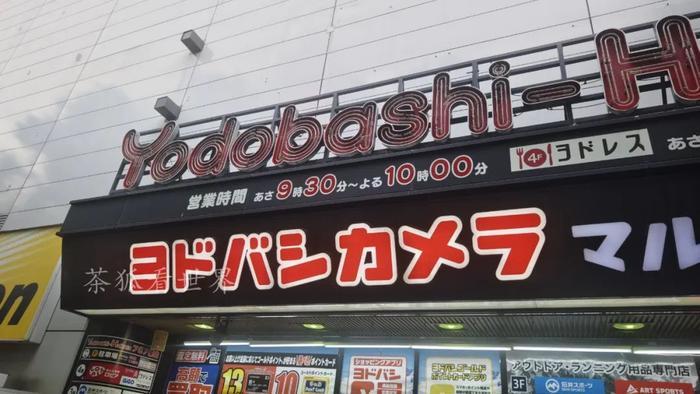
Core Insights - The article discusses the current state of the Japanese retail market, particularly focusing on the Yodobashi Camera, a leading electronics retailer in Japan, and highlights the prevalence of Chinese brands disguised as Japanese products [1][3][5][7]. Group 1: Retail Environment - Yodobashi Camera is one of Japan's top three electronics sales platforms, with the highest single-store sales in the retail sector [1]. - The store's layout is criticized for its overwhelming visual clutter, which detracts from the overall aesthetic experience [3]. - The shopping experience is compared to other Japanese stores like Don Quijote, known for their dense product displays [3]. Group 2: Market Dynamics - Despite the dominance of Chinese manufacturing, there remains a consumer belief in the superiority of Japanese products, as evidenced by continued purchases of Japanese-branded items like toilet seats [5][7]. - The global smart toilet seat market was valued at approximately $4.5 billion in 2024, with China accounting for 70% of production [5]. - Many products in Yodobashi Camera are actually Chinese brands marketed under Japanese names, reflecting a trend of "brand masquerading" [7][9]. Group 3: Technology and Brand Ownership - REGZA, originally a Toshiba brand, is now owned by China's Hisense, which acquired 95% of Toshiba's TV business in 2017 [9]. - Lenovo's acquisition of NEC's PC business has increased its market share in Japan to 27%, making it the leading player in the Japanese PC market [10]. - The article notes that even high-profile endorsements, such as those by Japanese celebrity Kimura Takuya for Huawei products, indicate a shift in brand perception in Japan [11][13]. Group 4: Consumer Behavior and Market Share - Huawei holds a 15% market share in Japan's smartwatch market, ranking second behind Apple, which has a 58% share [13]. - The article highlights that Japanese consumers are relatively reserved in leaving product reviews, with Huawei's GT 5 Pro smartwatch receiving 255 reviews on Amazon Japan, which is considered significant [15][19]. - The competitive landscape in the smartwatch market shows that Huawei and Apple dominate the high-end segment, while Xiaomi leads in the mid-range [23][26]. Group 5: Manufacturing and Competitive Landscape - The article discusses the evolution of Chinese manufacturing capabilities, emphasizing the transition from low-end imitation to technological leadership in various sectors, including smartphones and drones [34][35]. - China's dominance in the consumer drone market is noted, with over 90% market share, showcasing its rapid technological advancements [35]. - The article concludes that China's manufacturing prowess has surpassed Japan's, particularly in hardware sectors, indicating a significant shift in global manufacturing dynamics [36].
AI重塑器件建模:是德科技ML Optimizer独家揭秘
半导体行业观察· 2025-05-25 02:52
Core Viewpoint - The article highlights the challenges in semiconductor parameter extraction due to the complexity of device models and the inefficiencies of traditional optimization algorithms. It introduces Keysight's ML Optimizer, a machine learning-based global optimizer that significantly improves the parameter extraction process, reducing the time from days to hours and enhancing accuracy and consistency in model fitting [1]. Group 1: Challenges in Semiconductor Parameter Extraction - The complexity of semiconductor device models has made parameter extraction increasingly challenging [1]. - Traditional optimization algorithms struggle with unclear gradient changes, often getting trapped in local optima, leading to unsatisfactory extraction results [1]. - The presence of numerous interrelated parameters in modern semiconductor models further complicates the efficiency of traditional methods, requiring engineers to break down the extraction process into lengthy sub-steps [1]. Group 2: Introduction of ML Optimizer - Keysight has launched the ML Optimizer, which utilizes machine learning to revolutionize semiconductor parameter extraction [1]. - The ML Optimizer can process vast amounts of data in a single step, greatly simplifying the parameter extraction workflow [1]. - The time required for parameter extraction is reduced from several days to just a few hours, significantly enhancing work efficiency [1]. Group 3: Advantages of ML Optimizer - The ML Optimizer excels in navigating non-convex parameter spaces, overcoming the limitations of traditional methods [1]. - It provides more accurate global optimum solutions, improving the precision of parameter extraction and the overall consistency of model fitting [1]. - This advancement offers a solid foundation for the accurate construction of semiconductor device models [1]. Group 4: Upcoming Live Event - A live event will showcase the effectiveness of the ML Optimizer in various device modeling tasks, including diodes, GaN HEMT, MOSFET, and BJT [2]. - The event is scheduled for June 10, 2025, from 14:00 to 14:45 [4]. - Participants will have the opportunity to engage in interactive activities, including a lottery for prizes [2]. Group 5: Key Speakers - Li Yiao, a device modeling application engineer at Keysight, specializes in applying artificial neural networks and ML Optimizer in device modeling [7]. - Deng Jiayuan, a product manager at Keysight, has extensive experience in providing technical support for semiconductor customers and is involved in the development of modeling products [10].


直播预告 | 是德科技ML Optimizer全局优化器:基于机器学习,重塑半导体器件建模新范式
半导体行业观察· 2025-05-04 01:27
Core Viewpoint - The article highlights the challenges in semiconductor parameter extraction due to the complexity of device models and the inefficiencies of traditional optimization algorithms. It introduces Keysight's ML Optimizer, a machine learning-based global optimizer that significantly improves the parameter extraction process, reducing the time from days to hours and enhancing accuracy and consistency in model fitting [1]. Group 1: Challenges in Semiconductor Parameter Extraction - The complexity of semiconductor device models has made parameter extraction increasingly challenging [1]. - Traditional optimization algorithms struggle with unclear gradient changes, often getting trapped in local optima, leading to unsatisfactory extraction results [1]. - The presence of numerous interrelated parameters in modern semiconductor models further complicates the efficiency of traditional methods, requiring engineers to break down the extraction process into lengthy sub-steps [1]. Group 2: Introduction of ML Optimizer - Keysight has launched the ML Optimizer, which utilizes machine learning to provide a revolutionary solution for semiconductor parameter extraction [1]. - The ML Optimizer can process vast amounts of data and parameters in a single step, greatly simplifying the extraction workflow [1]. - The time required for parameter extraction is reduced from several days to just a few hours, significantly enhancing work efficiency [1]. Group 3: Advantages of ML Optimizer - The ML Optimizer excels in navigating non-convex parameter spaces, overcoming the limitations of traditional methods [1]. - It employs advanced machine learning algorithms to more accurately identify global optima, improving the precision of parameter extraction [1]. - The overall consistency of model fitting is enhanced, providing a solid foundation for the accurate construction of semiconductor device models [1].