小米11 Ultra

Search documents
背屏成不了下一个灵动岛
Xin Lang Cai Jing· 2025-09-26 07:39
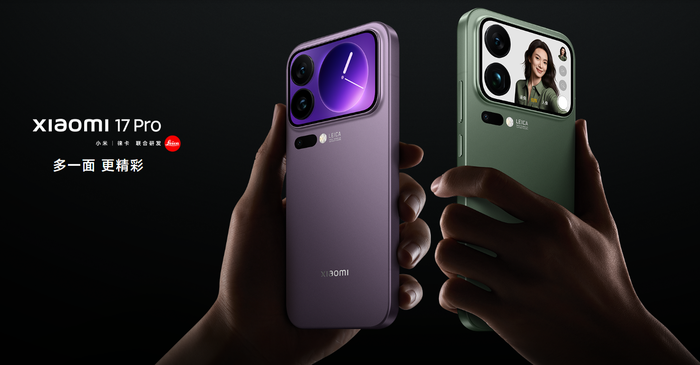
Core Viewpoint - The return of the back screen in the smartphone market, particularly as a key feature of the Xiaomi 17 Pro series, is unexpected and indicates Xiaomi's strong expectations for this technology [1][3]. Group 1: Back Screen Technology - Xiaomi has invested significant resources into the "Miao Xiang Back Screen" feature, with development and manufacturing costs reaching 1 billion yuan, making it challenging for other brands to follow suit [3]. - The back screen is not a new concept in the smartphone market, as it was first introduced by Meizu in 2017 with the "Intelligent Window" design [5]. - Previous attempts by various manufacturers, including Meizu and Xiaomi, to implement back screens were not successful, leading to a decline in interest in this feature [5][7]. Group 2: Market Position and Differentiation - The functionalities offered by the back screen in the Xiaomi 17 Pro series, such as personalized wallpapers and notifications, could also be effectively managed by the main screen, raising questions about the necessity of the back screen [5][7]. - The introduction of the back screen may be more about creating product differentiation rather than addressing high-frequency user needs or efficiency improvements [7]. - While the back screen provides some unique features for the Xiaomi 17 Pro, it is unlikely to achieve the same level of innovation and market impact as Apple's Dynamic Island, which effectively addressed user interaction challenges [10]. Group 3: Future Outlook - There are concerns that the back screen design may not achieve lasting success and could become a fleeting trend, similar to the previous back screen attempts by Xiaomi [11]. - Xiaomi's software director has assured users that the back screen will not be removed in future iterations, indicating a commitment to this feature [11]. - The market's acceptance of the Xiaomi 17 Pro series will ultimately determine the success of the back screen, with the product being perceived as having good value for money due to its strong battery life and imaging capabilities [11].


新机为什么命名为“小米17”?卢伟冰回应
Feng Huang Wang· 2025-09-19 13:12
Group 1 - The core viewpoint of the article is that Xiaomi's naming of the "Xiaomi 17" series is not an attempt to capitalize on Apple's popularity, but rather reflects significant product improvements and innovations [1] - Xiaomi's president, Lu Weibing, emphasized that the design of the Xiaomi 17 series is based on the company's own design language and technological direction, rather than imitation [1] - The Xiaomi 17 series will feature Qualcomm's latest flagship chip, which will be globally launched with this series, indicating a longer gap before competitors release similar devices [1] Group 2 - The Xiaomi 17/Pro/Pro Max flagship smartphones are set to be released this month, featuring the global debut of the Snapdragon 8 Elite Gen5 chip [2] - The Snapdragon 8 Elite Gen5 chip has reportedly achieved AnTuTu benchmark scores exceeding 4 million, pushing the limits of current smartphone performance [2]
卢伟冰直播回应小米17与iPhone17外观争议,晒真机对比
Xin Lang Ke Ji· 2025-09-19 11:52
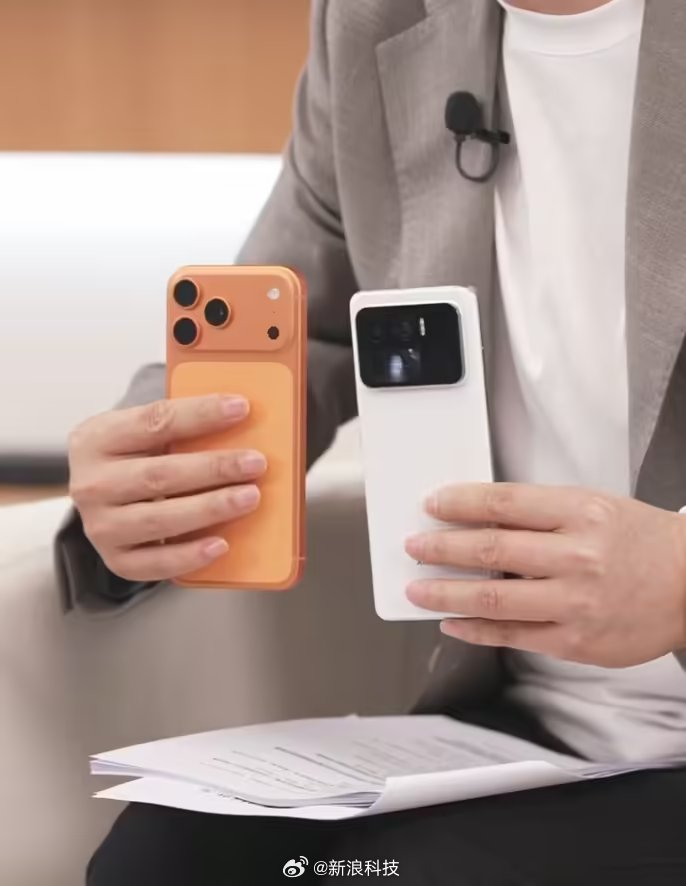
Core Viewpoint - The comparison between Xiaomi 17 series and iPhone 17 series has been addressed by Xiaomi's President, Lu Weibing, emphasizing that the design similarities are not new and have been present since the Xiaomi 11 Ultra model in 2021 [1] Group 1 - Lu Weibing responded to concerns about the design similarities between Xiaomi 17 series and iPhone 17 series, stating that the large rectangular camera module was first introduced in the Xiaomi 11 Ultra [1] - He showcased comparisons between Xiaomi 11 Ultra and iPhone 17 Pro, as well as Xiaomi 17 Pro and iPhone 17 Pro, asserting that the two phones are not alike [1] - The Xiaomi 17 series has been described as very popular among consumers, indicating strong market reception [1]

阿里自曝被DeepSeek逼急了,春节加班搞研发;曝中金系高管加盟蔚来,或将负责融资找钱;Temu美区全托管7月底将全面恢复运营
雷峰网· 2025-06-13 00:43
Key Points - The article discusses various significant developments in the automotive and technology sectors, highlighting the challenges and strategic moves of companies like NIO, Alibaba, and others in response to market pressures and competition [4][5][8][21]. Group 1: NIO's Financial Challenges and Leadership Changes - NIO has appointed Bagrin Angelov as Vice President of Capital Markets, aiming to enhance its financing capabilities amid severe financial challenges, including a net loss of 6.27 billion yuan in Q1 and a cash reserve of only 26 billion yuan [4][5]. - The company's gross margin has dropped to 10%, and it is actively seeking external funding to support operations over the next 12 months [5]. Group 2: Alibaba's Response to Competition - Alibaba's leadership, under Chairman C. Z. Cai, has acknowledged a crisis triggered by competitor DeepSeek, leading to a decision to have engineers work through the Spring Festival to accelerate development of their AI models [8]. - The company has launched the Qwen series of models in response to competitive pressures, emphasizing the importance of open-sourcing to enhance AI adoption and support its core cloud computing business [8]. Group 3: Automotive Industry Developments - Neta Auto has announced a shift to remote work and entered a restructuring process, indicating significant operational challenges [9]. - GAC has unveiled its first mass-produced flying car, priced under 1.68 million yuan, as part of a broader strategy to enter the low-altitude economy, with other companies like Xpeng and Geely also accelerating their efforts in this area [21]. Group 4: Regulatory and Market Responses - Temu is set to fully restore its operations in the U.S. by the end of July, following adjustments to its logistics and promotional strategies amid regulatory scrutiny [26]. - Tesla's CEO Elon Musk has urged European regulators to expedite the approval of its Full Self-Driving (FSD) technology, citing safety benefits compared to traditional driving [27][28].


阿里自曝被DeepSeek逼急了,春节加班搞研发;曝中金系高管加盟蔚来,或将负责融资找钱;Temu美区全托管7月底将全面恢复运营
雷峰网· 2025-06-13 00:40
Key Points - The article discusses various significant developments in the automotive and technology sectors, highlighting key personnel changes, financial challenges, and strategic moves by companies like NIO, Alibaba, and others [4][5][8][18][22]. Group 1: NIO Developments - NIO has appointed Bagrin Angelov as Vice President of Capital Markets, expected to enhance the company's financing capabilities [4]. - The company faces severe financial challenges, with a reported net loss of 6.27 billion yuan and a cash reserve of only 26 billion yuan as of Q1 [5]. - NIO's gross margin has dropped to 10%, and it is actively seeking external funding to support operations [5]. Group 2: Alibaba's Response to Competition - Alibaba's Chairman, C. Z. Cai, revealed that the company felt pressured by DeepSeek's advancements, prompting engineers to work through the Spring Festival to accelerate development [8]. - The company launched the Qwen series of AI models in response to competitive pressures, emphasizing the importance of open-sourcing to enhance AI adoption [8]. Group 3: Automotive Industry Challenges - Neta Auto has announced a shift to remote work and is entering a restructuring process amid financial difficulties [9]. - Multiple Mercedes-Benz owners reported issues with their vehicle's infotainment systems, indicating potential widespread technical problems [12][13]. Group 4: Emerging Technologies and Investments - GAC's first mass-produced flying car, the GOVY AirCab, is set to be priced under 1.68 million yuan, with plans for operational trials in the Guangdong-Hong Kong-Macao Greater Bay Area [22]. - Nvidia and Samsung are investing in AI robotics company Skild AI, which is valued at approximately $4.5 billion, indicating a growing interest in the robotics sector [35]. Group 5: Regulatory and Market Developments - Temu is set to fully restore its operations in the U.S. by the end of July, following adjustments to its business model [27]. - Ant International plans to apply for a stablecoin license in Hong Kong, aiming to contribute to the region's financial ecosystem [10].