
小锅牛肉

Search documents
贾国龙新品牌做焖面,人均消费40元至50元,回应:西贝要关一部分店
21世纪经济报道· 2026-03-19 05:44
Core Viewpoint - The founder and chairman of Xibei Catering Group, Jia Guolong, has launched a new brand "Tianbian Claypot Noodles" in Beijing's 798 Art District, focusing on a specific dish from his hometown, with a target consumer spending of 40 to 50 yuan per person [1]. Group 1 - Xibei plans to close some of its stores while maintaining the core brand, with Jia expressing the intention to transition some locations and employees to the new brand [1]. - The new brand "Tianbian" and "Tianbian's Kitchen" trademarks have been applied for by Inner Mongolia Xibei Catering Group, which was established in October 2017 with a registered capital of approximately 104 million yuan [4]. - Jia Guolong has previously attempted to create new brands such as "Jia Guolong Chinese Burger" and "Small Pot Beef," but these efforts did not achieve significant market penetration [4]. Group 2 - Xibei is expected to incur cumulative losses exceeding 600 million yuan between September 2025 and March 2026, with plans to close 102 stores, representing 30% of its total locations [4]. - Currently, Xibei operates 331 stores across 59 cities [4].


贾国龙,被梦想反咬了一口
Sou Hu Cai Jing· 2025-12-26 14:21
Core Viewpoint - The article discusses the challenges faced by Xibei, a Chinese restaurant chain, following a public relations crisis triggered by criticism from a prominent figure, leading to a significant decline in revenue and a reevaluation of its operational strategies [10][30][32]. Group 1: Company Status and Crisis - Xibei's operational head described the company as "bleeding" and "weak" after the crisis, indicating a need for recovery [4][30]. - Following the criticism from Luo Yonghao, Xibei's revenue reportedly halved within ten days, highlighting the immediate financial impact of the public backlash [30][32]. - The company had to implement promotional strategies, such as offering vouchers, to regain customer trust and stimulate sales [31][32]. Group 2: Operational Changes and Strategies - Xibei's previous efficiency model, which promised quick service, has been abandoned in favor of a more traditional cooking approach, reflecting a shift towards customer preferences for freshly prepared meals [9][45]. - The company has committed to returning more food preparation processes to its restaurants, including the production of children's meals, to align with consumer expectations for freshness [36][62]. - Xibei's average customer spending has decreased by 20%, indicating a strategic adjustment to attract more customers amid the crisis [36]. Group 3: Leadership and Management Philosophy - Founder Jia Guolong acknowledged the need for humility and a shift in management style, indicating a willingness to adapt to consumer feedback and market changes [61][73]. - The company has historically emphasized employee welfare, with recent salary increases despite financial pressures, reflecting a commitment to maintaining staff morale during challenging times [51][53]. - Jia's management style has been characterized as centralized, which may have limited the company's responsiveness to market changes and consumer preferences [57][58]. Group 4: Industry Context and Future Outlook - The crisis faced by Xibei is seen as part of a broader trend in the restaurant industry, where consumer expectations are shifting towards fresh, made-to-order meals, contrasting with the previous focus on efficiency and standardization [66][70]. - The article suggests that the restaurant industry may be at a crossroads, with many brands reconsidering their growth strategies in light of changing consumer demands [65][71]. - Xibei plans to maintain its number of locations around 300, focusing on quality over quantity in response to the recent challenges [48][62].
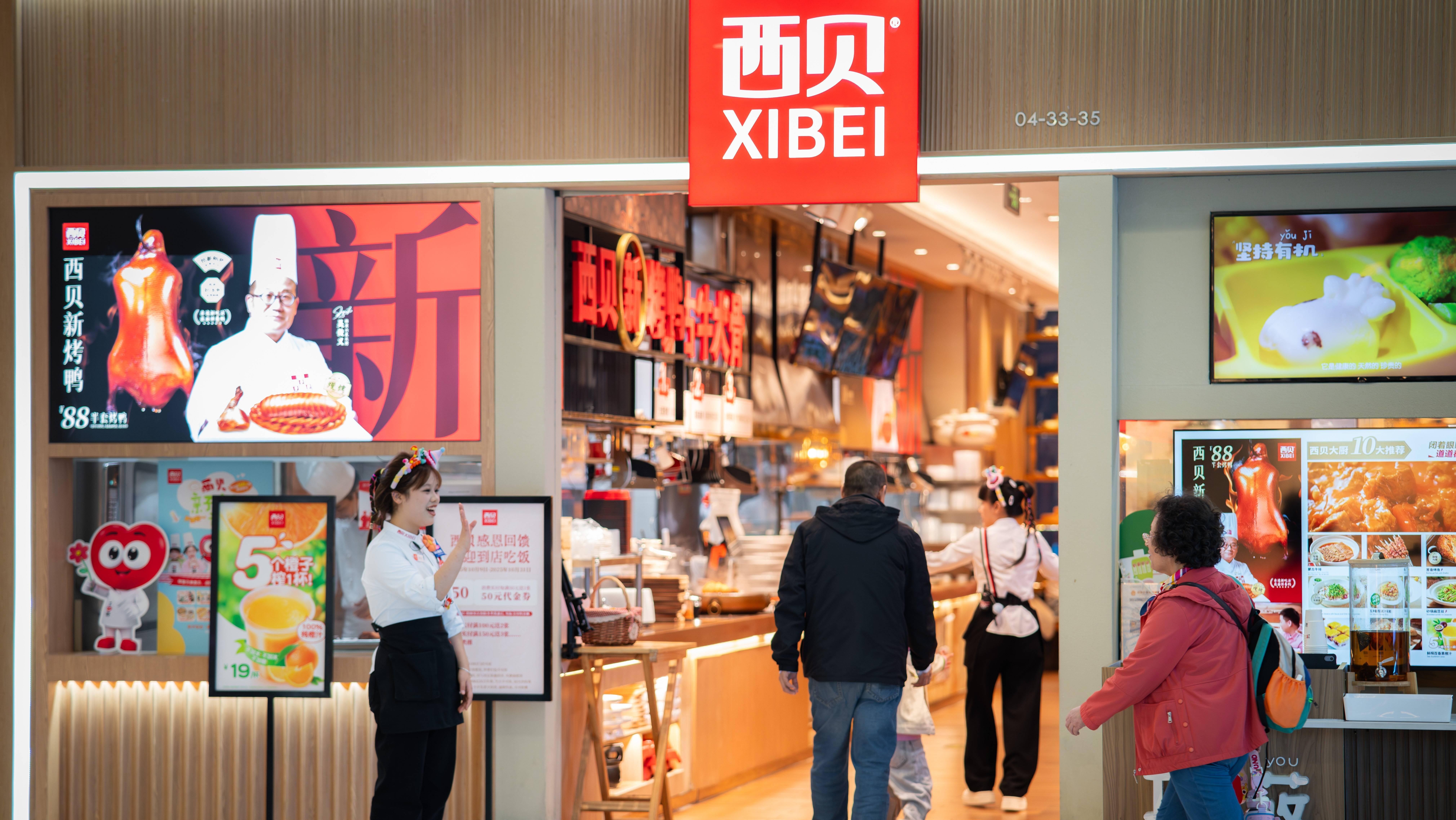
贾国龙,被梦想反咬了一口
虎嗅APP· 2025-12-26 13:50
Core Viewpoint - The article discusses the challenges faced by Xibei, a Chinese restaurant chain, following a public relations crisis triggered by criticism from a prominent figure, Luo Yonghao, regarding its use of pre-prepared ingredients. The crisis led to a significant drop in revenue and forced the company to reevaluate its operational strategies and customer engagement practices [2][25][56]. Group 1: Company Status and Crisis - Xibei is currently in a state of recovery, described as "stopping the bleeding" but still feeling weak [2]. - The crisis began after Luo Yonghao criticized Xibei for using pre-prepared dishes, leading to a public outcry and a rapid decline in customer trust [9][10]. - Following the backlash, Xibei's revenue reportedly halved within ten days, prompting the company to issue promotional coupons to regain customer interest [25][30]. Group 2: Operational Changes and Strategies - Xibei's operational model has shifted from a focus on efficiency to a more customer-centric approach, with a commitment to preparing dishes on-site rather than relying on pre-prepared ingredients [37][54]. - The company has implemented changes such as reducing the menu items that can be prepared in advance and increasing the use of fresh ingredients [29][54]. - Xibei's management has acknowledged the need for a more transparent communication strategy with customers to rebuild trust and address misconceptions about its food preparation methods [27][52]. Group 3: Industry Context and Trends - The article highlights a broader trend in the Chinese restaurant industry, where there is a growing consumer preference for freshly prepared meals over pre-packaged options, leading to a "current frying trend" [58]. - This shift in consumer behavior poses challenges for restaurants that have relied on centralized kitchens and pre-prepared ingredients for efficiency [56][59]. - The crisis faced by Xibei may serve as a cautionary tale for other brands in the industry, emphasizing the importance of aligning operational practices with consumer expectations [60]. Group 4: Leadership and Future Directions - Xibei's founder, Jia Guolong, has expressed a willingness to adapt his leadership style and consider employee input in decision-making processes moving forward [52]. - The company plans to maintain its number of locations around 300 while focusing on improving the quality of its offerings rather than rapid expansion [42]. - Despite the challenges, Jia remains optimistic about Xibei's future, aiming to enhance its international presence and brand influence [61].
2025年中国餐饮产业生态白皮书:餐饮业的十字路口,困境、破茧与曙光
Hong Can Chan Ye Yan Jiu Yuan· 2025-03-20 06:32
Investment Rating - The report does not explicitly provide an investment rating for the restaurant industry Core Insights - The restaurant industry in China is facing unprecedented challenges due to economic adjustments and changes in consumer behavior, leading to a significant compression of profit margins for restaurant businesses [6][10] - The report highlights a dual trend of short-term consumption downgrade and long-term consumption upgrade, indicating a shift in consumer preferences towards personalized and diverse dining experiences [40][43] - The competitive landscape is evolving, with chain brands expanding rapidly while niche restaurants gain popularity among specific consumer groups, prompting businesses to enhance their core competencies [6][10] Summary by Sections Macroeconomic Background - Economic adjustments are ongoing, with incremental policy effects gradually becoming apparent [7] - In 2024, GDP growth is projected to slow to 5.0%, with retail sales growth significantly declining to 3.5% [10] - Restaurant revenue growth is expected to drop sharply from 20.4% in 2023 to 5.3% in 2024, reflecting a broader economic slowdown [10] Current State of the Restaurant Industry - The industry is experiencing a misalignment of supply and demand, leading to a "dark moment" for restaurants [20] - High-cost pressures from labor and rent are forcing businesses to focus on cost reduction and efficiency [32][34] - The average price of dining has decreased, with the overall dining price dropping from 43.2 yuan in 2022 to 39.8 yuan in 2024, a decline of 6.6% [29] Consumer Dynamics - There is a notable shift in consumer behavior from quality-focused to practical spending, with a significant impact on mid-income groups [40][43] - The average number of family members is decreasing, leading to a rise in dining out, which is expected to stabilize demand for essential and self-indulgent dining experiences [45] - Consumers are increasingly favoring unique dining experiences over traditional social dining, with a growing preference for small, niche restaurants [51][56] Trends in Restaurant Operations - Cost reduction and efficiency enhancement are becoming core operational goals amid economic pressures [60] - The report outlines a "5S principle" for cost reduction, emphasizing smaller store models and flexible staffing to lower operational costs [62][66] - Digital tools and flexible staffing models are being adopted to improve efficiency and reduce labor costs by 15% to 25% [70] Supply Chain Trends - The trend towards downstream chain and scale operations is driving increased specialization in upstream supply chains [92] - The report emphasizes the importance of integrating supply chains to ensure quality and stability in food supply, particularly as the market evolves [92]