工业设计软件

Search documents
【投资视角】启示2025:中国计算机仿真行业投融资及兼并重组分析(附投融资汇总、产业基金和兼并重组等)
Qian Zhan Wang· 2026-01-21 03:39
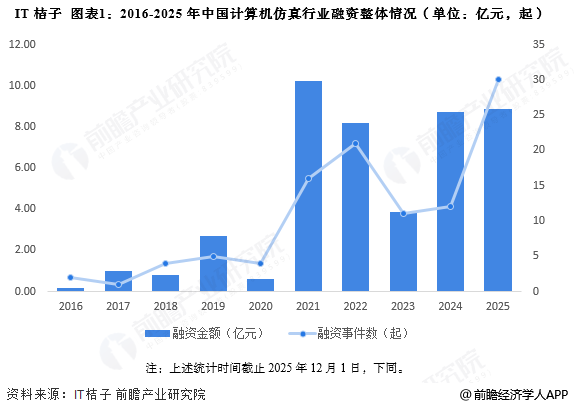
Core Insights - The computer simulation industry in China is experiencing fluctuating investment activity, with a total of 108 financing events from 2016 to 2025, indicating a volatile upward trend in investment [2][27]. - The average single financing amount in the computer simulation industry has shown a fluctuating trend, with an average of 0.3 billion yuan from January to November 2025 [4]. - Investment rounds are primarily concentrated in the angel and A rounds, reflecting a "large at both ends, small in the middle" characteristic in financing rounds [7][23]. Investment Activity - In 2024, there were 12 disclosed financing events totaling 0.873 billion yuan, while by December 1, 2025, there were 30 financing events totaling approximately 0.889 billion yuan [2][3]. - The majority of financing events are concentrated in Beijing, with 40 events, followed by Shanghai with 33 events, and other regions like Jiangsu, Guangdong, and Zhejiang also showing high activity [8]. Sector Focus - The computer simulation industry is primarily focused on the industrial sector, with significant financing events occurring between 2021 and 2023 [11]. - The main investors in the computer simulation industry are predominantly investment firms, with notable examples including交银投资 and 深创投, while industrial investors include companies like 比亚迪 and 金蝶国际 [23]. Mergers and Acquisitions - The industry is still in its early development stage, leading to smaller company sizes and limited mergers, primarily focusing on horizontal integration among midstream companies to expand scale [25][27]. - Recent merger activities include horizontal integrations such as 索辰科 acquiring 力控科技 and 露辰科 acquiring 麦思捷 [26].





现代生产性服务业是新“动力产业”
Sou Hu Cai Jing· 2025-10-26 21:12
Core Viewpoint - The article emphasizes the need to redefine the characteristics and economic attributes of the modern productive service industry during the "14th Five-Year Plan" period, establishing its priority strategic position in industrial policy support, which is essential for China's transition to high-quality development and for strengthening its governance over global industrial and value chains [1] Group 1: Global Industrial Technology Competition - The essence of global industrial technology competition has evolved beyond individual technological fields to a contest of overall effectiveness of industrial ecosystems, with modern productive service industries forming the invisible infrastructure that underpins technological research, transformation, and commercialization [1][2] - Key areas of competition include hard technologies such as chips, AI, and quantum computing, while the development of productive service industries like industrial design software and technology finance is crucial for future industrial competitiveness [1][2] Group 2: Strategic Development of Productive Service Industry - The modern productive service industry should be positioned as a new "driving industry" to create asymmetric advantages for China in global competition, focusing on leveraging short-term breakthroughs in hardware through accelerated development of productive services [2] - Enhancing industrial software development and fostering technology transfer institutions can unlock significant potential from dormant patents in universities and research institutes [2] Group 3: Policy Recommendations for Productive Service Industry - There is a need to reassess the nature and function of the modern productive service industry at the national strategy and policy level, addressing misconceptions that hinder its development [3] - Market-oriented reforms should be implemented to eliminate administrative monopolies and resource misallocation, allowing for the professionalization and marketization of the productive service industry [4] - A dual-platform ecosystem combining "service trade + manufacturing capability" should be established to enhance the international competitiveness of manufacturing through productive services [5] Group 4: Investment and Statistical Framework - The focus of industrial policy should shift from supporting backend manufacturing capacity expansion to prioritizing the development of productive service industries led by technological innovation [6] - A new statistical monitoring system is needed to accurately assess the contribution of the productive service industry to economic growth, including the establishment of a satellite account system for productive services [6]
“国产链”含金量飙升,未来主线有哪些?|每日研选
Shang Hai Zheng Quan Bao· 2025-10-14 05:54
Core Viewpoint - A revolution in the industrial chain surrounding technological autonomy is accelerating, with capital focusing on cost-effectiveness and security. Recent insights from multiple brokerages outline potential directions within the wave of domestic production [1]. Group 1: Investment Opportunities - Huatai Securities emphasizes the importance of cost-effectiveness in the "domestic chain," suggesting a focus on semiconductor equipment and end-side products within the AI sector, which remains a key area of growth [1]. - CITIC Construction highlights the significance of technological self-reliance, particularly in the domestic software sector, with advancements in AI and industrial software driving the domestic production chain [2]. - Dongfang Securities points out that industrial design software, despite its low domestic production rate, is poised for accelerated localization, presenting significant growth potential [3]. Group 2: Sector-Specific Insights - Dongwu Securities sees opportunities in the domestic semiconductor equipment sector, particularly in core processes like photolithography and etching, which are expected to see rapid increases in domestic production rates [4]. - Huafu Securities notes that while short-term impacts from U.S. trade measures may not be overly pessimistic, mid-term structural opportunities in domestic production are becoming clearer, with a focus on strategic technologies such as nuclear fusion and AI [5].
遭Autodesk起诉侵权,中望软件回应:主张不认可,将积极应诉
Guang Zhou Ri Bao· 2025-07-31 10:15
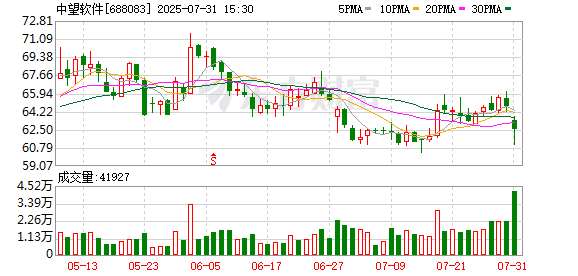
Core Viewpoint - Zhongwang Software is facing a lawsuit from Autodesk for copyright infringement, trade secret violations, and breach of existing agreements, with Autodesk seeking injunctions and damages [2]. Group 1: Lawsuit Details - Autodesk has filed a lawsuit in the U.S. District Court for the Northern District of California against Zhongwang Software and related parties [2]. - The lawsuit includes claims of copyright infringement, trade secret violations, and breach of existing agreements [2]. - Autodesk's requests in the lawsuit include an injunction against Zhongwang Software and related parties, as well as compensation for damages [2]. Group 2: Company Response - Zhongwang Software does not acknowledge Autodesk's claims and intends to take strong measures to defend itself [2]. - The company emphasizes its commitment to protecting the interests of itself and its shareholders [2]. - Zhongwang Software has a strong focus on research and innovation, with all its developed software possessing independent intellectual property rights [8]. Group 3: Company Background - Zhongwang Software has been dedicated to industrial design software for over 20 years, establishing a core technology and product matrix centered on independent 2D CAD, 3D CAD/CAM, and multi-disciplinary simulations [8]. - The company is currently unable to estimate the financial impact of the lawsuit, as the specific amount involved has not been clarified and the case has not yet gone to trial [8].


计算机行业专题:信创产业加快发展,关注科技内循环
Guoxin Securities· 2025-04-06 02:15
Investment Rating - The report maintains an "Outperform" rating for the industry [2]. Core Insights - The AI chip and CPU sectors are moving towards self-sufficiency, with significant growth potential in domestic chip production as companies like Alibaba, Tencent, and Huawei increase their investments in chip development [3][10]. - The domestic software industry is expected to accelerate, with the foundational software market projected to grow from approximately 153.8 billion RMB in 2023 to 432.76 billion RMB by 2025, reflecting a compound annual growth rate (CAGR) of about 48% [48]. - The autonomous driving chip market is also seeing a shift towards domestic production, with a notable increase in the output of domestic chips as the new energy vehicle industry expands [3][10]. Summary by Sections 01: AI Hardware: AI Chips + CPUs - The U.S. has added several Chinese AI companies to its entity list, increasing the difficulty of importing related components, which emphasizes the need for self-sufficiency in the AI industry [5]. - In 2024, China's AI chip shipments are estimated at 2.7 million units, with domestic brands accounting for only 30% of the market, indicating a significant reliance on imports [15]. - The market for AI chips in China is projected to grow rapidly, with a CAGR of 66.4% from 2020 to 2024, reaching a market size of approximately 1.412 trillion RMB in 2024 [15]. 02: Accelerated Development of the Trustworthy Computing Industry - The trustworthy computing industry is expected to grow significantly, with a market size projected to reach 3.38 trillion RMB by 2025, driven by increased domestic demand and government support [48]. - The foundational software market is anticipated to see rapid growth, with key segments such as operating systems and databases showing substantial potential for domestic replacement [48][51]. 03: Domestic Autonomous Driving Chips - In 2024, the output of domestic autonomous driving chips is expected to increase, with domestic manufacturers gradually catching up in terms of technology and production capacity [3][10]. - The market for intelligent cockpit chips is also expanding, with domestic chips currently accounting for only 10% of the market, indicating significant room for growth [3][10]. 04: Investment Recommendations - The report suggests actively monitoring the trustworthy computing industry chain due to the ongoing U.S. trade policies and technology restrictions, which are likely to drive domestic production and innovation [3].