工业Copilot系统

Search documents
工业世界迎来Copilot时刻!未来工业环境中人类的最强辅助
Xin Lang Cai Jing· 2025-10-26 04:53
Core Insights - The article highlights the transformation of manufacturing into a smart factory era, emphasizing the integration of AI and automation technologies to enhance operational efficiency and productivity [1][3][5]. Group 1: Smart Manufacturing as a Competitive Edge - A Deloitte survey indicates that 92% of U.S. manufacturing executives believe smart manufacturing will be a key driver of competitiveness within the next three years [3]. - Nearly half of the surveyed executives prioritize operational efficiency as the main value of adopting smart manufacturing [3]. - 78% of executives plan to allocate over 20% of their existing budgets to smart manufacturing initiatives [3]. Group 2: AI and Automation in Production Processes - The unmanned workshop of Shangmei showcases a fully automated production process, utilizing AGV robots and AI systems for material handling and packaging [3]. - Industrial robots at Shangmei perform 252,000 standardized operations daily, creating an efficient and precise production system [3]. Group 3: Digital Transformation and Integration - Companies are focusing on the cosmetics industry's production characteristics by integrating IoT, 5G, big data, and AI to create a digital collaborative system across the entire supply chain [5]. - Schneider Electric and Microsoft launched the Industrial Copilot system, combining AI with industrial automation to enhance productivity and redefine human-machine collaboration [5][7]. Group 4: Key Technologies Driving Industrial Intelligence - The digital twin simulation optimization system developed by Wuhan Huagong Saibai Data System Co., Ltd. enables comprehensive digital mapping and optimization of manufacturing processes [7][9]. - This system has led to production efficiency improvements of 10-25% and operational cost reductions of 10-20% in various manufacturing sectors [9]. Group 5: Challenges in the Transformation Journey - Talent shortages are a significant challenge, with 35% of executives citing the adaptation of existing employees to smart factories as a primary concern [11]. - Information security risks, including unauthorized access and intellectual property theft, are also major obstacles [11]. Group 6: Future Prospects of Industrial AI - The industrial AI market is projected to grow from $43.6 billion in 2024 to $154 billion by 2030, with a compound annual growth rate of 23% [12]. - The Chinese government has elevated the application of AI technologies to a national strategic level, promoting intelligent integration across all industrial elements [12].


【2025链博会】施耐德电气:未来供应链三大关键词为韧性、绿色和创新
Huan Qiu Wang· 2025-07-17 06:14
Core Viewpoint - The 2025 China International Supply Chain Promotion Expo highlights the need for efficient, agile, resilient, and green supply chains, with Schneider Electric aiming to collaborate with partners to create a win-win supply chain ecosystem [1][3]. Group 1: Supply Chain Transformation - Traditional supply chain models focused solely on efficiency are becoming obsolete due to complex challenges, necessitating a shift towards resilience, efficiency, and sustainability [3][4]. - Schneider Electric has established a resilient supply chain network globally, with China being its second-largest market and a key supply chain base, featuring 30 factories and logistics centers, including 15 national green factories [3][4]. Group 2: Future Supply Chain Keywords - The future supply chain will emphasize resilience, efficiency, and sustainability, moving away from a sole focus on efficiency [4]. - Schneider Electric's "Zero Carbon Plan" aims to reduce carbon emissions by 50% for the top 1,000 suppliers by 2025, and the Environmental Data Program promotes transparency in environmental data across product lifecycles [4]. Group 3: Digital Transformation and AI Integration - Schneider Electric integrates AI technology throughout its supply chain processes, with significant improvements in production efficiency and delivery times at its factories [4][5]. - The company collaborates with Microsoft to develop an industrial Copilot system, merging generative AI with industrial automation to enhance production efficiency [5]. Group 4: Globalization Support for Chinese Partners - Schneider Electric provides one-stop support for Chinese companies expanding globally, leveraging its supply chain and business network [6]. - The company emphasizes the importance of technological innovation, management upgrades, and ecosystem collaboration to drive industry upgrades [6]. Group 5: Commitment to the Chinese Market - Schneider Electric expresses confidence in the Chinese market's potential, aiming to build a collaborative global industrial ecosystem [7]. - The company showcases its practices in global supply chain upgrades, focusing on creating a green, efficient, and resilient supply chain to drive industry value and sustainable development [7].
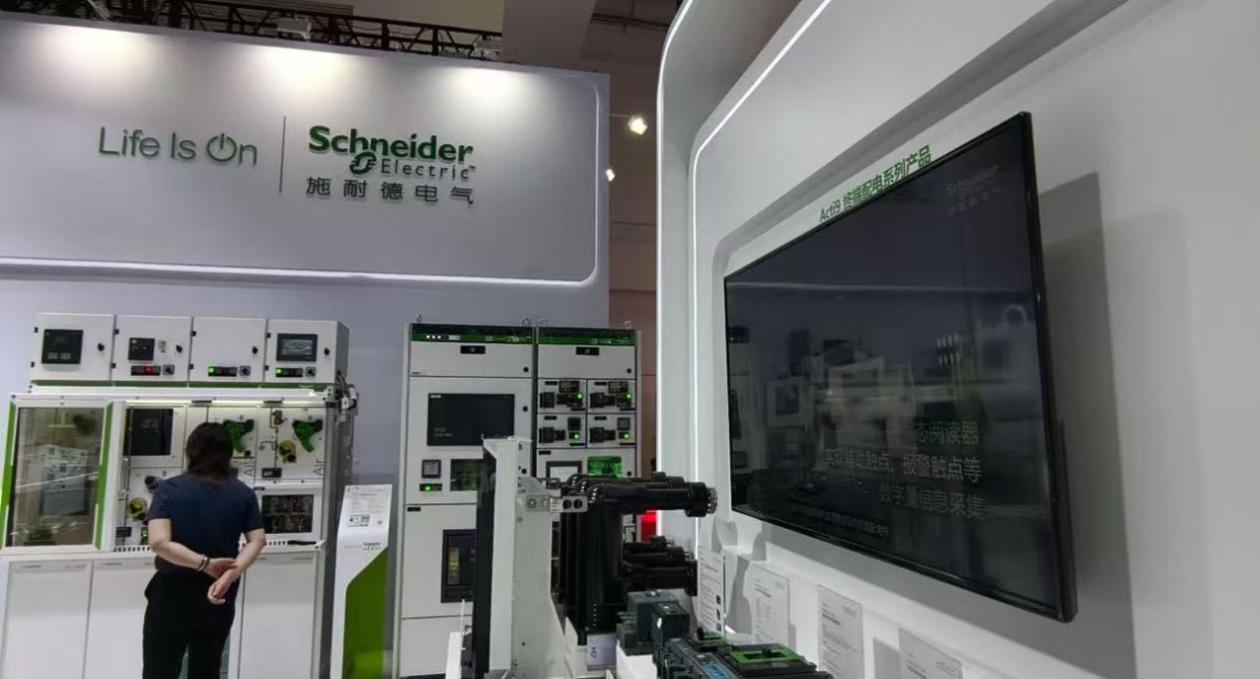
【高端访谈】构建“立足中国、辐射全球”的研发创新网络——访施耐德电气执行副总裁、中国及东亚区总裁尹正
Xin Hua Cai Jing· 2025-07-17 05:20
Core Insights - Schneider Electric emphasizes its unique capability in full business line R&D in China, planning to enhance local investments and establish a global innovation network from China [2][4] Group 1: Investment and R&D - Schneider Electric has established five major R&D centers and AI innovation labs in Beijing, Shanghai, Wuxi, Xi'an, and Shenzhen, creating a robust R&D network [2] - Since 2019, the company's R&D investment in China has grown at a compound annual growth rate of over 18% [2] - The company is expanding its Beijing Yizhuang Industrial Park and Wuxi New Industrial Park, expected to be completed by the end of this year, with a new industrial park in Xiamen set to become the world's largest medium-voltage production base [2] Group 2: Supply Chain and Sustainability - Schneider Electric has built a strong end-to-end green supply chain system with over 1,600 Chinese suppliers, enhancing the overall green transformation of the industry [2][3] - The company actively provides strategic consulting support to suppliers, resulting in improved production processes and competitiveness [3] Group 3: AI Integration and Efficiency - AI technology is shifting global supply chains towards resilience, efficiency, and sustainability, with Schneider Electric applying AI to enhance production efficiency [4] - The Shanghai Putuo factory has integrated AI, 5G, and AR technologies across the entire production process, achieving an 82% increase in per capita production efficiency [5] - The Wuxi factory has reduced carbon emissions by 90% over two years through AI-driven green design and energy efficiency models [5] Group 4: Talent Development and Collaboration - Schneider Electric is committed to cultivating AI talent, aiming for over 90% of employees to master digital skills by the end of 2025 through various training programs [5] - The company collaborates with over 100 Chinese universities and vocational schools to nurture digital innovation talent [5][6] - Recent partnerships with NVIDIA and Microsoft aim to accelerate the development of AI factories and enhance productivity across industries [6]
对话施耐德电气中国及东亚区总裁:通过技术、生态、管理的“三重创新”打造新质生产力
Xin Lang Cai Jing· 2025-06-18 02:03
Core Insights - Multinational companies are increasingly focusing on adapting their growth strategies to the unique conditions of the Chinese market while promoting sustainable development [1][2] - Schneider Electric emphasizes "triple innovation" through technology, ecology, and management to address industrial transformation and green transition challenges [2][4] Group 1: Technology Innovation - Schneider Electric is enhancing its technological advantages in digitalization, automation, and electrification, with a strong focus on AI research and development [2][4] - The company has established five R&D centers in China and has seen a compound annual growth rate of over 18% in R&D investment since 2019 [4][9] - AI and other advanced technologies have been integrated into their operations, exemplified by the transformation of traditional factories into "lighthouse factories" [10][11] Group 2: Ecological Innovation - Schneider Electric is building a digital and sustainable ecosystem through initiatives like the "Winning Together Program," which has attracted over 1,250 SMEs to enhance their innovation capabilities [7][9] - The company promotes a zero-carbon supply chain through its supplier initiatives and actively participates in industry-education integration to cultivate innovative talent [7][8] Group 3: Management Innovation - Management is considered a core competency, with Schneider Electric maintaining a "China Center" strategy that integrates sustainable development into its business operations [8][9] - The company focuses on empowering employees and enhancing their digital skills, aiming for over 90% of employees to become "digital citizens" by the end of 2025 [11][12] Group 4: Market Position and Future Outlook - China has become Schneider Electric's second-largest market and a key supply chain base, with the company planning to leverage opportunities in high-end, intelligent, and green development [2][12] - The company aims to contribute to global sustainable development by sharing its innovations and practices developed in China with other markets [12][13] - Schneider Electric's long-term strategy includes responding to local demands through increased R&D investment and agile mechanisms [15]