工业制品

Search documents
布米普特拉北京投资基金管理有限公司:高盛称多行业裁员信号持续上升
Sou Hu Cai Jing· 2025-12-01 11:37
Core Insights - Goldman Sachs reports signs of weakness in the U.S. labor market, with a significant rise in WARN filings indicating large-scale layoffs, reaching the highest level since 2016, excluding pandemic-related anomalies [1][3] - The Challenger, Gray & Christmas data shows that the number of layoff announcements has reached unprecedented levels outside of economic recession periods, particularly driven by layoffs in technology, industrial products, and food sectors [1][3] - The report highlights that the increasing layoffs are concerning, as job seekers are facing greater difficulties in finding new employment, with reemployment after job loss becoming particularly challenging [1][3] Group 1 - Amazon announced plans to cut approximately 14,000 jobs to streamline operations and transition to artificial intelligence, reflecting the broader trend of increasing layoffs among major companies [3] - The WARN filings serve as an important indicator of employer behavior, with more companies discussing potential layoffs in recent earnings calls, suggesting that further layoffs and efficiency improvements may occur in the coming months [3][6] Group 2 - Despite low initial unemployment claims, Goldman Sachs notes that this data typically lags behind private layoff indicators by about two months, indicating that federal unemployment figures may rise over time [6] - The current wave of layoffs aligns with a trend of rebalancing supply and demand in the job market, with a potential shift towards a "jobless economic growth" scenario where the economy expands without creating corresponding job opportunities [6] - As companies increasingly focus on reducing labor costs through AI, structural changes in the job market may exert long-term pressure on hiring practices [6]


高盛警示:裁员潮持续蔓延 美国就业市场疲软迹象加剧
Zhi Tong Cai Jing· 2025-11-27 23:59
Core Insights - Goldman Sachs warns that the U.S. labor market may be softening, with private sector data indicating a rising trend in layoffs across multiple industries [1] - WARN filings, which indicate planned mass layoffs, have surged to the highest level since 2016, excluding the pandemic spike, marking the most significant increase tracked by Goldman Sachs in nearly a decade [1] - The report highlights that layoffs in sectors such as technology, industrial products, and food and beverage are major contributing factors to this trend [1] Group 1 - The Challenger, Gray & Christmas data shows that corporate layoff announcements have reached unprecedented levels outside of recession periods, raising concerns about labor market weakness [1][2] - Goldman Sachs economists express that the increasing layoffs signal a worrying trend, as job seekers are finding it increasingly difficult to secure new employment [1][2] - Major companies, including Amazon, have announced significant job cuts, with Amazon planning to reduce approximately 14,000 positions to streamline operations and transition to artificial intelligence [1] Group 2 - WARN filings serve as an important indicator of employer behavior, suggesting that more companies are considering layoffs and efficiency improvements in the coming months [2] - Despite the rise in WARN notifications, initial jobless claims remain low, indicating that government reports may not fully reflect the deterioration of the job market [2] - There is ongoing concern about the impact of artificial intelligence on layoffs, but current evidence does not show that AI is a major driver of the recent wave of layoffs [2]

工业世界迎来Copilot时刻!未来工业环境中人类的最强辅助
Xin Lang Cai Jing· 2025-10-26 04:53
Core Insights - The article highlights the transformation of manufacturing into a smart factory era, emphasizing the integration of AI and automation technologies to enhance operational efficiency and productivity [1][3][5]. Group 1: Smart Manufacturing as a Competitive Edge - A Deloitte survey indicates that 92% of U.S. manufacturing executives believe smart manufacturing will be a key driver of competitiveness within the next three years [3]. - Nearly half of the surveyed executives prioritize operational efficiency as the main value of adopting smart manufacturing [3]. - 78% of executives plan to allocate over 20% of their existing budgets to smart manufacturing initiatives [3]. Group 2: AI and Automation in Production Processes - The unmanned workshop of Shangmei showcases a fully automated production process, utilizing AGV robots and AI systems for material handling and packaging [3]. - Industrial robots at Shangmei perform 252,000 standardized operations daily, creating an efficient and precise production system [3]. Group 3: Digital Transformation and Integration - Companies are focusing on the cosmetics industry's production characteristics by integrating IoT, 5G, big data, and AI to create a digital collaborative system across the entire supply chain [5]. - Schneider Electric and Microsoft launched the Industrial Copilot system, combining AI with industrial automation to enhance productivity and redefine human-machine collaboration [5][7]. Group 4: Key Technologies Driving Industrial Intelligence - The digital twin simulation optimization system developed by Wuhan Huagong Saibai Data System Co., Ltd. enables comprehensive digital mapping and optimization of manufacturing processes [7][9]. - This system has led to production efficiency improvements of 10-25% and operational cost reductions of 10-20% in various manufacturing sectors [9]. Group 5: Challenges in the Transformation Journey - Talent shortages are a significant challenge, with 35% of executives citing the adaptation of existing employees to smart factories as a primary concern [11]. - Information security risks, including unauthorized access and intellectual property theft, are also major obstacles [11]. Group 6: Future Prospects of Industrial AI - The industrial AI market is projected to grow from $43.6 billion in 2024 to $154 billion by 2030, with a compound annual growth rate of 23% [12]. - The Chinese government has elevated the application of AI technologies to a national strategic level, promoting intelligent integration across all industrial elements [12].

纸白银行情震荡回温 美欧关税战接近尾声
Jin Tou Wang· 2025-07-24 07:15
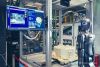
Group 1 - The ongoing trade negotiations between the EU and the US are tense due to the impending 30% tariff threat set for August 1, prompting the EU to seek an agreement before the deadline [3][4] - The EU is preparing a retaliatory tariff plan targeting $109 billion worth of US goods, which will be submitted for review by EU member states on July 24 [3] - The proposed tariffs will cover multiple sectors, including agriculture and industrial products, indicating a strong stance from the EU in the trade conflict [3][4] Group 2 - If the 30% tariffs are implemented, EU governments have agreed to initiate a series of "counter-coercion" measures that may extend beyond goods to include services and other sectors like finance and technology [4] - The EU's strategy is bolstered by the unity of its 27 member states and their significant reliance on the US market [4] Group 3 - In the silver market, paper silver is currently trading above 8.966, with a recent opening at 9.023 and a current price of 8.975, reflecting a decrease of 0.55% [1] - The highest price reached today was 9.041, while the lowest was 8.911, indicating a short-term oscillating trend in paper silver [1][5] - Key resistance levels for paper silver are noted at the 9.025-9.041 range, while support levels are identified at 8.977-8.911 [5]