
无六氟化硫环保开关柜

Search documents
“十五五”中国企业全球化:新出海、新伙伴、新未来
Jing Ji Guan Cha Wang· 2026-01-06 03:03
Core Insights - The article highlights the transformation of Chinese companies' international expansion strategies during the "15th Five-Year Plan" period, moving from simple product exports to a more integrated approach involving technology, brand, and ecosystem development [2][8]. Group 1: Project Developments - A 2600 MW solar power plant in Saudi Arabia, the largest in the Middle East, showcases the EPC capabilities of China Energy Engineering Group, integrating China's strong manufacturing with Schneider Electric's advanced technology [1]. - Schneider Electric collaborates with China Energy Engineering Group to provide electrical solutions for the solar project, demonstrating effective risk management in complex overseas environments [3]. Group 2: Globalization and Localization - The article emphasizes the need for Chinese companies to adopt a validated globalization methodology and seek reliable partners, particularly multinational corporations that understand both Chinese and global markets [3][6]. - Schneider Electric's extensive global network and deep understanding of the Chinese market position it as a key partner for Chinese companies looking to expand internationally [6][7]. Group 3: Collaborative Opportunities - Schneider Electric is actively partnering with various Chinese firms, such as China Power Construction and CATL, to explore third-party markets in the Middle East and Southeast Asia, contributing to local energy infrastructure [4]. - The collaboration with core suppliers like Jinrong Tianyu has led to significant upgrades in digitalization and internationalization, enhancing their global supply chain presence [4]. Group 4: Innovation and Technology Transfer - Schneider Electric's localized operations have resulted in a strong innovation network in China, producing advanced technologies like environmentally friendly switchgear and new generation circuit breakers that are now entering global markets [7][8]. - The partnership between Schneider Electric and Chinese companies facilitates the transfer of China's innovations in new energy and digitalization to broader markets, aligning with the global expansion of Chinese enterprises [8][9].
和音:从吸引外资结构变化看中国高质量发展
Ren Min Ri Bao· 2025-12-26 09:40
Group 1 - The core viewpoint is that China is becoming a crucial hub for global investment, with foreign companies viewing success in the Chinese market as essential for global competitiveness [1] - In November, China's actual foreign investment usage increased by 26.1% year-on-year, with 61,207 new foreign-invested enterprises established in the first 11 months, marking a 16.9% increase [1] - By mid-2023, China had achieved a cumulative actual foreign investment of $708.73 billion during the "14th Five-Year Plan" period, surpassing the $700 billion target six months ahead of schedule [1] Group 2 - There is a noticeable trend of foreign capital flowing into industries that represent China's economic transformation, with high-tech industries attracting 221.26 billion RMB in actual foreign investment, significantly contributing to the total [2] - Specific sectors such as e-commerce services, medical equipment manufacturing, and aerospace manufacturing saw foreign investment growth rates of 127%, 46.5%, and 41.9% respectively [2] - Foreign companies are increasingly recognizing opportunities in China, with significant investments in artificial intelligence, renewable energy, biomedicine, and green transformation [2] Group 3 - The attractiveness of foreign investment in China is rooted in its innovative ecosystem, complete industrial system, and rich application scenarios, leading to an increase in regional headquarters and global R&D centers established by multinational companies [3] - From 2013 to 2023, R&D expenditures by multinational companies in China grew by 86.5%, reflecting a shift from technology transfer to joint R&D and co-building industrial ecosystems [3] - The "14th Five-Year Plan" aims to create new advantages for attracting foreign investment, with ongoing policy benefits and an improved business environment expected to provide broader opportunities for foreign enterprises [3]
从吸引外资结构变化看中国高质量发展
Ren Min Ri Bao· 2025-12-26 00:56
Group 1 - China's actual use of foreign investment increased by 26.1% year-on-year in November, with a total of 61,207 new foreign-invested enterprises established in the first 11 months, marking a 16.9% increase [1] - By the end of June this year, China's actual use of foreign investment during the "14th Five-Year Plan" period reached $708.73 billion, achieving its target six months ahead of schedule [1] - The resilience and improving structure of China's foreign investment attraction are evident, making it a favored destination for foreign capital [1] Group 2 - In the first 11 months of this year, actual foreign investment in China's high-tech industries reached 221.26 billion yuan, significantly contributing to the total foreign investment [2] - The e-commerce service industry, medical instruments and equipment manufacturing, and aerospace manufacturing saw foreign investment growth rates of 127%, 46.5%, and 41.9% respectively, indicating a shift towards higher-quality investment [2] - Foreign companies are increasingly recognizing opportunities in China, with significant investments in artificial intelligence, new energy, biomedicine, and green transformation sectors [2] Group 3 - The core attractions for foreign investment in China include an open innovation ecosystem, a complete industrial system, and rich application scenarios [3] - From 2013 to 2023, R&D expenditures by multinational companies in China increased by 86.5%, reflecting a shift from technology transfer to joint R&D and co-building industrial ecosystems [3] - The "14th Five-Year Plan" suggests new deployments to create new advantages in attracting foreign investment, with an improving business environment and high-quality development expected to provide broader opportunities for foreign enterprises [3]
从吸引外资结构变化看中国高质量发展(和音)
Ren Min Ri Bao· 2025-12-25 22:19
Group 1 - China's actual use of foreign investment increased by 26.1% year-on-year in November, with a total of 61,207 new foreign-invested enterprises established in the first 11 months, marking a 16.9% increase [1] - By the end of June, China's actual use of foreign investment during the 14th Five-Year Plan period reached $708.73 billion, achieving its $700 billion target six months ahead of schedule [1] - The resilience and improving structure of foreign investment in China are evident, making it a favored destination for foreign capital despite global challenges [1] Group 2 - In the first 11 months, actual foreign investment in China's high-tech industries reached 221.26 billion yuan, significantly contributing to the total foreign investment [2] - The e-commerce services, medical instruments manufacturing, and aerospace equipment manufacturing sectors saw foreign investment growth rates of 127%, 46.5%, and 41.9%, respectively [2] - Foreign companies are increasingly recognizing opportunities in China, with significant investments in artificial intelligence, new energy, biomedicine, and green transformation sectors [2] Group 3 - The core attractions for foreign investment in China include an open innovation ecosystem, a complete industrial system, and rich application scenarios [3] - From 2013 to 2023, R&D expenditures by multinational companies in China increased by 86.5%, reflecting a shift from technology transfer to joint R&D and co-building industrial ecosystems [3] - Companies like Schneider Electric and Bayer are leveraging China's innovation capabilities, with significant contributions to global product development and market applications [3]
施耐德电气“中国进化论”:从扎根中国到反馈全球
Jing Ji Guan Cha Wang· 2025-11-24 02:42
Core Insights - The eighth China International Import Expo concluded with an intended transaction amount of $83.49 billion, marking a 4.4% increase from the previous year and setting a historical record [1] - A total of 4,108 companies from 138 countries and regions participated, including 290 Fortune Global 500 and industry-leading enterprises, showcasing China's strong market appeal [1] - The event highlighted a significant trend where multinational companies are increasingly focusing on deep localization centered around "China Original," rather than merely viewing China as a sales market or manufacturing base [1][2] Group 1: Foreign Enterprises' Localization Strategies - Many foreign companies have adjusted their organizational structures to enhance decision-making power in China and invest more in local supply chains and innovation centers [2] - In the automotive sector, overseas companies are adopting strategies focused on "deepening in China, serving China," leveraging China's advantages in the new energy vehicle industry [2] - The pharmaceutical industry is also witnessing this trend, with global pharmaceutical giants establishing strategic R&D centers in China and collaborating with local firms [2] Group 2: Market Environment Changes - The transformation in foreign enterprises' strategies is driven by significant changes in the Chinese market environment, including continuous upgrades from years of reform and opening up [3] - Emerging industries such as new energy vehicles, energy storage, wind power, photovoltaic, and digital technology are gaining prominence, providing a robust foundation for innovation [3] - Schneider Electric serves as a prime example of a multinational company enhancing its capabilities in China, having established itself as a key player in the market [3] Group 3: Schneider Electric's "China Center" Strategy - Schneider Electric has built a "China Center" strategy that integrates R&D, production, and talent development, allowing for agile responses to local market demands [4][5] - The company has established five R&D centers in China, employing over 2,200 engineers and holding more than 3,000 patents, with R&D investment growing at a compound annual growth rate of over 18% since 2019 [4] - Schneider Electric's production and supply chain systems are designed to quickly adapt to new product developments, ensuring efficient market responsiveness [5] Group 4: Global Impact and Talent Development - Schneider Electric is leveraging its capabilities developed in China to support Chinese companies in global markets, facilitating projects along the Belt and Road Initiative [9] - The company emphasizes the importance of local talent, with a significant number of core decision-makers in China being local professionals, marking a shift from global talent influx to Chinese talent taking on global roles [9][10] - The company's innovations, such as environmentally friendly switchgear developed in China, are being exported globally, exemplifying the "China wisdom" benefiting the world [8][10]
聚焦进博|“全勤生”施耐德电气的AI新生密码
Guo Ji Jin Rong Bao· 2025-11-08 16:04
Core Insights - Schneider Electric views the China International Import Expo (CIIE) as a vital platform for showcasing high-level openness and quality development in China, emphasizing its commitment to innovation and collaboration in the Chinese market [2][3]. Group 1: Commitment to China - Schneider Electric has participated in the CIIE for eight consecutive years, showcasing innovative products and technologies, with an increasing proportion of original Chinese innovations [2][6]. - The company aims to deepen its investment in China, positioning it as a key market and innovation hub, with a compound annual growth rate of over 18% in R&D investment since 2019 [6][7]. - Schneider Electric's "China Center" strategy has made China its second-largest market globally, with significant contributions to its supply chain and R&D capabilities [6][7]. Group 2: Technological Integration - The integration of AI and energy technologies at Schneider Electric's Shanghai Putuo factory has led to a remarkable 82% increase in per capita productivity, demonstrating the transformative power of digital technologies in traditional manufacturing [3][4]. - The factory has adopted advanced digital technologies such as AI, 5G, and AR, enhancing processes like prototype design and flexible production [3][4]. - The application of AI has not only improved efficiency but also empowered workers, reducing fault repair times by 30% and increasing production speed by 65% [3][4]. Group 3: Ecosystem Development - Schneider Electric is building digital, sustainable, and global ecosystems in China to enhance innovation capabilities among SMEs and strengthen the overall competitiveness of the ecosystem [7][8]. - The "Winning Together" program has attracted over 1,250 SMEs, resulting in more than 40 joint innovation outcomes, serving as an AI-enabled innovation incubator [7]. - The company has successfully achieved 53% of its goal to help 270 Chinese suppliers reduce carbon emissions by 50% by the end of 2025 [7]. Group 4: Strategic Location - Shanghai is identified as a critical area for Schneider Electric's "China Center" strategy, benefiting from its unique innovation ecosystem and talent pool [8]. - The city serves as the headquarters for Schneider Electric in China and is pivotal for its ongoing investment and innovation efforts [8].

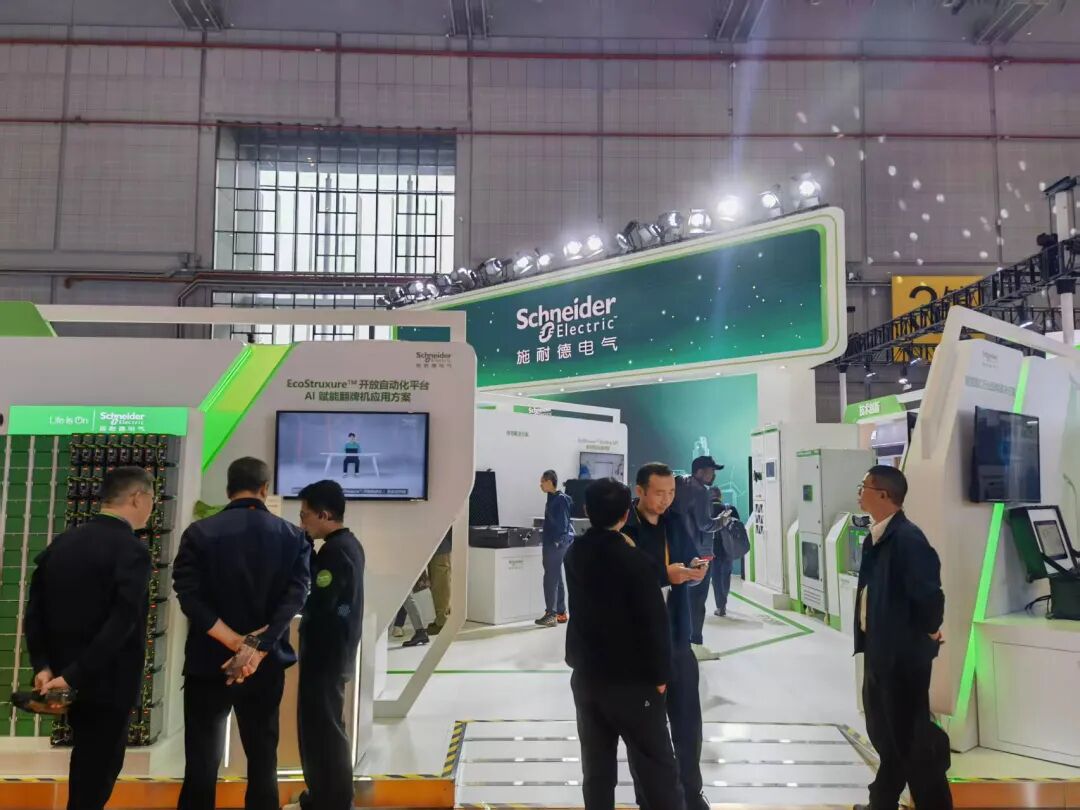
施耐德电气执行副总裁尹正:持续强化在华投入,加码中国就是加码未来
Zheng Quan Shi Bao Wang· 2025-11-05 14:31
Core Viewpoint - Schneider Electric has consistently participated in the China International Import Expo (CIIE) since its inception in 2018, showcasing its commitment to the Chinese market and emphasizing the increasing proportion of original products developed in China [1][2]. Group 1: Company Commitment and Strategy - Schneider Electric has been operating in China for 38 years and considers it its second-largest global market and a key supply chain and R&D base [1]. - The company is committed to its "China-centered" strategy, focusing on digital technology, ecological cooperation, and industrial applications to drive transformation in key sectors such as data centers, oil and gas, and zero-carbon parks [1][3]. - The company has established an agile mechanism integrating R&D, production, and sales, continuously investing in talent and ecological cooperation to better meet local market demands [3]. Group 2: Product Innovation and Market Response - At the CIIE, Schneider Electric introduced several innovative products, including the BlokSeT low-voltage switchgear and the upgraded MasterPacT MTZ air circuit breaker, which was launched simultaneously from its Shanghai factory [2]. - The company reported a 26% increase in signed contracts at the 2024 CIIE compared to the previous year, indicating strong market demand for its innovative solutions [2]. - Schneider Electric's environmentally friendly switchgear, developed in China, has been widely adopted globally, contributing to sustainability efforts by reducing greenhouse gas emissions [2]. Group 3: Global Market Strategy - Schneider Electric views China as a vital strategic hub for expanding its global business, leveraging the country's market vitality and scale [3]. - The company aims to enhance its investments in China, emphasizing that its operations not only serve the local market but also enable Chinese innovations to be exported globally [3].
施耐德电气执行副总裁、中国及东亚区总裁尹正:坚定看好中国市场,始终秉持“中国中心”战略
Xin Hua Cai Jing· 2025-11-05 06:37
Core Viewpoint - Schneider Electric remains optimistic about the Chinese market, emphasizing its "China-centric" strategy and commitment to deepening its presence in the region [1][2]. Group 1: Market Position and Strategy - China has become Schneider Electric's second-largest global market and a key supply chain and R&D base [1]. - The company has established five R&D centers and AI innovation labs in China, contributing to global innovation and product development [1]. - Schneider Electric has been a participant and beneficiary of China's high-level opening since entering the market in 1987, demonstrating a strong commitment to the region [1]. Group 2: Sustainability and Green Development - Schneider Electric operates 22 "zero-carbon factories," 15 national-level "green factories," and two world-class "lighthouse factories" in China [2]. - The company initiated a "zero-carbon plan" for suppliers in 2021, aiming for the top 1,000 suppliers to achieve a 50% reduction in carbon emissions by 2025 [2]. - Overall energy consumption in Schneider Electric's supply chain in China has decreased by 19.4% compared to 2019, with production efficiency improving by nearly 10% annually [2]. Group 3: AI and Technological Integration - China is recognized as a global hub for AI industry development, and Schneider Electric extensively applies AI technology in its operations [2]. - Factories in Shanghai and Wuxi have significantly improved production efficiency and reduced energy consumption and carbon emissions through AI deployment, earning the designation of world-class "lighthouse factories" [2]. - The company combines advanced AI technology with industry experience to empower key sectors such as building construction, industrial manufacturing, infrastructure, and data centers, facilitating the transformation and upgrading of Chinese enterprises [2].
创新生态持续优化 中国成为跨国企业研发热土
Jing Ji Ri Bao· 2025-10-25 05:00
Core Viewpoint - China is increasingly becoming a research and development (R&D) hub for multinational companies, reflecting a shift from being merely a manufacturing base to a center for innovation and R&D investment [1] Group 1: Foreign Investment in R&D - From January to August 2025, 42,435 new foreign-invested enterprises were established in China, marking a 14.8% year-on-year increase, indicating sustained enthusiasm for foreign investment and an optimized investment structure [2] - Since 2013, R&D expenditure of foreign-funded industrial enterprises in China has increased by over 86.5%, with Shanghai surpassing 600 foreign R&D centers and Beijing's number doubling compared to the previous year [2] - Henkel has made significant investments in R&D projects in China, including the opening of its largest Asian R&D center in January 2024 and a new innovation experience center in September 2024 with a total investment of approximately 500 million yuan [2] Group 2: Pharmaceutical Sector Investments - AstraZeneca announced a $2.5 billion investment to establish a global strategic R&D center in Beijing, making it one of two such centers in China, with plans to launch 20 global innovative drugs by 2030 [3] - Schneider Electric has established multiple R&D centers in China, with an annual compound growth rate of over 18% in R&D investment since 2019, emphasizing the importance of local innovation [3] Group 3: Optimized Innovation Ecosystem - The increasing enthusiasm for foreign R&D investment in China is attributed to the country's large market size, favorable policy environment, and robust innovation ecosystem [4] - China has created a unique innovation advantage with a demand-driven, industry-supported, and talent-driven ecosystem, aligning well with the technological expertise of companies like Schneider Electric [4] Group 4: Global Business Impact - Bayer's new innovation cooperation center in Shanghai reflects a deepening R&D presence in China, supported by a stable policy environment that encourages innovation in the pharmaceutical and health sectors [5] - The rapid development of new technologies such as artificial intelligence and green energy in China presents significant market opportunities for multinational companies [6] - Cross-border innovations developed in China are increasingly serving global markets, with Bayer's innovative products from China accounting for 15% of its global innovation output as of 2023 [7] Group 5: Local Market Adaptation - Companies are recognizing the need to adapt to the unique characteristics of the Chinese market to maintain competitiveness, with local R&D enhancing supply chain flexibility and accelerating innovation [7][8] - Schneider Electric's environmentally friendly products developed in China are being promoted globally, showcasing the potential for "China's creation" to benefit worldwide markets [8]
中国成为跨国企业研发热土
Jing Ji Ri Bao· 2025-10-24 22:08
Core Viewpoint - A significant increase in foreign investment in research and development (R&D) in China reflects multinational companies' commitment to enhancing local innovation capabilities, aligning with China's economic transformation from a manufacturing base to a research hub [1][4]. Group 1: Foreign Investment Trends - From January to August 2025, 42,435 new foreign-invested enterprises were established in China, marking a 14.8% year-on-year increase, indicating sustained enthusiasm for foreign investment and an optimized investment structure [2]. - Over the past decade, R&D expenditure of foreign-funded industrial enterprises in China has increased by over 86.5% [2]. - Shanghai has surpassed 600 foreign R&D centers, while Beijing's number has doubled compared to the previous year [2]. Group 2: Sector-Specific Developments - In the pharmaceutical sector, AstraZeneca announced a $2.5 billion investment to establish a global strategic R&D center in Beijing, making it one of two such centers in China [3]. - Schneider Electric has established multiple R&D centers in China, with an annual compound growth rate of over 18% in R&D investment since 2019, and has built five major R&D centers and AI innovation labs [3]. Group 3: Innovation Ecosystem - China's market size, policy environment, and innovation ecosystem are increasingly attractive to foreign enterprises, fostering a conducive environment for R&D [4]. - The Chinese market is characterized by strong growth potential and a welcoming attitude towards innovation, which is crucial for the rapid commercialization of new technologies and products [4]. Group 4: Global Impact of Local Innovations - Bayer's investment in a health consumer innovation center in Shanghai reflects confidence in China's stable policy environment for R&D, enhancing collaboration with local research institutions [5]. - Cross-national companies are leveraging innovations developed in China to serve global markets, with Bayer's innovative products from China accounting for 15% of its global innovation output as of 2023 [7]. Group 5: Technological Advancements - The rapid development of new technologies such as artificial intelligence and green energy presents significant market opportunities for multinational companies, positioning China as a key player in these fields [6]. - AstraZeneca is utilizing AI technology in China to accelerate scientific discoveries, exemplifying the integration of advanced technologies in local R&D efforts [6]. Group 6: Strategic Responses to Market Needs - Companies are increasingly focusing on local market characteristics to enhance competitiveness, with Henkel emphasizing the importance of R&D in China to respond quickly to market demands [7]. - Schneider Electric's innovations, such as environmentally friendly switchgear, developed in China, are being promoted globally, showcasing the international relevance of local R&D efforts [8].