
巴拿马运河

Search documents
美强绑马杜罗诱发寒蝉效应 巴拿马总统向特朗普“进贡”巴拿马运河
Xin Lang Cai Jing· 2026-01-31 14:19
Core Viewpoint - The article discusses the implications of the U.S. military's actions in Venezuela, particularly the kidnapping of President Maduro, as a strategic move to influence the Panamanian government and judiciary ahead of a critical ruling on the Panama Canal ports [1] Group 1 - The U.S. military's operation to capture Maduro is seen as a demonstration of power aimed at the current Panamanian President, Mulino, and the Supreme Court justices involved in the canal case [1] - This action is expected to create a chilling effect not only in Panama but also across other Latin American countries, signaling U.S. dominance and interventionist policies [1]
巴西总统谴责单边主义、霸权主义等“死灰复燃”
Yang Shi Xin Wen· 2026-01-28 16:17
Core Viewpoint - Brazilian President Lula emphasizes the need for greater autonomy and integration in Latin America and the Caribbean, condemning unilateralism, protectionism, and the resurgence of "hegemonic temptations" on the international stage [1] Group 1: Political Context - Lula criticizes the outdated practices of dividing the world into spheres of influence and the new colonial invasions for strategic resources, labeling them as a regression in history [1] - He defends the neutrality of the Panama Canal, asserting that it has been managed "efficiently, safely, and non-discriminatorily" for nearly thirty years [1] Group 2: Economic Integration - The President states that infrastructure integration does not involve ideology, highlighting the importance of collaborative economic development in the region [1]
美媒:特朗普称“收回”巴拿马运河“某种程度上”仍在考虑之中
Huan Qiu Wang· 2026-01-21 01:57
Core Viewpoint - The article discusses U.S. President Trump's ongoing consideration of "reclaiming" the Panama Canal, indicating a potential shift in U.S. foreign policy regarding territorial claims [1][3]. Group 1 - Trump has expressed that "reclaiming" the Panama Canal is still "under consideration" [3]. - In previous statements, Trump has mentioned the possibility of using force to achieve this goal, highlighting a more aggressive stance on U.S. territorial interests [3]. - The President's comments have been met with denial from the Panamanian President, who stated that the canal is not in any process of being "reclaimed" [3].

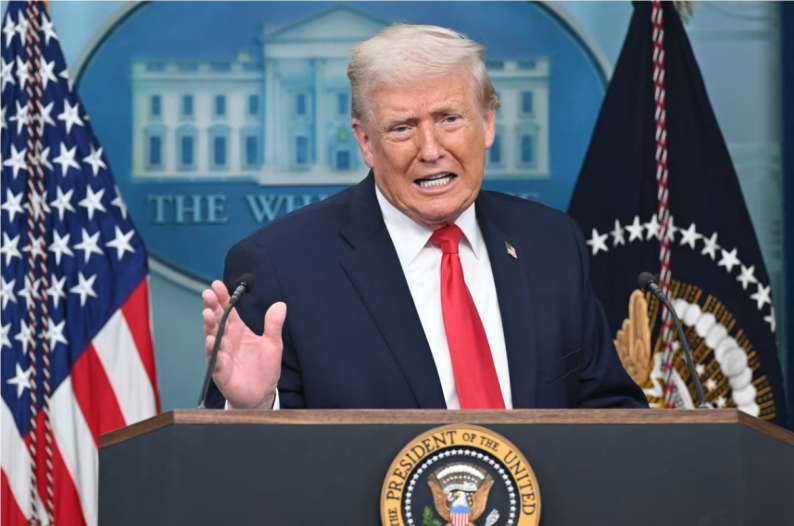
从委内瑞拉到巴拿马运河、格陵兰岛 预测市场对特朗普政府后续军事行动下注近250万美元!
智通财经网· 2026-01-07 02:40
Core Insights - Market traders are increasingly betting on potential international turmoil following President Trump's military actions in Venezuela, indicating a shift in focus towards other geopolitical hotspots [1] - Analysts suggest that Trump's confidence in using military force has grown, marking a more aggressive stance in his second term [1] Group 1: Predictions and Market Reactions - On the prediction market Kalshi, the probability of Trump "reclaiming the Panama Canal" has risen to over 35%, up from less than 30% the previous weekend [1] - The likelihood of the U.S. "controlling any part of Greenland" increased to 38%, an 8 percentage point rise from the previous week [1] - Total betting amounts on these issues have approached $2.5 million on Kalshi [1] Group 2: Greenland Acquisition Discussions - A senior U.S. official indicated that Trump is exploring various options for acquiring Greenland, including purchasing it from Denmark and military options [2] - The White House views the acquisition of Greenland as a national security priority, despite opposition from NATO leaders [2] - Trump has repeatedly expressed the need for Greenland, stating that military force is not off the table [2] Group 3: Broader Military Predictions - New prediction markets on Polymarket have emerged, with significant betting amounts on potential U.S. military actions against Colombia and Cuba [3] - On Kalshi, the probability of Iranian Supreme Leader Khamenei stepping down before next year is around 54%, with market size nearing $1 million [3] - Trump's previous military actions against Iran have heightened tensions in the region, with threats of severe retaliation if Iran attempts to rebuild its nuclear program [3]
巴拿马举行“插旗仪式”纪念反美爱国行动
Xin Hua Wang· 2025-10-24 06:42
Core Viewpoint - The 22nd Panama "Flag Insertion Ceremony" commemorates the patriotic actions of the Panamanian people to reclaim sovereignty over the Panama Canal, highlighting the historical significance of this event in the context of national identity and sovereignty [1][2]. Group 1: Historical Context - In 1903, the United States signed a treaty with Panama, granting it permanent monopoly rights to construct and operate the Panama Canal, along with permanent occupation of the canal zone, which severely restricted Panamanian access and prohibited the display of the Panamanian flag [2]. - Throughout the first half of the 20th century, Panama engaged in multiple negotiations with the U.S. to amend the unequal canal treaties and witnessed numerous anti-American protests [2]. - The culmination of Panamanian resistance and international pressure led to the full recovery of canal management and defense rights on December 31, 1999, with the complete withdrawal of U.S. military forces from the canal zone [2]. Group 2: Recent Developments - The ceremony featured remarks from Jorge Arosemena, who emphasized the significance of the 1958 flag insertion by Panamanian students as a pivotal moment in the awakening of national sovereignty consciousness [1]. - Former President Mireya Moscoso recounted the historical moment in 1999 when the U.S. President Jimmy Carter handed over the Panamanian flag, symbolizing Panama's freedom [1]. - The Panama Canal remains a crucial waterway connecting the Pacific and Atlantic Oceans, with the U.S. being its largest user, despite recent claims by former President Trump to regain control over the canal [1].
巴总统联大重申:保持中立原则 巴拿马运河永远属于巴拿马
Yang Shi Xin Wen Ke Hu Duan· 2025-09-24 15:25
Core Viewpoint - The President of Panama, Laurentino Cortizo, reaffirmed the commitment to the treaty on the permanent neutrality and operation of the Panama Canal during the 80th United Nations General Assembly, emphasizing that neutrality is the best way to ensure the safety of the canal, which is considered a global public asset [1] Group 1 - The Panama Canal is described as a neutral and open entity that promotes more integrated international trade, and it will always belong to Panama [1] - The President highlighted the urgent challenges faced by the United Nations, including the need to prevent global wars and achieve sustainable development goals [1] Group 2 - The world is currently facing three catastrophic crises: climate crisis, pollution crisis, and loss of biodiversity, with a fragmented cooperation landscape [1] - A call for rapid and united responses to these crises was made, indicating the importance of collaboration in addressing global challenges [1]
涉巴拿马运河,中方在安理会驳斥美国:停止造谣生事
Huan Qiu Shi Bao· 2025-08-12 22:57
Core Viewpoint - The United States and China are engaged in a dispute over the influence of China in the Panama Canal, with the U.S. claiming it poses a threat to international trade and global security, while China refutes these claims as baseless attacks [1][3][4]. Group 1: U.S. Position - The U.S. has intensified pressure on the Panamanian government regarding China's influence over the Panama Canal since Trump's return to the White House [3]. - U.S. Secretary of State Rubio demanded that Panama "immediately change" its relationship with China concerning the canal during a visit in February [3]. - The U.S. has plans to acquire significant shares of the Panama Canal port operations through a consortium led by BlackRock [3]. Group 2: China's Response - China firmly opposes U.S. accusations, asserting that the Panama Canal is fully operated by Panamanians and that there is no increasing Chinese control [3][4]. - China's permanent representative to the UN emphasized respect for Panama's sovereignty over the canal and criticized U.S. unilateralism and hegemonic behavior as escalating global maritime security risks [4]. - China has called for the U.S. to reflect on its responsibilities as a major power and cease its fabrications regarding the Panama Canal [4]. Group 3: Maritime Security Concerns - The UN Security Council meeting highlighted multiple maritime security threats, including piracy, armed robbery, transnational crime, and increasing cyber-attack risks [1]. - The Secretary-General of Interpol warned that criminals might exploit artificial intelligence to target ports with the weakest cybersecurity, posing significant challenges to global port operations and shipping safety [1].
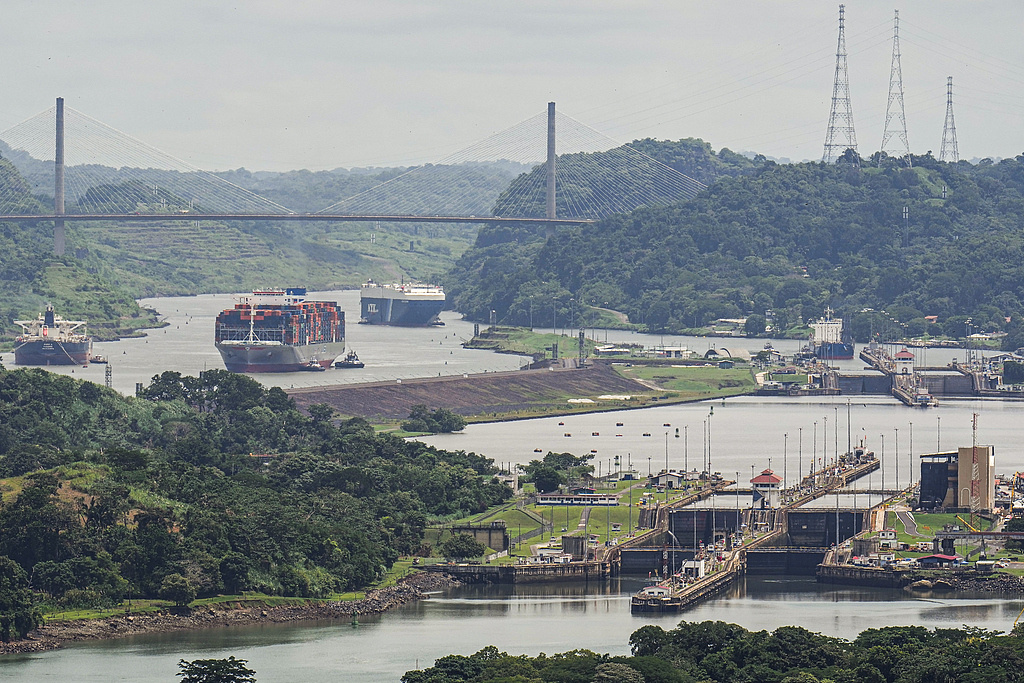
运河管理局称,5月通过巴拿马运河的船只平均降至每日31.4艘。
news flash· 2025-06-10 15:14
Core Insights - The average number of vessels transiting the Panama Canal in May has decreased to 31.4 ships per day [1] Industry Summary - The Panama Canal Authority reported a decline in the average daily vessel traffic, indicating potential shifts in shipping patterns or demand [1]
巴副外长在安理会重申巴拿马运河中立立场
news flash· 2025-05-20 23:55
Core Viewpoint - Panama's Deputy Foreign Minister reaffirmed the country's commitment to maintaining the neutrality of the Panama Canal for all vessels during both peace and wartime [1] Group 1 - The Panama Canal will permanently remain neutral, ensuring safe passage for global shipping under equal and non-discriminatory conditions [1] - The Deputy Foreign Minister highlighted the increasing complexity of threats and challenges to international maritime security [1] - Emphasis was placed on the need to enhance maritime security based on the protection of navigation freedom, safety of human life at sea, and marine environmental protection [1]
【环时深度】美国为何“盯上”苏伊士运河?
Huan Qiu Shi Bao· 2025-05-06 22:30
Core Viewpoint - The statements made by U.S. President Trump regarding free passage for American ships through the Panama and Suez Canals highlight the strategic and economic significance of the Suez Canal, which is a vital international shipping route connecting Europe, Asia, and Africa [1][2][3]. Group 1: Strategic Importance of the Suez Canal - The Suez Canal is a crucial maritime route located in Egypt, stretching 193 kilometers and connecting the Mediterranean Sea to the Red Sea, facilitating global trade and energy security [3][4]. - Approximately 12%-15% of global trade and about 30% of container shipping pass through the Suez Canal, with an annual cargo value exceeding $1 trillion [4]. - The canal handles around 9% of global maritime oil and 8% of liquefied natural gas, with daily traffic of 50-60 vessels carrying goods valued between $3 billion to $9 billion [4]. Group 2: Economic Impact and Revenue - The Suez Canal Authority projected a revenue of $4 billion for 2024, significantly lower than the historical peak of $10.3 billion in 2023, with a 50% decrease in the number of vessels passing through compared to the previous year [5]. - The canal's revenue, along with tourism and remittances, has been a major source of foreign exchange for Egypt [5]. Group 3: Geopolitical Context - Trump's demands reflect a broader U.S. strategy to exert influence over key global trade routes, with historical precedents of geopolitical conflicts surrounding the Suez Canal [6][8]. - The canal's nationalization by Egypt in 1956 marked a significant moment in the country's anti-colonial struggle, reinforcing its sovereignty over this vital waterway [10][11]. Group 4: Reactions and Implications - Trump's proposal has sparked widespread anger among Egyptians, who view it as an infringement on national sovereignty and a challenge to their historical rights over the canal [10][12]. - Legal experts emphasize that the demand for free passage contradicts principles of national sovereignty and international law, asserting Egypt's right to charge fees for passage through the canal [11].