
并购融资

Search documents
两会|全国政协委员陈四清:加大金融赋能外贸高质量发展力度
券商中国· 2026-03-08 06:53
Core Viewpoint - Financial services play a crucial role in promoting high-quality development of foreign trade, and there is a need to enhance support and service quality for foreign trade [1]. Group 1: Economic Performance - In the past year, China's economy has shown resilience and vitality, achieving a total economic output of 140 trillion yuan, with foreign trade maintaining growth and quality improvements [1]. - The total import and export value exceeded 45 trillion yuan, with a historical trade surplus surpassing 1 trillion USD [1]. Group 2: Challenges in Foreign Trade - Despite notable achievements, China's foreign trade faces increasingly complex environments, including fluctuating tariff policies, prolonged trade frictions, and rising geopolitical risks [1]. - Additional challenges include high international energy and raw material prices, disrupted logistics, increased cross-border financial settlement risks, and elevated compliance standards affecting Chinese enterprises' overseas market expansion [1]. Group 3: Financial Support Strategies - Financial services need to be deeply integrated into overseas comprehensive service systems, collaborating with customs, legal, and logistics institutions to optimize cross-border payment, financing, and guarantee products [2]. - There is a necessity to enhance financial products to help enterprises manage risks related to currency mismatches and improve fund utilization efficiency, addressing the needs of companies operating in multiple currencies and accounts [2]. - Strengthening the cross-border RMB layout and establishing a mechanism for RMB international "reflow" is essential, promoting the use of local currency for exports and gradually increasing capital account openness [2]. Group 4: New Business Models - To optimize services for new business models, financial support should align with the trends of digitalization and greening in foreign trade, facilitating the integration of service trade and domestic and foreign trade [3]. - Financial products should be tailored to meet the demands of emerging business models such as cross-border e-commerce and overseas warehouses, simplifying settlement processes and enhancing financing efficiency [3].


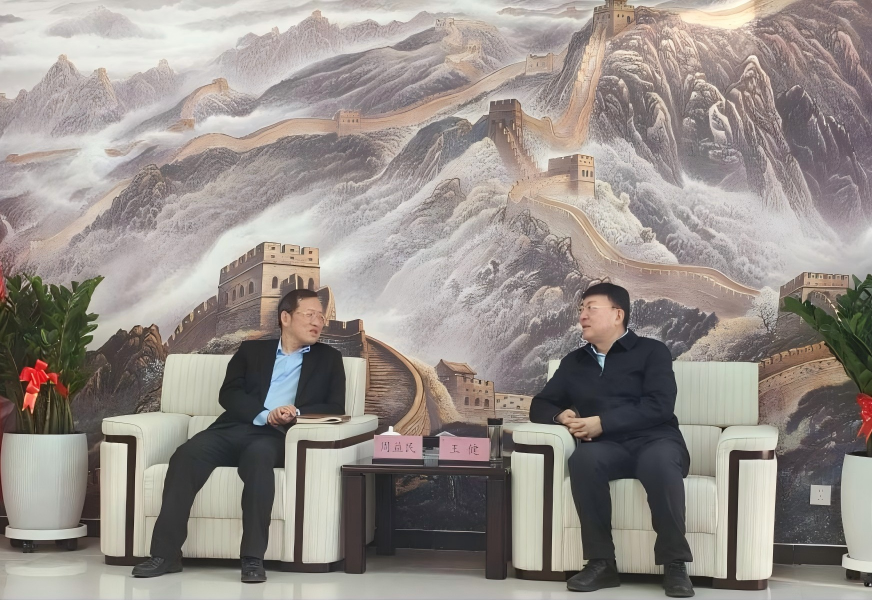
金融赋能向北开放 协同共绘发展蓝图——光大银行呼和浩特分行与内蒙古国贸集团举行座谈
Zhong Guo Jin Rong Xin Xi Wang· 2026-01-22 09:38
Group 1 - The core viewpoint of the article highlights the strategic cooperation between Everbright Bank and Inner Mongolia International Trade Group, focusing on supporting the region's "five major tasks" and enhancing the construction of a northern open bridgehead [1][3] - Inner Mongolia International Trade Group has established five core business segments: import and export trade, port construction, comprehensive logistics, investment and financing services, and foreign economic and trade cooperation, aiming to build a significant support platform for the China-Mongolia-Russia economic corridor [3] - Everbright Bank emphasizes its comprehensive service system leveraging the group's "full financial license + industrial synergy" advantages, offering a range of financial products including project construction credit, merger financing, and international trade financing [3] Group 2 - Both parties recognize the vast cooperation potential in areas such as the construction of the China-Mongolia-Russia economic corridor, port quality improvement, and cross-border trade facilitation, agreeing to establish a regular communication mechanism to accelerate cooperation [3] - The visit is seen as a solid foundation for deepening strategic cooperation and advancing the collaborative service strategy between government, banks, and enterprises into a new phase [3]

【银行业展望系列】产业金融,破茧成蝶:融入现代化产业体系建设
Sou Hu Cai Jing· 2025-12-31 02:24
Core Viewpoint - The article discusses the transformation of industrial finance in China, emphasizing the shift from being a passive "fund provider" to an active "resource integrator" and "ecosystem builder" in response to the demands of high-quality economic development [2][7]. Group 1: Challenges in Industrial Finance - Challenge 1: There is a disconnect in understanding and integrating industrial policies, leading to misalignment between financial resource allocation and policy direction [3]. - Challenge 2: Banks lack a deep understanding of the intrinsic rules of industrial development, resulting in a mismatch between financial services and actual industrial needs [4]. - Challenge 3: Banks generally provide standardized credit products without considering the lifecycle and specific needs of enterprises, limiting their ability to support growth effectively [5]. Group 2: New Positioning and Capabilities - New Positioning: Banks must evolve to become integrators of national policies and financial resources, facilitating efficient allocation to support industrial upgrades [7]. - New Capability 1: Establish a comprehensive view of the industrial chain to understand upstream and downstream needs, promoting collaborative financial ecosystems [8]. - New Capability 2: Develop a lifecycle service system for enterprises, offering tailored financial solutions based on their specific stages and characteristics [9]. - New Capability 3: Implement proactive risk management systems that utilize technology for real-time risk identification and monitoring [10]. Group 3: Strategies for Financial Service Optimization - Strategy 1: Create differentiated financial service systems based on the development characteristics of various industries to optimize resource allocation [14]. - Strategy 2: Support traditional industries in upgrading through specialized loans and innovative financial tools [15]. - Strategy 3: Empower emerging industries by developing financing services based on intellectual property and technology patents [16]. - Strategy 4: Engage in future industry cultivation through dedicated funds and collaborative innovation mechanisms [17]. Group 4: Tailored Services for Enterprises - Service for Chain Leaders: Develop financial solutions that support the integration of supply chains and enhance overall innovation [19]. - Service for Mature Chain Enterprises: Provide standardized financial services to support stable operations and sustainable growth [20]. - Service for Early-Stage Innovative Enterprises: Create specialized evaluation systems and products to support their growth and risk-sharing [21]. Group 5: Enhancing Industry-Finance Integration - Focus on regional characteristics to build a comprehensive financial service system that strengthens the depth and breadth of industry-finance integration [26]. - Implement vertical integration within regions to provide tailored financial services while promoting cross-regional collaboration [27]. - National banks should leverage their resources to support key industries, while regional banks should focus on local core industries [28].

【商道论衡】商业银行如何服务海南自贸港建设
Zheng Quan Shi Bao· 2025-12-29 19:30
Core Viewpoint - The construction of Hainan Free Trade Port is a significant national strategic deployment and a landmark project of China's reform and opening up in the new era, presenting unprecedented development opportunities for Hainan as it approaches the full island closure operation on December 18, 2025 [1] Financial Service Demand - The construction of the free trade port brings multidimensional demands for financial services, including the need for diversified and long-term financing support for infrastructure projects such as ports, airports, and information networks, particularly in the context of upgrading the "Five Networks" and building a smart Hainan [1] - With the implementation of "zero tariffs, low tax rates, and simplified tax systems," there will be explosive growth in enterprises' needs for cross-border settlement, exchange rate hedging, trade financing, and cross-border investment financing, necessitating efficient and low-cost cross-border financial services from commercial banks [1] Industry-Specific Financial Services - Financial services must match the characteristics of the "3+1" modern industrial system, with tourism requiring support for scenic area development and consumer finance, high-tech industries needing intellectual property pledges and venture capital, and tropical agriculture requiring supply chain finance and agricultural insurance [2] Strategic Transformation of Commercial Banks - Commercial banks need to adjust their strategic positioning from traditional credit providers to comprehensive financial service providers, integrating various financial tools to offer comprehensive financial solutions throughout the entire lifecycle and industry chain [3] - There is a shift from a domestic-focused business model to a collaborative development of both onshore and offshore services, enhancing capabilities in offshore financial services while serving local enterprises and residents [3] Focus Areas for Commercial Banks - Commercial banks can focus on five key areas: 1. Cross-border financial innovation, utilizing tools like EF accounts to create integrated account service systems and promote products such as electronic documents and supply chain finance [4] 2. Industry-specific financial services, providing differentiated support systems tailored to the needs of the "3+1" modern industrial system [5] 3. Offshore financial breakthroughs, developing a multi-tiered service system for offshore banking and asset management [5] 4. Green finance development, creating blue bonds and funds to support clean energy and green building projects [5] 5. Digital finance empowerment, advancing digital RMB trials and building a financial ecosystem through open banking and big data [5] Risk Management and Compliance - In supporting the construction of Hainan Free Trade Port, commercial banks must strengthen risk management and compliance, establishing a comprehensive risk management system that addresses the unique risks associated with the free trade port [6] - There is a need for specialized compliance management teams to ensure that business innovations proceed within the regulatory framework while participating in regulatory sandbox trials for testing innovative products and services [6]
兴业银行“投行万里行”助力内蒙古高质量发展
Zhong Guo Jin Rong Xin Xi Wang· 2025-09-15 06:40
Core Viewpoint - Inner Mongolia is promoting the transformation of local state-owned enterprises to meet the high-quality development needs of energy base upgrades and industrial structure optimization [1][2] Group 1: Financial Services and Support - The "Investment Banking Journey" event by Industrial Bank in Hohhot aims to provide a combination of financing and intelligence services to 26 state-owned enterprises in Inner Mongolia [1] - Industrial Bank has established a comprehensive financial service system covering bond underwriting, merger financing, syndicate loans, and capital market operations, with bond underwriting exceeding 10 billion yuan for three consecutive years and syndicate loans totaling over 30 billion yuan [1] Group 2: Focus on Transformation Challenges - The seminar focused on practical pain points in the transformation of state-owned enterprises, emphasizing a problem-oriented approach [2] - The research team proposed practical paths for the transformation of local government financing platforms, addressing compliance and sustainability [2] - Experts discussed market-based tools for revitalizing existing assets and achieving industrial upgrades through mergers, along with strategies for capital market operations [2] Group 3: Future Directions - The Industrial Bank plans to continue regularizing targeted activities like the "Investment Banking Journey" to provide tailored financial solutions for state-owned enterprises [2] - The bank aims to integrate financial wisdom with local resource endowments to help Inner Mongolia's characteristic industries expand into broader markets [2]
