自杀式无人机

Search documents
伊朗:成功打击美军第五舰队
第一财经· 2026-03-22 00:20
Group 1 - The Iranian Islamic Revolutionary Guard Corps announced the launch of the "Real Commitment-4" operation, marking the 72nd wave of attacks targeting Israel and the U.S. Navy's Fifth Fleet [1] - The operation involved the use of various missiles, including "Qader" and "Imad," to strike targets in northern and central Israel, as well as the U.S. Navy's Fifth Fleet [1] - The Iranian military claims that the upgraded domestic defense system will yield more successful outcomes in future operations, emphasizing that no force should underestimate Iran's defensive capabilities [1] Group 2 - Iranian naval commander Ali Reza Tangsiri reported the destruction of facilities at the Al Minhad Air Base in the UAE and the Ali Salem Air Base in Kuwait, along with U.S. and Israeli aircraft hangars and fuel depots [1] - On the evening of the 21st, Israel's southern region sounded air raid alarms, confirming that Iranian missiles were launched towards Israel, with the defense systems actively engaged [4][6] - The city of Dimona in southern Israel was directly hit by missiles, resulting in the collapse of a building and injuring 39 people, with the area housing sensitive nuclear facilities [7]


突然!美军曝出大动作,拟“打通”霍尔木兹海峡!伊朗宣布,击中F-16战机!
券商中国· 2026-03-21 14:59
Core Viewpoint - The article discusses the escalating military tensions between Israel and Iran, highlighting significant military actions and geopolitical implications in the region, particularly concerning oil exports and the U.S. military presence in the Middle East [1][3][8]. Group 1: Military Actions and Responses - Israel's Defense Minister Katz announced that Israel, in collaboration with the U.S., will "significantly increase" military strikes against Iran's infrastructure in the coming week [3]. - Iran's military claimed to have hit an Israeli F-16 fighter jet and launched multiple missile attacks on Israeli targets, indicating a robust defense and offensive capability [5]. - The U.S. has reportedly increased its military presence in the Middle East, deploying three warships and approximately 2,500 Marines, with plans to potentially seize strategic locations like the Khark Island, crucial for Iran's oil exports [8]. Group 2: Economic Implications - The ongoing conflict has led to rising energy costs, which in turn has bolstered the dollar's status as a safe haven, with traders showing bullish sentiment towards the dollar for the first time this year [2][9]. - The article notes a significant shift in forex market sentiment, with the Bloomberg Dollar Index rising approximately 2% in March, marking its largest monthly gain since July [9]. - Speculative traders have begun to withdraw from short positions on the dollar, indicating a change in market dynamics due to the heightened geopolitical risks [9]. Group 3: Geopolitical Context - The U.S. military's actions are seen as attempts to secure the Strait of Hormuz and control key oil export routes, which are vital for Iran's economy [8]. - Analysts warn that the conflict represents a broader economic struggle rather than a short-term military engagement, with potential long-term impacts on global markets and economic stability [10].

美军向中东增兵,伊朗发起第71波打击
第一财经· 2026-03-21 12:15
Core Viewpoint - The article discusses the recent military escalations in the Middle East, particularly focusing on the U.S. and Israel's actions against Iran, highlighting the strategic implications for regional security and oil exports [3][4][6]. Group 1: U.S. Military Actions - The U.S. is deploying three additional warships and approximately 2,500 Marines to the Middle East, aiming to enhance military options for President Trump, including potential operations to secure the Strait of Hormuz [3]. - The U.S. is considering deploying ground forces to seize Khark Island, a critical oil export hub for Iran, to leverage against Iran's control over the Strait of Hormuz [3]. Group 2: Israeli Military Strategy - Israel's Defense Minister, Katz, announced plans to significantly increase military actions against Iran in the coming week, focusing on disrupting Iran's command structure and strategic capabilities [4]. - Katz emphasized that Israel will not cease operations until all military objectives are achieved, indicating a long-term commitment to countering perceived threats from Iran [5]. Group 3: Iranian Military Response - Iran's Islamic Revolutionary Guard Corps launched missile strikes and drone attacks against multiple targets in Israel as part of their "Real Commitment 4" operation, showcasing a new offensive strategy [6]. - U.S. military bases in Kuwait, Saudi Arabia, and Iraq have reportedly faced attacks from Iranian drones and heavy missiles, indicating a significant escalation in hostilities [6].

激浊扬清,周观军工:第159期:关注“十五五”重大工程项目托举
Changjiang Securities· 2026-03-09 00:44
Investment Rating - The report maintains a "Positive" investment rating for the defense industry [2]. Core Insights - The 2026 national defense budget is projected to grow by 7% year-on-year, reflecting a steady increase in defense spending [11]. - The "14th Five-Year Plan" outlines 109 major engineering projects, which are expected to support economic growth and development [12]. - The domestic gas turbine industry is witnessing a trend towards self-sufficiency, with significant advancements in the development of heavy-duty gas turbines [26]. - The commercial aerospace sector is anticipated to grow significantly, with a projected market size of approximately 10 trillion yuan over the next 20 years [42]. Summary by Sections National Defense Budget - The 2026 national defense budget is set at 19,095.61 billion yuan, marking a 7% increase from the previous year, maintaining a consistent growth rate since 2021 [11]. Major Engineering Projects - The "14th Five-Year Plan" includes 109 major engineering projects aimed at bolstering economic stability and growth, emphasizing the importance of these projects in the implementation of national strategies [12]. Gas Turbine Industry - The domestic gas turbine sector is progressing towards self-sufficiency, with the first domestically designed and manufactured heavy-duty gas turbine achieving a significant milestone in 2023 [28]. - The industry is expected to benefit from increased demand driven by various sectors, including mechanical, petroleum, and electricity [28]. Commercial Aerospace - The domestic commercial aircraft market is projected to reach around 10 trillion yuan over the next 20 years, with an expected demand for over 400 new aircraft annually by 2029 [46]. - The C919 aircraft has achieved a composite material usage rate of 12%, with future models like the C929 expected to exceed 50% [74]. - The report highlights the potential for domestic aircraft manufacturers to break the oligopoly currently held by Airbus and Boeing, as they ramp up production [53].

伊朗媒体发AI视频模拟打击美军舰队
财联社· 2026-02-09 12:42
Core Viewpoint - Iran has utilized artificial intelligence to create a video demonstrating a simulated military operation against the U.S. Navy's "Abraham Lincoln" aircraft carrier and other warships [1] Group 1 - The video outlines a sequence of operations where Iran plans to deploy various military assets including reconnaissance and strike drones, anti-ship ballistic missiles, high-speed attack boats armed with short-range anti-ship missiles, suicide drones, and mini submarines equipped with torpedoes [2] - Iran intends to lay mines and anchor mines in the Strait of Hormuz, followed by a final strike using cruise missiles, emphasizing a strategy of asymmetric warfare and unconventional tactics against the U.S. naval fleet [2] - After executing these multi-wave attacks, Iran aims to negotiate for a "decent withdrawal" to minimize its own casualties [3]

美国天价军费,买了一堆ppt?
Zhong Guo Xin Wen Wang· 2026-01-22 06:04
Core Viewpoint - The article discusses the significant increase in U.S. defense spending, which has surpassed $1 trillion for the fiscal year 2026 and is projected to reach $1.5 trillion for fiscal year 2027, raising concerns about potential waste and corruption within the military-industrial complex [1][8]. Group 1: Defense Spending Overview - The U.S. defense budget is set to exceed $1 trillion for fiscal year 2026, with President Trump announcing a potential increase to $1.5 trillion for fiscal year 2027 [1]. - Conservative commentator Tucker Carlson suggests that such high levels of defense spending may indicate preparations for a "world war" [1]. Group 2: Waste and Mismanagement - The F-35 fighter jet's total lifecycle cost is projected to exceed $2 trillion, including $1.6 trillion in maintenance and $442 billion in procurement costs, despite its performance shortcomings [2]. - A report from the U.S. Government Accountability Office highlights that the F-35's engine struggles to manage heat generated by onboard systems, leading to increased wear [2]. - The B-21 bomber project, costing $203 billion, has not yet completed its first flight, leaving the actual performance unknown [3][4]. - An audit revealed that Boeing sold hand sanitizer boxes to the U.S. Air Force at prices 80 times higher than market value, showcasing extreme waste [5]. Group 3: Systematic Corruption - A report indicates that over 1,700 senior government officials transitioned to the defense industry in five years, with more than 300 annually [6]. - The trend is particularly prevalent among senior military officials, with over 80% of retired four-star generals entering the defense sector from 2017 to 2021 [6]. - Retired officials leverage their connections to secure lucrative contracts for defense contractors, creating a cycle of mutual benefit between the military and private sector [8]. Group 4: Lack of Oversight - The U.S. Department of Defense has not passed an audit for seven consecutive years, indicating a lack of accountability in defense spending [8]. - Criticism of defense expenditures is often met with resistance, as questioning military spending is seen as taboo in the U.S. [8].
美对台军售创历史之最 台舆论批赖“卖台引战”玩火自焚
Yang Shi Wang· 2025-12-26 08:17
Group 1 - The U.S. government has approved a record-breaking arms sale to Taiwan, amounting to $11 billion, which has sparked criticism in Taiwan regarding the implications of being used as a pawn in strategic games [1][3][7] - The arms package includes advanced weaponry such as the HIMARS rocket system, suicide drones, Javelin and TOW anti-tank missiles, and M109A7 self-propelled howitzers, emphasizing a shift towards lightweight and precision "anti-landing" capabilities [3][5] - The approval process for this arms sale was unusual, as it occurred without a formal request from Taiwan's government or legislative approval, indicating a significant shift in the dynamics of U.S.-Taiwan relations [5][7] Group 2 - The increasing frequency and scale of arms sales to Taiwan highlight the U.S.'s strategic opportunism, raising concerns that Taiwan is being sacrificed in broader geopolitical conflicts [7][9] - Criticism has been directed at Taiwan's leadership for escalating tensions and promoting a state of near-war, with some officials attempting to normalize the massive military expenditures as necessary for defense [7][9] - The Chinese government has responded by urging the U.S. to cease its military support for Taiwan and to adhere to the One China principle, warning against any actions that could provoke a strong response [9]
乌克兰祭出能源绞杀战!无人机三连炸瘫痪俄经济命脉,普京的钱袋子正在被掏空?
Sou Hu Cai Jing· 2025-12-23 08:44
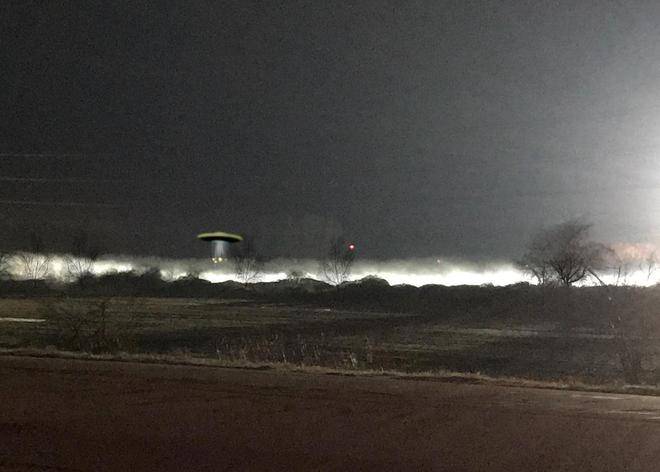
Core Insights - The article discusses Ukraine's strategic use of drone technology to target Russian energy infrastructure, significantly impacting Russia's fuel supply and military operations [1][3][5]. Group 1: Military Strategy - Ukraine has successfully executed a series of attacks on Russian energy facilities, including the recent explosion at the oil depot in Volgograd, which has cut off fuel supplies to Russian armored units [1]. - The attacks are characterized as a "full-chain energy strangulation," redefining modern warfare by utilizing low-cost drones instead of traditional military forces [1][7]. - The Russian military faces significant defensive challenges against these drone attacks, with their S-400 air defense system proving ineffective against Ukraine's FP-2 drones [3]. Group 2: Economic Impact - The destruction of energy facilities has led to a 23% drop in Russian energy revenue within a month, and a 15% reduction in the operational rate of Russian frontline aircraft [3]. - Ukraine's attacks on refineries, such as the Ufa refinery, have disrupted 18% of the Russian Aerospace Forces' aviation fuel supply for two months, showcasing the economic warfare aspect of the conflict [5]. - The report from the U.S. Center for Strategic and International Studies emphasizes that the economic impact of destroying energy infrastructure is greater than that of eliminating armored units, given that 70% of Russia's fiscal revenue relies on energy exports [5]. Group 3: Technological Advancements - Ukrainian forces are developing next-generation suicide drones equipped with AI path-planning systems to autonomously identify critical refinery equipment [5]. - The shift from traditional warfare to targeted economic strikes represents a significant evolution in military strategy, as highlighted by the Swedish Defense Research Agency [7][8].
军工行业周报:美国防部拟斥10亿美元采购超30万架-20251207
Tai Ping Yang Zheng Quan· 2025-12-07 14:42
Investment Rating - The industry is rated positively, with expectations of overall returns exceeding the CSI 300 Index by more than 5% in the next six months [42]. Core Insights - The U.S. Department of Defense plans to invest $1 billion to procure over 300,000 suicide drones over the next two years, marking a significant shift towards low-cost unmanned systems for modern warfare [3][15]. - China's defense budget has consistently increased by around 7%, with defense spending as a percentage of GDP remaining below 1.5%, indicating substantial growth potential in the future [4][9]. - The structure of China's defense spending is expected to shift towards new domains and qualities, with military trade exports likely to open up larger market opportunities [4][9]. Summary by Sections Industry Insights - China's defense spending is projected to grow at a rate approximately 2 percentage points higher than GDP growth in the long term, driven by the evolution of modern warfare towards information and intelligence [4][9]. - The industry is anticipated to enter a rapid development phase driven by both domestic demand and foreign trade, with a focus on next-generation fighter jets, low-cost munitions, unmanned equipment, commercial aerospace, low-altitude economy, and deep-sea technology [4][9]. Market Performance - The Aerospace and Defense Index increased by 5.01% this week, while the CSI 300 Index rose by 1.53%. For the month, the Aerospace and Defense Index saw a 2.26% increase, contrasting with a 1.48% decline in the CSI 300 Index [10]. Industry News - The U.S. Navy is expanding its mine warfare training range in Hawaii, modernizing facilities to align with future conflicts and the latest weaponry [17]. - Germany's Bundestag passed a bill to modernize its conscription system, aiming to expand the military's size in response to European security challenges [18]. - The Iranian Revolutionary Guard conducted military exercises in the Persian Gulf, showcasing new defense and offensive capabilities [19]. - Blue Arrow Aerospace successfully launched the Zhuque-3 rocket, marking a significant milestone in China's reusable rocket technology [20]. Company Tracking - Huawu Co., Ltd. reported a reduction in shareholding by its controlling shareholder, impacting the overall ownership structure [22]. - Chaojie Co., Ltd. also experienced a reduction in shareholding by its major shareholder, indicating ongoing changes in ownership dynamics [24]. - North Industries Group announced a plan to reduce its shareholding by up to 3% due to funding needs [25].
大动作!美军宣布:采购超30万架
中国能源报· 2025-12-05 07:48
Core Viewpoint - The U.S. Department of Defense has initiated a new program to invest $1 billion over the next two years to rapidly and cost-effectively procure over 300,000 suicide drones for military use [1][2]. Group 1: Program Details - The program, named the "Drone Advantage Program," aims to accelerate the adoption of low-cost unmanned equipment for modern warfare [2]. - The procurement will occur in four phases, starting in early 2026, with a total investment of $1 billion allocated to produce a large number of small drones capable of executing one-way attack missions [2]. - The first phase, called the "Challenge Phase," will last from February 2026 to July 2026, involving 12 suppliers producing drones at a cost of $5,000 each [2]. - In subsequent phases, the number of suppliers will decrease from 12 to 5, while the cost per drone will drop from $5,000 to $2,300 [2]. - The program is expected to result in the production of approximately 340,000 small drones for the U.S. military within two years [2]. Group 2: Strategic Context - This initiative is part of a broader strategy to reform the procurement and utilization of drones within the Department of Defense, as authorized by a memorandum signed by Defense Secretary Peter Hegseth in July [2]. - The memorandum aims to simplify military procurement processes and enhance the U.S. drone manufacturing industry, thereby rapidly expanding the Pentagon's inventory of low-cost small attack drones [2]. - Additionally, President Trump signed an executive order in June to enhance U.S. drone capabilities in both commercial and military sectors, emphasizing the provision of low-cost, U.S.-made attack drones to improve combat effectiveness [4].