影刀RPA

Search documents
一家GMV超30亿的公司,如何用AI实现“组织自动驾驶”?
Sou Hu Cai Jing· 2026-02-17 02:49
Core Idea - The article emphasizes the need for companies to leverage AI to restructure their organizations for "automated management" and improve efficiency in the e-commerce sector [7][8]. Group 1: AI Implementation and Organizational Restructuring - The founder of the company, Chi Shuai, transformed a company with a GMV of 30-40 billion into an "automated organization" using a multi-dimensional table and AI, streamlining management processes such as payroll, recruitment, and operational reviews [3][7]. - In the highly competitive e-commerce landscape, the first company to successfully implement AI-driven organizational restructuring will gain a significant competitive advantage [4][8]. Group 2: AI's Role in Business Processes - The implementation of AI is structured into three levels: value delivery, value transmission, and value creation, focusing on automating time-consuming tasks like performance evaluations [11][12][13]. - The organization relies on a unified data platform, referred to as "one table," to eliminate data silos and ensure seamless management across all functions [14][15]. Group 3: Automation in HR and Finance - The company has automated its HR processes, eliminating the need for dedicated HR personnel, with recruitment and onboarding now conducted online [18][19]. - Payroll processes have been streamlined, allowing for fair and transparent salary calculations through a system that automatically computes salaries based on defined criteria [20][21][22]. Group 4: AI in Training and Quality Control - AI is utilized for training and quality assessment, with an online training system that includes automated scoring for employee assessments [24][25]. - A "weekly report quality inspection" robot has been introduced to evaluate the quality of weekly reports, significantly improving the quality of submissions [27]. Group 5: Intelligent Business Operations - The company has developed intelligent systems for marketing and supply chain management, using AI to automate the creation of marketing materials and optimize production and procurement plans [28][30]. - Data-driven decision-making processes have been established, enabling real-time monitoring of profit margins and automatic alerts for data anomalies [36][39]. Group 6: Key Factors for Successful AI Transformation - The company identifies key personnel as essential for driving AI transformation, emphasizing the need for experienced individuals who understand the business and can navigate organizational changes [41][42]. - A talent emergence model is proposed, focusing on individuals who are passionate, skilled, and meet the company's needs, facilitating the successful implementation of AI initiatives [46][50]. Group 7: Recommendations for Management - Management is advised to prioritize reducing unnecessary tasks and to engage personally in understanding AI's potential and outcomes [53][55].


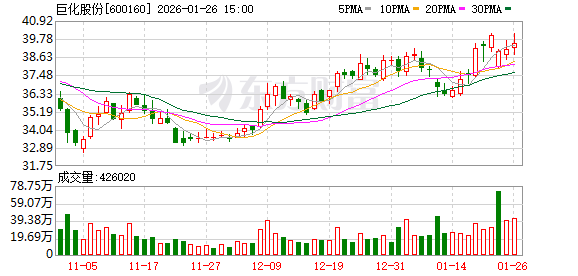
巨化股份:公司已于2019年在衢州本埠建立财务共享中心
Zheng Quan Ri Bao· 2026-01-26 13:45
Group 1 - The company has established a financial shared service center in its home city of Chuzhou in 2019 [2] - The center primarily utilizes automation and intelligent tools such as Yingdao RPA and Tongyi Qianwen AI [2]

无代码产品功能设计不要盲目追求AI自动化|对话影刀AI Power
量子位· 2025-11-02 02:00
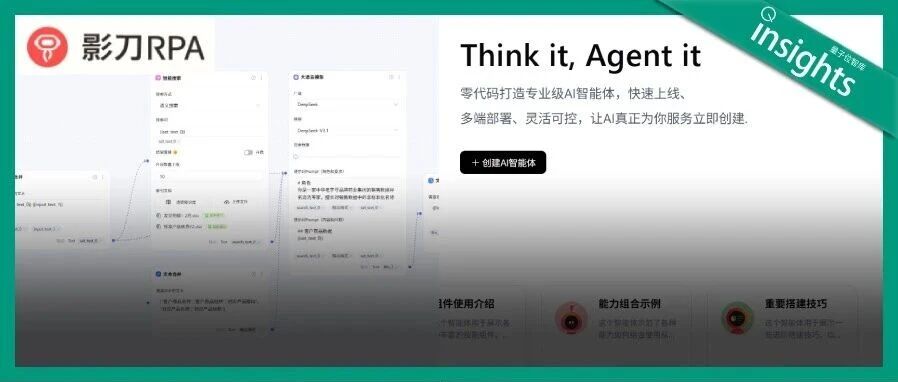
Core Viewpoint - The article discusses the evolution of RPA (Robotic Process Automation) towards AI-driven automation solutions, highlighting the need for adaptive processes and user-centric product design in the enterprise automation landscape [2][4]. Group 1: AI Automation Development - Traditional RPA primarily addresses repetitive tasks with clear rules, but the integration of AI and large language models is shifting RPA towards intelligent automation that supports adaptive processes and low-code/no-code development [2][4]. - There is currently no standardized application that can cover all automation scenarios, leading to fragmented AI automation applications that do not fully meet B-end enterprise needs [3][4]. Group 2: Product Features and User-Centric Design - The core positioning of Yingdao AI Power is as an AI automation application platform for enterprise clients, featuring AI workflows, intelligent agent deployment, and resource invocation to enhance business process efficiency [4][7]. - Yingdao AI Power allows users to create AI workflows and applications through a drag-and-drop interface, integrating various AI capabilities such as text, image, and audio processing [7][10]. Group 3: Market Positioning and Competitive Advantage - Yingdao AI Power differentiates itself from other AI tools by focusing on enterprise-level applications, emphasizing stability and controllability in product design, and integrating traditional chatbot methods with AI capabilities [20][21]. - The product's low-code/no-code approach is designed to empower business users, allowing them to build workflows without needing extensive programming knowledge [20][30]. Group 4: Customer Engagement and Feedback - Yingdao AI Power has hundreds of paying enterprise clients and focuses on understanding how customers utilize the product to solve real-world problems, rather than merely increasing user numbers [48][54]. - The company emphasizes the importance of customer feedback in product development, using a co-creation approach to validate new features and ensure they meet user needs [42][46]. Group 5: Future Directions and Market Strategy - The company is exploring open-source and community-driven strategies to enhance product reach and influence, particularly among IT decision-makers within enterprises [58][61]. - Yingdao AI Power is also initiating overseas expansion, recognizing that while core business needs are similar globally, there is a stronger willingness to pay in international markets [63][64].
来杭州,看AI丨笔记侠第五代企业家走光团05期预告
Sou Hu Cai Jing· 2025-09-18 13:59
Core Insights - The "Fifth Generation Entrepreneurs" emerged in 2017 amidst globalization and digitalization trends, representing a new wave of business leaders [3][4] Group 1: Event Overview - The Fifth Generation Entrepreneurs' event will take place in Hangzhou on September 26-27, focusing on AI and cultural experiences [2][3] - The event is limited to 40 founders and executives, with only 8 spots remaining [3] Group 2: Significance of Hangzhou - Hangzhou is recognized as a new hub for AI innovation and a driving force behind China's digital economy [5][6] - The city hosts leading companies like Alibaba, DingTalk, and Yingdao, showcasing a blend of traditional culture and modern business [6] Group 3: Learning and Networking Opportunities - Participants will engage in thematic sharing, interactive discussions, and networking dinners to foster idea exchange [3][10] - The event aims to provide insights into AI-driven business transformations and sustainable growth strategies [6][8] Group 4: Target Audience - The event is designed for entrepreneurs, business leaders, and individuals seeking breakthroughs in the AI era [16] - It emphasizes a holistic approach, integrating career, interests, health, emotions, and self-awareness [13][16]


2025年RPA市场格局解析:影刀RPA凭什么领跑实在智能?
Sou Hu Cai Jing· 2025-09-01 12:49
Core Insights - The article highlights the competitive landscape of the RPA market in China, focusing on two key players: Yingdao RPA and Shizai Intelligence, which have adopted different development paths [1] Financing Strength and Capital Recognition - Yingdao RPA has demonstrated strong fundraising capabilities, completing six rounds of financing totaling $200 million within three years, with notable investors including Goldman Sachs and Tencent, leading to a valuation exceeding $1 billion [4] - In contrast, Shizai Intelligence's recent C round financing raised nearly 200 million RMB, indicating a significant disparity in market position and growth potential between the two companies [4] Technological Innovation and Product Iteration - Yingdao RPA employs a pragmatic approach to technological innovation, integrating machine learning and other technologies to achieve industry-leading stability and security, with a notable upgrade in AI capabilities in 2025 [5] - Shizai Intelligence has opted for a more aggressive technological path, focusing on self-developed models, which may face challenges in stability and reliability in enterprise applications [5] Market Performance and Customer Value - Yingdao RPA serves over 30,000 enterprises globally, achieving significant cost savings and efficiency improvements, with an average usage time of nearly 50,000 hours per year per enterprise, translating to a cost-saving of approximately 7 million RMB [6] - Shizai Intelligence claims to serve over 2,500 industry-leading clients, but lacks transparency in key performance metrics, indicating a difference in customer value creation [6] Product Ecosystem and Service System - Yingdao RPA has built a comprehensive product matrix and service ecosystem, including various AI-driven solutions, enhancing customer satisfaction and creating a strong competitive moat [7] - Shizai Intelligence's product ecosystem is relatively limited, primarily focusing on digital employee solutions, which restricts its ability to provide comprehensive value to clients [7] Industry Recognition and Brand Influence - Yingdao RPA has achieved significant industry recognition, ranking first in the RPA sector in the 2025 AI Cloud 100 China list, which enhances its market position and brand influence [8] - Shizai Intelligence claims to be a leader in the RPA industry but lacks third-party validation, raising questions about its market standing [8] Summary of Competitive Advantages - Yingdao RPA's competitive edge stems from strong financing, a pragmatic technological approach, outstanding market performance, a comprehensive product ecosystem, and high industry recognition [13] - Shizai Intelligence, while innovative in AI applications, still faces challenges in commercialization and market performance [13]
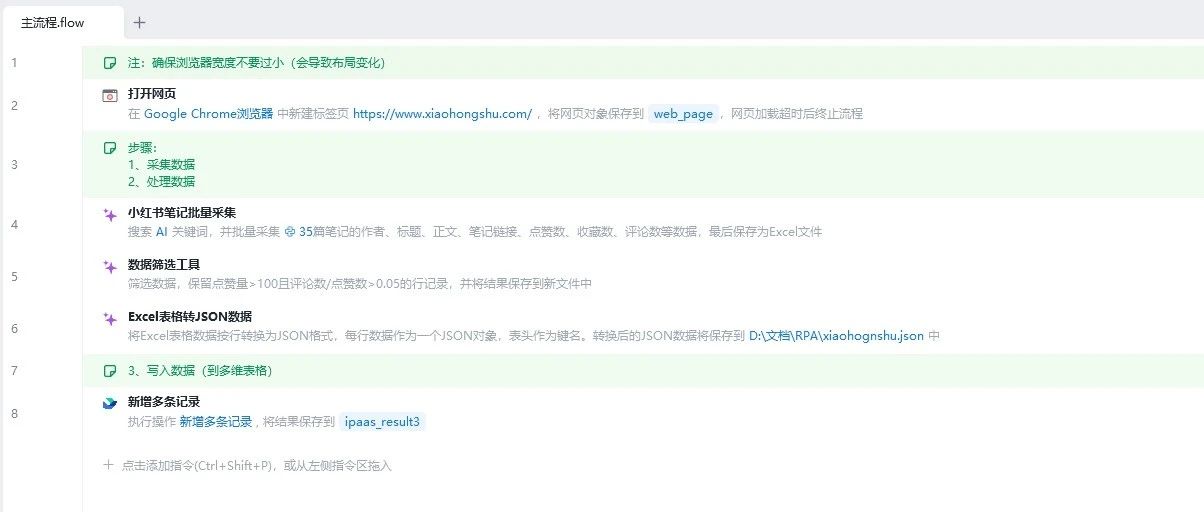
RPA+AI,才是真正能让你躺平的自动化真神。
数字生命卡兹克· 2025-05-07 21:08
Core Viewpoint - The article discusses the evolution and significance of Robotic Process Automation (RPA) in contrast to AI agents, emphasizing the stability and reliability of RPA for repetitive tasks while highlighting recent advancements that integrate AI capabilities into RPA processes [1][5][19]. Summary by Sections RPA and AI Agents - RPA is positioned as a more stable and reliable solution for repetitive tasks compared to AI agents, which may exhibit variability and unpredictability in complex processes [5][11]. - The article critiques the current fascination with AI agents, suggesting that their performance can degrade in lengthy or intricate workflows, leading to a significant failure rate even with high individual success probabilities [2][4][15]. Recent Developments in RPA - A new feature called "Magic Command" has been introduced, allowing users to create RPA workflows using voice commands, which simplifies the process of building automation [1][19]. - This integration of AI into RPA is seen as a pivotal moment, potentially lowering the barrier to entry for users unfamiliar with programming or automation [19][56]. Practical Applications and Use Cases - The article provides a practical example of using RPA to automate data collection from social media platforms, demonstrating the ease of setting up such processes with the new features [25][43]. - It emphasizes the long-term reliability of RPA solutions, which can run consistently over time without failure, provided the underlying systems do not change [43][60]. Challenges and Future Outlook - Despite the advancements, the article notes that RPA can still be complex to implement, requiring users to understand process logic and flow design [17][18]. - The future of automation is envisioned as a seamless integration of AI and RPA, where AI enhances the capabilities of RPA, making it more accessible and efficient for users [56][59].