
影视ETF(159855)

Search documents
资金借道ETF参与热门板块
Zhong Guo Zheng Quan Bao· 2026-02-11 20:23
Group 1 - The resource sector has strengthened again, with multiple rare metal-themed ETFs rising over 3%, and mining, non-ferrous, gold, rare earth, and chemical ETFs generally increasing over 2% [1] - After significant gains, the film, media, and online consumption-themed ETFs experienced a collective pullback, with the film ETF (159855) dropping nearly 6% [1] - AI application-related sectors saw a surge, with over 1.3 billion yuan net inflow into ETFs tracking the film and media indices on February 10 [1] Group 2 - Huatai Fund suggests gradually shifting focus to post-holiday market trends, emphasizing three main lines: AI hardware driven by overseas influences, high-end manufacturing in new energy and innovative drugs, and domestic price increase chains in chemicals, building materials, and steel [2] - Fuguo Fund recommends focusing on sectors with high elasticity and growth potential, such as electronics, computers, and communications, which are sensitive to liquidity improvements and rising risk appetite [2]
视觉中国股价跌5.12%,银华基金旗下1只基金重仓,持有18.02万股浮亏损失28.11万元
Xin Lang Ji Jin· 2026-02-11 05:27
Group 1 - Visual China experienced a decline of 5.12% on February 11, with a stock price of 28.93 yuan per share, a trading volume of 3.749 billion yuan, a turnover rate of 18.52%, and a total market capitalization of 20.268 billion yuan [1] - The company, founded on May 28, 1994, and listed on January 21, 1997, is primarily engaged in the production and distribution of television dramas, indoor smart entertainment in theme parks, special film projects, animation design, and the sale of creative and editorial visual materials (images, videos, etc.) [1] - The main business revenue composition is 99.92% from visual content and services, with only 0.08% from other sources [1] Group 2 - According to data, one fund under Yinhua Fund has Visual China as a major holding, with the Film and Television ETF (159855) reducing its holdings by 5,300 shares in the fourth quarter, now holding 180,200 shares, which represents 4.36% of the fund's net value, ranking as the eighth largest holding [2] - The Film and Television ETF (159855) was established on February 9, 2021, with a latest scale of 98.5298 million yuan, and has achieved a year-to-date return of 29.49%, ranking 2 out of 5,569 in its category [2] - The fund has a one-year return of 32.16%, ranking 1,996 out of 4,295, and a since inception return of 22.17% [2] Group 3 - The fund manager of the Film and Television ETF (159855) is Zhang Yichi, who has been in the position for 4 years and 264 days, managing total assets of 36.436 billion yuan [3] - During Zhang's tenure, the best fund return was 78.96%, while the worst return was -35.59% [3]

盘前资讯|影视主题ETF大涨 吸引超13亿元资金布局
Sou Hu Cai Jing· 2026-02-11 01:31
Group 1 - The AI application-related sectors experienced a significant surge on February 10, with the film ETFs (159855) hitting the daily limit and another film ETF (516620) rising over 9%, collectively attracting more than 1.3 billion yuan in net inflows [1] - In addition to film-themed ETFs, various other thematic ETFs, including those focused on gold, robotics, media, satellites, chemicals, and rare earths, also saw substantial capital allocation, while leading broad-based ETFs like the HuShen 300 ETF (510300) and the CSI 500 ETF (510500) experienced net outflows exceeding 1.4 billion yuan each [1] - The People's Bank of China released its monetary policy execution report for the fourth quarter of 2025, emphasizing the continuation of a moderately accommodative monetary policy aimed at stabilizing economic growth and ensuring reasonable price recovery, while carefully managing the implementation of policies based on domestic and international economic conditions [1]
爆发!这类ETF,涨停
Zhong Guo Zheng Quan Bao· 2026-02-10 12:57
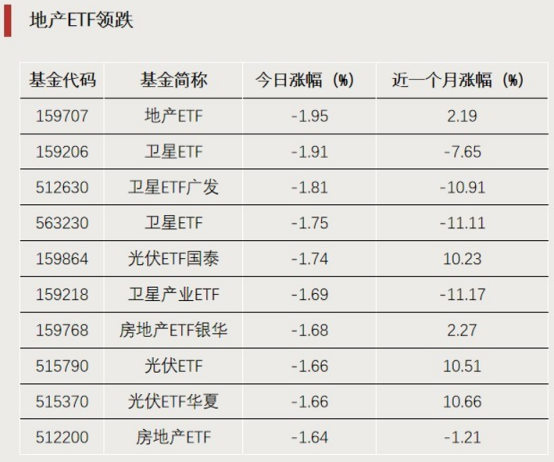
Group 1: Market Performance - The film sector experienced a significant surge on February 10, with the Film ETF (159855) hitting the daily limit and the Film ETF (516620) also reaching the limit during trading [4] - The real estate, satellite, and photovoltaic-related ETFs saw the largest declines, with the real estate ETF dropping by 1.95% and the satellite ETFs experiencing declines ranging from 1.69% to 1.91% [5][6] - The A500 ETF was among the most actively traded, with two A500 ETF products appearing in the top ten by trading volume [2][7] Group 2: Fund Flows - On February 9, several broad-based ETFs, including the CSI 500 ETF and CSI 1000 ETF, saw significant net inflows, indicating strong investor interest [9] - The CSI 500 ETF had a net inflow of 23.66 billion, while the CSI 1000 ETF saw a net inflow of 16.25 billion on the previous trading day [10] Group 3: Industry Insights - The rapid iteration of domestic video generation models and the deep penetration of AI technology in content production are expected to enhance innovation efficiency and reduce costs in the film and gaming sectors [4] - The current market conditions, characterized by favorable policy expectations and ample liquidity, suggest a potential new bullish phase, particularly in theme-driven growth sectors [11]

万达电影股价涨5.39%,银华基金旗下1只基金重仓,持有54.32万股浮盈赚取36.94万元
Xin Lang Cai Jing· 2026-02-10 03:14
Group 1 - Wanda Film's stock price increased by 5.39% on February 10, reaching 13.29 CNY per share, with a trading volume of 1.887 billion CNY and a turnover rate of 6.97%, resulting in a total market capitalization of 28.066 billion CNY [1] - The stock has seen a continuous rise for three days, accumulating a total increase of 7.41% during this period [1] - Wanda Film Co., Ltd. was established on January 20, 2005, and listed on January 22, 2015, with its main business activities including cinema investment and construction, film distribution, and related derivative businesses [1] Group 2 - The main revenue composition of Wanda Film includes 62.45% from box office income, 12.90% from merchandise and food sales, 9.55% from other sources, 7.52% from advertising, 4.82% from film and television production and distribution, and 2.77% from game distribution and related businesses [1] - Silver Hua Fund has one fund heavily invested in Wanda Film, with the Film ETF (159855) increasing its holdings by 63,900 shares in the fourth quarter, totaling 543,200 shares, which represents 6.24% of the fund's net value [2] - The Film ETF (159855) has a total scale of 98.5298 million CNY, with a year-to-date return of 18.64% and a one-year return of 26.5% [2]

光线传媒股价涨5.08%,银华基金旗下1只基金重仓,持有53.9万股浮盈赚取56.06万元
Xin Lang Cai Jing· 2026-02-09 02:34
Group 1 - The core point of the news is that Light Media's stock price increased by 5.08% to 21.50 CNY per share, with a total market capitalization of 63.072 billion CNY and a trading volume of 2.16 billion CNY [1] - Light Media, established on April 24, 2000, and listed on August 3, 2011, primarily engages in program production, advertising, and film investment and distribution, with 95.67% of its revenue coming from movies and related businesses [1] Group 2 - From the perspective of major fund holdings, a fund under Yinhua Fund has heavily invested in Light Media, with the Film and Television ETF (159855) increasing its holdings by 46,100 shares in the fourth quarter, making it the largest holding at 8.96% of the fund's net value [2] - The Film and Television ETF (159855), established on February 9, 2021, has a current size of 98.5298 million CNY and has achieved a year-to-date return of 11.98%, ranking 252 out of 5,579 in its category [2] - The fund manager, Zhang Yichi, has been in charge for 4 years and 262 days, overseeing assets totaling 36.436 billion CNY, with the best fund return during his tenure being 76.87% [2]

东方明珠股价跌5.07%,银华基金旗下1只基金重仓,持有76.3万股浮亏损失59.51万元
Xin Lang Cai Jing· 2026-01-14 06:16
Group 1 - The core point of the news is that Oriental Pearl Media Co., Ltd. experienced a 5.07% drop in stock price, closing at 14.61 yuan per share, with a trading volume of 6.135 billion yuan and a turnover rate of 11.87%, resulting in a total market capitalization of 49.117 billion yuan [1] - Oriental Pearl's main business includes film and television production and distribution, media content rights management and distribution, new media channel and platform operations (digital pay TV, IPTV, internet TV, online video, mobile TV), broadcasting signal transmission, new media advertising, gaming entertainment, TV shopping, e-commerce, and cultural tourism [1] - The revenue composition of Oriental Pearl's main business is as follows: smart broadcasting business accounts for 68.75%, cultural consumption business 28.41%, other 2.70%, and additional 0.14% [1] Group 2 - From the perspective of fund holdings, one fund under Yinhua Fund has a significant position in Oriental Pearl, with the Film and Television ETF (159855) increasing its holdings by 275,000 shares in the third quarter, totaling 763,000 shares, which represents 7.45% of the fund's net value, ranking as the fourth largest holding [2] - The Film and Television ETF (159855) was established on February 9, 2021, with a current scale of 106 million yuan, and has achieved a year-to-date return of 17.25%, ranking 82 out of 5,520 in its category; over the past year, it has returned 45.82%, ranking 1,823 out of 4,203; since inception, it has returned 10.63% [2] - The fund manager of the Film and Television ETF (159855) is Zhang Yichi, who has been in the position for 4 years and 236 days, managing total assets of 7.737 billion yuan, with the best fund return during his tenure being 72.23% and the worst being -35.59% [3]

视觉中国股价涨9.99%,银华基金旗下1只基金重仓,持有18.55万股浮盈赚取48.24万元
Xin Lang Cai Jing· 2026-01-12 01:56
Group 1 - Visual China experienced a stock price increase of 9.99%, reaching 28.62 CNY per share, with a trading volume of 1.75 billion CNY and a turnover rate of 0.91%, resulting in a total market capitalization of 200.51 billion CNY [1] - The company, founded on May 28, 1994, and listed on January 21, 1997, is primarily engaged in the production and distribution of television dramas, indoor smart entertainment in theme parks, and special film projects, with 99.92% of its revenue coming from visual content and services [1] Group 2 - Silver Hua Fund has one fund heavily invested in Visual China, with the Film and Television ETF (159855) increasing its holdings by 67,500 shares to a total of 185,500 shares, representing 3.59% of the fund's net value, making it the ninth largest holding [2] - The Film and Television ETF (159855) was established on February 9, 2021, with a current size of 1.06 billion CNY, yielding a return of 9.71% this year, ranking 552 out of 5,579 in its category, and a one-year return of 32.15%, ranking 2,530 out of 4,202 [2]
中国电影股价涨1.28%,银华基金旗下1只基金重仓,持有28.25万股浮盈赚取5.65万元
Xin Lang Cai Jing· 2025-12-31 03:14
Group 1 - China Film's stock price increased by 1.28% to 15.88 CNY per share, with a trading volume of 400 million CNY and a turnover rate of 1.38%, resulting in a total market capitalization of 29.648 billion CNY [1] - The stock has risen for three consecutive days, with a cumulative increase of 2.22% during this period [1] - China Film Industry Group Co., Ltd. was established on December 9, 2010, and listed on August 9, 2016, with main business activities including film production, distribution, screening, and related services [1] Group 2 - Silver Hua Fund has one fund heavily invested in China Film, with the Film ETF (159855) holding 282,500 shares, accounting for 4.18% of the fund's net value, making it the eighth largest holding [2] - The Film ETF has generated a floating profit of approximately 56,500 CNY today and 96,000 CNY during the three-day increase [2] - The Film ETF was established on February 9, 2021, with a current size of 106 million CNY and a year-to-date return of 12.97%, ranking 3298 out of 4189 in its category [2] Group 3 - The fund manager of the Film ETF is Zhang Yichi, who has been in the position for 4 years and 222 days, managing assets totaling 7.737 billion CNY [3] - During Zhang's tenure, the best fund return was 64.68%, while the worst return was -35.68% [3]

视觉中国股价涨5.73%,银华基金旗下1只基金重仓,持有18.55万股浮盈赚取24.49万元
Xin Lang Cai Jing· 2025-11-21 05:46
Group 1 - Visual China experienced a stock price increase of 5.73%, reaching 24.36 CNY per share, with a trading volume of 2.22 billion CNY and a turnover rate of 13.88%, resulting in a total market capitalization of 17.066 billion CNY [1] - The company, founded on May 28, 1994, and listed on January 21, 1997, is primarily engaged in the production and distribution of television dramas, indoor smart entertainment in theme parks, special film projects, animation design, and the sale of creative and editorial visual materials (images, videos, etc.) [1] - The main revenue composition of Visual China is 99.92% from visual content and services, with only 0.08% from other sources [1] Group 2 - According to data from the top ten heavy stocks of funds, one fund under Yinhua Fund has a significant holding in Visual China, with the Film and Television ETF (159855) increasing its holdings by 67,500 shares in the third quarter, totaling 185,500 shares, which represents 3.59% of the fund's net value, ranking as the ninth largest heavy stock [2] - The Film and Television ETF (159855) was established on February 9, 2021, with a current scale of 106 million CNY, achieving a year-to-date return of 15.42%, ranking 3018 out of 4208 in its category, and a one-year return of 11.86%, ranking 2964 out of 3972, while experiencing a total loss of 4.55% since inception [2] Group 3 - The fund manager of the Film and Television ETF (159855) is Zhang Yichi, who has been in the position for 4 years and 182 days, managing total assets of 7.745 billion CNY, with the best fund return during his tenure being 62.98% and the worst being -35.59% [3]