快钱金融

Search documents
刚赎回一座万达,王健林又突传坏消息,王思聪的话终于有人信了!
Sou Hu Cai Jing· 2025-12-09 04:42
Core Insights - Wang Jianlin, once a prominent figure in the Chinese real estate sector, is facing significant financial challenges, having seen his wealth decline from 220 billion yuan in 2015 to approximately 29 billion yuan in 2024 [27] - Despite the difficulties, he has maintained a commitment to repaying debts without resorting to bankruptcy, which has garnered him public respect [24][26] Group 1: Financial Challenges - Wang Jianlin's company, Wanda Group, has been under severe financial strain, with over 69 billion yuan in total execution amounts reported [30] - The company has been selling off assets to manage its debt, including over 80 Wanda Plazas and various other assets, totaling more than 90 billion yuan in disposals over three years [16][24] - As of mid-2025, Wanda's overall debt remains close to 600 billion yuan, with interest-bearing debt for Wanda Commercial at 137.56 billion yuan [34] Group 2: Asset Management and Recovery - In a notable turn, Wanda Group successfully repurchased the Yantai Zhifu Wanda Plaza, marking the first asset recovery after a series of sales [22] - The repurchased plaza generates an annual rent of approximately 120 million yuan, with a net rental yield exceeding 6%, indicating a valuable cash flow asset for the company [22] - The company has managed to clear all domestic debts, with only one overseas bond remaining, due in February 2026, with an outstanding balance of 400 million USD [36] Group 3: Leadership and Public Perception - Wang Jianlin's approach to handling the crisis has been characterized by a commitment to not "run away" from responsibilities, which has positively influenced public perception [24][27] - His son, Wang Sicong, has echoed this sentiment, emphasizing the family's dedication to not leaving debts for the state or the public [20][27] - Wang Jianlin continues to work actively, demonstrating resilience and a long-term vision for recovery, likening business to a marathon rather than a sprint [45]

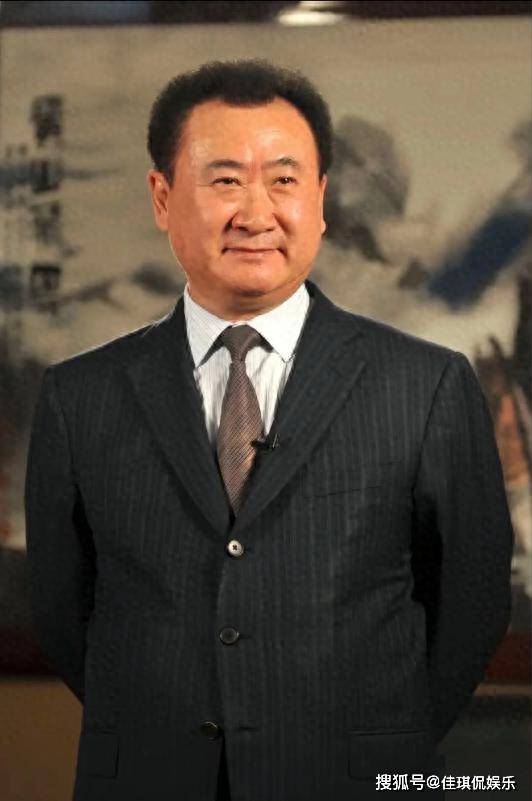
卖卖卖之后,王健林首次拿回一座万达广场
Mei Ri Jing Ji Xin Wen· 2025-12-03 11:25
Group 1 - Kunhua (Tianjin) Equity Investment Partnership and Kunyuanchengxing (Xiamen) Investment Management Consulting Co., Ltd. have exited as shareholders, with Shanghai Wanda Ruichi Enterprise Management Co., Ltd. becoming the sole controlling shareholder [1] - The new shareholder, Shanghai Wanda Ruichi, is a subsidiary of Dalian Wanda Commercial Management Group, which is the core enterprise of Wang Jianlin's Wanda Group [2][6] - The Yantai Zhifu Wanda Plaza, which was repurchased by Wanda, was established in November 2010 with a registered capital of 708 million RMB [5] Group 2 - Dalian Wanda Commercial Management Group has been facing a debt crisis, with 56 instances of equity freeze risk and 4 high-risk execution information reported [6] - In an effort to recover financially, Wanda has sold various assets, including 100% of Wanda Hotel Management Co. for 2.49 billion RMB and 30% of Kuaiqian Financial for 240 million RMB [6] - As of October 1, Wanda has sold over 80 Wanda Plaza locations, including those in Xuancheng, Tongling, Anyang, Siping, and Yangzhou [7]

王健林限高已解除,虚惊一场?
Sou Hu Cai Jing· 2025-09-29 02:20
Core Viewpoint - The recent removal of the high consumption restriction on Wang Jianlin, chairman of Wanda Group, highlights the company's ongoing financial struggles and the impact of economic disputes on its operations [1][2]. Group 1: Financial Situation - Wang Jianlin was previously restricted from high consumption due to economic disputes involving Wanda's subsidiary projects, indicating ongoing financial challenges within the company [2]. - Wanda Group has been selling off assets to manage its significant debt, which has exceeded hundreds of billions, with over 50 billion yuan in assets sold just this year [2]. - Notable asset sales include the complete stake in Wanda Hotel Management for 2.49 billion yuan and the sale of 48 Wanda Plazas in major cities for an estimated 50 billion yuan [2]. Group 2: Historical Context - Since 2017, Wanda has faced severe financial pressure, leading to asset divestitures to survive amidst mounting liabilities [2]. - The company's struggles are underscored by the drastic shift from its previous status as a leading real estate giant to its current predicament [3].
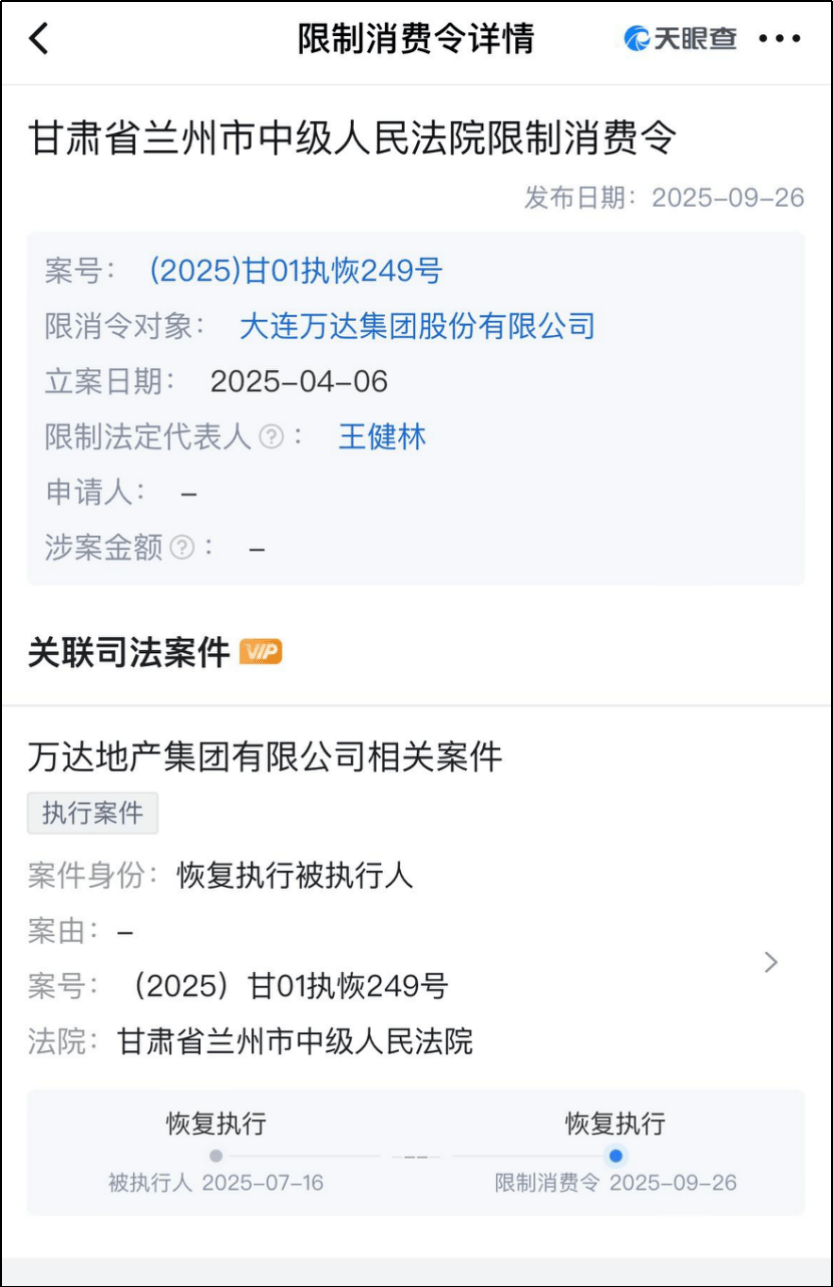
知情人士回应王健林被限高:或因执行层面信息不对称导致
Guan Cha Zhe Wang· 2025-09-28 07:53
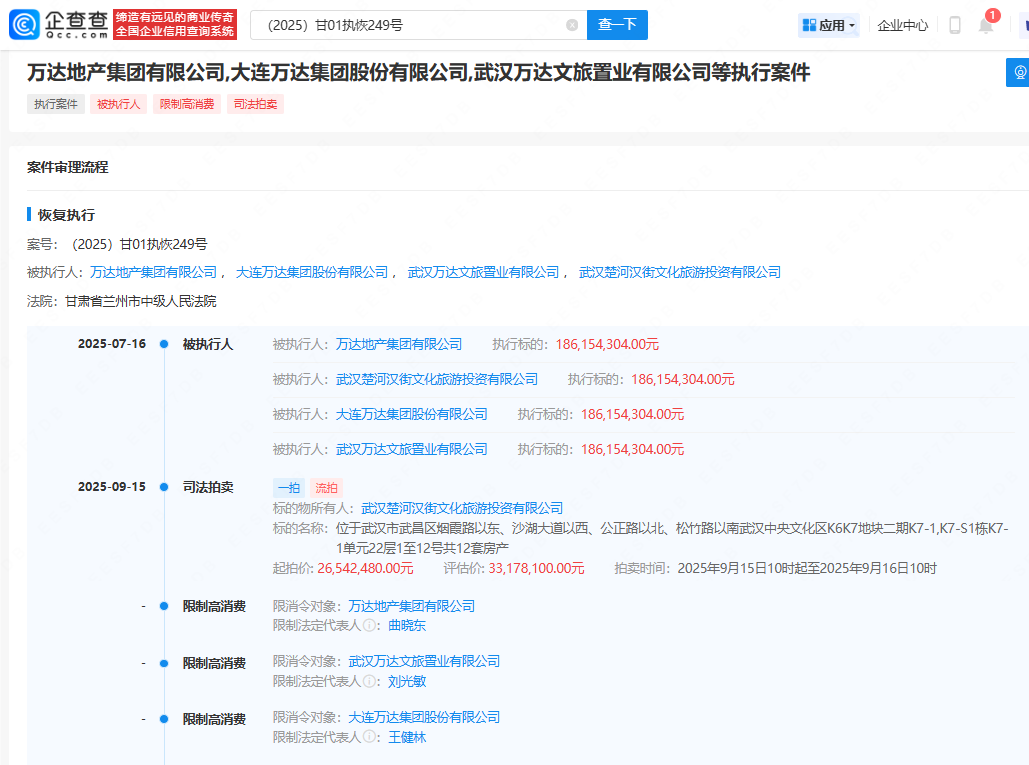
Core Viewpoint - Dalian Wanda Group and its legal representative Wang Jianlin have been restricted from high consumption due to economic disputes involving subsidiary project companies, despite the company selling multiple assets to alleviate its debt burden [1][6]. Group 1: Company Financial Situation - Dalian Wanda Group has sold seven Wanda Plazas this year as part of its asset disposal strategy, but it has not successfully extricated itself from its debt issues [1][6]. - The total amount involved in the execution case against Dalian Wanda Group is approximately 186 million yuan (about 27 million USD) [2]. - The company has a total of 10 execution records with a cumulative amount exceeding 5.2 billion yuan (about 740 million USD) [4]. Group 2: Legal and Financial Actions - The court issuing the consumption restriction is the Intermediate People's Court of Lanzhou, Gansu Province [1][2]. - Recently, Dalian Wanda Group's shares worth 8 billion yuan (about 1.1 billion USD) have been frozen, with the freezing period set from September 1, 2025, to August 31, 2028 [4][5]. - The company has faced multiple instances of share freezes, which are directly linked to its debt issues, with each freeze corresponding to unpaid debts [6]. Group 3: Historical Context and Strategic Moves - The company's debt pressure primarily stems from previous investment missteps, particularly in large-scale cultural tourism projects initiated in 2016 [7]. - Wang Jianlin's attempts to list the company on the A-share market to raise funds have failed three times between 2016 and 2023, exacerbating the debt burden [7]. - In 2022, Wanda sold 26 Wanda Plazas and lost control of Zhuhai Wanda Commercial Management, reducing its stake from 78.83% to 40% [7]. Group 4: Recent Developments - In 2023, the pace of asset sales has accelerated, with significant transactions including the sale of Wanda Hotel Management Company for 2.49 billion yuan (about 360 million USD) and the sale of 48 Wanda Plazas [9]. - A consortium involving major firms like Tencent and JD.com has been formed to acquire Wanda's assets, with a total investment of 22.43 billion yuan (about 3.2 billion USD) [9].
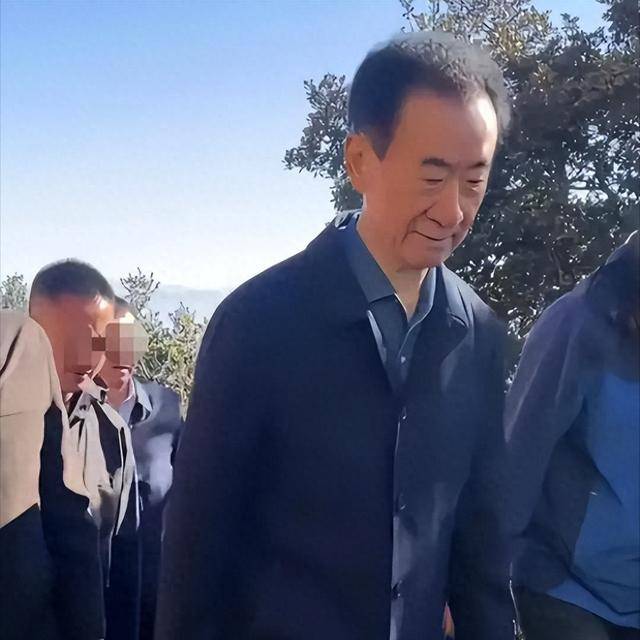
再难翻身?刚还完6000亿外债,71岁的王健林又迎来大麻烦
Sou Hu Cai Jing· 2025-08-14 07:55
Core Viewpoint - The article discusses the financial struggles of Wanda Group and its founder Wang Jianlin, highlighting the significant debt and asset sales that have characterized the company's recent history [1][3][30]. Financial Situation - Wang Jianlin faces a court execution order of 2.4 billion yuan (approximately 0.34 billion USD) and a total debt of 7.6 billion yuan (approximately 1.07 billion USD) [4][6]. - In response to financial pressures, Wanda has sold 48 Wanda Plazas and its headquarters, along with 1,300 cinemas and 77 hotels, in a bid to recover cash flow [6][10][11]. - The company previously had a staggering 600 billion yuan (approximately 85.7 billion USD) in external debt, indicating a severe financial crisis [6][30]. Strategic Retreat - The article describes a strategic retreat by Wanda, with Wang Jianlin adopting a "sell, sell, sell" approach to stabilize the company [8][28]. - Since 2024, Wanda has transferred ownership of 26 Wanda Plazas and other significant assets, marking a drastic shift from its previous expansion strategy [10][11]. Family Dynamics and Reputation - The article contrasts Wang Jianlin's efforts to stabilize the company with his son Wang Sicong's public persona, which has been marred by personal controversies and a lack of focus on the family business [15][19]. - Wang Sicong's loss of control over his business ventures, including the transfer of his stake in Huanju Commercial to a competitor, symbolizes a generational shift and potential instability within the family business [23][24]. Broader Implications - The dual crises of financial and reputational challenges suggest that Wanda Group is facing a complex situation where both tangible and intangible assets are under threat [30][32]. - The article raises concerns about the future leadership of the company, questioning whether Wang Jianlin can navigate these challenges effectively while his son appears to be detracting from the family's legacy [28][30].
王健林想不到,刚卖完家当不到72小时,刘强东就出了这么大的风头
Sou Hu Cai Jing· 2025-07-29 11:13
Group 1 - The article discusses the rise and fall of prominent business figures, particularly focusing on Wang Jianlin and Liu Qiangdong, highlighting the contrasting paths they are currently taking [2][4][6] - Wang Jianlin, once a titan in the commercial real estate sector, is facing significant challenges, including asset sales and debt pressures, as he navigates a complex business environment [7][9][15] - Recent developments include China Ruyi's announcement of acquiring a 30% stake in Kuaiqian Financial for 240 million yuan, marking a strategic shift for Wang Jianlin's Wanda Group [11][13][15] Group 2 - Wang Jianlin's asset divestitures are part of a broader strategy to alleviate financial strain, with this being the third major asset sale in six months [15][27] - The article notes that Wanda has faced legal challenges from former partners like Suning and Rongchuang, further complicating its financial situation [29][30] - In contrast, Liu Qiangdong is expanding his business ventures, recently launching a new delivery service and a "product partner" program, showcasing a proactive approach to growth [31][32][37] Group 3 - Liu Qiangdong's recent participation in high-profile events, including a meeting with national leaders, underscores his rising prominence and the government's support for private enterprises [41][45][49] - The article emphasizes the stark differences in the trajectories of Wang Jianlin and Liu Qiangdong, illustrating how market dynamics and personal choices shape their respective fates [53][57][66] - The narrative concludes with a reflection on the inevitability of change in business, suggesting that no one remains at the top forever, as new leaders emerge [68][69][71]