恩益坦®(奥马珠单抗生物类似药)

Search documents
老业务“失血”,新故事“烧钱”:新诺威的2亿元亏损是起点还是终点?
Hua Xia Shi Bao· 2026-01-22 10:52
Core Viewpoint - The company, XinNuoWei, is undergoing a significant transformation from a traditional caffeine producer to an innovative pharmaceutical platform, resulting in substantial financial losses for 2025, with projected losses between 170 million to 255 million yuan, marking a drastic decline compared to the previous year's profit of 53.73 million yuan [6]. Financial Performance - The net profit attributable to shareholders is expected to be a loss of 170 million to 255 million yuan, a decline of 416% to 575% compared to the same period last year [6]. - The net profit after deducting non-recurring gains and losses is projected to be a loss of 210 million to 315 million yuan, a decrease of 596% to 844% year-on-year [6]. R&D Investment - The company plans to invest approximately 1 billion yuan in R&D for the year 2025, an increase of 18.76% year-on-year, which is the primary reason for the financial losses [4]. - The R&D spending has led to significant milestones, including the approval of four antibody drugs, six ADC products, and one mRNA vaccine for clinical trials [4]. - High R&D expenditure is common during the transformation phase of pharmaceutical companies, with leading international firms often exceeding 30% in R&D expense ratios [4]. Traditional Business Challenges - The traditional functional raw materials business, primarily caffeine products, has seen increased sales but a significant decline in gross margins due to market conditions, leading to reduced profit contributions [5]. - The company is experiencing a "transition phase" where the old business model is losing momentum while the new innovative pipeline is still developing [8]. Strategic Moves - XinNuoWei has initiated a dual strategy by applying for a listing on the Hong Kong Stock Exchange and establishing a joint venture focused on GLP-1 drugs, aiming to alleviate financial pressures and enhance its market position [10]. - The joint venture will focus on the GLP-1 market, which is expected to face intense competition and pricing pressures as multiple companies are preparing to launch similar products [12]. Future Outlook - The success of the innovative drug segment in reversing the current financial situation remains uncertain and will require time to validate [10]. - The company’s ability to leverage its GLP-1 assets and maintain R&D funding while navigating a competitive landscape will be critical for its future profitability [12].

老业务“失血”,新故事“烧钱”:新诺威的2亿元亏损是起点还是终点
Xin Lang Cai Jing· 2026-01-21 10:25
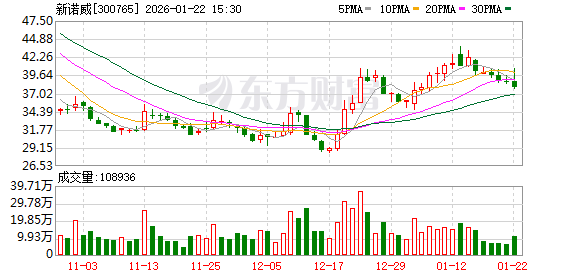
Core Viewpoint - New Nuo Wei (300765.SZ), a subsidiary of Shijiazhuang Yiling Pharmaceutical, is projected to incur a significant loss of between 170 million to 255 million yuan in 2025, marking a stark decline of 416% to 575% compared to the previous year's profit of 53.726 million yuan, indicating a dramatic shift from a peak net profit of over 700 million yuan in 2023 to its first annual loss in six years [2][13]. Group 1: Financial Performance - The anticipated net loss for 2025, excluding non-recurring gains and losses, is expected to be between 210 million to 315 million yuan, representing a decline of 596% to 844% from the previous year's profit of 42.342 million yuan [2][13]. - The company is experiencing a significant increase in research and development (R&D) expenditure, projected at approximately 1 billion yuan for 2025, which is an 18.76% increase year-on-year, contributing to the financial losses [5][16]. - The fourth quarter of 2025 is expected to see a substantial increase in losses, with estimated net losses ranging from 146 million to 231 million yuan, indicating a continuous decline in profitability over five consecutive quarters [7][18]. Group 2: Strategic Transition - New Nuo Wei is undergoing a strategic transformation from a traditional caffeine product leader to an innovative pharmaceutical platform, which involves substantial R&D investments aimed at expanding its drug pipeline [3][14]. - The company has achieved significant milestones in its R&D pipeline, including the approval of four antibody drugs, six ADC products, and one mRNA vaccine for clinical trials, reflecting a proactive approach to future growth despite current losses [5][16]. - The acquisition of an 80% stake in its subsidiary, Jushi Bio, for 1.1 billion yuan has increased the financial burden, as Jushi Bio is not yet profitable and its losses are now more pronounced in New Nuo Wei's financial statements [6][17]. Group 3: Market Position and Future Prospects - New Nuo Wei has submitted an application for a Hong Kong IPO under the name "Shijiazhuang Innovation," aiming to alleviate financial pressures and support its innovative drug business [19]. - The establishment of a joint venture focused on GLP-1 assets is part of a broader strategy to penetrate the weight loss and diabetes market, with the company investing approximately 158 million yuan for a 35% stake [22]. - The competitive landscape for GLP-1 drugs is intensifying, with over 30 competing products in the pipeline, raising concerns about market share and profitability for New Nuo Wei's upcoming products [23].

创新药企扎堆港股IPO
2 1 Shi Ji Jing Ji Bao Dao· 2025-12-12 07:53
Group 1 - The Hong Kong stock market for biopharmaceutical IPOs has seen a significant increase in activity, with multiple companies like Jiahe Biotech and Haisong Pharmaceutical submitting listing applications [2] - On December 10, Baoji Pharmaceutical's stock opened 129% higher on its first trading day, closing at HKD 69 per share, with a total market capitalization of HKD 22.493 billion [2] - In the first three quarters of this year, 28 healthcare companies successfully went public in China, a 100% increase year-on-year, with over 60% choosing the Hong Kong Stock Exchange [2] Group 2 - The quality assessment criteria for innovative biopharmaceutical companies are becoming more diverse, focusing on core R&D pipeline competitiveness, product commercialization progress, and profitability [4] - Companies like Junshi Biosciences and Gaohong Pharmaceutical are advancing in business development (BD) partnerships, while others like Haisong Pharmaceutical have entered the commercialization phase [4] - The global market for Tumor Infiltrating Lymphocyte (TIL) therapy is projected to grow from USD 104 million in 2024 to USD 1.692 billion by 2030, with China's first TIL therapy expected to enter the market around 2027 [4] Group 3 - The competition in the oncology drug development sector is intensifying, with Chinese companies conducting 39% of global clinical trials in this area, a significant increase from 24% five years ago [5] - Despite the influx of new entrants in the oncology space, achieving successful product development remains a challenge due to the need for substantial funding and resources [5] - Haisong Pharmaceutical is focusing on autoimmune diseases, with its drug Mufemilast expected to receive NDA approval in September 2025 for treating moderate to severe plaque psoriasis [5] Group 4 - Gaohong Pharmaceutical has established a partnership with Biohaven Therapeutics, receiving USD 10 million upfront and potential milestone payments totaling up to USD 2 billion [6] - Financial data indicates that Haisong Pharmaceutical reported a pre-tax loss of CNY 73 million, while Gaohong Pharmaceutical had a total revenue loss of CNY 190 million for the first half of 2025 [6] - The ongoing financial challenges highlight the need for effective commercialization strategies and BD collaborations to improve profitability and enhance company valuations [6] Group 5 - Shiyao Innovation is exploring a dual listing strategy ("A+H") to diversify its capital market presence, focusing on biopharmaceuticals and health products [8] - The company aims to commercialize two antibody drugs by the second half of 2024, while also developing mRNA vaccines that have been included for emergency use in China [8] - Financially, Shiyao Innovation recorded a net loss of CNY 226 million in the first seven months of 2025, emphasizing the need for substantial funding for ongoing R&D [8] Group 6 - The trend of "A+H" listings is becoming more common among biopharmaceutical companies, as seen with Baiyao Saitou's successful listing on the STAR Market after its previous IPO on the Hong Kong Stock Exchange [9] - However, some companies like Baili Tianheng have delayed their IPOs due to unfavorable market conditions, indicating a cautious approach to capital raising [10] - Investors are increasingly focusing on pipeline concentration, data differentiation, and cash flow management, shifting from storytelling to data-driven strategies for product development [10]
港股医药IPO热潮:从“讲故事”到“拼数据”,严把质量关
2 1 Shi Ji Jing Ji Bao Dao· 2025-12-12 04:48
Core Viewpoint - The Hong Kong stock market for biopharmaceutical IPOs has seen a significant increase in activity, with multiple companies successfully listing and others submitting applications, indicating a strong market outlook for biotech firms in the region [1][3]. Group 1: Market Performance - The biopharmaceutical sector in Hong Kong has experienced a surge in IPO activity, with 28 companies successfully listed in the first three quarters of the year, a 100% increase year-on-year, with over 60% being innovative drug companies [1]. - The IPO of Baoji Pharmaceutical on December 10 saw a first-day increase of 129%, closing at 69 HKD per share, leading to a market capitalization of 22.493 billion HKD [1]. - The Hong Kong stock market is currently the leading global venue for IPO financing in the healthcare sector, with expectations that it will remain the primary listing choice for Chinese biotech companies through 2026 [1][3]. Group 2: Company Developments - Companies like Junshi Biosciences and Gaohong Pharmaceutical have submitted IPO applications despite not having products approved for market, while He Mei Pharmaceutical and Shiyao Innovation have entered the commercialization phase [3]. - Junshi Biosciences is focused on innovative cell therapies for solid tumors, with its core product expected to be the first TIL therapy approved in China [3][4]. - He Mei Pharmaceutical is targeting autoimmune diseases, with its drug Mufemilast expected to receive NDA approval in September 2025 for treating moderate to severe plaque psoriasis [5]. Group 3: Financial Insights - Gaohong Pharmaceutical has entered a collaboration with Biohaven Ltd., receiving 10 million USD in cash and shares, with potential milestone payments totaling up to 2 billion USD based on product development and sales [6]. - Despite advancements in commercialization, both He Mei Pharmaceutical and Gaohong Pharmaceutical reported significant losses, with He Mei showing a pre-tax loss of 73 million CNY and Gaohong reporting a loss of 190 million CNY for the first half of 2025 [6]. Group 4: Industry Trends - The trend of "A+H" dual listing is becoming more common among biopharmaceutical companies, as seen with Shiyao Innovation's strategy to tap into multiple capital markets [7][8]. - The competitive landscape for TIL therapies is intensifying, with the global market expected to grow from 104 million USD in 2024 to 1.692 billion USD by 2030, and the Chinese market projected to reach 200 million USD by 2030 [4]. - The overall sentiment in the Hong Kong biopharmaceutical sector remains cautious, with companies focusing on pipeline quality and financial management to navigate the current market challenges [9].