手膜

Search documents
2025年手护理电商消费趋势
知行战略咨询· 2026-01-14 14:08
Investment Rating - The report indicates that the hand care market is approaching saturation, with a mixed performance across different e-commerce platforms [7][10][12]. Core Insights - The hand care product category includes items designed for cleaning, protecting, repairing, and beautifying hand skin and nails, focusing on maintaining skin health and addressing issues like dryness and aging [5]. - The e-commerce sales of hand care products have shown fluctuations over the past three years, with Tmall maintaining the largest market share despite a decline in sales [7][10]. - The report highlights significant growth in specific product categories, particularly hand creams and masks, while other categories like hand sanitizers are experiencing declines [10][15]. Summary by Sections E-commerce Market Overview - The hand care online market has shown no significant growth, indicating saturation. Tmall's sales in 2023 declined by 8.9% compared to 2022, but it still holds a 51.7% market share. JD's sales have continuously decreased, with a projected 2024 sales of 895 million, representing a market share of 19.2%. Douyin has seen rapid growth, with 2024 sales reaching 1.355 billion, increasing its market share from 15.5% in 2022 to 29.1% [7][8][10]. Product Category Performance - In 2024, hand cream sales on Taobao reached 1.666 billion, growing by 15.7%, while hand masks grew by 4.7%. However, hand sanitizer sales fell by 9.9% [10]. - On JD, hand care sales are projected to decline by 14.4% in 2024, with hand creams and sanitizers making up 98% of the total sales, both experiencing slight declines [12]. - Douyin's hand care sales are expected to grow by 25.3% in 2024, with hand creams accounting for 87% of the sales, reaching 1.184 billion, and hand masks growing by 52.3% [15]. Brand Rankings - The top brands in the hand care category on Tmall for 2024 include L'Occitane with sales of 331 million, followed by Roopy and Aarye. On JD, L'Occitane also leads with sales of 198.65 million, while Safeguard and Walch follow [17][21]. - Notable growth rates were observed for brands like Roopy and NUJET on Tmall, with growth rates of 86.7% and 211.7% respectively [19]. Market Trends - The report indicates a shift in consumer preferences, with a notable increase in demand for hand creams and masks, while traditional categories like hand sanitizers are declining [10][15]. - The competitive landscape is evolving, with brands like L'Occitane and Roopy showing strong performance, while others like Shiseido and Vaseline are experiencing declines [17][21].
(第八届进博会)境外中小企业加码进博会 “小而美”产品受追捧
Zhong Guo Xin Wen Wang· 2025-11-07 10:18
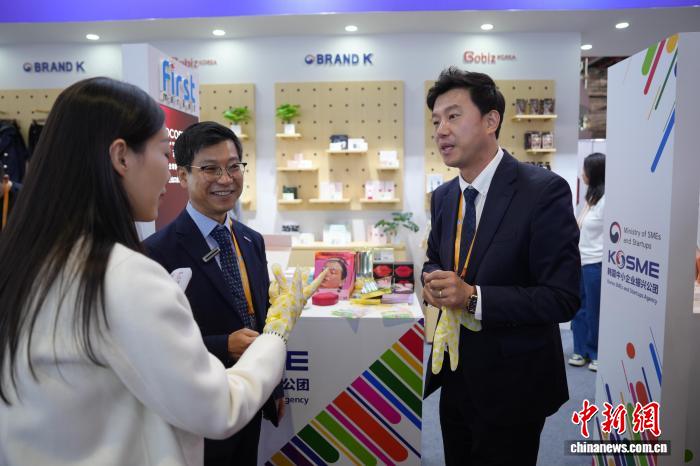
Core Insights - The eighth China International Import Expo (CIIE) is witnessing increased participation from overseas small and medium-sized enterprises (SMEs), with a focus on "small and beautiful" products that are gaining popularity among Chinese consumers [1][3]. Group 1: Australian Participation - The Australian Trade and Investment Commission is participating for the seventh time, showcasing over 160 Australian companies in a 1,000 square meter exhibition area [1]. - Australian SMEs are leveraging the expo to enhance brand visibility and promote exports of high-quality products such as fresh food, fruits, and health supplements to China [1]. - The Australian government is committed to supporting SMEs by providing policy interpretation and resource connection services to facilitate their entry into the Chinese market [1]. Group 2: South Korean Participation - The Korea SMEs and Startups Agency is participating for the third consecutive year, with 36 SMEs presenting over 100 products, including cosmetics and health products [1]. - A South Korean cosmetics company specializing in hand and foot masks achieved sales of 20 million RMB at the previous expo, indicating strong market interest [1]. - As of now, 11 South Korean companies have established a presence in China through the expo, with aspirations to enhance cooperation in sectors like automotive parts and biomedicine [1]. Group 3: Canadian Participation - The Canadian Exhibition and Trade Association has expanded its exhibition area from 72 square meters to 163 square meters, featuring over 100 products including maple syrup and wine [3]. - The number of Canadian companies participating has steadily increased from 60 in 2018 to 112 expected by 2025, reflecting the expo's positive reputation [3]. - Canadian enterprises have signed nearly 60 contracts with Chinese partners during this year's expo, showcasing the growing collaboration between the two markets [3].

面向未来-2025年中国面膜市场创新动向与全球消费趋势报告
Sou Hu Cai Jing· 2025-05-17 02:20
Market Size and Growth Characteristics - The online mask market in China is projected to reach 48.4 billion yuan by 2025, with Douyin leading at 26 billion yuan GMV and a growth rate of 32%, surpassing Taobao and Tmall as the core growth engine [1][11] - Sheet masks remain the mainstream product (89% market share on Douyin), while cream masks are experiencing explosive growth with a year-on-year increase of 174.77%, showcasing differentiated growth potential [1][11] - The global mask GMV is expected to reach 20-25 billion USD by 2025 and 30-40 billion USD by 2030, driven by consumption upgrades and technological iterations in the Asia-Pacific region, particularly in China and India [1][24] Core Consumer Trends and Product Innovations 1. Dual Drive of Efficacy and Emotional Value - Consumer demand is shifting from "ingredient competition" to "emotional value," with the term "self-care skincare" seeing a year-on-year increase of 2169%. Masks are becoming a ritual for self-healing [1][12] - Anti-aging products account for 19% of market share, but 42% of consumers focus on barrier repair, pushing products towards "cell-level precise response" upgrades, such as biomanufacturing and AI customization [1][12] 2. Technological Innovations Reshaping Product Forms - Plant fiber and lyocell mask materials occupy over 50% of the market, with ultrasonic composite mask materials (up 672% year-on-year) enhancing essence penetration [2] - Fresh-lock technology (volume up 244.16%) and freeze-drying technology (volume up 125.33%) preserve active ingredients effectively [2] - Cream masks are expanding from mud-like textures to creams and gels, with innovations like cooling sensations (volume up 477%) and collagen water glow (volume up 498%) enhancing user experience [2] 3. Market Segmentation and Scenario Breakthroughs - Localized care products for specific areas, such as eye and nasolabial fold masks, are seeing significant GMV growth, with products like KAZOO's eye mask providing targeted solutions [3] - Personal care masks for hands, necks, and feet have an online scale of 710 million yuan, with notable growth in Douyin neck masks and Kuaishou foot masks [3] - Four potential categories are emerging: instant (emergency repair), intensive (periodic care), precise (targeted care), and experiential (multi-sensory SPA) masks, reshaping market dynamics [3] Global Market Landscape and Localization Strategies 1. Regional Differentiated Competition - In Southeast Asia, markets in Vietnam and Indonesia have surpassed 100 million yuan in scale within six months, with TikTok Shop as a growth driver, focusing on low-price strategies and localized selections [4][5] - In the US, mid-to-high-end masks account for 84% of the market, emphasizing "collagen + PDRN" anti-aging formulas; Singapore's average transaction price reaches 535.8 yuan, indicating a significant luxury trend [4][5] 2. Sustainability and Technological Integration - Environmental policies are driving the adoption of biodegradable mask materials and bottle recycling initiatives, such as Proya's green packaging plan [6] - Biomanufacturing technologies (e.g., recombinant collagen, microencapsulation) enhance ingredient precision, while the "carbon-negative beauty" concept is gaining traction, with blue algae carbon-sequestering masks seeing a year-on-year volume increase of 125% [6] Future Development Paradigms - The mask industry is expected to exhibit a dual trend of "technological democratization" and "emotional scenarioization," where advanced technologies lower the barriers for high-end ingredients, while fragrance design and skin-specific customization enhance emotional value [7] - Brands need to balance breakthroughs in hard technology (e.g., cell-level repair) with soft power engagement (e.g., cultural resonance) to build competitiveness in the global market through "technological adaptation + localized innovation" [7]

走访300+消费公司后,我发现了一个超级品牌的共性
Hu Xiu· 2025-04-10 06:35
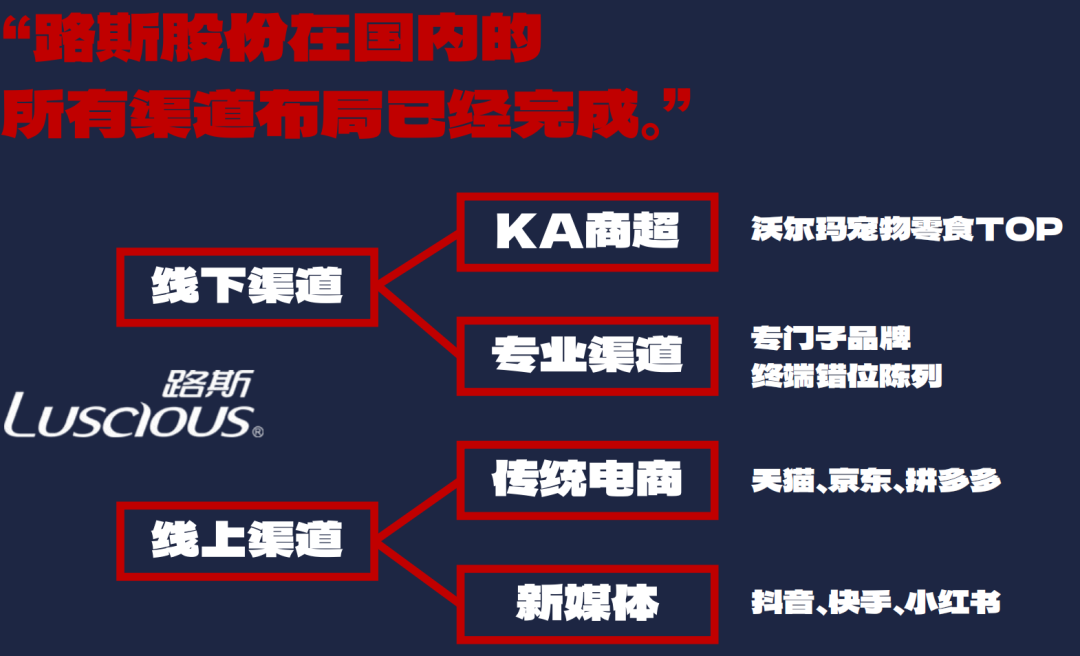
Core Insights - The core barrier for consumer goods and retail across cycles is the development of channels and brands, with a focus on how companies leverage these elements to create sustainable growth. Group 1: Channel Development - Super channels incubate super brands, with successful brands like Coca-Cola and Nestlé relying heavily on channel strength [2][10] - Companies like Lusi Co., which initially focused on international markets, have shifted to domestic markets by building strong channel networks rather than solely relying on social media platforms [5][8] - Lusi Co. has established a comprehensive channel presence, including major retail systems and online platforms, to support its brand growth [6][7][8] Group 2: Product Focus - The concept of "super products" is crucial, as seen in brands like Mixue Ice City and Luckin Coffee, which focus on strategic single products to drive brand recognition [11][12] - The case of "Boss Loves Fish" illustrates how focusing on a single product can lead to brand success, emphasizing the importance of product quality and differentiation [17][12] Group 3: Brand Power - The essence of consumer goods barriers lies in brand strength rather than just channel or product power, as highlighted by historical examples from Coca-Cola [40][41] - The evolution of brand competition has transitioned from product competition to marketing competition, emphasizing the importance of storytelling and content in brand development [43][50] Group 4: Content Strategy - Effective content strategy is essential for brand growth, with a focus on creating engaging narratives that resonate with consumers [51][62] - Brands must adapt their content to different platforms, understanding that each medium has unique characteristics and audience expectations [106][100] - Successful brands like Banmu Huatian have leveraged targeted content strategies across platforms to achieve significant sales growth [108][110] Group 5: Market Trends - The rise of new media platforms has transformed consumer engagement, with brands needing to adapt their strategies to remain relevant in a rapidly changing market [106][125] - The case of Zibo barbecue demonstrates how viral marketing can create significant brand awareness and consumer interest [70][72] Group 6: Case Studies - The example of "Ren Yang Yi Tou Niu" illustrates how storytelling and community engagement can enhance brand value and consumer loyalty [168][171] - The strategic use of KOLs (Key Opinion Leaders) in marketing campaigns can effectively drive brand recognition and sales [120][119]