
抹灰机器人

Search documents
机器人“组团上岗”,智能建造场景上新
Ke Ji Ri Bao· 2025-12-15 06:26
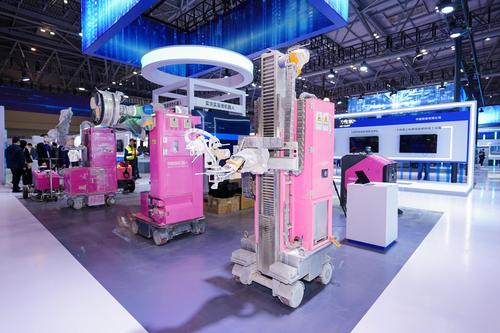
Core Insights - The construction industry is transitioning towards standardization, industrialization, intelligence, and sustainability through the integration of data elements and advanced technologies like BIM, prefabricated buildings, and robotic construction [1][7] Group 1: Technological Advancements - The use of robots in construction has significantly improved efficiency, with a plastering robot achieving a precision of 0.3 mm and completing 3 square meters per minute, which is four times faster than manual labor [1] - The competition showcased 146 innovative results from 109 units across over 20 provinces, highlighting the leap from "single-point technology breakthroughs" to "full-scene implementation" in smart construction [3] - Robots are now integrated into a systematic work network, utilizing BIM, FMS, and WMS systems to create a closed-loop of task execution and material delivery [3][4] Group 2: Collaborative Work Models - The collaborative operation of construction robots has transformed job sites, enhancing efficiency, quality, and safety while reducing reliance on human labor [4] - Advanced technologies are essential for the promotion of robots in construction, with modular intelligent controllers reducing development cycles by over 50% [5] Group 3: Smart Construction Applications - Smart construction is driven by data, enabling full-process collaboration and real-time monitoring of project design, production, and construction progress [6] - The integration of AI in construction has led to significant improvements, such as a 30% reduction in equipment failure rates and a 40% increase in yard turnover rates [7] Group 4: Expanding Application Scenarios - New application scenarios for smart construction are emerging, including drone inspections, wall-climbing robots for bridge diagnostics, and underwater robots for tunnel monitoring [8] - The city of Chongqing has developed ten typical applications in digital engineering, achieving a 70% reduction in pipeline damage incidents and a 100% digitalization rate in core business processes [8] Group 5: Policy and Investment - Chongqing is implementing a comprehensive policy approach to promote the intelligent and modern transformation of the construction industry, with a total investment of 37.4 billion yuan in signed projects [9] - The national strategy during the 14th Five-Year Plan period emphasizes the rapid development of smart construction and the application of advanced technologies and materials [9][10]


机器人“组团上岗” 智能建造场景上新
Ke Ji Ri Bao· 2025-12-15 00:33
Core Insights - The construction industry is undergoing a transformation towards standardization, industrialization, intelligence, and sustainability, driven by the integration of data elements and advanced technologies like BIM, prefabricated buildings, and robotic construction [1][5]. Group 1: Technological Advancements - The third National Construction Robot Competition showcased 146 innovative results from 109 units across over 20 provinces, highlighting the leap from "single-point technology breakthroughs" to "full-scene implementation" in intelligent construction [1]. - Robots such as the plastering robot can achieve a precision of 0.3 mm and complete 3 square meters of work per minute, which is four times more efficient than manual labor [1]. - The use of AI algorithms in robots, like the vibrating robot from Zhejiang Futike Technology Co., allows for optimal path planning and ensures concrete density meets the best standards, addressing quality issues in traditional manual processes [2]. Group 2: Collaborative Work Models - The collaborative work model of robots has changed the construction site landscape, with various robots working together to enhance efficiency, quality, and safety [3]. - The integration of BIM, FMS (robot collaborative management), and WMS (warehouse management) systems allows for seamless coordination among robots, transforming them from isolated tools into components of a systematic work network [2]. Group 3: Smart Construction and Data Utilization - Smart construction relies on data-driven processes for full-cycle collaboration, with real-time data on project design, component production, and construction progress displayed on large screens [4]. - The integration of QR codes with construction components allows robots to automatically identify, grab, and install parts, leading to standardized production and intelligent construction on-site [4]. Group 4: Expanding Application Scenarios - The application scenarios for intelligent construction are continuously evolving, with drones, wall-climbing robots, and underwater robots being deployed for risk inspection and monitoring of urban infrastructure [6]. - The development of a "digital twin community" model showcases the integration of smart renovation technologies and community governance data, enhancing residential services and security [6]. Group 5: Policy and Investment - As a national pilot city for intelligent construction, Chongqing is implementing a series of policies to promote the modernization of the construction industry, with a total investment of 37.4 billion yuan in signed projects [7]. - The Chinese government is actively promoting intelligent construction and advanced technology applications during the 14th Five-Year Plan period, aiming for accelerated transformation and high-quality development in the housing and urban construction sector [7].
抹灰效率翻两倍 人机协作更稳当
Hang Zhou Ri Bao· 2025-12-03 02:41
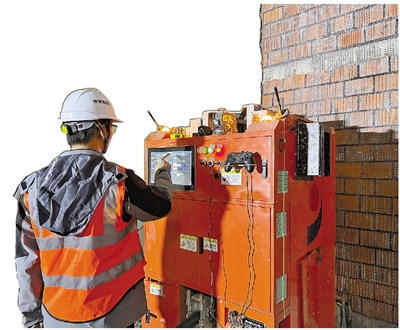
Core Insights - The introduction of plastering robots significantly enhances construction efficiency and quality, with reports indicating that these robots can complete tasks in two hours that would traditionally take a day for human workers [3] - The robots provide consistent force application, reducing issues such as cracking and hollow spots that are common with manual plastering, achieving a precision error of only 1.8 millimeters compared to the standard of 4 millimeters [3] - The use of robots eliminates the need for scaffolding, improving safety for workers and allowing them to focus on detailed finishing work [3] Group 1 - The plastering robot can complete tasks in two hours, which traditionally takes a day for human workers [3] - The robot's consistent application of force leads to improved quality, reducing the likelihood of defects such as cracking [3] - The precision of the robot's work is significantly better, with an error margin of 1.8 millimeters compared to the acceptable standard of 4 millimeters [3] Group 2 - The use of robots in construction has increased overall efficiency by more than two times [3] - The elimination of scaffolding reduces safety risks for workers, allowing them to work from lifts instead [3] - The introduction of other robots, such as floor grinding robots, further enhances construction site safety and health by controlling dust levels effectively [3]
深圳市住建系统“质量月”观摩交流会在南山举行
Nan Fang Du Shi Bao· 2025-09-19 13:41
Core Insights - The Shenzhen construction system's "Quality Month" event emphasizes comprehensive quality management and the promotion of a quality-driven nation [1] - The Southern University of Science and Technology Medical College project showcases advanced management practices and construction techniques, serving as a model for quality and safety in construction [1] Group 1 - The event features 11 exhibition areas, including topics such as prefabricated structures, drones, and quality inspection, aimed at enhancing construction quality and smart management [1] - The Southern University of Science and Technology Medical College project is a pilot for intelligent construction, integrating smart production, construction, and operation throughout the project lifecycle [1][2] - The project emphasizes the integration of party building and quality management, establishing a project party branch to enhance organizational and institutional development [1] Group 2 - The project has developed an independent intelligent construction management platform based on smart site, BIM technology, and production management systems, creating a digital management environment [2] - Innovative construction robots, including transport, measurement, ALC installation, and plastering robots, were showcased, highlighting the transformative impact of smart equipment on construction [2]
国电南瑞江宁基地主体结构封顶
Nan Jing Ri Bao· 2025-07-20 23:39
Group 1 - The project at Guodian NARI Jiangning Base aims to enhance construction efficiency through the use of various robots, including ground leveling robots and installation robots, as part of the 2025 Nanjing intelligent construction pilot program [1][2] - The total construction area of the project is 97,912 square meters, which includes dormitory buildings and supporting facilities [1] - The robots employed in the project utilize laser positioning systems and intelligent control technology to improve the precision of construction tasks, eliminating the need for secondary leveling processes [1] Group 2 - The project incorporates an intelligent construction engineering command center that features management platforms for production, quality, and equipment, allowing for real-time monitoring of project progress and safety [2] - AI algorithms combined with monitoring equipment enable remote supervision of the construction site, shifting safety management from post-event accountability to proactive prevention [2] - Guodian NARI's implementation of this project is intended to modernize the Jiangning Base's production and living facilities, thereby enhancing talent attraction and boosting the company's technological innovation and market competitiveness [2]

聚焦高质量发展丨湖北:智能建造助力建筑业向“新”发展
Xin Hua Wang· 2025-07-14 14:00
Core Insights - Hubei is systematically promoting the development of intelligent construction through industrialization, standardization, digitalization, and innovation in application scenarios [1] Group 1: Intelligent Construction Initiatives - The Guanggu Science Island project, a pilot for intelligent construction in Hubei, has integrated 5G tower crane remote control technology, allowing ground-level operation for material hoisting [2][4] - The project has also introduced plastering robots, which are 6 to 8 times more efficient than manual plastering, enhancing construction speed and precision [4] - The overall construction of Guanggu Science Island has reached a significant scale, with various infrastructure components completed, and the second phase expected to be operational by the second half of 2025 [4] Group 2: Advanced Construction Technologies - The use of unmanned cluster paving equipment in the expansion of the Jinggang'ao Expressway is set to alleviate traffic pressure, with completion expected by the end of September [5] - The project employs 3D paving technology, achieving millimeter-level precision and dynamic control of paving thickness and slope, significantly improving construction efficiency [6] - Prefabricated construction methods have reduced the time required for culvert construction by approximately 23 days compared to traditional methods [6] Group 3: Smart Project Management - The construction of the China Table Tennis Team's training base in Huangshi is utilizing a smart construction management platform, enhancing safety and quality control through real-time data monitoring [9] - The project encompasses a total area of 139,000 square meters, with significant progress made in various components, including the main training hall [9] - The integration of construction robots and AI technology has improved efficiency, precision, and resource utilization in the project [9] Group 4: Future Directions - Hubei is leveraging technological innovation as a driving force for the construction industry, aiming for a transition towards precision, digitalization, and sustainability [10]
非金属建材行业研究:涂料机器人应用提速
SINOLINK SECURITIES· 2025-03-03 07:35
Investment Rating - The report suggests focusing on companies involved in the application of robots in flooring and wall construction [6][23]. Core Insights - The construction industry in China is projected to reach a total output value of 32.65 trillion yuan in 2024, with a year-on-year growth of 3.9%. Despite the industry's expansion, the level of industrialization and informatization remains low, leading to inefficiencies [2][8]. - The labor shortage in the construction sector is becoming increasingly severe, with the number of migrant workers decreasing from a peak of 61.09 million in 2014 to approximately 45.82 million by the end of 2023, a decline of about 25% [2][8]. - The integration of artificial intelligence, sensor technology, and automation systems is providing robust technical support for the application of construction robots, enhancing efficiency and quality while addressing labor shortages [2][9]. Summary by Sections Section 1: Industry Development - The report highlights the significant progress in construction robot technology in China, particularly in flooring and wall construction applications. Robots such as leveling, troweling, and grinding machines are widely used, improving efficiency and reducing material waste [5][18]. - The application of spraying robots for interior and exterior walls has shown to be efficient, with low paint consumption and high work efficiency [5][18]. Section 2: Policy Support - The Chinese government has introduced a series of policies to promote intelligent construction, including the "14th Five-Year Plan for the Development of the Construction Industry," which emphasizes accelerating the research and application of construction robots [3][14]. - Local governments have also implemented supportive policies, including special funds and tax incentives, to bolster the development and application of construction robot technology [4][15]. Section 3: Case Studies - The report provides examples of successful robot applications in construction projects, such as the use of exterior wall spraying robots in Xiamen, which improved efficiency by 32% compared to manual labor [21]. - In the Wuxi Liangxi District Medical Center project, robotic teams reduced the workforce by approximately 60%, significantly easing project management burdens [21]. Section 4: Investment Recommendations - The report recommends focusing on companies that are actively deploying robots in flooring and wall construction, specifically mentioning leading paint company "Sankeshu" and others like "Beixin Building Materials," "Yasichuangneng," and "Oriental Yuhong" [6][23].