
爬壁机器人

Search documents
向“新”而行 “质”胜未来--中国铁建“十四五”发展新质生产力培育壮大新动能
Zhong Guo Chan Ye Jing Ji Xin Xi Wang· 2026-01-12 22:07
Core Viewpoint - China Railway Construction Corporation (CRCC) is driving an industrial leap through innovation during the 14th Five-Year Plan period, focusing on strategic national needs and the characteristics of the construction industry [1] Group 1: Strategic Development - CRCC is actively developing new productive forces and constructing a system that aligns with these forces, aiming to break down barriers to new momentum development [2] - The "1256" mid-to-long-term development strategy outlines CRCC's path for the next 10 to 20 years, with the goal of becoming a world-class modern enterprise and focusing on upgrading traditional construction and nurturing strategic emerging industries [2] - The establishment of the CRCC Research Institute and various industry technology research institutes supports a systematic innovation framework, enhancing the development of strategic emerging industries and providing a robust support system for a "second growth curve" [2] Group 2: Technological Advancements - CRCC is committed to overcoming key technical challenges and has achieved significant breakthroughs, such as the independent development of a 8.61-meter main bearing for shield machines, positioning itself at a world-leading level in this area [4] - The company has made strides in green production, with significant orders for bamboo-wound pipelines, indicating a strong market potential in the new materials sector [4][5] - Innovations in other fields include the development of aerogels and new photocatalytic materials, which have entered the market for air purification and building materials [5] Group 3: Digital Transformation - Since the 14th Five-Year Plan, CRCC has been promoting transformation through six key areas: high-end, intelligent, green, digital, refined, and international [6] - The company has developed advanced machinery for railway construction, such as the world's first thousand-ton high-speed rail bridge erection machine, showcasing its technological leadership [6] - CRCC is advancing digital transformation by establishing a computing power center and integrating technologies like Beidou and laser radar to enhance efficiency in design and construction processes [7]

机器人“组团上岗” 智能建造场景上新
Ke Ji Ri Bao· 2025-12-15 00:33
Core Insights - The construction industry is undergoing a transformation towards standardization, industrialization, intelligence, and sustainability, driven by the integration of data elements and advanced technologies like BIM, prefabricated buildings, and robotic construction [1][5]. Group 1: Technological Advancements - The third National Construction Robot Competition showcased 146 innovative results from 109 units across over 20 provinces, highlighting the leap from "single-point technology breakthroughs" to "full-scene implementation" in intelligent construction [1]. - Robots such as the plastering robot can achieve a precision of 0.3 mm and complete 3 square meters of work per minute, which is four times more efficient than manual labor [1]. - The use of AI algorithms in robots, like the vibrating robot from Zhejiang Futike Technology Co., allows for optimal path planning and ensures concrete density meets the best standards, addressing quality issues in traditional manual processes [2]. Group 2: Collaborative Work Models - The collaborative work model of robots has changed the construction site landscape, with various robots working together to enhance efficiency, quality, and safety [3]. - The integration of BIM, FMS (robot collaborative management), and WMS (warehouse management) systems allows for seamless coordination among robots, transforming them from isolated tools into components of a systematic work network [2]. Group 3: Smart Construction and Data Utilization - Smart construction relies on data-driven processes for full-cycle collaboration, with real-time data on project design, component production, and construction progress displayed on large screens [4]. - The integration of QR codes with construction components allows robots to automatically identify, grab, and install parts, leading to standardized production and intelligent construction on-site [4]. Group 4: Expanding Application Scenarios - The application scenarios for intelligent construction are continuously evolving, with drones, wall-climbing robots, and underwater robots being deployed for risk inspection and monitoring of urban infrastructure [6]. - The development of a "digital twin community" model showcases the integration of smart renovation technologies and community governance data, enhancing residential services and security [6]. Group 5: Policy and Investment - As a national pilot city for intelligent construction, Chongqing is implementing a series of policies to promote the modernization of the construction industry, with a total investment of 37.4 billion yuan in signed projects [7]. - The Chinese government is actively promoting intelligent construction and advanced technology applications during the 14th Five-Year Plan period, aiming for accelerated transformation and high-quality development in the housing and urban construction sector [7].

智能机器人向各行各业“突围” 技术“温度”赋能美好生活催生数千亿及大市场
Yang Shi Wang· 2025-12-10 03:06
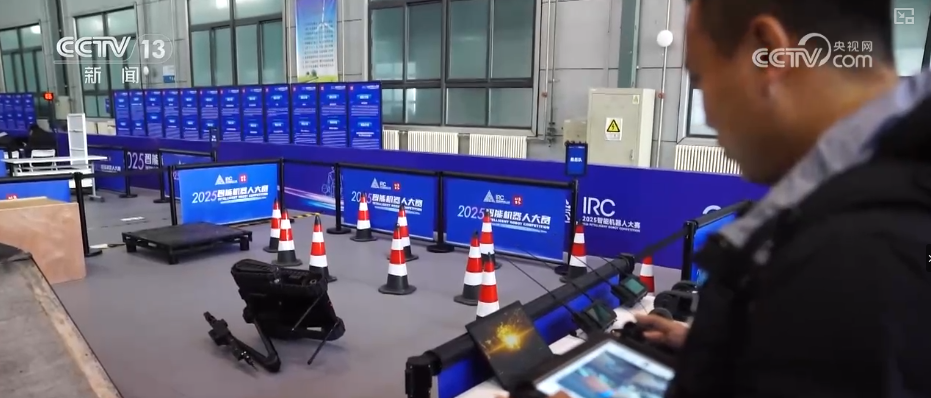
Core Insights - The 2025 Intelligent Robot Competition showcased advancements in emergency rescue, rehabilitation, and innovation, highlighting breakthroughs in technology autonomy, scene diversity, and human-centered services [1][11]. Emergency Rescue Robots - Emergency robots are evolving from tools to partners, capable of operating independently in extreme scenarios where human presence is risky [9]. - Robots demonstrated self-rescue capabilities during tasks, such as a bomb disposal robot that could right itself after tipping over, ensuring continued operation and minimizing risk to human operators [3][9]. - These robots utilize multi-dimensional perception systems to actively identify risks and hazards, serving as remote sensors in dangerous environments [5][7]. Rehabilitation and Elderly Care Robots - The competition featured a dedicated track for rehabilitation and elderly care robots, focusing on understanding and caring rather than just strength and speed [12]. - Innovations include exoskeleton robots equipped with brainwave receivers that predict user movements, enhancing rehabilitation outcomes through active collaboration [14][16]. - Robots are designed to assist the elderly in daily tasks, promoting autonomy and dignity, with applications in household chores and interaction [18][20]. - Despite advancements, challenges remain in the widespread adoption of rehabilitation robots due to high costs and the need for user-friendly interfaces [22]. Innovation in Robotics - The competition highlighted the expansion of robotic applications beyond traditional settings, with robots now operating in diverse environments such as deep sea and high altitudes [25]. - Innovative robots demonstrated capabilities in high-risk tasks, such as maintenance of wind turbines and power line de-icing, showcasing their potential to enhance safety and efficiency [27][30][31]. - The robotics industry is experiencing significant growth, with projections indicating that the market could double by 2030, particularly in the safety and emergency sectors [11][24][32].

2025智能机器人大赛落幕 这些突破性进展值得关注
Yang Shi Xin Wen· 2025-12-10 01:24
Core Insights - The 2025 Intelligent Robot Competition concluded, focusing on three main areas: emergency rescue, rehabilitation and elderly care, and all-domain innovation, showcasing significant advancements in technology autonomy, scene diversity, and human-centered services [1] Group 1: Emergency Robots - Emergency robots have achieved breakthroughs in autonomous survival and precise collaboration, exemplified by a robot that can self-right after tipping over during a simulated bomb disposal task, minimizing risks to human operators [2] - These robots are evolving from mere tools to partners, capable of operating independently in extreme environments where human presence is hazardous [2] - The market for emergency robots is expected to grow significantly, with the safety and emergency sector becoming a key growth area within the broader robotics industry, projected to double in size by 2030 [3] Group 2: Rehabilitation and Elderly Care Robots - Rehabilitation robots are increasingly addressing the needs of an aging population, integrating technology that enhances understanding and care, such as a new exoskeleton that uses brainwave signals to predict movement intentions [4] - The focus is on improving the quality of life for the elderly, with robots designed to assist in daily tasks, promoting autonomy and dignity rather than replacing human interaction [4][5] - The production of service robots has surged, with 13.5 million units produced in the first three quarters of the year, surpassing the total for 2024, indicating a growing market for rehabilitation and elderly care robots [6] Group 3: All-Domain Innovation Robots - Robots are expanding their applications beyond traditional settings, entering various sectors including high-altitude and underwater operations, demonstrating versatility and innovation [7] - The competition showcased robots capable of performing high-risk tasks, such as maintenance on wind turbines and ice removal from power lines, highlighting their potential to enhance safety and efficiency in hazardous environments [8] - The robotics industry is transitioning from quantity-driven growth to quality enhancement, with applications now covering 71 major sectors of the national economy, driving manufacturing upgrades and meeting public needs [9]
香港科创生态呈现“百花齐放”新格局
Xin Hua She· 2025-04-22 01:34
Group 1 - The Hong Kong government is seizing the opportunity to build an international innovation and technology center as part of the national "14th Five-Year Plan" [1][2] - The number of startups in Hong Kong increased by 10% in 2024 compared to the previous year, reaching a historical high, with total employment growing by 7% [2][3] - The establishment of the Hong Kong Microelectronics Research Institute in 2024 is seen as a significant vision for the semiconductor industry in Hong Kong [2][3] Group 2 - The Hong Kong Science Park is a major technology research and enterprise incubation base, showcasing the development of service robots that have successfully entered markets in Japan and Thailand [2][3] - The Hong Kong government has introduced 18 key enterprises in high-tech industries, including advanced manufacturing, artificial intelligence, and life health technology [3][4] - The Lok Ma Chau Loop Innovation and Technology Park is becoming a significant platform for collaborative innovation between Hong Kong and Shenzhen, with over 200 high-end research projects underway [4][5] Group 3 - Hong Kong is hosting several international events, including the Hong Kong International Innovation and Technology Expo, showcasing its strengths in innovation and technology [6][7] - The city is positioned as a "super node" in the global innovation network, facilitating the internationalization of mainland enterprises [6][7] - The Hong Kong government emphasizes its role as a platform for mainland companies to expand internationally, leveraging its highly internationalized environment [7]