招商核心竞争力A

Search documents
【干货】一图看懂2025年4季报,投顾组合基金背后的投资秘诀
银行螺丝钉· 2026-01-29 14:04
Core Viewpoint - The article provides an overview of the updated active fund manager pool information for the 2025 Q4 reports, highlighting key metrics such as investment style, stock ratio, industry preference, turnover rate, valuation of major holdings, concentration of holdings, and fund size [1][2][3]. Summary by Sections Fund Manager Information - The article includes a comprehensive list of fund managers categorized by investment style, such as deep value, growth, and balanced strategies, along with their respective fund names and codes [4][5][10][11]. Investment Style - Investment styles are crucial as they reflect the types of stocks held by the funds. The article notes that different styles have their strong and weak phases, with historical data showing a rotation between value and growth styles over the years [36][40]. Industry Preference - Fund managers typically focus on specific industries where they have expertise. The article emphasizes the importance of understanding these preferences to gauge potential performance [48][50]. Stock Ratio - The article discusses the stock ratio, indicating that active funds usually maintain a stock ratio around 85% to 90%, which affects the fund's volatility [45][46]. Concentration of Holdings - The concentration of holdings, defined as the proportion of the top ten stocks in the fund's net assets, is highlighted as a significant factor influencing fund volatility [53]. Valuation of Major Holdings - The article mentions that the valuation of major holdings is assessed based on the top ten stocks disclosed in the fund's reports, which may not always reflect real-time adjustments made by fund managers [56][58]. Turnover Rate - The turnover rate, which indicates how frequently stocks are bought and sold within the fund, is discussed. A turnover rate below 200% is considered low for active funds [59][60]. Fund Size - The size of the fund is noted as a critical factor, with larger funds potentially facing challenges in achieving excess returns due to management complexities [62][64]. Fund Manager's Perspective - The article emphasizes the importance of the fund manager's insights, which can provide valuable context regarding past performance and future market outlooks [70][74].


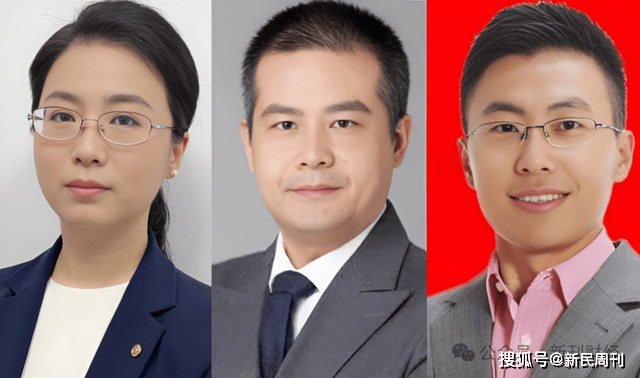
招商基金三首席同日上任!“去管理化”浪潮下高管密集换防为哪般
Sou Hu Cai Jing· 2025-06-02 06:18
Core Insights - The recent appointment of Zhu Hongyu and Wang Jing as senior executives at China Merchants Fund is a notable move in an industry where many firms are reducing management layers, indicating a commitment to research and investment capabilities [1][3][7] - The company has experienced significant turnover in its investment research talent, with nine fund managers leaving in the past year, prompting the need for internal promotions to stabilize the team [7][8] Group 1: Executive Appointments - China Merchants Fund appointed Zhu Hongyu, Wang Jing, and Chen Fangyuan as company chiefs, a rare large-scale executive change in the industry [1][3] - Zhu Hongyu and Wang Jing were previously in roles as Chief Research Officer and Assistant General Manager, respectively, while Chen Fangyuan served as Chief Institutional Business Officer [3] Group 2: Performance Metrics - Zhu Hongyu manages funds with a total scale of 50.80 billion yuan, achieving a return of 45.61% for the "China Merchants Core Competitiveness" fund, ranking 222 out of 2878 similar products [4] - Wang Jing manages funds totaling 60.67 billion yuan, but has faced challenges with significant losses in several products, including a 41.90% decline in the "China Merchants Jin'an Growth Select" fund [4][5] Group 3: Industry Context - The public fund industry has seen a trend of senior fund managers resigning due to performance pressures and administrative burdens, contrasting with China Merchants Fund's strategy of promoting from within [3][7] - The company has reported stagnant revenue and profit figures over the past few years, with operating income of 57.57 billion yuan in 2022, 52.94 billion yuan in 2023, and 53.08 billion yuan in 2024, alongside net profits of 18.13 billion yuan, 17.53 billion yuan, and 16.5 billion yuan respectively [7]
朱红裕掌舵招商基金首只浮动费率产品,曾因重仓卫宁健康受到争议
Sou Hu Cai Jing· 2025-05-29 05:55
Core Viewpoint - The first innovative floating fee rate product from China Merchants Fund, named "China Merchants Value Select Mixed Securities Investment Fund," has been approved and is set to launch on June 4, 2025, aiming to align the interests of fund managers and investors through a performance-linked fee structure [2]. Fee Structure - The management fee for the fund is structured in three tiers: - 1.50% per year if the annualized return exceeds the benchmark return by 6% or more - 0.60% per year if the return falls below the benchmark by 3% or more - 1.20% per year for all other scenarios - This model breaks away from traditional fixed management fees, incentivizing fund managers to pursue excess returns and encouraging long-term investment by reducing short-term trading volatility [3]. Fund Management - The fund will be managed by Zhu Hongyu, who has 18 years of investment research experience and is currently the Chief Research Officer at China Merchants Fund. His management scale peaked at 11.978 billion yuan in 2023 but decreased to 5.08 billion yuan by May 2025 due to market adjustments and underperformance of certain products [3]. Historical Performance - Zhu Hongyu's previous funds include "China Merchants Core Competitiveness A," which achieved a return of 45.75% since its inception, and "China Merchants Social Responsibility A," which reported a loss of 2.29% over two years [4]. - The fund manager faced controversy for heavily investing in Weining Health, which saw a significant drop in stock price after the company's chairman was placed under investigation, leading to a 31% decline in one month [5].

一图看懂:主动优选基金经理,在2025年1季报里都说了啥?
银行螺丝钉· 2025-05-21 13:56
Core Viewpoints - The article summarizes the insights from fund managers based on their Q1 2025 reports, focusing on their investment strategies and market outlooks [1]. Group 1: Fund Manager Perspectives - Fund managers typically cover two main areas in their reports: a review of past investments and future market outlooks, with the latter being more significant [3]. - Different fund managers exhibit varying levels of detail in their reports, influenced by their investment styles, such as value or growth [3]. - The deep value style emphasizes low valuations and high dividend yields, primarily investing in sectors like finance, real estate, and energy [4][5]. - Growth value style focuses on companies with strong profitability and cash flow, often holding stocks for the long term [10]. Group 2: Deep Value Style Insights - Deep value style has shown strong performance from 2021 to 2024, while it underperformed in 2019-2020 [6]. - Fund managers express confidence in their holdings despite market uncertainties, citing factors like geopolitical changes and technological advancements as influential [7]. - The current market environment is characterized by structural changes, with some sectors facing prolonged competition, while others show clear competitive advantages [7]. Group 3: Growth Value Style Insights - Growth value managers highlight the resilience of high-frequency economic data and improved financing conditions, suggesting a positive outlook for the second quarter [12]. - They emphasize the importance of focusing on domestic economic transformation and internal demand rather than external pressures [12][13]. - Fund managers are adjusting their portfolios to capitalize on sectors like AI and healthcare, anticipating a shift in consumer behavior and market dynamics [15][16]. Group 4: Balanced Style Insights - The balanced style seeks to combine growth potential with valuation, often looking for stocks that offer good value relative to their growth prospects [26]. - Fund managers maintain a diversified approach, focusing on sectors with favorable valuations and growth potential, such as healthcare and technology [29][30]. - They express optimism about domestic consumption policies and liquidity, which may support market performance despite external uncertainties [30]. Group 5: Growth Style Insights - The growth style prioritizes companies with high revenue and profit growth, often accepting higher valuations for strong growth potential [39][40]. - Fund managers are actively seeking opportunities in emerging industries, such as renewable energy and technology, which are expected to drive future growth [41].