
拿破仑

Search documents
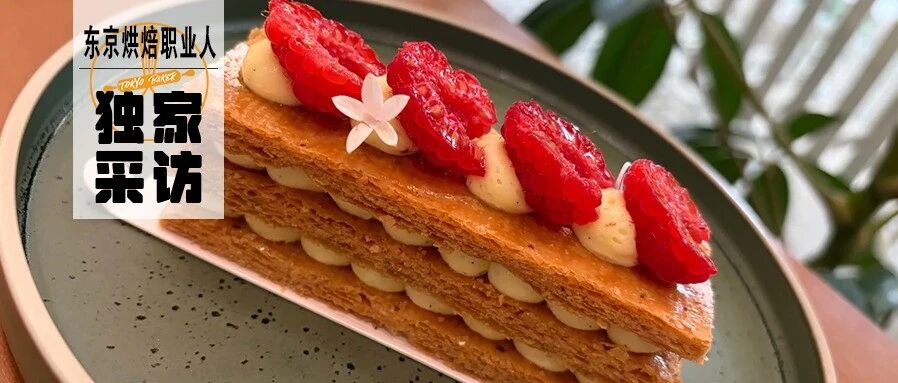
【独家专访】全上海最脆的拿破仑,藏在这里!「POPELINE」,把“高级感”做到刚刚好
东京烘焙职业人· 2025-11-12 09:01
Core Viewpoint - The article highlights the journey of Oliver, the founder of "POPELINE patisserie," emphasizing the importance of passion, quality ingredients, and the art of creating exquisite pastries, particularly the signature Napoleon dessert, which has become a defining product of the brand [2][4][13]. Group 1: Founder’s Background and Philosophy - Oliver transitioned from a stable career in advertising and luxury brand management to pursue his passion for pastry, studying in France for a year and a half [7][9][10]. - The brand "POPELINE" is inspired by a high-quality fabric, symbolizing simplicity and sophistication, focusing on using basic yet premium ingredients to create memorable experiences [12][22]. - The philosophy of "POPELINE" revolves around the idea that true quality does not require excessive decoration or complex recipes, allowing the natural flavors to shine [22][26]. Group 2: Product and Market Positioning - "POPELINE" has gained recognition as a "Napoleon specialty store," with each Napoleon made fresh to order within a strict ten-minute timeframe, emphasizing the importance of timing in delivering the best taste [13][16]. - The brand faced challenges in balancing sweetness levels to cater to customer preferences while maintaining the essence of French pastry [16][20]. - The focus is on refining a few core products rather than constantly innovating, ensuring that each item is memorable and can be enjoyed repeatedly [20][22]. Group 3: Operational Insights - Oliver manages every aspect of the production process, from creativity to preparation and cleaning, often working long hours to maintain quality [22][23]. - The experience of running a pastry shop has proven to be more challenging than anticipated, yet Oliver expresses no regrets, finding joy in the process and the connections made with customers [23][24].

新中式烘焙十年,为什么再没出下一个肉松小贝?
东京烘焙职业人· 2025-09-29 08:33
Core Viewpoint - The article discusses the evolution of the new Chinese baking industry over the past decade, highlighting the challenges in creating new "blockbuster" products like the "Meat Floss Little Cake" that once captivated the market. It emphasizes the need for a shift from short-lived trends to sustainable, long-term products that resonate with consumers' memories and experiences [5][38]. Group 1: Historical Context and Market Dynamics - The "Meat Floss Little Cake," developed by Bao Caisheng in 2004, became a nationwide sensation in 2014, marking a significant moment in the Chinese baking industry [3][4]. - This product represented a fusion of Chinese and Western flavors, breaking traditional boundaries and creating a new taste experience that appealed to consumers [6][11]. - The rapid expansion of bakery stores and the maturation of supply chain logistics in 2015 facilitated the widespread distribution of the "Meat Floss Little Cake," which was easy to standardize and replicate [8][9]. Group 2: Evolution of Product Categories - The new Chinese baking industry has undergone a transformation from "blockbuster" products to "evergreen" and "daily" products over the past decade [14]. - The "blockbuster phase" (2016-2018) was characterized by products that gained popularity through novelty and rapid social media sharing, such as salted egg yolk pastries and mochi [15]. - The "evergreen phase" saw products like egg yolk pastries become stable choices for consumers, focusing on long-term repeat purchases rather than short-term spikes in sales [17][20]. - The "daily phase" post-2020 integrated new Chinese baked goods into everyday consumer life, making them standard offerings in bakeries [22][23]. Group 3: Challenges and Market Saturation - The article notes that the market for new Chinese baked goods has become saturated, with the emergence of numerous similar products leading to intense competition and reduced profit margins [31][32]. - The rise of short video platforms has changed consumer behavior, making it difficult for any single product to achieve the same level of widespread attention as the "Meat Floss Little Cake" did in its heyday [26][29]. - Consumers are experiencing "taste fatigue," as the novelty of new flavors diminishes, leading to higher expectations for unique and memorable taste experiences [35][37]. Group 4: Future Directions - The industry must transition from a focus on one-time blockbusters to creating products that foster long-term consumer loyalty and repeat purchases [38]. - Emphasizing "scene economy" will be crucial, integrating baked goods into everyday life scenarios such as breakfast and celebrations to build consumer attachment [39]. - Establishing a "taste memory" rather than relying solely on trendy symbols will be essential for creating enduring products that resonate with consumers [42]. - A shift from "single product logic" to a "systematic logic" that combines product matrices and brand value is necessary for sustainable growth [44]. - Brands must develop self-sustaining cycles that focus on community engagement and long-term reputation rather than short-term viral marketing [45].
【书籍专题 · 亚洲咖啡西点 】全是干货!带你了解各国下午茶小知识
东京烘焙职业人· 2025-07-05 00:39
Group 1 - The article discusses the cultural significance and pairing of tea and snacks in China, highlighting traditional sayings about which snacks complement different types of tea [3][6]. - Green tea is noted for its refreshing taste and health benefits, particularly in inhibiting sugar absorption and promoting lipid metabolism, making it suitable to pair with sweet snacks like mung bean cake and pineapple cake [3][6]. - Red tea, with its rich flavor, pairs well with sour snacks, enhancing the overall taste experience and alleviating any astringency left after drinking [3][6]. - Oolong tea, being semi-fermented, is best enjoyed with savory snacks that preserve its aroma, while heavier snacks can be paired with black tea and Pu-erh tea, which help in digestion [6]. Group 2 - The article outlines the history of English afternoon tea, originating in the Victorian era, where it became a social event among the aristocracy [10][11]. - Afternoon tea is categorized into High tea and Low tea, with the former being a more casual standing affair for the working class, while the latter is a seated, elegant experience for the upper class [11]. - The traditional three-tiered serving structure of English afternoon tea is emphasized, with a specific order of consumption from savory to sweet [12][13]. - The atmosphere of afternoon tea is highlighted as an essential element, promoting social interaction and enjoyment [16]. Group 3 - French afternoon tea is characterized by its romantic and artistic approach to sweets, featuring classic pastries like macarons and éclairs paired with tea or coffee [20]. - Italian afternoon tea is described as casual and vibrant, focusing on strong coffee and rich chocolate desserts, reflecting the Italian culture's emphasis on flavor [24]. - Hong Kong's afternoon tea is noted for its casual and homely feel, with popular pairings like silky milk tea and pineapple buns, showcasing a blend of tradition and modernity [28].
面包店“剩菜盲盒”暴打网红烘焙店
东京烘焙职业人· 2025-04-25 07:23
以下文章来源于新消费101 ,作者考拉是只鹿 新消费101 . 《商业评论》出品,原新零售商业评论,用深度案例、前沿观点,和你一起探索新零售的1001种可能。 作者:考拉是只鹿 | 编辑:小鱼 "谁会和钱过不去呢? " 好文3668字 | 6分钟阅读 图源自 电影《幸福的面包》 " 下午 5 点抢 ' 剩菜盲盒 ' ,比抢演唱会门票还拼。 " 这是 " 面包脑袋 " 的 Ruby 最近生活的真实写照,甚至为此每天都按时设起了闹钟。 走进上海某网红路上的某网红烘焙店,货架上 " 日本进口面粉 "" 法国百年酵母 " 的标签与价签交 相辉映: 18 元一个海盐卷; 28 元一个贝果; 38 元一个水果挞 ……Ruby 的耳边仿佛响起了 《价格刺客狂想曲》。 网红面包的价值究竟有几许? 曾几何时, Ruby 也沉迷于小红书上的网红烘焙店无法自拔,甚至还煞有介事地将其价值分成三个 层面:一是食物本身的价值;二是颜值带来的情绪价值;三是网红属性赋予的社交价值。 Ruby 不是一个人在战斗。 小红书上,网友们纷纷自行发起了 # 剩菜盲盒生存挑战 # ,面包成了其中的主力军: "15 元任选 5 个,开出口蘑芝士包算你赢 ...