场景经济

Search documents
如何让服务消费“花得起、买得到、放心买”?丨孙立坚专栏
Xin Lang Cai Jing· 2026-02-03 22:56
Core Viewpoint - Service consumption is becoming a structural variable in China's economic growth, driven by the transformation of consumer demand from material to service-oriented, with a projected increase in per capita service consumption expenditure to 46.1% by 2025 [2] Group 1: Reasons for Service Consumption as a Key Driver - The combination of resident demand upgrades, economic structure transformation, and continuous policy support creates a robust foundation for service consumption [3] - The aging population and the growing number of young children in China are driving demand for essential services like elderly care and childcare, with the domestic housekeeping industry expected to create over 30 million jobs by 2024 [3] - Experience-based consumption in sectors like tourism and health is expected to generate significant economic activity, with leisure tourism revenue projected to reach 450 billion yuan during the 2025-2026 winter season [3] Group 2: Economic Structure and Trust - The service sector has become the largest industry in China's economy, with its unique non-standard nature influencing consumer behavior and market dynamics [4] - Establishing a unified service standard and a reliable credit system is essential for enhancing service quality and consumer trust, which are critical for unlocking potential demand [4] Group 3: Policy Support and Institutional Framework - The policy framework has shifted from merely stimulating demand to a dual focus on supply and demand collaboration, with significant improvements in areas like medical and educational market access [4] - By 2025, the sales of tax refund goods for outbound travelers are expected to increase by 95.9%, indicating a growing emphasis on enhancing consumer infrastructure [4] Group 4: Challenges and Opportunities - Despite rapid growth in service consumption, issues such as structural mismatches in supply and demand, quality concerns, and consumer confidence need to be addressed [5] - The integration of AI and big data in service consumption can help overcome challenges related to non-standard services, enhancing precision and efficiency in service delivery [5] Group 5: Modernization of Supply System - The modernization of the service supply system is crucial, focusing on making services affordable, accessible, and trustworthy [6] - Emphasizing the development of a professional workforce in essential service areas like elderly care and childcare is vital for meeting growing demand [6] Group 6: Institutional Improvement and Market Integration - The establishment of a unified national market can reduce transaction costs and facilitate the replication of quality services across regions [7] - Continuous efforts to optimize the business environment for private enterprises and enhance service standards are necessary for fostering a safe and fair consumption environment [7] Group 7: Open Cooperation and Trade Upgrading - Promoting high standards in service trade and enhancing cross-border payment systems can lower costs and improve efficiency in service consumption [8] - The focus on integrating regional economies and enhancing service resource collaboration can lead to improved supply efficiency and quality [8] Group 8: Focus on Livelihood and Essential Services - The aging population is shifting service consumption from optional to essential, creating stable demand for healthcare and related services [9] - Strengthening social security systems and expanding coverage can enhance consumer confidence and support service consumption growth [9] Group 9: Long-term Economic Growth - Service consumption is positioned as a new engine for economic growth, with significant potential for expansion and development [10] - The successful transformation of service consumption into a long-term economic driver depends on building a modern supply system that ensures quality, trust, and accessibility [10]


“场景经济”引领文旅消费新浪潮
Huan Qiu Wang· 2025-12-21 01:30
Core Insights - Qingdao's cultural tourism industry is transitioning from traditional ticket sales to a new consumption ecosystem characterized by "scene economy" and thematic monthly events [1][2] - The city is leveraging "IP + scene" strategies to extend the cultural tourism consumption chain and integrate various sectors, effectively driving cross-industry collaboration [1] - A comprehensive year-round thematic activity system is being established to smooth seasonal tourism fluctuations, enhancing visitor overnight and repeat rates [1][2] Group 1: Consumption Dynamics - Qingdao hosted 34 large-scale performances in 2025, selling 808,000 tickets and generating box office revenue of 590 million yuan, which stimulated approximately 3.4 billion yuan in overall consumption [1] - The city issued 17 million yuan in cultural tourism consumption vouchers during monthly themed events, directly boosting consumption by nearly 9 million yuan [1] Group 2: Policy and Governance - A "government guidance, market leadership, and financial empowerment" mechanism has been established to lower visitor costs through combined incentives like payment discounts and transportation subsidies [2] - Qingdao is focusing on both short-term incentives and long-term cultivation of new business formats, such as immersive experiences and low-altitude tourism, while implementing differentiated rewards for off-peak seasons [2] - The city has improved market order and visitor safety through rapid complaint handling, preemptive compensation mechanisms, and credit rating supervision [2]
新观察:场景经济或将重塑城市竞争力格局
Sou Hu Cai Jing· 2025-12-18 10:38
Core Viewpoint - The "scenario economy" is emerging as a new competitive arena for cities, driven by specific application needs that promote technological implementation and industrial transformation [1] Group 1: Definition and Concept - The scenario economy focuses on connecting cutting-edge technology with market demand through real and specific application scenarios, differing from mere technology development or product promotion [3] - It serves as a "bridge" linking technological innovation in laboratories with industrial upgrades on production lines, and as a "melting pot" refining new products and business models from complex real-world demands [3] Group 2: Pathways to Empower New Productive Forces - Top-level design should elevate scenarios to a strategic ecological content, making them a core part of urban innovation strategies [5][6] - A balanced approach to supply and demand is essential, systematically identifying and opening "opportunity scenarios" while showcasing local "capability scenarios" to seek external collaboration [7] - Establishing a regular platform for scenario supply and demand cooperation is crucial to break down information barriers and facilitate face-to-face interactions among technology providers, enterprises, capital, and government [7] Group 3: Goals and High-Quality Development - The exploration of the scenario economy ultimately aims to develop new productive forces and achieve "leapfrog development," embedding scenario innovation into the overall layout of innovation entities, talent aggregation, and platform building [8] Group 4: Future Outlook - Future urban competition will hinge not only on policies, costs, or single technologies but also on the ability to cultivate a "fertile innovation soil," precisely defining key scenarios and facilitating cross-border integration [10] - By deeply engaging in the scenario economy, cities can transform into dynamic, open "innovation laboratories," where technology meets market needs and creativity finds a platform, driving high-quality development [10]
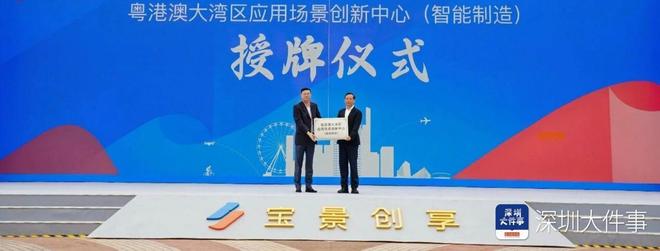
把城市变成“实验室”:宝安如何为全国打样“场景经济”?
Nan Fang Du Shi Bao· 2025-11-30 13:50
Group 1 - The article discusses the importance of "scene" cultivation and openness as a new driver for high-quality development in industries and cities, highlighted by recent policies from the central and local governments [1][2] - The Bao'an District in Shenzhen is actively transforming the concept of scene cultivation into actionable plans, aiming to create over 100 innovative application scenes and release more than 1,000 new technologies, products, and solutions [1][2] - The "Linghang Scene · Yuejin Future" event showcased over 500 scene opportunities, with significant participation from more than 760 enterprises, indicating a strong push for scene innovation and application [2][4] Group 2 - The event emphasized breaking traditional models of招商 (investment promotion) by revealing "demand-side" needs, with 288 government-led scenes and 220 enterprise application scenes released, turning Bao'an into a "super scene laboratory" [4][6] - Bao'an's rich industrial base, with nearly 560,000 enterprises across all manufacturing categories, provides a solid foundation for testing and implementing new technologies [4][6] - The scene opportunity list includes diverse applications in public services, such as mental health support for children and elderly care, showcasing a new logic of openness that addresses real governance pain points [6][9] Group 3 - The event featured over 150 companies showcasing their scene products, including advanced manufacturing technologies and consumer-oriented innovations, demonstrating a strong market response to the scene opportunities presented [7][12] - Government roles as "scene providers" were highlighted, with various smart devices displayed to enhance urban governance and public services, indicating a commitment to integrating new technologies [9][12] - Successful case studies, such as the implementation of low-altitude logistics networks and AI applications in public administration, illustrate the practical validation of scene opportunities in Bao'an [12][13] Group 4 - Bao'an aims to shift from "Bao'an manufacturing" to "Bao'an scenes," focusing on enhancing collaboration among local enterprises and improving government service capabilities [13][14] - The district plans to regularly update its scene list and clarify responsibilities to ensure effective matching of demand and supply, thus facilitating the transformation of urban resources into industrial momentum [13][14] - The article concludes with a call for Bao'an to become a preferred testing ground for new technologies by providing rich application scenes and a supportive ecosystem for innovation [14][15]
记者手记:当机器人“走”上街头
Xin Hua She· 2025-11-29 08:34
Group 1 - The core idea of the articles highlights the integration of artificial intelligence and robotics into everyday life in Chengdu, showcasing various applications such as coffee-making robots and human-like service robots [1][2] - Chengdu has initiated regular verification activities for robots and AI technologies, involving 29 companies and 49 innovative products across multiple sectors including tourism and transportation since June [1][2] - The establishment of a "Scene Application Promotion Office" by the Chengdu Economic and Information Commission aims to facilitate the large-scale commercial application of new technologies, products, and business models in the manufacturing sector [1] Group 2 - The importance of scene-based verification for innovative technologies is emphasized, as it accelerates the iteration of products based on user feedback and real-world applications [2] - The development of new products, such as a large outdoor holographic device, is driven by insights gained from previous scene verification activities, demonstrating a responsive approach to market needs [2] - Sichuan is focusing on the development of emerging industries, particularly in AI and robotics, with plans to cultivate numerous future factories and advanced intelligent factories during the 14th Five-Year Plan period [3]

从“批项目”到“造场景”,中国在改写什么?
Xin Lang Cai Jing· 2025-11-23 03:36
Core Insights - The article discusses the shift in China's innovation language from "projects" to "scenes," indicating a transformation in governance and economic strategy [1][2][3] Group 1: Shift in Innovation Language - "Scene" has emerged as a national buzzword, replacing "project" as the primary focus for development and innovation [2][3] - The transition from project-based thinking to scene-based thinking reflects a fundamental restructuring of national thought processes regarding innovation [3][4] - The National Development and Reform Commission emphasizes that scenes are essential for connecting technology and industry, marking a shift in the national innovation system [3][6] Group 2: New Organizational Logic - Scenes are now seen as a new organizational unit that integrates people, data, systems, and technology to facilitate innovation in real environments [4][5] - The traditional project-based approach, which emphasized linear structures and approvals, is becoming inadequate in the face of complex, cross-sector innovations [5][6] - The focus is shifting from merely executing projects to creating environments where innovation can thrive [6][7] Group 3: Government and Enterprise Dynamics - Local governments are adapting by creating "scene opportunity lists" to attract businesses, indicating a competitive shift towards providing better experimental platforms [10][11] - Enterprises are now competing based on their ability to create meaningful experiences within these scenes, rather than just on technological capabilities [11][12] - The competition is evolving from scale-based to perception-based, where understanding user needs becomes crucial [12][13] Group 4: Data and Algorithmic Influence - The competition for defining scenes is also occurring in the data realm, where algorithm companies and content platforms are reshaping experiences through their definitions of scenes [13][14] - Ownership of scenes translates to narrative power, as algorithms increasingly dictate user experiences [14][15] Group 5: Cultural and Systemic Implications - The article highlights a broader cultural shift where the ability to create scenes is becoming a measure of a civilization's maturity, moving from a focus on material production to relational and experiential quality [27][28] - The concept of "scene" is positioned as a new language of civilization, emphasizing the importance of trust and understanding in societal progress [28][29]
「比利信息」完成数千万A+轮融资,加速构建“人工智能+酒旅大消费”新场景 | 36氪首发
Sou Hu Cai Jing· 2025-11-19 05:44
Core Insights - "Bili Information," a digital solution provider in the travel and hospitality industry, has recently completed a multi-million RMB A+ round of financing, led exclusively by Tiantu Capital, to accelerate the development of its travel media platform and the commercialization of AIGC and AI Agent technologies [1][10] Company Overview - Founded in 2016, Bili Information focuses on AI-driven personalized travel experiences, offering two main product scenarios: "Hotel+" and "Ticket+" [1][2] - The "Hotel+" scenario serves as the foundation of Bili's business, evolving from the MYCOOLTV product to a comprehensive travel media platform that provides localized content and services for travelers [2][4] Business Model and Market Reach - Bili Information's travel media platform has expanded its reach across various venues in the Asia-Pacific region, including hotels, theme parks, and cruise lines, with partnerships with major hotel groups like Marriott and Hyatt [4][6] - The company has a significant annual reach, impacting over 80 million travelers on the move (POTM) [4] Technological Innovation - Bili Information leverages AI technology to enhance user engagement, with AI Agents providing personalized content recommendations in real-time as users enter hotel rooms [5][9] - The company is developing a new model for "in-time" and "in-where" recommendations, focusing on immediate consumption experiences during travel [6][9] Future Growth and Revenue Structure - Currently, the "Hotel+" business accounts for 90% of Bili's overall revenue, but the company plans to shift this balance, aiming for 70% of revenue to come from scenic and travel experiences within five years [8] - The founder, Wang Yang, has a background in marketing and B2B sales, which has contributed to the company's strategic positioning in the market [8] Investment Perspective - Tiantu Capital views Bili Information as a leader in the travel and hospitality sector, with a clear replicable model in both accommodation and ticketing, positioning AI as a core driver for the next growth phase in the industry [10]

【发展之道】 强化场景开放共享打开民企发展新空间
Zheng Quan Shi Bao· 2025-11-10 18:34
Core Insights - The State Council has issued an implementation opinion to accelerate the cultivation and large-scale application of new scenarios, focusing on 22 key areas including the digital economy and artificial intelligence, as well as the transformation of traditional industries like manufacturing and transportation [1] - The policy encourages state-owned enterprises, especially central enterprises, to open their main business scenarios to attract participation from private enterprises, small and medium-sized enterprises, and research institutions, thereby creating new development opportunities for private companies [1][2] Group 1 - The concept of "scenarios" has been introduced from the film industry to various sectors, serving as a critical link between technological innovation and market demand, which is essential for the commercialization of new technologies [1] - The policy aims to break down entry barriers for private enterprises, fostering a fair competitive environment and providing them with new platforms and opportunities [2] - The scenario economy is characterized by inclusivity and symbiosis, promoting cross-domain integration of technology and resource sharing, which enhances the functionality and value of various scenarios [2] Group 2 - The large-scale opening of scenarios necessitates accompanying institutional, regulatory, and service innovations to ensure effective resource allocation and data security [3] - The successful implementation of this policy relies on translating plans into practical applications, which will stimulate innovation and entrepreneurship among private enterprises [3] - The initiative is expected to drive the development of new technologies, products, and business models, ultimately reshaping the economic landscape and contributing to high-quality growth [3]
“串游”热正在重塑文旅消费逻辑
Bei Jing Qing Nian Bao· 2025-10-09 08:42
Core Insights - The rise of immersive travel experiences among young Chinese tourists reflects a deeper transformation in consumer behavior, moving from traditional sightseeing to participatory cultural experiences [1][2][3][4] - The trend indicates a shift from ticket-based revenue models to experience-based economies, with a significant increase in travel orders to border cities during the recent holiday period [1][3] Group 1: Travel Trends - Young travelers are increasingly seeking unique, local experiences rather than conventional tourist attractions, as evidenced by their preference for handmade crafts and local markets [2][3] - The demand for immersive cultural experiences is driving a supply-side revolution in the tourism market, with a notable increase in bookings for experiential activities like tie-dye workshops and drone photography [1][3] Group 2: Cultural Integration - The integration of culture and tourism is evolving, with young tourists desiring emotional connections and deeper historical understanding during their travels [3][4] - Innovative practices, such as using AR technology to recreate historical scenes, are transforming traditional tourism models into interactive cultural experiences [3][4] Group 3: Future Directions - The future of the tourism industry will focus on three key areas: utilizing digital twin technology to bring historical artifacts to life, empowering local artisans as experience designers, and creating cultural package offerings that cater to diverse tourist interests [4] - The pursuit of deep experiences is expected to shift the tourism industry from a focus on volume to a focus on meaningful engagement, enhancing the narrative quality of travel experiences [4]
新中式烘焙十年,为什么再没出下一个肉松小贝?
东京烘焙职业人· 2025-09-29 08:33
Core Viewpoint - The article discusses the evolution of the new Chinese baking industry over the past decade, highlighting the challenges in creating new "blockbuster" products like the "Meat Floss Little Cake" that once captivated the market. It emphasizes the need for a shift from short-lived trends to sustainable, long-term products that resonate with consumers' memories and experiences [5][38]. Group 1: Historical Context and Market Dynamics - The "Meat Floss Little Cake," developed by Bao Caisheng in 2004, became a nationwide sensation in 2014, marking a significant moment in the Chinese baking industry [3][4]. - This product represented a fusion of Chinese and Western flavors, breaking traditional boundaries and creating a new taste experience that appealed to consumers [6][11]. - The rapid expansion of bakery stores and the maturation of supply chain logistics in 2015 facilitated the widespread distribution of the "Meat Floss Little Cake," which was easy to standardize and replicate [8][9]. Group 2: Evolution of Product Categories - The new Chinese baking industry has undergone a transformation from "blockbuster" products to "evergreen" and "daily" products over the past decade [14]. - The "blockbuster phase" (2016-2018) was characterized by products that gained popularity through novelty and rapid social media sharing, such as salted egg yolk pastries and mochi [15]. - The "evergreen phase" saw products like egg yolk pastries become stable choices for consumers, focusing on long-term repeat purchases rather than short-term spikes in sales [17][20]. - The "daily phase" post-2020 integrated new Chinese baked goods into everyday consumer life, making them standard offerings in bakeries [22][23]. Group 3: Challenges and Market Saturation - The article notes that the market for new Chinese baked goods has become saturated, with the emergence of numerous similar products leading to intense competition and reduced profit margins [31][32]. - The rise of short video platforms has changed consumer behavior, making it difficult for any single product to achieve the same level of widespread attention as the "Meat Floss Little Cake" did in its heyday [26][29]. - Consumers are experiencing "taste fatigue," as the novelty of new flavors diminishes, leading to higher expectations for unique and memorable taste experiences [35][37]. Group 4: Future Directions - The industry must transition from a focus on one-time blockbusters to creating products that foster long-term consumer loyalty and repeat purchases [38]. - Emphasizing "scene economy" will be crucial, integrating baked goods into everyday life scenarios such as breakfast and celebrations to build consumer attachment [39]. - Establishing a "taste memory" rather than relying solely on trendy symbols will be essential for creating enduring products that resonate with consumers [42]. - A shift from "single product logic" to a "systematic logic" that combines product matrices and brand value is necessary for sustainable growth [44]. - Brands must develop self-sustaining cycles that focus on community engagement and long-term reputation rather than short-term viral marketing [45].