挂钩黄金结构性存款

Search documents
挂钩黄金结构性存款走俏
Jing Ji Ri Bao· 2026-02-05 22:15
Core Viewpoint - The core risk of gold-linked structured deposits lies in "uncertainty of returns," where investors may end up with lower guaranteed yields if gold price movements do not meet set conditions [1]. Group 1: Market Dynamics - Recent volatility in international gold prices has led to a surge in various financial products related to gold, particularly gold-linked structured deposits, which are favored by investors due to their low minimum investment amounts and high expected annual yields [1]. - Major banks have launched multiple related products, such as the "Wentai Hui" series from Bank of Communications, which links to the closing price of the Shanghai Gold Exchange's AU99.99 contract, offering annual yields ranging from 0.5% to 3.2% [1]. - The demand for gold-linked structured deposits is driven by a combination of factors, including global economic uncertainty that enhances gold's safe-haven appeal and the low yields of traditional low-risk products like savings and money market funds [2]. Group 2: Investor Considerations - Investors are advised to assess their risk tolerance and investment goals, choosing products that align with their risk preferences, as structured deposits are more suitable for conservative investors rather than aggressive ones seeking high returns [4]. - It is crucial for investors to closely examine the product's core elements, including the design of the yield structure, guaranteed returns, and conditions for higher yields, to determine the likelihood of achieving those returns [4]. - Investors should also consider the product's duration in relation to their liquidity needs to avoid potential liquidity risks [4]. Group 3: Risks and Warnings - The primary risk associated with gold-linked structured deposits is the "uncertainty of returns," where the final yield is not fixed and depends on the performance of the linked gold price during a specific observation period [3]. - There are liquidity constraints as these deposits typically do not allow for early withdrawal during the agreed deposit term, which limits fund flexibility [3]. - Major banks have issued risk warnings regarding gold investment, advising investors to manage their positions carefully to mitigate price volatility risks [3].
金银价格强势拉涨,相关ETF规模大增,银行“上新”挂钩黄金结构性存款
Xin Lang Cai Jing· 2026-01-13 00:34
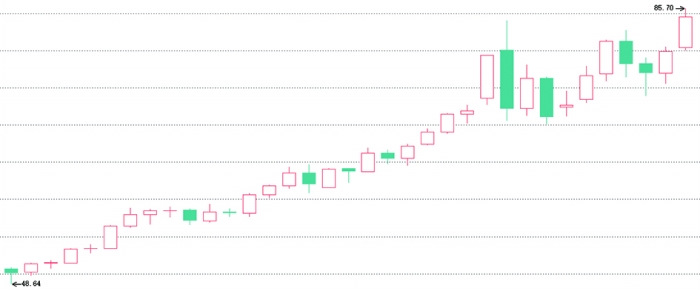
Group 1 - The core viewpoint of the article highlights the significant rise in gold and silver prices, with gold reaching a record high of $4,610.68 per ounce and silver increasing over 7% to surpass $85 per ounce, marking historical peaks [1] - Domestic gold ETFs have collectively risen in price, with the largest gold ETF nearing a scale of 100 billion yuan, indicating strong market enthusiasm [1] - Commercial banks are intensifying risk management for gold-related businesses, with several banks launching structured deposits linked to gold [1] Group 2 - Multiple domestic and foreign institutions believe that the long-term performance of gold and silver remains promising due to factors such as the interest rate cut cycle, de-dollarization trends, and industrial demand support [1]
金银价格强势拉涨 相关ETF规模大增 银行“上新”挂钩黄金结构性存款
Shang Hai Zheng Quan Bao· 2026-01-12 18:58
Core Viewpoint - The recent surge in gold and silver prices is driven by geopolitical factors, expectations of interest rate cuts by the Federal Reserve, and increased industrial demand, leading to a positive outlook for precious metals in the medium to long term [2][3][8]. Price Movements - As of January 12, gold reached a record high of $4610.68 per ounce, with a daily increase of over 2%, while silver rose more than 7% to surpass $85 per ounce, also setting a new historical record [2][3]. - International gold and silver futures hit historical highs of $4612.7 per ounce and $84.69 per ounce, respectively, with daily increases of 2% and 5% [3]. ETF Performance - Gold ETFs collectively rose, with the Guotou Silver LOF increasing by 7.11% [3]. - In the first seven trading days of 2026, gold ETFs saw net subscriptions exceeding 400 million shares, with the Huazhang Gold ETF approaching a scale of 100 billion yuan [3]. Institutional Insights - UBS Wealth Management raised its price forecast for gold, increasing target prices for March, June, and September 2026 from $4500 to $5000 per ounce, with a slight decline expected to $4800 by the end of 2026 [4]. - Analysts from various institutions express optimism about the long-term performance of gold and silver, citing a shift in investment logic towards strategic hedging against long-term structural risks [8][9]. Banking Sector Response - In response to high gold prices, banks are tightening risk management for gold-related businesses, raising the entry threshold for gold accumulation business to a balanced investment level [5][6]. - Several banks have launched structured deposits linked to gold, offering varying expected annual returns based on gold price fluctuations [6][7]. Industrial Demand - Increased demand for gold from central banks and industrial sectors such as photovoltaics, electric vehicles, and AI infrastructure is contributing to rising gold and silver prices [3][9].