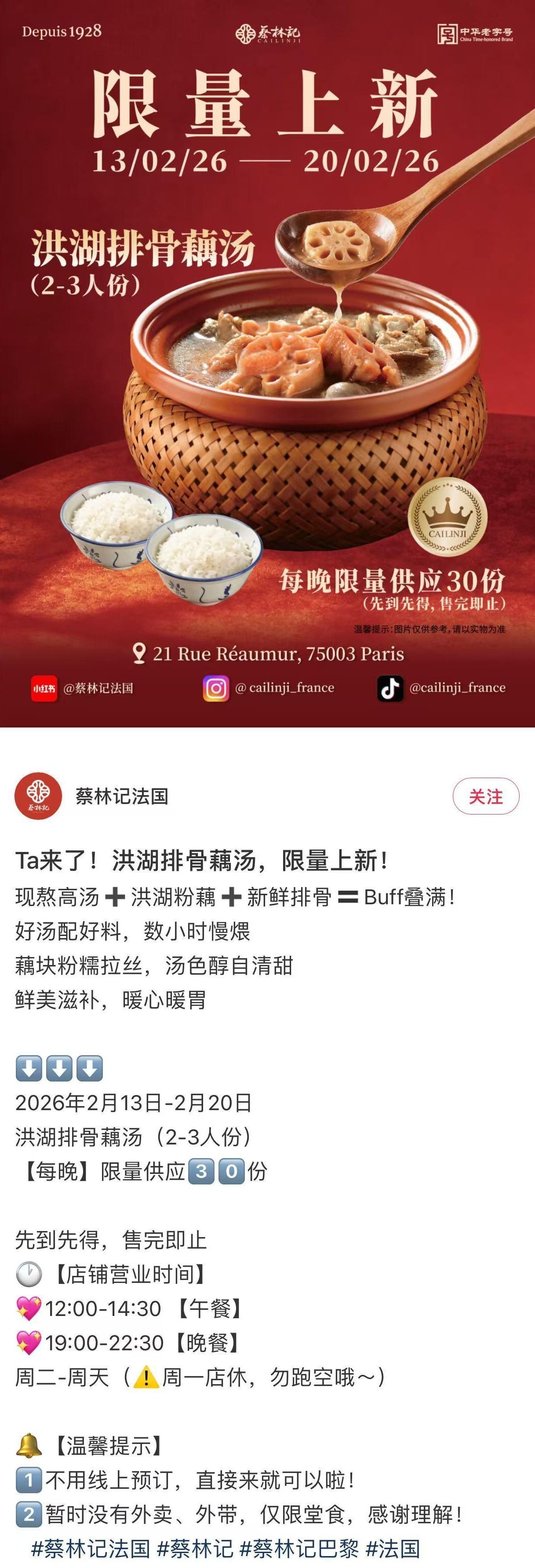
排骨藕汤

Search documents
全国游客来武汉“过早” 一家店一天卖1000个鸡冠饺
Chang Jiang Ri Bao· 2026-02-23 00:41
Core Viewpoint - The article highlights the vibrant food culture in Wuhan during the Spring Festival, showcasing the city's unique breakfast offerings and the influx of tourists enjoying local delicacies [1]. Group 1: Tourist Experience - Tourists from various regions, including a high school student from Hebei, express their love for Wuhan's breakfast, particularly dishes like Doupi, Hutoufen, and Glutinous Rice Chicken, emphasizing the freshness, flavor, and affordability of the food [1]. - The article notes that Wuhan's breakfast culture is a significant attraction, with visitors stating that it is their favorite among many cities they have experienced [1]. Group 2: Business Impact - Local businesses, such as a breakfast shop run by Cheng Lilan, report a dramatic increase in customer traffic during the holiday, with foot traffic rising to 6-7 times the normal levels [1]. - Cheng Lilan's shop, known for its signature Chicken Crown Dumplings, sees daily sales increase from 300-500 to over 1,000 dumplings, with staff working more than 10 hours a day to meet demand [1]. - The festive atmosphere and increased business activity contribute to a sense of community and economic benefit for local vendors, enhancing the overall appeal of Wuhan as a tourist destination [1].
“武汉味道”投票热消费火
Sou Hu Cai Jing· 2026-02-20 12:40
Core Insights - The voting for Wuhan's "Top Ten Dishes," "Top Ten Snacks," and "Top Ten Souvenirs" has generated over 10 million votes, significantly boosting holiday consumption [1][2] - The popularity of the voting has led to increased foot traffic in physical stores and steady growth in online orders during the Spring Festival [2] Group 1: Voting and Consumption Trends - The voting process opened on January 26 and will remain active until March 3, allowing citizens to participate through various official WeChat mini-programs [3] - The "Top Ten Dishes" list is led by the steamed fish with 90,019 votes, followed by Wangji Chicken Soup and Wuhan Black Duck Pot [2] - The "Top Ten Snacks" is topped by Wuhan Cold Noodles with 100,329 votes, while the "Top Ten Souvenirs" is led by Sakura Noodles with 71,321 votes [2] Group 2: Retail Performance - During the Spring Festival, the sales of selected local specialties have increased significantly, with some stores reporting sales two to three times higher than usual [2] - The average daily foot traffic at the Jianghan Road pedestrian street reached 30,000 visitors, with a total of over 800,000 visitors from February 15 to 18, marking a 14% year-on-year increase [6] - The sales revenue during the same period also saw a 12% increase compared to the previous year [6] Group 3: New Product Trends - Anime-related merchandise has emerged as a popular new specialty among young visitors, with stores reporting high demand for plush toys and other related products [4][6] - The integration of local culture and modern trends is evident in the offerings, appealing to both local residents and tourists [6]


四世同堂,32人团圆了
Chang Jiang Ri Bao· 2026-02-17 01:04
Group 1 - The article highlights the significance of family reunions during the Chinese New Year, showcasing a 78-year-old resident of Wuhan, Wang Zuo Jin, who celebrates a complete family gathering for the first time in years with 32 family members present [1][2] - The preparation of traditional dishes, such as bamboo shoots and pork, and the involvement of multiple generations in cooking reflects the cultural importance of shared meals during festive occasions [1][2] - The emotional connection to home-cooked food is emphasized, with family members expressing nostalgia for unique flavors that cannot be found elsewhere, particularly the "Yuanbao dumplings" symbolizing reunion and prosperity [2]
巴黎春节飘起藕汤香,汉派美食出海出圈走向全球
Chang Jiang Ri Bao· 2026-02-17 00:36
Core Insights - The article highlights the growing international presence of Han cuisine, particularly through the establishment of traditional brands like Cai Lin Ji, which is expanding its reach globally while maintaining cultural authenticity [3][4][12]. Group 1: Expansion of Han Cuisine - Cai Lin Ji, a century-old brand, opened its first European store in Paris, attracting significant customer interest with long queues during its trial operation [4][7]. - The restaurant offers traditional dishes like hot dry noodles and fried dough sticks at prices that align with local market standards, making it accessible to both locals and tourists [6]. - Other traditional brands from Wuhan, such as Xiao Ji Gong An Beef Fish Soup, are also planning to expand internationally, with a focus on cities with large Chinese populations [8]. Group 2: Domestic Growth and Market Penetration - Han cuisine is rapidly expanding across China, with both traditional and new brands making significant inroads into various provinces, including Henan, Shanxi, Jiangxi, and Shandong [9]. - Cai Lin Ji has achieved full coverage in Hubei province and is continuously increasing its number of outlets, currently totaling around 300 nationwide [9]. - New brands like Lai Cai·Hubei Head Brand Lotus Soup are also emerging, with plans to open multiple locations in major cities, showcasing the competitive landscape of Han cuisine [11]. Group 3: Cultural Integration and Brand Development - Cai Lin Ji emphasizes cultural integration by adapting its offerings to local tastes, including a specialized wine list for French customers and culturally themed decor [6]. - The local government supports the restaurant industry through various initiatives aimed at enhancing brand visibility and facilitating international expansion [12]. - Recent promotional activities, such as the selection of top local dishes, have helped raise awareness and appreciation for Han cuisine, contributing to its brand development [12]. Group 4: Future Prospects - The article suggests that as more Han cuisine brands expand globally, they will enhance the recognition of Wuhan and Hubei culture through culinary experiences [15].
湖北菜,正在冲击第九大菜系
3 6 Ke· 2026-01-07 07:41
Core Viewpoint - The emergence of "Lai Cai," a Hubei cuisine restaurant in Beijing, signifies a shift in the dining landscape, focusing on casual dining without private rooms, contrasting with previous high-end approaches in the market [1][2]. Group 1: Restaurant Strategy - "Lai Cai" opened its first store in Beijing on December 20, 2024, attracting long queues of up to 5 hours, indicating strong demand [2]. - The restaurant's design features an open layout without private rooms, aligning with the trend of "de-privatization" in dining following the "Eight Regulations" [2][6]. - Unlike its predecessor "Xiang E Qing," which focused on high-end dining, "Lai Cai" aims to capture the mid-range market by offering a casual dining experience [8][9]. Group 2: Menu and Product Strategy - "Lai Cai" has identified "lotus root soup" as a potential signature dish, promoting it with the slogan that annual sales could fill 30 Yellow Crane Towers [11]. - The restaurant also features other dishes like "crispy lotus root with bass" and "Mianyang steamed pork," which are gaining popularity among customers [14]. - The focus on fewer, high-quality dishes allows for cost efficiency and a stronger brand identity, moving away from the previous model of social dining [17]. Group 3: Marketing and Branding - The restaurant employs an "internet thinking" approach, actively seeking customer feedback and using social media to enhance its brand presence [18]. - The founder, Yang Yifeng, is positioned as a youthful entrepreneur, contributing to the restaurant's appeal among younger demographics [18][19]. - The concept of "Chu Cuisine," which encompasses various Hubei dishes, is being promoted to attract tourists and enhance the culinary reputation of the region [20][22].

国庆中秋8天假期从头火到尾 武汉一口气拿下3个全国前十
Chang Jiang Ri Bao· 2025-10-11 00:52
Core Insights - Wuhan experienced a significant surge in tourism during the recent National Day and Mid-Autumn Festival holiday, ranking in the top ten for several national categories, including popular domestic destinations and tourism consumption [1][5] Group 1: Tourism and Events - The "2025 River and Mountain Add Splendor - Cultural Tourism IP Wuhan City Grand Parade" attracted nearly 100,000 attendees, generating considerable online buzz [2] - Major sporting events, such as the Wuhan Open Tennis Tournament, drew large crowds, with a dedicated sports consumption theme park enhancing the experience [2] - The China Drift Championship and other automotive events attracted over 35,000 participants, with nearly half being from outside the city [2] Group 2: Consumer Engagement and Promotions - The "Enjoy Wuhan with the Tennis Ticket" tourism package offered discounts on dining and accommodation, while a promotional campaign distributed 10 million yuan worth of vouchers to stimulate consumption [3] - Local restaurants and traditional food items gained popularity, with long wait times reported at popular dining spots [5] - Innovative food products, such as creatively designed mooncakes, gained traction on social media, appealing to younger consumers [5] Group 3: Night Economy and Cultural Experiences - Nighttime attractions, including light shows and extended museum hours, contributed to the city's vibrant evening economy [4] - Various cultural and artistic events, such as street performances and drone shows, enhanced the nighttime experience for visitors [4] Group 4: Overall Tourism Performance - During the holiday, Wuhan welcomed approximately 34.63 million visitors, marking a year-on-year increase of 12.06%, and generated a total tourism revenue of 21.70 billion yuan, up 16.35% from the previous year [6]
武汉南昌双城记: 黄鹤楼和滕王阁的双向奔赴
Chang Jiang Ri Bao· 2025-09-22 01:03
Core Viewpoint - The article highlights the growing tourism and economic collaboration between Wuhan and Nanchang, emphasizing their geographical proximity and cultural connections, which are fostering a "golden travel route" and enhancing cooperative development in various sectors. Transportation - The travel time between Wuhan and Nanchang is currently 1 hour and 51 minutes by train, with plans to reduce it to 1 hour and 30 minutes through ongoing railway construction initiatives [1] - The "Central Six Provinces Capital City Transportation Cooperation Initiative" aims to accelerate the development of key railway lines, enhancing connectivity between the two cities [1] Cultural Significance - Both cities are rich in cultural heritage, with landmarks like Wuhan's Yellow Crane Tower and Nanchang's Tengwang Pavilion symbolizing their historical significance [2] - The cities share a deep historical connection, illustrated by events such as the Nanchang Uprising and the August 7th Meeting [3] Culinary Diversity - The culinary offerings of both cities reflect their cultural ties, with local dishes like Wuhan's hot dry noodles and Nanchang's rice noodles being popular among tourists [1][4] Economic Collaboration - Wuhan and Nanchang are key cities in the Central Region and the Yangtze River Midstream Urban Agglomeration, with a strong foundation for cooperation [5] - Recent meetings led by President Xi Jinping have emphasized the importance of innovation-driven development and collaboration between the two cities [5][6] Technological Cooperation - A framework agreement for technological cooperation has been established among Hubei, Jiangxi, and Hunan provinces, promoting joint initiatives and resource sharing [7] - The "Wuchuangyuan" disruptive technology innovation competition has been held in Nanchang, showcasing collaborative efforts in technology and innovation [7] Education and Research - Educational institutions from both cities, such as Nanchang University and Wuhan University, have signed cooperation agreements to facilitate student exchanges and joint research [8] - Experts from Nanchang are actively participating in significant technological assessments and collaborative events in Wuhan [8] Business Development - Wuhan's local commercial group, Wushang, has chosen Nanchang as its first expansion destination, with sales reaching 3.1 billion yuan in 2024 [8] - The establishment of a public housing fund that allows for mutual recognition and lending between the two cities supports residents in living a "dual-city life" [9] Future Prospects - The article suggests that the collaboration between Wuhan and Nanchang can lead to the development of influential industrial clusters, particularly in sectors where each city has its strengths, such as optics and artificial intelligence in Wuhan and aviation and biomedicine in Nanchang [9]