
教育垂类大模型

Search documents
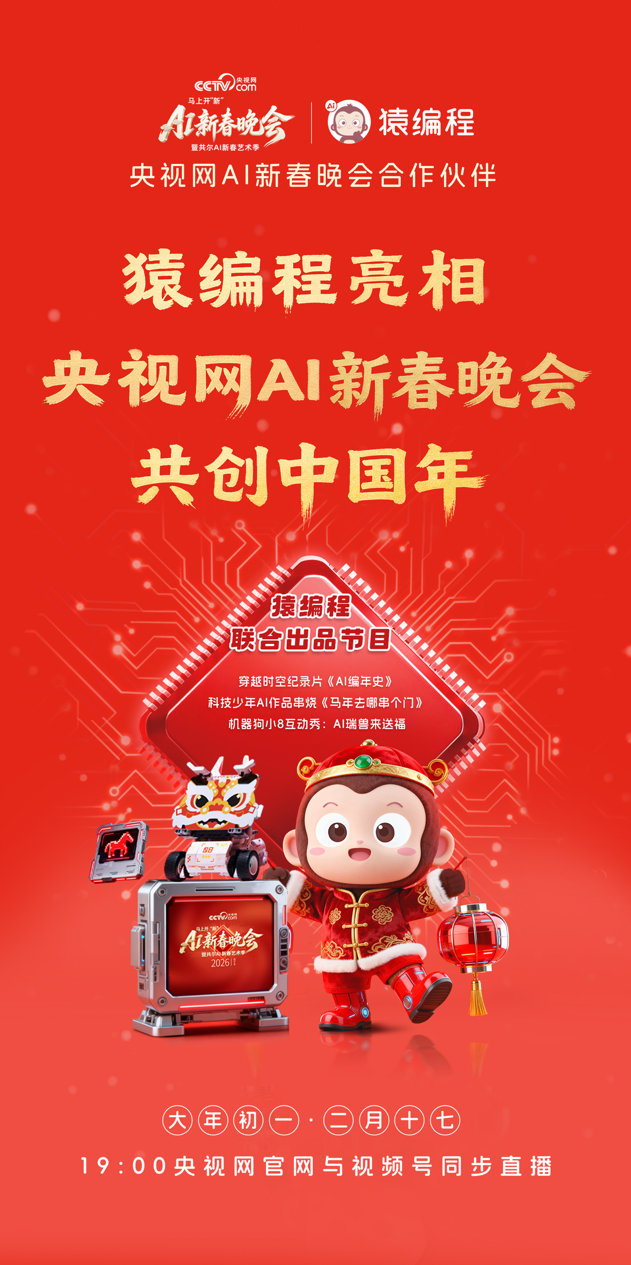
2026央视网AI新春晚会圆满落幕,猿编程上演“AI编年史”
Zhong Guo Jing Ji Wang· 2026-02-18 01:33
Core Viewpoint - The AI Spring Festival Gala, co-hosted by Yuan Programming, showcased the integration of technology and education, emphasizing the importance of AI education for youth and the creative potential of children in the AI era [1][11]. Group 1: Event Highlights - Yuan Programming produced two major programs for the gala: "AI Chronicle" and "Where to Visit in the Year of the Horse," featuring the AI programming robot "Xiao 8" as an interactive element [1][3]. - "AI Chronicle" took viewers on a historical journey through AI development, highlighting key milestones from the 1950s to recent advancements, while emphasizing the need for understanding and harnessing AI technology [3][4]. - "Where to Visit in the Year of the Horse" showcased the imagination and creativity of youth in the AI era, inviting them to visualize future worlds and festive scenes using AI technology [4][11]. Group 2: Educational Philosophy - Yuan Programming's founder, Li Yi, articulated the belief that programming should be an exploratory journey rather than a standalone skill, promoting inquiry-based learning and interdisciplinary integration [7][10]. - The educational approach encourages students to engage in project-based learning, where they apply knowledge from various subjects to solve real-world problems, fostering innovation and critical thinking [7][10]. - The company has served over 8 million students and has developed a comprehensive programming platform with 39 proprietary intellectual properties, supporting personalized education through a large-scale AI model [10]. Group 3: Future Talent Development - Li Yi outlined the characteristics of future talent needed in the AI era, including strong focus amidst information overload, rich imagination, and the ability to collaborate deeply with AI [8][10]. - The collaboration with Tsinghua University on research regarding the impact of programming education on youth's AI awareness and cognitive abilities signifies a commitment to scientific development in AI education [10]. Group 4: Cultural Integration - The gala highlighted the deep integration of technology and education, with AI being portrayed as a tool for creativity and expression rather than a cold technology [11]. - The event served as a reminder that AI education should focus on nurturing children's growth and capabilities, shifting from knowledge transmission to fostering diverse development [11].

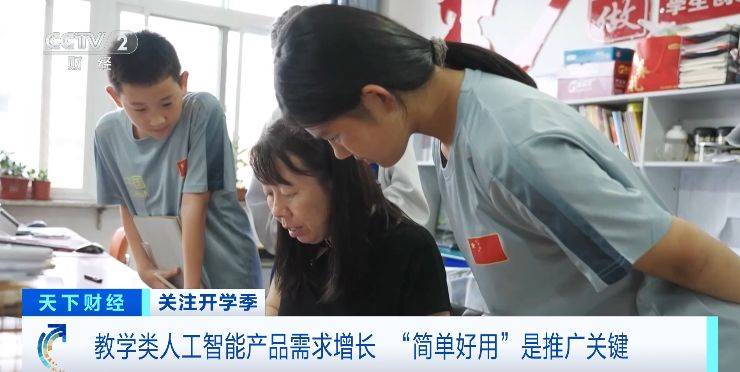
教学类人工智能产品需求增长,“简单好用”是推广关键
Sou Hu Cai Jing· 2025-09-01 15:08
Group 1 - The State Council has issued an opinion to deeply implement the "Artificial Intelligence +" initiative, aiming to integrate AI into all elements and processes of education [1] - In the new semester, over 3,000 seventh-grade students in Beijing's Pinggu District will experience significant changes in their learning process through AI terminals that provide personalized assignments [3] - Some schools are adopting education-specific large models to enhance teachers' efficiency in lesson preparation and grading [5] Group 2 - An education technology company has developed a teaching solution utilizing large models, currently piloted in dozens of schools across major cities like Beijing, Shanghai, Jiangsu, Zhejiang, and Guangzhou [7] - There is a rapidly growing demand for AI applications in schools located in the relatively under-resourced central and western regions of China [9] - A company representative noted a potential annual growth in related demand of 20% to 30%, although the overall market has not yet reached an explosive level [11] Group 3 - The Dean of the Artificial Intelligence College at Beijing Normal University emphasized that many AI technologies are not universal and are closely tied to specific scenarios, requiring deep understanding and communication with frontline teachers [13]
习近平总书记关切事|从“有学上”到“上好学”
Xin Hua She· 2025-08-06 10:31
Group 1 - The core viewpoint emphasizes the importance of educational equity and quality, highlighting the need for better educational opportunities for all children, particularly in underdeveloped regions [2][4] - The establishment of the Guoluo Xining Nationality Middle School in 2019, supported by Shanghai, aims to address the educational needs of children in the Guoluo pastoral area, which has historically faced challenges in accessing quality education [4][9] - The initiative has successfully welcomed over 1,700 students from Guoluo, showcasing the effectiveness of east-west educational cooperation and support [9] Group 2 - The integration of digital education resources is crucial for bridging the urban-rural educational gap, with the National Smart Education Public Service Platform providing over 110,000 basic education resources and 48,500 online courses [10][11] - The Chinese government is committed to advancing educational informationization, with a focus on utilizing artificial intelligence to enhance teaching methods and improve student engagement [11][15] - The ongoing development of AI tools in education is expected to reshape the educational landscape, making quality resources accessible to millions of students [12][15] Group 3 - Special education initiatives are increasingly providing opportunities for disabled students, with over 30,000 disabled students entering universities annually [16][19] - The Beijing Union University Special Education College is a pioneer in integrating disabled and non-disabled students, utilizing technology to enhance learning experiences for hearing-impaired students [19] - The government's focus on improving vocational education for disabled individuals aims to enhance their employability and support their integration into society [19][20]
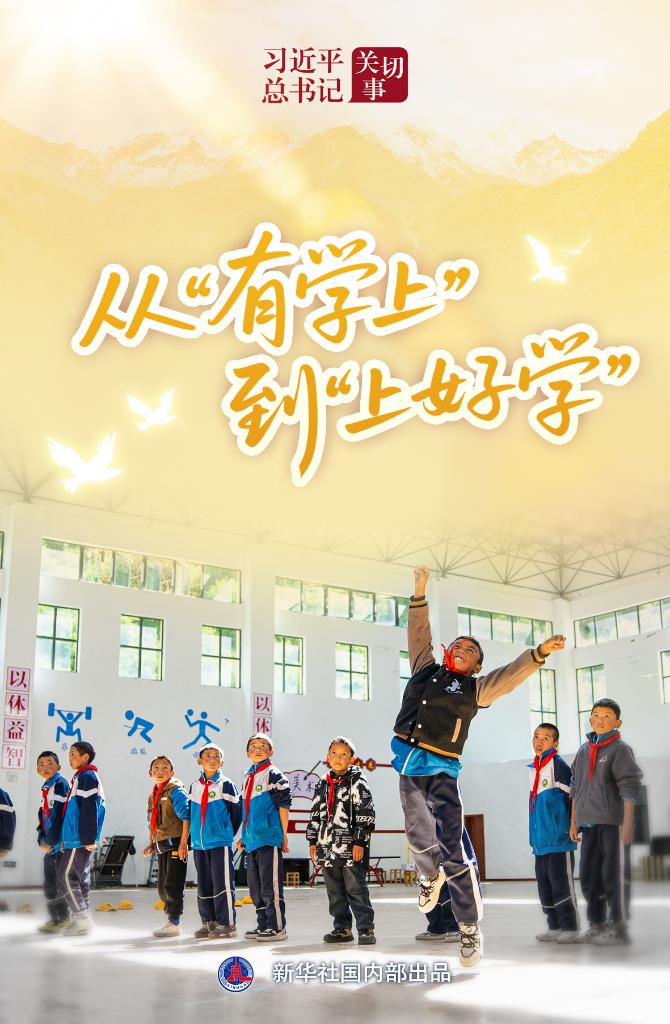
习近平总书记关切事丨从“有学上”到“上好学”
Xin Hua She· 2025-08-06 10:01
Group 1: Education Equity and Quality - The core viewpoint emphasizes the transition from merely having access to education ("有学上") to ensuring quality education ("上好学") for all students, reflecting the public's strong desire for educational equity and quality [1] - Recent years have seen a reduction in educational disparities across regions, urban and rural areas, and different groups, driven by policy guidance, digital empowerment, and resource optimization [1][2] - The achievements in education are increasingly benefiting all citizens, promoting social equity and justice, and instilling confidence and hope in every child for their future [1] Group 2: Educational Support and Collaboration - The establishment of the Guoluo Xining Nationality Middle School in 2019, supported by Shanghai, aims to address the educational needs of children in the Guoluo pastoral area, facilitating their access to quality education [3] - The initiative has successfully welcomed over 1,700 students from Guoluo, showcasing the effectiveness of East-West educational collaboration and support [3] - The importance of educational assistance from developed coastal regions to underdeveloped western areas is highlighted, with a focus on nurturing students for long-term benefits [2][3] Group 3: Digital Empowerment in Education - The National Smart Education Public Service Platform has gathered over 110,000 basic education resources and 48,500 online quality courses, benefiting over 169 million registered users [5] - The platform aims to bridge the digital gap between urban and rural education, promoting educational equity and enabling millions of children to share quality education resources [4][5] - The integration of artificial intelligence in education is transforming teaching methods, enhancing student engagement, and facilitating personalized learning experiences [6][7] Group 4: Special Education Initiatives - The increasing enrollment of disabled students in universities, with over 30,000 each year, reflects the growing inclusivity in education [7][8] - Special education programs are being developed to cater to the unique needs of disabled students, providing them with opportunities for higher education and skill development [8][9] - The government's commitment to improving the educational landscape for disabled children is evident in the implementation of supportive measures and the establishment of specialized educational institutions [7][8]