
新航海计划

Search documents
焦点科技副总裁李丽洁:真正具有战略定力的企业在加速全球化布局
2 1 Shi Ji Jing Ji Bao Dao· 2025-12-06 01:52
Core Insights - The forum focused on the theme "Innovation Without Boundaries, Intelligence to See the Future," highlighting the importance of digitalization and AI in the context of cross-border trade and globalization [1]. Group 1: Digitalization and Cross-Border Trade - Companies have evolved from early attempts at using digital platforms to now having digital tools as standard for going global, with a shift from B2B cross-border e-commerce to a mature ecosystem including B2C, cross-border logistics, and payment [1]. - The challenges faced by Chinese companies have shifted from initial technology and channel issues to more complex regional compliance, localization operations, and supply chain restructuring [1]. Group 2: Globalization Strategy - In the face of geopolitical pressures and tariff barriers, companies with strategic determination are accelerating their global expansion, with leaders planning their production capacity and supply chains more rationally [2]. - The launch of the "New Maritime Plan" by the company aims to assist businesses in penetrating emerging markets in Southeast Asia, the Middle East, and Africa, fostering deep connections with local business associations and channel partners [2]. Group 3: AI Integration - The company is strategically advancing AI empowerment across the entire supply chain, providing AI tools for buyers and sellers to enhance user experience and transaction efficiency [2]. - AI model technology is expected to bring profound changes to cross-border trade, necessitating companies to adopt AI in both product strategies and platform operations [2]. Group 4: Future Outlook - There is confidence in the ability of Chinese companies, especially SMEs, to expand globally through a combination of digitalization and deep localization [4]. - The importance of human connections remains significant in the current wave of globalization, emphasizing that while digital tools are crucial, the inherent warmth and decision-making ability of individuals are invaluable [4]. - With the support of digital tools and platforms, combined with the determination and flexibility of entrepreneurs, Chinese manufacturing is expected to continue rising in the global value chain [4].

中国制造网与西麦克展览达成战略合作 共筑数字化会展新生态
Zheng Quan Shi Bao Wang· 2025-09-16 07:29
Group 1 - Focus Technology's subsidiary, MIC International Station, has signed a strategic cooperation agreement with Ximac International Exhibition Co., Ltd. to create a new exhibition service model that integrates online and offline services, aimed at accelerating the international expansion of Chinese manufacturing [1][2] - The partnership will leverage MIC International Station's strong supplier resources and intelligent matching capabilities to provide precise and efficient supply chain sourcing services, while Ximac will offer brand exposure and market promotion support through its global exhibition resources [1][2] - The collaboration is seen as a strategic synergy that addresses the digitalization and integration trends in the global exhibition industry, with plans to jointly host industry exhibitions, training seminars, and business matching events to enhance international exposure and transaction opportunities for Chinese foreign trade enterprises [2][3] Group 2 - MIC International Station has over 52 million enterprise users and more than 99 million product data entries, with an annual visit volume exceeding 3.04 billion as of June 30, 2025 [2] - Ximac has a history of over 70 years in exhibition organization, managing over 100 overseas exhibition projects annually across various industries, and participating in nearly 300 renowned international exhibitions [2] - The cooperation aims to enhance the digitalization of exhibition services and trade matching efficiency, contributing to the high-quality international expansion of Chinese foreign trade enterprises [3]
新航海计划破浪前行 中国制造网织就全球贸易新图景
Jing Ji Wang· 2025-08-04 09:19
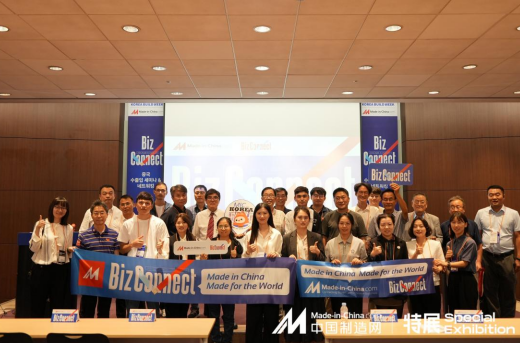
Core Insights - MIC International Station (MIC) successfully participated in the Korea Build Week and the Malaysia International Food and Beverage Trade Fair, enhancing its "New Maritime Plan" for diversified market expansion [1][6] Group 1: New Maritime Plan - Launched in April, the "New Maritime Plan" focuses on diversified international market strategies, supporting Chinese suppliers in emerging markets through resource investment and targeted operations [2][8] - The plan has led to a 44% year-on-year increase in platform traffic in Q2, with regions like the Middle East, Latin America, Africa, South Asia, and Europe seeing over 50% growth [7] Group 2: Trade Shows and Events - At the Korea Build Week, MIC organized a "Business Chain" event, facilitating over 100 buyers' participation and showcasing six exhibitors, which resulted in high engagement and potential client connections [4] - The Malaysia International Food and Beverage Trade Fair featured a dedicated "Chinese Food Machinery Zone," attracting significant attention, including a visit from the Deputy Minister of Agriculture and Agro-Based Industry [6] Group 3: Industry Support and Growth - A special fund of 150 million yuan has been established to support light industry products affected by tariff barriers, focusing on ten key sectors [7] - Notable increases in traffic for light industry categories were reported, with computer products, gift boxes, and consumer electronics seeing year-on-year growth rates of 108%, 97%, and 66% respectively [7] Group 4: Future Plans - MIC plans to accelerate its multi-market strategy with the launch of the "Golden Autumn Trade Fair" and participation in major industry exhibitions in Dubai, aiming to deepen its presence in the rapidly growing Middle Eastern market [8]

外贸企业迎来金融政策“及时雨”
Zheng Quan Shi Bao· 2025-05-07 17:55
Core Viewpoint - The Chinese government has introduced a series of financial policies aimed at stabilizing the market and supporting export-oriented enterprises, particularly in response to the impact of new tariffs from the United States [1][2]. Group 1: Financial Policies - The policies include measures from the banking and insurance sectors to support foreign trade development [1]. - Specific support will be provided to listed companies significantly affected by tariffs, including assistance with equity pledges and fundraising [1]. - The government aims to enhance regulatory support while maintaining a balance in oversight to help affected enterprises cope with tariff impacts [1]. Group 2: Company Responses - Companies like Xinbao Co., a leader in the small home appliance sector, expressed optimism about the new policies, which are expected to alleviate some of the pressures from tariffs [1]. - Xinbao Co. highlighted that approximately 70%-80% of its revenue comes from exports, with a significant portion from the U.S. market [1]. - Other companies, such as an automotive parts manufacturer, noted that while they experienced short-term market fluctuations due to tariffs, their financial stability remains intact, and they are more concerned about rising business costs than liquidity [3]. Group 3: Industry Support Initiatives - China Manufacturing Network, a comprehensive foreign trade service platform, acknowledged the positive impact of the new financial policies on export-oriented businesses, while emphasizing the need for further evaluation of the policy details [4]. - The platform has launched initiatives like the "New Maritime Plan" to help small and medium-sized enterprises expand into emerging markets and has established a special development fund to support industries heavily impacted by tariffs [4].
