
旅行团服务

Search documents
预定餐厅酒店临时加价?这些投诉渠道能帮你维权
Xin Lang Cai Jing· 2026-01-22 07:15
Core Viewpoint - The article emphasizes the importance of consumer rights protection during the festive season, highlighting the rise in consumer disputes and the availability of efficient complaint platforms to resolve issues without compromising holiday enjoyment [1][8]. Group 1: Official Complaint Channels - The official administrative complaint channels are the most authoritative and legally effective means for consumers to address issues [2][9]. - The Market Supervision Administration's 12315 platform is the most widely covered official consumer complaint channel, suitable for various issues including price fraud and product quality [3][11]. - The Ministry of Culture and Tourism's 12301 hotline is the primary channel for handling tourism complaints, directly connecting to local regulatory departments for administrative penalties against violators [4][12]. Group 2: Industry Self-Regulation and Corporate After-Sales - Before approaching regulatory bodies, consumers are encouraged to communicate directly with companies or platforms, as many large enterprises have dedicated customer complaint channels [5][13]. - Online travel platforms like Ctrip and Meituan often have efficient internal complaint mechanisms, which can lead to quicker resolutions [5][13]. - Major hotel chains and airlines typically prioritize customer complaints, especially from members or high-end clients, and can be contacted through official apps or customer service hotlines [5][13]. Group 3: Third-Party Public Complaint Platforms - If initial complaint channels do not yield timely results, consumers can utilize third-party consumer dispute mediation platforms, which often have a public interest focus [6][14]. - The Black Cat Complaint platform, a public interest consumer rights protection platform, offers a convenient supplementary complaint channel with features like easy access and transparent processing [6][14]. - The platform promotes public oversight by displaying complaint content and maintaining a "red and black list" of businesses based on their complaint handling performance [6][14]. Group 4: Tips for Successful Rights Protection - Consumers are advised to retain evidence such as order screenshots and communication records to support their claims [10][15]. - Clear articulation of demands, such as refund amounts and compensation methods, is crucial for effective communication [10][15]. - A multi-tiered approach to complaints, starting from the company level to regulatory bodies and then to third-party platforms, is recommended for better outcomes [10][15].
为什么很多旅行社开始害怕大学生?
Hu Xiu· 2025-06-16 01:44
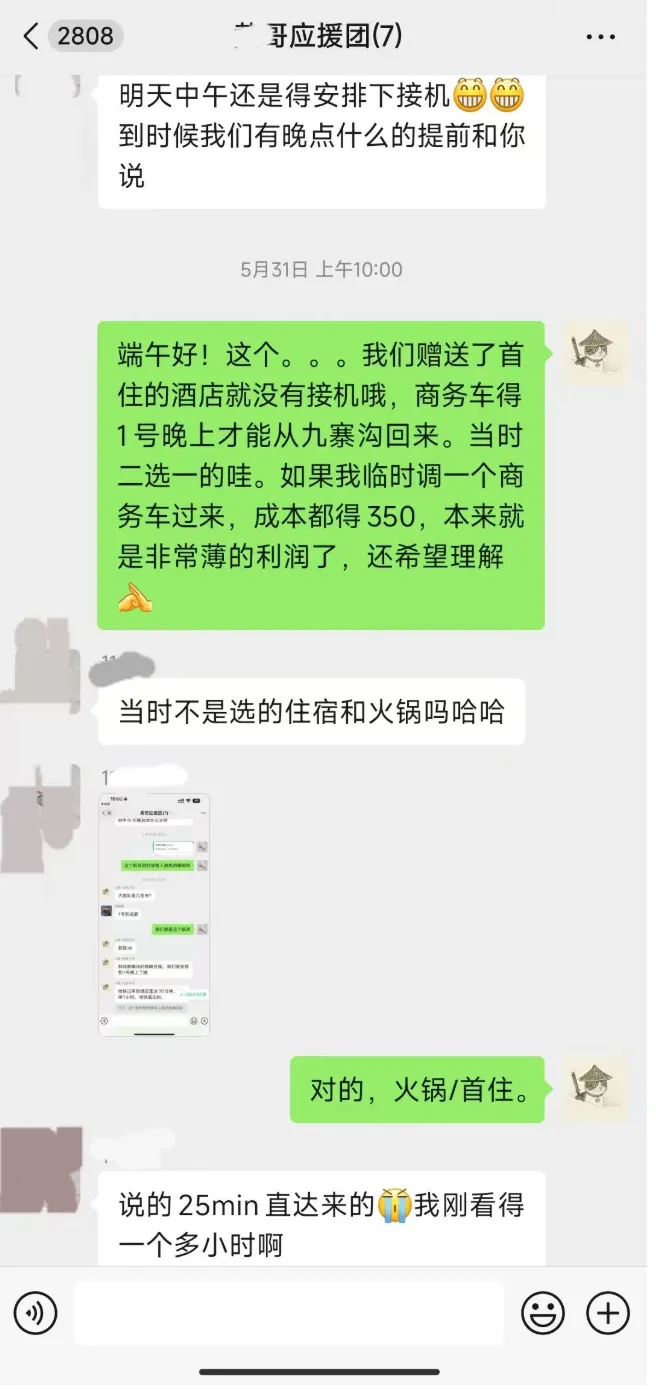
Core Viewpoint - The travel industry is facing challenges with the current generation of university students, who exhibit strong consumer rights awareness and demand transparency and respect in their travel experiences [2][10][19]. Group 1: Issues Faced by Travel Agencies - Travel agencies report increasing difficulties with university students, who often demand refunds and express dissatisfaction with services [10][20]. - Complaints from students include discrepancies between advertised services and actual experiences, leading to accusations of deception against travel agencies [8][14]. - The travel industry is experiencing a shift in customer expectations, with younger consumers being more vigilant and critical of service quality [21][22]. Group 2: Student Perspectives - University students are increasingly aware of their rights and are proactive in documenting issues, often using social media to voice complaints [16][30]. - Students express frustration over perceived exploitation by travel agencies, feeling that they are treated as easy targets for profit [15][19]. - The financial constraints faced by students lead them to scrutinize every expense, making them less tolerant of service failures [25][28]. Group 3: Changing Dynamics in Travel Services - The relationship between travel agencies and young consumers has evolved, with students now seeking more control and transparency in their travel arrangements [46][50]. - Travel agencies need to adapt to the new expectations of younger consumers, who prioritize risk management, emotional respect, and clear communication [50][52]. - The traditional model of travel services is being challenged, requiring agencies to shift from a directive approach to a more collaborative one [60][62]. Group 4: Recommendations for Travel Agencies - Travel agencies should focus on maintaining cost control and ensuring smooth processes to avoid customer dissatisfaction [55][57]. - Agencies must recognize the importance of clear communication and transparency to build trust with younger consumers [54][58]. - Acknowledging the changing landscape of consumer expectations is crucial for travel agencies to remain competitive and relevant in the market [64].

加拿大今年4月CPI同比上涨1.7% 通胀水平进一步放缓
Sou Hu Cai Jing· 2025-05-21 10:56
Group 1 - The core viewpoint of the articles indicates that Canada's inflation rate has slowed down, with the Consumer Price Index (CPI) rising by 1.7% year-on-year in April, down from 2.3% in March, primarily due to a decrease in energy prices [1] - The significant drop in gasoline prices, which fell over 18% year-on-year in April, is attributed to the cancellation of the consumer carbon tax by Prime Minister Carney, alongside a reduction in crude oil prices [1] - Retail food prices in Canada increased by 3.8% year-on-year in April, surpassing the overall CPI growth for three consecutive months, with fresh vegetables and beef prices rising by 3.7% and over 16% respectively [1] Group 2 - The Bank of Canada considers the inflation rate as a crucial reference for interest rate adjustments, having maintained the benchmark rate after seven consecutive cuts since June of the previous year [2] - The next policy interest rate decision by the Bank of Canada is scheduled for June 4 [2]