昇腾体系

Search documents
不能将核心算力长期建立在美国芯片之上
Guan Cha Zhe Wang· 2025-12-11 06:24
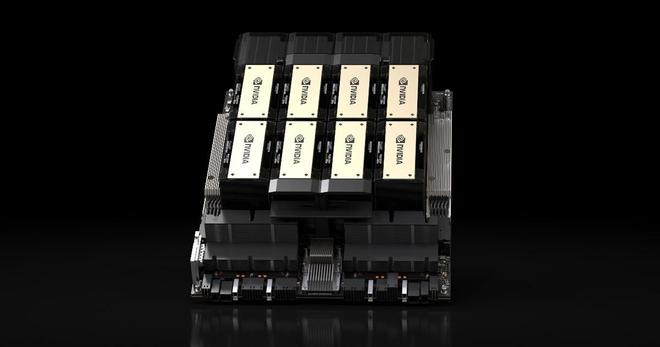
Core Insights - The U.S. government's approval for NVIDIA to export H200 AI chips to China reflects a complex backdrop of changing market dynamics and competitive pressures from domestic Chinese AI chip manufacturers [1][6] - The H200 chip, while currently advanced, faces significant challenges in the Chinese market due to the rapid development of local alternatives and regulatory recommendations against its use in critical infrastructure [1][4] Group 1: Market Dynamics - NVIDIA's CEO expressed optimism about the H20 chip's acceptance in China, but local companies have shown reluctance to purchase it due to its performance limitations and regulatory concerns [1][2] - The rise of domestic AI chip companies, such as Huawei and Cambricon, has led to a shift in procurement patterns, with an increasing emphasis on local solutions [2][4] Group 2: Strategic Implications - The long-term absence of NVIDIA from the Chinese market poses structural risks, as local GPU manufacturers could gain sufficient competitive strength to hinder NVIDIA's re-entry [4][5] - The U.S. export policy's unpredictability creates challenges for companies relying on imported high-end chips, making sustainable procurement of H200 impractical for critical industries [5][6] Group 3: Future Outlook - The approval of H200 is seen as a response to the rapid growth of China's computing ecosystem, indicating that U.S. policy may adapt in light of domestic advancements [6] - The future competitive landscape will depend more on China's ability to develop a robust high-end chip ecosystem rather than on specific export licenses from the U.S. [6]


梁军首次发声:公开与寒武纪的纠纷细节,再创业要做颠覆性产品
雷峰网· 2025-08-13 11:27
Core Viewpoint - The article discusses the complex background of Liang Jun, the former CTO of Cambricon, and his disputes with the company, highlighting his new venture, Fangqing Technology, which aims to innovate in AI chip architecture [2][3][5]. Group 1: Background of Liang Jun and Cambricon - Liang Jun's departure from Cambricon in 2022 was marked by internal conflicts, particularly with CEO Chen Tianshi, which escalated into a public dispute in January 2025 [2][5]. - The conflict began on December 14, 2021, when Chen Tianshi confronted Liang Jun about his influence within the company, leading to Liang's IT access being revoked shortly after [4][5]. - Liang Jun's departure was followed by allegations regarding stock distribution among employees, which he contested, claiming he did not benefit from the employee stock platform [5][6]. Group 2: Legal Disputes and Claims - Liang Jun is involved in legal proceedings against Cambricon, seeking compensation for stock options amounting to over 4.2 billion RMB, while Cambricon has initiated a lawsuit against him for stock transfer [5][6][44]. - The court hearing is set for January 23, 2025, with Liang Jun expressing concerns about the limited preparation time due to the sudden notice [6][44]. - The disputes reflect broader issues within early-stage startups regarding equity distribution and governance, particularly for core team members [6][37]. Group 3: Liang Jun's Contributions to AI Chip Development - Liang Jun played a significant role in the development of AI chips in China, overseeing the launch of several key products during his tenure at Cambricon, including the first 7nm AI training chip [6][7]. - His experience spans from Huawei's Kirin SoC architecture to leading Cambricon's technological advancements, marking a decade of contributions to the industry [6][7]. Group 4: Fangqing Technology's Vision - Fangqing Technology aims to introduce a novel distributed computing architecture that separates context-aware and context-free processing, a unique approach in the global market [3][57]. - The company seeks to overcome the constraints of existing CUDA ecosystems, positioning itself to innovate in AI hardware design [57][58]. - Liang Jun's vision includes creating a new system architecture that allows for independent processing units, potentially revolutionizing the market for AI hardware [58][59].