星智大模型3.0

Search documents
思想领航 共赴新程——第九届深商盛典暨中国企业家俱乐部20年活动书写中国企业高质量发展新篇
Xin Lang Cai Jing· 2026-01-15 09:10
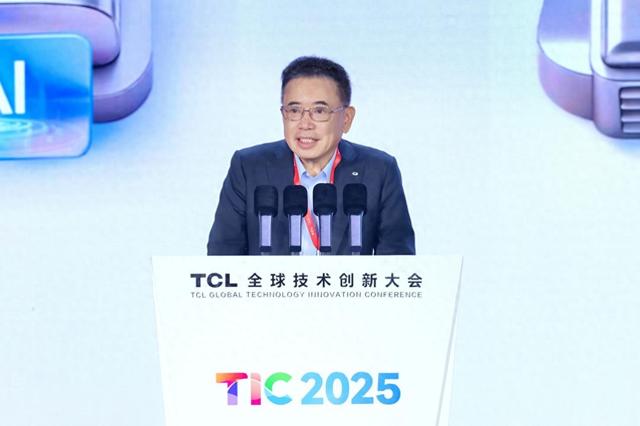
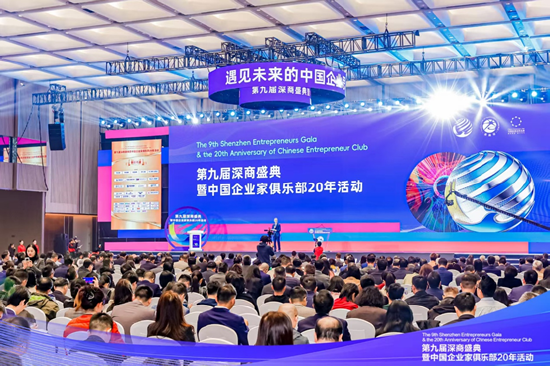
Core Insights - The event, the 9th Shenzhen Business Convention and the 20th Anniversary of the China Entrepreneurs Club, gathered top Chinese entrepreneurs to discuss key topics such as industrial innovation, technological breakthroughs, ecological construction, and social responsibility, aiming to provide a clear path for high-quality economic development in China during the 14th Five-Year Plan period [1][22]. Group 1: Technology Empowerment and Industrial Innovation - TCL's founder, Li Dongsheng, emphasized the importance of AI in driving economic growth and highlighted the application of their Star Intelligence Model 3.0 in the semiconductor display industry, which significantly enhances product development and material research efficiency [4][24]. - iFlytek's founder, Liu Qingfeng, pointed out the accelerating arrival of the general artificial intelligence era, stressing the need for core technology autonomy and the company's focus on AI as a primary business, with over 3 million applications developed on their open AI platform [6][25]. - XPeng Motors' CEO, He Xiaopeng, discussed the transition of the Chinese automotive industry from electrification to intelligent competition, emphasizing breakthroughs in autonomous driving and smart cockpit technologies as key to gaining a global competitive edge [9][27]. Group 2: Financial Support and Industrial Synergy - Ping An Group's General Manager, Xie Yonglin, discussed the role of financial technology in upgrading industrial chain finance, providing targeted financial support for technology innovation and green development, aligning with the trend of steady growth in manufacturing loans [11][29]. - The CEO of Huada Group, Yin Ye, highlighted the importance of core technology in the life and health industry, advocating for the integration of cutting-edge technologies like gene technology into everyday life to enhance public health [17][35]. Group 3: Traditional Industry Transformation and Digitalization - Luzhou Laojiao's General Manager, Lin Feng, shared insights on the transformation of traditional enterprises, emphasizing the need to embrace digitalization while maintaining quality and cultural heritage [13][31]. - Wumart's founder, Zhang Wenzhong, discussed the digital transformation in the retail sector, which enhances operational efficiency and consumer experience through supply chain innovation and the integration of online and offline shopping [15][33]. Group 4: Social Responsibility and Sustainable Development - Lin Li, Chairman of Liyue Group, stressed the importance of balancing economic benefits with social responsibility, advocating for community development through public welfare and employment initiatives [19][37]. - Ma Weihua, former President of China Merchants Bank, highlighted the significance of ESG principles in guiding high-quality development, promoting green investments and social responsibility projects to achieve a win-win scenario for commercial and social values [21][39].





人工智能技术加速应用落地
Jing Ji Ri Bao· 2026-01-08 21:43
Core Insights - The artificial intelligence (AI) core industry in China is projected to exceed 1 trillion yuan by November 2025, driven by policy support, market demand, and technological advancements [1] - AI technology is expected to undergo further upgrades in 2026, enhancing the supply capacity of industry elements and empowering traditional industries and emerging sectors [1] Industry Development - Key technologies such as multimodal, logical reasoning, and physical perception are expected to see breakthroughs by 2025, solidifying the foundation for AI industry development [2] - As of September 2025, the number of AI companies in China has surpassed 5,300, with over 400 specialized "little giant" enterprises [2] Company Innovations - Alibaba is significantly increasing investments in its Tongyi Qianwen model, achieving notable improvements in long text processing and visual reasoning capabilities [3] - The China GenAI market report indicates that Tongyi holds the largest market share in enterprise-level model usage in the first half of 2025 [3] - iFLYTEK has iterated its Spark model five times, with the latest version featuring personalized memory capabilities [4] Application Expansion - AI is increasingly embedded in various industries, with the number of smart factories in China exceeding 30,000, leading to a 22.3% increase in production efficiency [5] - The AI large model solution market reached 3.07 billion yuan in the first half of 2025, reflecting a year-on-year growth of 122.1% [5] - TCL is enhancing its manufacturing and R&D processes through AI, with its Star Intelligence model improving product development efficiency by 20% and material development efficiency by 30% [5] Value Chain Insights - Analysis of AI model applications shows a "smile curve" distribution, with higher value in R&D and marketing services, while production manufacturing is gaining traction [6] - The proportion of AI applications in production manufacturing increased from 19.9% to 25.9% in 2025, indicating deeper integration into core value creation processes [6] Supportive Elements - The scale of intelligent computing power in China is projected to reach 1,037.3 EFLOPS by 2025, becoming a mainstream carrier for large model training and inference [7] - Data production in China is expected to exceed 50 zettabytes by 2025, with significant contributions from data annotation bases [7] Data Utilization - High-quality data sets are crucial for AI applications, particularly in autonomous driving, where continuous data collection is essential for model training [8] - Recommendations include prioritizing the construction of industrial large models and enhancing data governance to ensure safe and compliant AI model optimization [8]

环球问策|TCL锚定“人工智能+”:扎根制造业沃土,让技术价值奔涌于产线与生活
Huan Qiu Wang· 2025-12-19 10:01
Core Viewpoint - The article emphasizes the integration of artificial intelligence (AI) into various sectors, particularly in manufacturing, showcasing TCL's efforts to leverage AI for enhancing productivity and efficiency, ultimately contributing to economic growth and societal benefits [1][10]. Group 1: AI Integration in Manufacturing - The "AI+" initiative aims to transform industries by embedding AI into core manufacturing processes, particularly in semiconductor display and renewable energy sectors [4][6]. - TCL's Star Intelligence Model 3.0 is recognized as the first domain-specific large model in the display field, improving product issue analysis efficiency by 20% and material development efficiency by 30% [4][5]. - The application of AI in TCL's smart factories has led to a 300% increase in labor productivity and a reduction in chip loss rates to below 0.1% [6]. Group 2: Economic Impact and Value Creation - TCL anticipates generating over 1 billion yuan in comprehensive benefits by 2025 through the implementation of AI applications [1]. - The integration of AI has resulted in a 21% reduction in production costs by optimizing the complex crystal growth process in solar energy production [6]. Group 3: Consumer Electronics and Smart Living - TCL's AI strategy focuses on enhancing the fundamental value of consumer products, emphasizing health, comfort, and companionship [7][8]. - Innovations such as the TCL Blue Wing air conditioner and AI-powered washing machines demonstrate the shift towards proactive, user-centered technology [8][9]. - The development of AI companion robots and smart TVs aims to redefine user interaction and emotional engagement, highlighting TCL's commitment to creating a comprehensive smart home ecosystem [9][10].