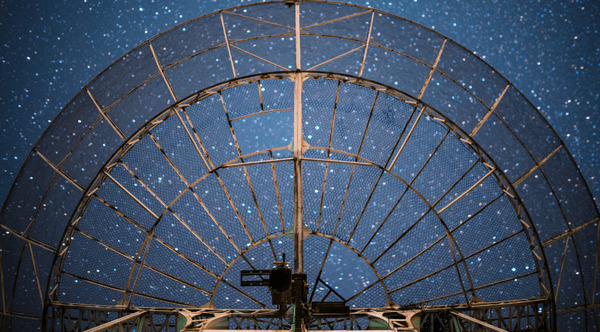
星链(Starlink)卫星网络

Search documents
10万亿!史上最大IPO定档6月,马斯克生日那天
Sou Hu Cai Jing· 2026-01-30 17:22
Core Viewpoint - Elon Musk's companies, including SpaceX, xAI, and Tesla, are considering potential mergers, which has led to significant stock price movements for Tesla [2][4][8] Group 1: Merger Discussions - Two main merger paths are being evaluated: one between SpaceX and Tesla, and another between SpaceX and xAI, with xAI having integrated Musk's social media platform X [4][6] - The potential merger of SpaceX and xAI is seen as a step towards Musk's vision of a "space data center," integrating SpaceX's infrastructure with xAI's computational needs [5][6] - The discussions are still in early stages, and no final decisions have been made, with the possibility that the companies may continue to operate independently [4][17] Group 2: IPO Considerations - SpaceX is planning an IPO for June, targeting a valuation of approximately $1.5 trillion and aiming to raise up to $50 billion, which would be the largest IPO in history [4][11] - The company is collaborating with major banks to prepare for this potential IPO, with the valuation and fundraising plans still subject to market conditions [11][14] - SpaceX's IPO is linked to its strategy of deploying data centers in space, which Musk believes is crucial for competing in the AI sector [11][14] Group 3: Market Reactions - Following the merger news, Tesla's stock rose by 4.5% in after-hours trading after a 3.5% decline during regular trading [2][8] - Current valuations indicate that xAI is valued at $230 billion, while Tesla's market cap stands at $1.39 trillion [4][8] - Predictions suggest a 48% chance of a merger between SpaceX and xAI occurring before mid-year, while the likelihood of a merger between SpaceX and Tesla is estimated at 16% [8]

马斯克大动作!史上最大IPO要来了?
Jin Rong Jie· 2025-12-14 06:38
Core Viewpoint - SpaceX is preparing for a potential IPO in 2026, with an internal stock price set at $421 per share, leading to a valuation of $800 billion, which could become the largest IPO in history [1][2][3] Group 1: IPO Preparation - SpaceX's CFO Bret Johnsen confirmed the company is actively preparing for a potential IPO, aiming to raise over $30 billion [2][3] - The internal stock price has increased from $212 per share in July to $421 per share, effectively doubling the company's valuation in less than six months [2][3] - The IPO could surpass the current record of $29.4 billion set by Saudi Aramco in 2019, with a target valuation potentially reaching $1.5 trillion [2][3][5] Group 2: Business Expansion and Revenue Projections - The funds raised from the IPO are intended to support three core areas: increasing launch frequency of the Starship rocket, building advanced space AI data centers, and establishing a lunar base [3] - SpaceX is projected to generate approximately $15 billion in revenue in 2025, increasing to between $22 billion and $24 billion in 2026, primarily from the Starlink business [5] - The company has established a dominant position in the commercial space sector, driven by its Falcon 9 rocket and Starlink satellite network [2][5] Group 3: Elon Musk's Ambitions - Elon Musk aims for SpaceX's overall valuation to reach $1.5 trillion, which could make him the world's first trillionaire [5][6] - Musk's long-term vision includes the establishment of a city on Mars, requiring substantial funding and resources, estimated to need around $1 trillion for launch costs alone [6]
重磅!史上最大IPO要来了!
券商中国· 2025-12-14 04:39
Core Viewpoint - SpaceX is preparing for a potential IPO in 2026, with an internal stock price set at $421 per share, leading to a valuation of $800 billion, which could become the largest IPO in history [2][3]. Group 1: IPO Preparation - SpaceX's CFO Bret Johnsen confirmed the company is gearing up for an IPO, with a target to raise over $30 billion, potentially surpassing the previous record of $29.4 billion set by Saudi Aramco in 2019 [3][5]. - The internal stock price has doubled from $212 per share in July 2023 to $421 per share, indicating a significant increase in valuation [3][6]. - The IPO is seen as a crucial step for funding SpaceX's ambitious plans, including Mars colonization, which requires substantial financial resources [7]. Group 2: Business Expansion and Valuation - SpaceX aims to establish a valuation of $1.5 trillion, which would position Elon Musk as the world's first trillionaire [2][7]. - The company has established dominance in the commercial space sector, driven by its Falcon 9 rocket and Starlink satellite network, which has over 9,000 satellites deployed [6][7]. - SpaceX's revenue for 2023 is projected to be around $15.5 billion, with significant contributions from NASA contracts [6]. Group 3: Future Funding Focus - Future funding from the IPO will primarily support three key areas: increasing launch frequency of the Starship rocket, developing advanced space AI data centers, and establishing a lunar base [4].

史上最大IPO!SpaceX内部定价曝光:每股421美元,估值8000亿美元
华尔街见闻· 2025-12-13 11:54
Core Insights - SpaceX's internal stock price has reached $421 per share, leading to a valuation of $800 billion, potentially setting a record for the largest IPO in history [1] - The valuation has doubled in less than six months, from $400 billion in July to $800 billion now, reclaiming the title of the world's "unicorn" king from OpenAI [2][3] - SpaceX is preparing for a potential IPO in 2026, aiming to raise over $30 billion [4] - Elon Musk aims for a total company valuation of $1.5 trillion, which would bring SpaceX close to the record market value achieved by Saudi Aramco during its IPO in 2019 [5] Funding Allocation - The upcoming financing will focus on three core areas: 1. Supporting the "crazy launch frequency" of the Starship rocket 2. Establishing advanced "space AI data centers" 3. Building a lunar base [6] Market Practices - SpaceX conducts two tender offers annually, allowing employees and shareholders to cash out or increase their holdings, with the current pricing being part of this mechanism [7] - Despite high market expectations, the CFO has emphasized that the timing and valuation of the IPO remain uncertain, and the company may decide not to proceed based on market conditions [7]
SpaceX IPO内部定价曝光:421美元一股,估值8000亿美元
Hua Er Jie Jian Wen· 2025-12-13 11:02
Group 1 - SpaceX has set its latest internal stock price at $421 per share, leading to a valuation of $800 billion, potentially creating the largest IPO in history [1][2] - The valuation has doubled in less than six months from $212 per share ($400 billion valuation), surpassing OpenAI's $500 billion valuation and reclaiming the title of the world's "unicorn" leader [2] - The company is preparing for a potential IPO in 2026, aiming to raise over $30 billion, with Elon Musk targeting a total valuation of $1.5 trillion [2] Group 2 - The upcoming funding will primarily focus on three core areas: supporting the "crazy launch frequency" of the Starship rocket, building a cutting-edge "space AI data center," and establishing a lunar base [3][5] - SpaceX conducts two tender offers annually, allowing employees and shareholders to cash out or increase their holdings, with the current pricing being part of this mechanism [3] - Despite optimistic market expectations, the CFO has emphasized that the timing and valuation of the IPO remain uncertain, and the company may decide against proceeding based on market conditions [3]
外媒:马斯克的星链干扰低频射电天文观测 问题日益严峻
Sou Hu Cai Jing· 2025-07-31 09:59
Core Viewpoint - The Starlink satellite network by SpaceX is significantly interfering with radio astronomy, affecting up to 30% of low-frequency radio astronomical images, which severely limits related scientific research [1][3]. Group 1: Research Findings - A recent study analyzed tens of millions of astronomical images and found that the interference from Starlink satellites is due to passive electromagnetic noise generated by onboard electronic devices, rather than active signal transmission [3]. - The noise is unpredictable and exhibits variability across different datasets, making it difficult for scientists to completely eliminate it using conventional filtering techniques [3]. - Some satellites have been detected emitting signals in protected radio frequency bands, such as 150.8 MHz, which are reserved for radio astronomy [3]. Group 2: Regulatory and Mitigation Efforts - Although Starlink is not currently violating any international regulations, the complexity of the issue is acknowledged, and the research team has engaged in constructive dialogue with SpaceX to seek mitigation solutions [4]. - Historically, astronomers could schedule observations to avoid satellite transits, but this strategy is becoming increasingly difficult as the number of Starlink satellites continues to grow [4]. - Organizations like the "Dark Sky Protection Center" under the International Astronomical Union have developed satellite tracking tools to help observatories optimize their observation windows [4]. Group 3: Future Implications - Experts emphasize that while the current interference has not led to a "collapse" of radio astronomy, the ongoing expansion of the Starlink constellation and the potential emergence of similar large satellite groups will exacerbate the problem [5]. - If Starlink continues to operate successfully, it may encourage more commercial companies to deploy similar systems, creating a "satellite swarm" effect that further compresses the observational space for ground-based astronomy [5].