
普瑞泊肽注射液

Search documents
速递|从人用到宠用,银诺医药申报宠物糖尿病超长效GLP-1
GLP1减重宝典· 2026-02-06 12:53
整理 | GLP1减重宝典内容团队 从人用到宠用,GLP-1 正在打开一个全新的蓝海。 2 月 4 日,银诺医药发布公告称,其核心产品依苏帕格鲁肽 α用于治疗宠物糖尿病的新兽药临床试验申请,已正式获得农业农村部受理,预计 将于 2026 年第一季度启动 I 期临床试验。这意味着,GLP-1 这一近年席卷人类代谢疾病市场的明星机制,正加速向宠物医疗领域渗透。 从技术层面看,依苏帕格鲁肽 α 并非"简单移植"的人用药。该产品属于新一代人源超长效 GLP-1 融合蛋白,通过基因工程重组蛋白技术,在 GLP-1 与 IgG2 之间引入独特的天然铰链结构,形成稳定的双分子构型。这一设计显著增强了其对 GLP-1 受体的亲和力,同时大幅降低了体内 酶降解与肾脏滤过速度。在成人 2 型糖尿病患者中,该药物已验证平均半衰期可达 204 小时,支持 1–2 周一次皮下注射,在疗效与依从性之间 取得平衡——这恰恰是宠物长期慢病管理中最稀缺的特性。 在人用市场,依苏帕格鲁肽 α 的商业路径已初步跑通。2025 年 1 月,该产品在国内获批上市,用于成人 2 型糖尿病治疗,既可单药使用,也 适用于在二甲双胍基础上血糖控制不佳的人群, ...


胖猫咪也有减肥药了?它经济何以驶入千亿赛道
Sou Hu Cai Jing· 2026-01-07 23:20
Core Insights - The introduction of a weight management drug for cats, specifically the GLP-1 receptor agonist, marks a significant innovation in the pet healthcare market, addressing the obesity issue affecting approximately 28.1% of pet cats globally [1][2][4] - The pet economy in China is rapidly evolving, driven by emotional consumption, technological innovation, and capital investment, creating a market projected to reach hundreds of billions [4][7] Group 1: Market Dynamics - The number of pets in China is expected to grow from 310 million in 2020 to 430 million by 2024, with urban pet cat numbers reaching 71.53 million by 2024 [4][5] - The demand for pet healthcare is increasing, with a notable rise in consultations for overweight pets, leading to a shift towards specialized dietary products and medical solutions [5][6] - The pet healthcare sector is experiencing a surge in new companies, with nearly 20,000 pet medical enterprises projected by the end of 2025, indicating a robust growth phase [6][7] Group 2: Technological Advancements - Over 2,700 patents related to pet healthcare have been filed in China, with more than 60% being invention patents, showcasing a strong focus on innovation in the industry [6] - The integration of AI and blockchain technology is transforming the supply chain in pet healthcare, enhancing efficiency in drug procurement and management systems [6][7] Group 3: Consumer Trends - Pet owners are increasingly viewing their pets as family members, leading to a rise in spending on health-related products and services, including specialized diets and insurance [5][8] - The emergence of the cat weight management drug reflects a broader trend towards preventive medicine and the management of chronic conditions in pets, moving beyond traditional treatment methods [4][6] Group 4: Geographic Expansion - The pet healthcare market is expanding beyond major cities, with significant growth observed in lower-tier cities, indicating a shift in consumer behavior and market opportunities [7][8] - New business models are being adopted to penetrate these emerging markets, including local partnerships and hybrid online-offline sales strategies [7][8]


猫咪减肥药来了!国内宠物医疗相关企业近2万,专利超2000项
Qi Cha Cha· 2026-01-06 03:55
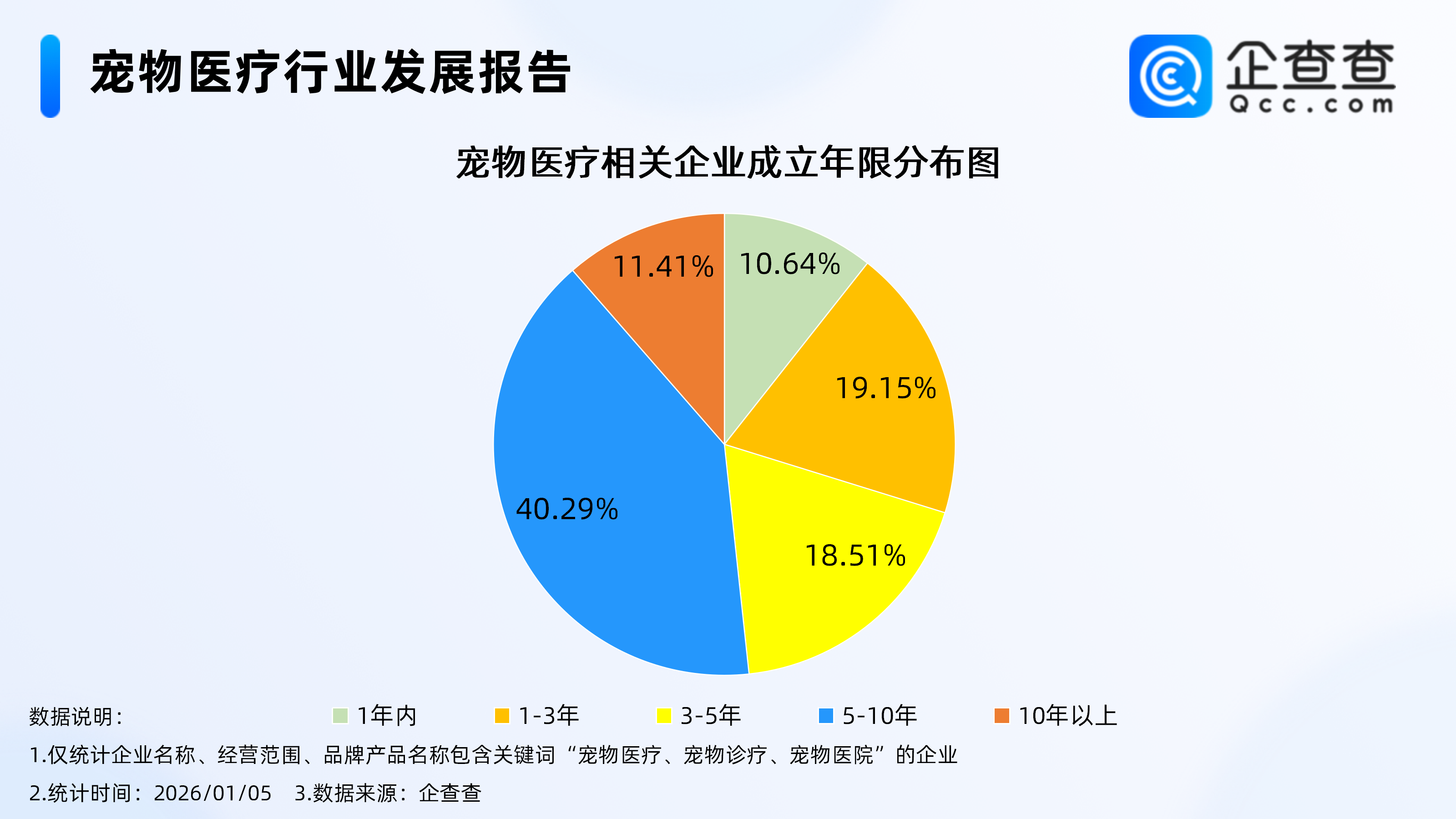
Core Insights - The role of pets has shifted from "animals" to "family members," leading to increased owner concern for pet health and a surge in high-value products such as pet pharmaceuticals, health supplements, and functional prescription foods [1] Group 1: Market Growth and Trends - The introduction of a new weight loss drug for cats, "Pralmorelin Injection," has been accepted for registration by the Ministry of Agriculture and Rural Affairs, showing an average weight loss of 9.26% in trial cats after six weeks [1] - Pet health is identified as the primary driver of consumer growth, with projected increases in pet prescription food by 290%, pet treatment drugs by 80%, and calming products by over 90% by 2025, significantly outpacing traditional categories [1] Group 2: Industry Landscape - As of January 5, there are 17,400 existing pet medical-related companies in China, with 1,909 new registrations expected in 2025, reflecting an 8.59% year-on-year growth [2][3] - The majority of existing pet medical companies (40.29%) were established 5-10 years ago, while companies established 1-3 years and 3-5 years account for 19.15% and 18.51%, respectively [3] Group 3: Regional Distribution - Pet medical-related companies are predominantly located in East China, accounting for 38.75% of the total, followed by Central China (14.66%) and South China (14.52%) [6] Group 4: Patent Landscape - There are currently 2,768 existing patents related to pet medicine in China, with over 60% being invention patents, including 53.41% for published inventions and 11.24% for authorized inventions [7] - The annual application volume for related patents has fluctuated between 140 and 260 over the past decade, with an expected total of 166 applications in 2025 [7]
华东医药猫用减肥药获受理,创新药ETF天弘(517380)年内份额增超308%,机构:春季行情关注医药新兴方向
2 1 Shi Ji Jing Ji Bao Dao· 2025-12-30 02:27
Group 1 - The pharmaceutical sector showed weakness on December 30, with the Hang Seng Hong Kong-Shanghai Innovation Drug Select 50 Index down by 0.56% [1] - Among the constituent stocks, Gan Li Pharmaceutical, Hao Yuan Pharmaceutical, and Junshi Biosciences saw the highest gains, while Baijia Shenzhou, WuXi AppTec, and Kailai Ying experienced declines [1] - The Tianhong Innovation Drug ETF (517380), which tracks the Hang Seng Hong Kong-Shanghai Innovation Drug Select 50 Index, has a total fund size of 1.381 billion yuan and has seen a share increase of over 308% year-to-date, with the latest share count at 1.848 billion [1] Group 2 - Huadong Medicine announced that its subsidiary received a notice from the Ministry of Agriculture and Rural Affairs regarding the acceptance of a new veterinary drug registration application for HDM7006, aimed at weight management in adult obese cats [1] - Xinda Securities believes that the spring market is about to start, recommending attention to emerging pharmaceutical industries such as brain-computer interfaces, surgical robots, and AI applications, with a long-term focus on innovation and international expansion in the medical investment sector [1] - Huaxi Securities points out that the innovation drug industry chain will be the main line of the pharmaceutical sector by 2026, highlighting two key trends: marginal improvement in overseas demand and reversal of domestic demand challenges [2]