
智家大脑

Search documents
从响应指令迈向执行任务 海尔智家描绘家庭具身智能新图景
Zheng Quan Ri Bao Wang· 2026-03-15 12:56
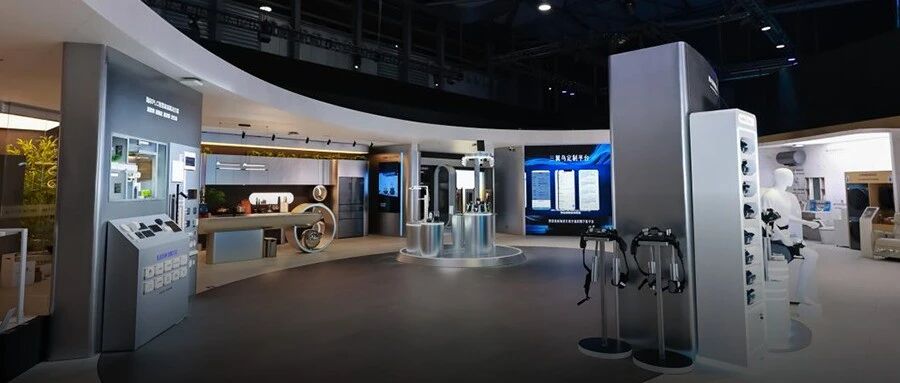
Core Insights - The 2026 China Household Appliances and Consumer Electronics Expo (AWE2026) showcased advancements in smart home technology, particularly focusing on artificial intelligence applications in household devices [1][2] - Haier Smart Home introduced its AI Eye 2.0, family robots, and Smart Home Brain, emphasizing the transition from simple command-response systems to more autonomous, intelligent home environments [1][3] Group 1: Smart Home Technology Advancements - Haier Smart Home's exhibition highlighted a shift from traditional appliance displays to immersive home environments, demonstrating how devices like refrigerators and air conditioners can now understand and respond to user needs in real-time [2] - The AI Eye 2.0 has improved recognition capabilities, allowing for a broader range of food identification and dynamic adjustments based on user location, enhancing the overall user experience [2][3] - The integration of various appliances into a cohesive smart home system marks a trend towards collaborative functionality rather than isolated device upgrades [2][4] Group 2: Family Robots and Their Role - The new family robots from Haier Smart Home are designed to work in conjunction with other household systems, moving beyond basic cleaning tasks to become integral parts of the home service ecosystem [3] - These robots can now assist in managing food storage and household chores by providing real-time suggestions based on their environment, indicating a shift towards more practical applications of robotics in daily life [3][5] - The evolution of family robots reflects a broader industry trend towards executing tasks rather than merely assisting, which could significantly enhance household efficiency [3][5] Group 3: Competitive Landscape and Future Directions - The competition in the smart home sector is evolving from hardware capabilities to platform and ecosystem strengths, as companies like Haier Smart Home enhance their foundational technologies [4] - The ongoing development of smart home systems is expected to redefine household management, focusing on how technology can alleviate domestic burdens and improve living standards [5] - Industry experts suggest that the future of smart homes will hinge on the ability to genuinely assist users in their daily lives, rather than just the number of smart devices owned [5]

AWE里的海尔智慧家庭:AI之眼2.0与「无人家务」的临界点
36氪· 2026-03-12 15:24
Core Insights - The article discusses the evolution of smart homes, emphasizing the integration of AI technology into household appliances, which transforms them from simple devices into a cohesive intelligent system capable of understanding and responding to user needs [4][5][6]. Group 1: Evolution of Smart Homes - Smart homes have evolved from basic connectivity to complex systems that can understand and interact with users, driven by advancements in AI and robotics [4][5][6]. - The introduction of AI capabilities allows household devices to not only control and link but also to comprehend environmental changes and user behaviors, marking a significant shift in the smart home landscape [5][6][12]. Group 2: AI Integration in Appliances - Haier's AI Eye 2.0 enhances the ability of appliances to perceive their environment, improving recognition accuracy and response speed, thus enabling a more intuitive user experience [17][21]. - The AI Eye technology allows devices to autonomously adjust their functions based on real-time environmental data, enhancing safety and efficiency in household tasks [21][22]. Group 3: Robotics in Smart Homes - Haier has introduced various household robots, including cleaning and companion robots, which leverage AI to perform complex tasks autonomously, thus reducing the need for human intervention [27][28]. - These robots are designed to understand their surroundings and execute tasks such as cleaning and organizing, representing a significant leap from traditional smart appliances [27][28]. Group 4: Decision-Making Systems - The Haier Smart Home Brain serves as the decision-making hub, utilizing a unified operating system to coordinate various appliances and robots, thereby optimizing household management [30][33]. - This system allows for seamless interaction between devices, enabling them to work together to fulfill user needs and enhance overall household efficiency [33][34]. Group 5: Expanding the Concept of Smart Homes - The concept of smart homes is evolving to encompass broader life ecosystems, integrating not just household devices but also connecting to community and urban systems [39][40]. - Haier's vision includes creating a comprehensive ecosystem that links homes with vehicles, communities, and cities, thereby expanding the functionality and relevance of smart home technology [39][40].

海尔深耕六大产业生态 努力创造更美好的生活
Ren Min Ri Bao· 2026-02-12 22:24
Group 1 - The company focuses on six major industrial ecosystems: smart home, health care, digital economy, robotics, new energy, and automotive, while actively developing artificial intelligence technology to enhance the "user-centered" philosophy [1][2] - The key to smart homes is making artificial intelligence more intuitive to daily life, exemplified by the three-tub washing machine, which has sold over 400,000 units online, showcasing user participation in product co-creation [1] - The number of smart terminals linked to the platform has exceeded 100 million, providing users with more convenient smart home services [1] Group 2 - The company leverages the Kaos industrial internet platform to deepen its engagement in the digital economy, having developed the Tianzhi industrial model, which integrates over 4,700 mechanism models and 200 expert algorithms to assist enterprises in digital transformation [2] - The transition from a home appliance company to an ecosystem enterprise is underway, with ongoing expansion into new industries such as robotics, new energy, and automotive [2] - The competition in the future is expected to shift from individual companies to dialogues between ecosystems, as stated by the company's chairman and CEO [2]
武汉智博会:三翼鸟小场景蕴含大智慧
Quan Jing Wang· 2025-11-05 08:33
Core Insights - The smart home industry is transitioning from single-device intelligence to whole-home intelligence, focusing on simplifying user experiences amidst increasing device complexity [1] - The recent International Smart Construction Expo showcased how SanYingNiao is creating user value through detailed scene experiences, emphasizing the importance of understanding user needs [1][2] User-Centric Experience - SanYingNiao's AI smart home technology prioritizes proactive service over passive adaptation, enhancing user interaction through seamless integration of smart devices [2] - Specific examples include AI biometric locks that recognize family members and create personalized homecoming scenes, and kitchen appliances that automatically respond to user actions [2][3] Technological Innovation - The core engine of SanYingNiao's smart home, the Uhome model, enables complex command understanding and efficient device collaboration, enhancing user experience in daily life [3] - The platform has over 13 million active users, indicating widespread adoption of its smart living solutions [3] Customization and Digitalization - SanYingNiao offers a new AI-customized smart home experience, allowing users to create personalized home designs in as little as three minutes using real floor plans [4] - The platform has digitized the entire process from design to delivery, covering over 15 million home types and generating more than 290,000 design solutions [4] Ecosystem Collaboration - The company is redefining industry relationships by building an open ecosystem that integrates over 6,600 partners and 52 million connected products, focusing on user needs [5] - The approach emphasizes solving specific user pain points rather than merely accumulating technology, promoting a sustainable and high-quality development path for the smart home industry [5]


海尔智家(600690):AI赋能海尔全面升级,智慧家庭战略引领行业
Changjiang Securities· 2025-04-05 23:30
Investment Rating - The investment rating for the company is "Buy" and is maintained [6]. Core Viewpoints - The report emphasizes that Haier Smart Home is leveraging AI technology to enhance its strategic, product, and ecological frameworks, leading the industry towards a smart home future [2][3][10]. Strategic Aspects - AI is aiding the company in deepening digital transformation and improving operational efficiency, with a shift to online marketing, AI-driven service matching, and smart logistics reducing costs [11][13]. - The company has upgraded its R&D, manufacturing, and order systems using AI, resulting in a 20% reduction in R&D cycles, a 30% increase in production efficiency, and a 13% improvement in order response times [11][15][16]. Product Development - Haier is transitioning from "assisting with chores" to a vision of "unmanned chores," introducing the "AI Eye" series of appliances that autonomously manage cooking and laundry tasks [17][20]. - The "AI Eye" technology enables appliances to recognize and respond to user needs, enhancing user experience and operational efficiency [20][21]. Ecological Development - The "Smart Home Brain" has been upgraded to incorporate AI perception, voice, and visual capabilities, aiming to create a more intuitive home environment [36][38]. - The company is expanding its smart home solutions through its "Three Wings Bird" brand, which covers smart appliances, customized home solutions, and comprehensive home control [31][35]. Investment Recommendations - The report suggests that Haier Smart Home is well-positioned to capitalize on AI-driven opportunities, with projected net profits of 21.44 billion, 24.29 billion, and 26.76 billion yuan for 2025-2027, corresponding to P/E ratios of 11.5, 10.1, and 9.2 times [43].