
AI+家电

Search documents
华为小米已成新“年货”,后国补时代市场热度几何?
财联社· 2026-02-12 03:25
Core Viewpoint - The article discusses the impact of the new round of national subsidies on consumer electronics and home appliances during the upcoming Spring Festival, highlighting increased consumer demand and sales driven by these subsidies [2][15]. Group 1: National Subsidy Implementation - The Ministry of Commerce has allocated the first batch of 62.5 billion yuan in national subsidies, which will be distributed to local commerce departments to ensure consumers can claim these subsidies during the Spring Festival [1]. - Consumers can now apply for subsidies online for digital and smart products, with significant sales increases observed in various electronics stores [2][4]. - The new subsidies are expected to stimulate sales, particularly in the home appliance and 3C product sectors, with sales of air conditioners, refrigerators, washing machines, and televisions seeing over 90% month-on-month growth [2][11]. Group 2: Consumer Trends and Product Preferences - The demand for home appliances and 3C products has surged, with consumers increasingly seeking products that enhance efficiency and create a festive atmosphere [3][10]. - Popular products include smart appliances like automatic washing machines, large-capacity refrigerators, and high-end AI smartphones, reflecting a shift towards premium and technologically advanced items [3][16]. - The sales of energy-efficient appliances have risen significantly, with 92% of sales now comprising first-level energy/water efficiency products, indicating a trend towards greener and smarter home solutions [11][16]. Group 3: Market Dynamics and Manufacturer Strategies - Manufacturers are preparing for the Spring Festival by increasing inventory of energy-efficient products and optimizing supply chains to ensure product availability [12]. - Major brands like Huawei, Xiaomi, and OPPO are offering additional discounts alongside the national subsidies to enhance promotional efforts [12]. - Despite the positive impact of subsidies, rising costs of raw materials are leading to price increases for some products, which may affect overall sales volumes in the consumer electronics sector [13][14]. Group 4: Future Outlook and Challenges - The article notes that while national subsidies have boosted market confidence and consumer demand, the underlying issue of supply-demand mismatch remains a challenge [17]. - The effectiveness of subsidies may diminish as consumers become accustomed to them, necessitating a focus on product innovation and user engagement to sustain growth [17]. - Analysts express caution regarding the marginal benefits of subsidies in 2026, suggesting that manufacturers may prioritize high-margin products over volume sales, potentially impacting overall market performance [17].


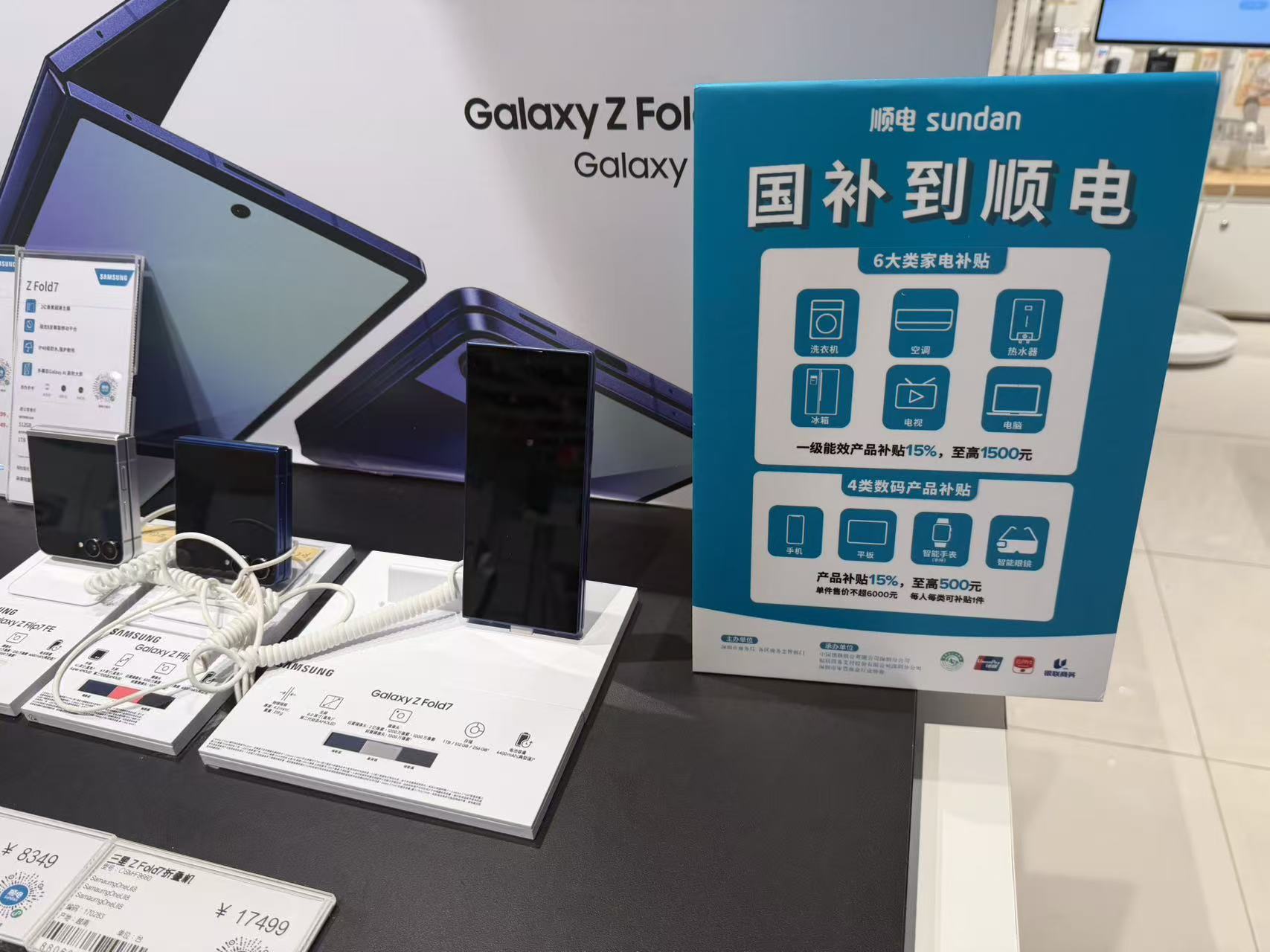
一线实探!华为小米已成新“年货” 后国补时代市场热度几何?
Xin Lang Cai Jing· 2026-02-12 01:49
Core Viewpoint - The Chinese government has allocated 62.5 billion yuan in subsidies to stimulate consumer spending during the Spring Festival, with a focus on home appliances and 3C electronic products, leading to increased sales and market activity [1][2][6]. Group 1: Subsidy Implementation and Market Response - The Ministry of Commerce has released the first batch of 62.5 billion yuan in national subsidies, which will be distributed to local commerce departments to ensure consumers can claim these subsidies during the Spring Festival [1]. - Consumers can now apply for subsidies online for digital and smart products, with reports of increased sales activity in stores, particularly for mobile phones and home appliances [2][3]. - The combination of national subsidies, brand discounts, and platform incentives is driving consumer interest and sales, particularly in the home appliance and 3C product sectors [2][6]. Group 2: Sales Performance and Consumer Trends - Sales of major home appliances such as air conditioners, refrigerators, and washing machines have seen a month-on-month increase of over 90%, with high-end smartphones dominating the market [2][7]. - The demand for efficient and technologically advanced home appliances is rising, with products like smart air conditioners and large-screen TVs becoming popular choices for consumers during the festive season [2][7]. - The sales of energy-efficient appliances have surged, with 92% of sales being of first-level energy efficiency products, indicating a shift towards greener and smarter home solutions [7][13]. Group 3: Manufacturer Strategies and Market Dynamics - Manufacturers are preparing for the Spring Festival by increasing inventory of energy-efficient products and optimizing supply chains to ensure availability during peak demand [8][9]. - Major 3C brands are enhancing promotional efforts during the Spring Festival, with additional discounts and marketing campaigns to attract consumers [9]. - Despite the positive impact of subsidies, rising costs of raw materials are leading to price increases for some products, which may affect overall sales volumes in the future [10][11]. Group 4: Future Outlook and Industry Challenges - The effectiveness of subsidies may diminish as consumers become accustomed to them, and the market faces challenges related to supply-demand mismatches [14]. - Industry experts suggest that continuous growth will depend on product innovation and the ability to meet evolving consumer preferences, particularly in the context of AI integration in home appliances [12][14]. - The anticipated decline in smartphone sales in 2026 highlights the need for brands to adapt their strategies in response to changing market conditions and consumer behavior [11].
海外品牌发布财报,产能外迁是主方向
Orient Securities· 2026-02-09 13:11
Investment Rating - The report maintains a "Positive" outlook for the home appliance industry, indicating an expectation of returns exceeding the market benchmark by over 5% [4]. Core Insights - The report highlights that while the domestic subsidy effect is slowing, the "Two New" policy is expected to stimulate greater consumer potential in the home appliance sector. Leading white goods companies with higher energy efficiency product ratios and mature trade-in management processes are likely to benefit more significantly [3]. - The long-term strategy of expanding overseas production capacity remains a key focus, with companies that diversify their production locations expected to outperform. The report anticipates a valuation shift in 2026, particularly for companies like Roborock Technology and Lek Electric [3]. - The report emphasizes the importance of stable performance in core businesses and the potential for developing secondary growth avenues, with companies like Anfu Technology being highlighted for their strong cash flow and manufacturing capabilities [3]. Summary by Sections Domestic Market Insights - The report notes that the domestic market is experiencing a marginal slowdown in subsidy effects, but ongoing policy optimizations are expected to unlock more consumer potential [3]. Overseas Expansion - Companies are increasingly focusing on overseas production as a long-term strategy, with expectations of accelerated price increases starting in Q1 2026 due to tariff impacts and rising raw material costs [3]. Investment Recommendations - Key investment themes include: - Leading companies with higher operational efficiency and stable dividend yields are recommended for conservative allocation, with Haier Smart Home and Hisense Visual Technology as notable mentions [3]. - Companies with a focus on international expansion are expected to see valuation shifts, with Roborock Technology and Lek Electric recommended for buying [3]. - Companies with stable core business performance and potential for secondary growth avenues, such as Anfu Technology, are also highlighted [3].




PPI上行周期,中高端卡位机会显现
Orient Securities· 2026-02-05 02:41
Investment Rating - The report maintains a "Positive" outlook for the home appliance industry, indicating a strong performance relative to market benchmarks [5]. Core Insights - The PPI (Producer Price Index) upcycle presents opportunities for mid-to-high-end positioning, with leading companies demonstrating stronger pricing power and higher profit certainty [2][3]. - The report identifies two main investment themes: 1. Leading companies exhibit higher operational efficiency and stability during cost upcycles, making them preferred choices for stable allocations. Recommended stocks include Haier Smart Home (600690, not rated) and Hisense Visual (600060, increase holding) [3]. 2. International expansion remains a long-term theme, with potential valuation shifts expected by 2026. Recommended stocks include Stone Technology (688169, buy) and Lek Electric (603355, buy) [3]. Summary by Sections - **PPI Upcycle and Pricing Dynamics**: The report notes that from July 1, 2025, to January 30, 2026, LME copper prices increased by 32%, prompting home appliance brands to raise prices. For instance, Hisense announced a price increase of 5%-10% for its air conditioning products starting February 11, 2026, while Midea announced a cumulative price increase exceeding 6% [7]. - **Sales Impact and Market Concentration**: Price increases have not significantly affected overall sales volumes but have contributed to market concentration. Historical data shows that after previous raw material price hikes, leading companies have successfully increased their market share, particularly in the air conditioning and refrigerator segments [7]. - **Mid-to-High-End Market Opportunities**: The report emphasizes that the PPI upcycle is a positive signal for industrial enterprises and economic stabilization. It highlights opportunities in mid-to-high-end segments, where consumer price sensitivity is lower, allowing for better price transmission during commodity upcycles [7].
TCL电子:与索尼战略合作优势互补,强化全球领导地位-20260121
HTSC· 2026-01-21 02:50
Investment Rating - The report maintains a "Buy" rating for TCL Electronics [8] Core Views - TCL Electronics has signed a memorandum of understanding with Sony for strategic cooperation in the home entertainment sector, which is expected to enhance its global market position [2][3] - The company anticipates adjusted net profit for 2025 to be between HKD 2.33 billion and HKD 2.57 billion, representing a year-on-year growth of approximately 45% to 60%, exceeding the upper limit of its equity plan target of 45% growth [1][3] - The company is benefiting from a "globalization" and "mid-to-high-end" strategy, leading to steady increases in international market share, alongside advantages from domestic policies promoting product upgrades [1][4] Summary by Sections Strategic Cooperation - TCL Electronics plans to establish a joint venture with Sony, where TCL will hold 51% and Sony 49%, to manage integrated operations for products including televisions and home audio systems globally [2] - This partnership is expected to enhance TCL's brand recognition in the high-end television market and leverage its scale and industrial advantages to strengthen competitiveness in the display industry [2] Financial Performance - The company has reported a profit upgrade, with expected adjusted net profit for 2025 reaching HKD 2.45 billion, driven by product structure optimization and improved operational efficiency, particularly in high-margin Mini LED televisions [3][6] - Mini LED TV global shipments increased by 153.3% year-on-year, with shipments of televisions sized 65 inches and above growing by 25.8% [3] Market Policies and Trends - The continuation of the "old-for-new" appliance policy in 2026 is expected to benefit TCL Electronics, promoting sales of Mini LED backlit products and optimizing profit margins [4] - The company is enhancing its overseas localization efforts by establishing production and R&D systems in North America, Europe, and emerging markets, effectively reducing tariff risks [5] Future Outlook - The report projects an increase in net profit for 2025-2027 to HKD 2.45 billion, HKD 2.99 billion, and HKD 3.38 billion respectively, with corresponding EPS of HKD 0.97, HKD 1.18, and HKD 1.34 [6][12] - The target price for TCL Electronics has been raised to HKD 14.16, based on a 12x PE for 2026, reflecting the company's strong global brand and product competitiveness [6]
TCL电子(01070):与索尼战略合作优势互补,强化全球领导地位
HTSC· 2026-01-21 01:55
Investment Rating - The report maintains a "Buy" rating for TCL Electronics [8] Core Views - TCL Electronics has signed a memorandum of understanding with Sony for strategic cooperation in the home entertainment sector, which is expected to enhance its global market position [2][3] - The company anticipates adjusted net profit for 2025 to be between HKD 2.33 billion and HKD 2.57 billion, representing a year-on-year growth of approximately 45% to 60% [1][3] - The company is benefiting from a global strategy focused on "globalization" and "mid-to-high-end" products, leading to steady market share growth [1][4] - The continuation of the "old-for-new" policy in China is expected to further drive sales and product upgrades, particularly in Mini LED backlight products [4] - TCL Electronics is actively enhancing its overseas localization efforts and expanding its AI applications, including AI televisions and smart glasses, which may open new growth opportunities [5] Summary by Sections Strategic Cooperation - TCL Electronics and Sony plan to establish a joint venture to manage Sony's home entertainment business, with TCL holding a 51% stake and Sony 49% [2] - This partnership is expected to strengthen TCL's brand recognition in the high-end television market and enhance its competitive edge in the display industry [2] Financial Performance - The company has reported a profit upgrade, with a projected adjusted net profit of HKD 2.33 billion to HKD 2.57 billion for 2025, driven by product structure optimization and improved operational efficiency [3][6] - Mini LED TV shipments have increased significantly, with a year-on-year growth of 153.3% in global shipments [3] Market Trends - The "old-for-new" policy in China is expected to continue benefiting TCL Electronics, although the marginal impact may weaken over time [4] - The company is focusing on high-margin products and leveraging its scale to optimize profitability [4] Future Outlook - The report projects an increase in net profit for 2025-2027, with estimates of HKD 2.45 billion, HKD 2.99 billion, and HKD 3.38 billion respectively, reflecting growth rates of 39.2%, 21.94%, and 13.16% [6][12] - The target price for TCL Electronics has been raised to HKD 14.16, based on a 12x PE ratio for 2026 [6]
家用电器2025年中期投资策略:大家电稳健为基,小家电企稳改善
Guoxin Securities· 2025-08-14 11:23
Core Viewpoints - The home appliance sector is expected to show steady growth in domestic sales despite the diminishing effects of national subsidies, with a return to stable growth anticipated in the second half of 2025 [3][25] - The valuation of the home appliance industry remains at a low level, with the industry index PE (TTM) at 14.45X, placing it at the 39.0 percentile since 2020 [13] - The report maintains an "outperform" rating for the home appliance sector, highlighting the resilience of major appliances and the recovery of small appliances [1][3] Summary by Sections 1. Overall Market Performance - In the first half of 2025, the home appliance sector slightly underperformed the market, with the sector index down 1.2% compared to the Shanghai and Shenzhen 300 index, which remained stable [10] - The home appliance sector's valuation is at a five-year low, with significant growth in home appliance components, which saw a rise of over 17% [10][11] 2. White Goods - Domestic sales of white goods benefited from national subsidy policies, showing strong resilience, with a projected steady growth in the second half of 2025 despite a slowdown in growth rates [4][19] - Major brands like Midea, Haier, Gree, and Hisense are recommended for investment due to their strong market positions and global production capabilities [4][17] 3. Black Goods - The black goods segment, particularly televisions, is experiencing stable demand with a shift towards Mini LED technology and decreasing panel prices, which are expected to enhance profitability for leading companies [40][44] - The domestic retail volume of televisions increased by 1.8% in the first half of 2025, with retail revenue growing by 7.5% [44] 4. Kitchen Appliances - The kitchen appliance sector is seeing a recovery in demand, particularly for traditional cooking appliances, driven by national subsidies, with retail sales of range hoods and gas stoves showing significant growth [53][54] - The overall demand for kitchen appliances is expected to stabilize as the effects of national subsidies wane, with a focus on the recovery of the real estate market to support future growth [55][57] 5. Small Appliances - The small appliance market, particularly kitchen appliances, is witnessing a notable recovery, with retail sales reaching 31.9 billion yuan, a year-on-year increase of 9.3% [65] - The demand for new cleaning products, such as robotic vacuum cleaners, has surged, with sales increasing by over 40% due to national subsidies [68][66] 6. Technology Integration - Leading home appliance companies are focusing on their strengths and expanding into emerging application areas, such as smart home technology and AI products, which are expected to drive long-term growth [4][28]




海尔智家(600690):AI赋能海尔全面升级,智慧家庭战略引领行业
Changjiang Securities· 2025-04-05 23:30
Investment Rating - The investment rating for the company is "Buy" and is maintained [6]. Core Viewpoints - The report emphasizes that Haier Smart Home is leveraging AI technology to enhance its strategic, product, and ecological frameworks, leading the industry towards a smart home future [2][3][10]. Strategic Aspects - AI is aiding the company in deepening digital transformation and improving operational efficiency, with a shift to online marketing, AI-driven service matching, and smart logistics reducing costs [11][13]. - The company has upgraded its R&D, manufacturing, and order systems using AI, resulting in a 20% reduction in R&D cycles, a 30% increase in production efficiency, and a 13% improvement in order response times [11][15][16]. Product Development - Haier is transitioning from "assisting with chores" to a vision of "unmanned chores," introducing the "AI Eye" series of appliances that autonomously manage cooking and laundry tasks [17][20]. - The "AI Eye" technology enables appliances to recognize and respond to user needs, enhancing user experience and operational efficiency [20][21]. Ecological Development - The "Smart Home Brain" has been upgraded to incorporate AI perception, voice, and visual capabilities, aiming to create a more intuitive home environment [36][38]. - The company is expanding its smart home solutions through its "Three Wings Bird" brand, which covers smart appliances, customized home solutions, and comprehensive home control [31][35]. Investment Recommendations - The report suggests that Haier Smart Home is well-positioned to capitalize on AI-driven opportunities, with projected net profits of 21.44 billion, 24.29 billion, and 26.76 billion yuan for 2025-2027, corresponding to P/E ratios of 11.5, 10.1, and 9.2 times [43].