
智慧列车装备

Search documents
“人工智能+交通运输”路线图来了,智能产品“加速上路”
2 1 Shi Ji Jing Ji Bao Dao· 2025-09-26 11:43
Core Viewpoint - The implementation of "Artificial Intelligence + Transportation" is a key initiative to foster new economic drivers and update existing ones in China, with a focus on enhancing intelligent driving and related industries as new engines for economic growth [1][2]. Group 1: Goals and Objectives - By 2027, AI is expected to be widely applied in typical scenarios within the transportation sector, with the establishment of a comprehensive transportation AI model system and the development of several landmark innovative projects [2]. - By 2030, AI will be deeply integrated into the transportation industry, promoting a smart, comprehensive, and multi-dimensional transportation network, with key technologies achieving self-control and a leading global position [2]. Group 2: Key Tasks - The implementation plan outlines four main tasks: increasing the supply of key technologies, accelerating innovation in application scenarios, strengthening core element guarantees, and optimizing the industrial development ecosystem [2][4]. - In increasing key technology supply, the plan emphasizes breakthroughs in common technologies such as dynamic scene perception, real-time precise positioning, and autonomous decision-making in complex environments [2]. Group 3: Innovation in Intelligent Products - The plan calls for accelerated innovation in intelligent products, including smart driving systems, remote driving cockpits, and advanced monitoring technologies for road infrastructure [3]. - It encourages the development of new equipment such as drones and all-terrain vehicles, as well as upgrades to railway equipment and smart logistics facilities [3]. Group 4: Focus Areas for Innovation - Seven key tasks are identified for accelerating innovation in application scenarios, including smart driving, intelligent railways, and smart logistics [3][4]. - The plan supports the development of intelligent trains and autonomous control systems, promoting technologies that enhance self-detection and self-repair capabilities [4]. Group 5: Core Element Guarantees - The plan emphasizes optimizing computing power supply, accelerating the construction of high-quality data sets, and promoting the development of ubiquitous network facilities [4]. - It aims to integrate AI, next-generation communication, and IoT technologies to support the development of transportation infrastructure and service networks [4]. Group 6: Industrial Ecosystem Optimization - The plan proposes enhancing the incubation capacity of the industrial ecosystem by forming alliances for AI model innovation and industry collaboration [5]. - It addresses the need for a governance mechanism for AI applications in transportation, focusing on data risk prevention and the establishment of monitoring and emergency response systems [5]. - The plan highlights the importance of talent development, advocating for the establishment of AI education centers in transportation-related universities and promoting interdisciplinary talent cultivation [5].
“人工智能+交通运输”实施意见印发
Di Yi Cai Jing Zi Xun· 2025-09-26 08:10
Core Insights - The implementation opinions on "Artificial Intelligence + Transportation" were jointly released by several government agencies, aiming for widespread application of AI in the transportation sector by 2027 and deep integration by 2030 [1][2] Group 1: AI Integration Goals - By 2027, AI will be widely applied in typical scenarios within the transportation industry, with a comprehensive transportation model system deployed [1] - By 2030, AI will be deeply integrated into the transportation sector, promoting a smart and comprehensive transportation network [1] Group 2: Innovation in Smart Products - The initiative emphasizes accelerating the innovation of smart products, including the development of intelligent driving systems and remote driving cockpits [2] - It encourages the research and application of new technologies and equipment, such as high-performance night vision monitoring and structural detection [2] - The plan includes upgrading railway equipment with smart train systems, new generation communication signals, and intelligent scheduling systems [2]
交通运输部等7部门:加快智能驾驶系统、远程驾驶座舱等产品研发
Xin Hua Cai Jing· 2025-09-26 08:02
Core Viewpoint - The Ministry of Transport and six other departments have released implementation opinions on "Artificial Intelligence + Transportation," emphasizing the acceleration of product development in intelligent driving systems and remote driving cockpits [1] Group 1: Intelligent Driving and Monitoring Technologies - The initiative aims to enhance the research and application of high-performance night vision monitoring and structural inspection technologies for highways [1] - It encourages the development of new equipment such as drones and all-terrain vehicles [1] Group 2: Railway Equipment Upgrades - The plan promotes upgrades in railway equipment, including smart train systems, heavy-load capabilities, next-generation communication signal equipment, and intelligent train scheduling systems [1] Group 3: Maritime and Construction Equipment - There is a focus on advancing the research of intelligent marine equipment, smart ships, and offshore intelligent rescue gear [1] - The initiative also includes the development of intelligent paving and compaction machines, tower cranes, bridge construction machines, and intelligent inspection robots for construction and maintenance [1] Group 4: Logistics and Security Equipment - The plan aims to push forward the development of intelligent handling, unloading, warehousing, distribution, and security inspection equipment [1]
“人工智能+交通运输”实施意见印发
第一财经· 2025-09-26 07:54
Core Viewpoint - The article discusses the implementation opinions on "Artificial Intelligence + Transportation" released by multiple Chinese government agencies, highlighting the future integration of AI in the transportation sector by 2027 and 2030, aiming for innovation and high-quality development in the industry [1][2]. Group 1: AI Integration Timeline - By 2027, AI will be widely applied in typical scenarios within the transportation industry, with a comprehensive deployment of transportation big models and a batch of intelligent systems [1] - By 2030, AI will be deeply integrated into the transportation sector, promoting a smart and comprehensive transportation network [1] Group 2: Innovation in Smart Products - The initiative emphasizes accelerating the innovation of smart products, including the development of intelligent driving systems and remote driving cockpits [2] - It encourages the research and application of new technologies and equipment such as high-performance night vision monitoring and structural inspection [2] - The plan includes upgrading railway equipment with smart trains, new communication signal systems, and intelligent scheduling systems [2]

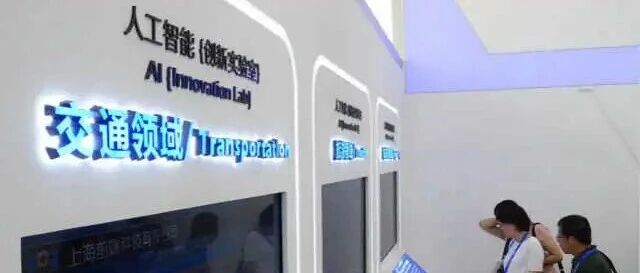
交通运输部等部门:加快智能驾驶系统、远程驾驶座舱等产品研发
Zheng Quan Shi Bao Wang· 2025-09-26 07:49
Group 1 - The core viewpoint of the article emphasizes the implementation of "Artificial Intelligence + Transportation" by various government agencies in China, aiming to accelerate innovation in smart products and technologies [1] Group 2 - The initiative includes the development of smart driving systems and remote driving cockpits, highlighting a focus on advanced technology in transportation [1] - There is a push for the application of new technologies and equipment in highway monitoring and structural inspection, indicating a commitment to enhancing safety and efficiency [1] - The plan encourages the research and development of new equipment such as drones and all-terrain vehicles, which could lead to significant advancements in logistics and transportation capabilities [1] Group 3 - The upgrade of railway equipment is prioritized, including smart trains, heavy-load systems, next-generation communication signals, and intelligent scheduling systems, which could improve operational efficiency [1] - The development of smart marine equipment and intelligent search and rescue gear is also emphasized, reflecting a broader scope of innovation in maritime transportation [1] Group 4 - The initiative promotes the research of intelligent construction and maintenance equipment, such as smart pavers, compactors, tower cranes, bridge-building machines, and inspection robots, which could enhance construction efficiency [1] - There is a focus on the development of smart handling, loading, warehousing, and security inspection facilities, indicating a comprehensive approach to modernizing logistics and supply chain operations [1]
交通运输部等7部门: 加快智能驾驶系统、远程驾驶座舱等产品研发
Xin Lang Cai Jing· 2025-09-26 07:46
Core Viewpoint - The Ministry of Transport and six other departments have released implementation opinions on "Artificial Intelligence + Transportation," emphasizing the acceleration of product development in intelligent driving systems and remote driving cockpits [1] Group 1: Intelligent Driving and Monitoring Technologies - The initiative aims to enhance the research and application of high-performance night vision monitoring and structural detection technologies for highways [1] - It encourages the development of new equipment such as drones and all-terrain vehicles [1] Group 2: Railway Equipment Upgrades - The plan promotes upgrades in railway equipment, including smart train systems, heavy-load capabilities, next-generation communication signal equipment, and intelligent train scheduling systems [1] Group 3: Marine and Construction Equipment - There is a focus on advancing smart marine equipment, intelligent ships, and offshore intelligent search and rescue gear [1] - The initiative also includes the development of intelligent paving and compaction machines, tower cranes, bridge construction machines, and intelligent inspection robots for construction and maintenance [1] Group 4: Logistics and Security Equipment - The program aims to push forward the research and development of intelligent handling, unloading, warehousing, distribution, and security inspection facilities and equipment [1]