
智慧政务平台

Search documents
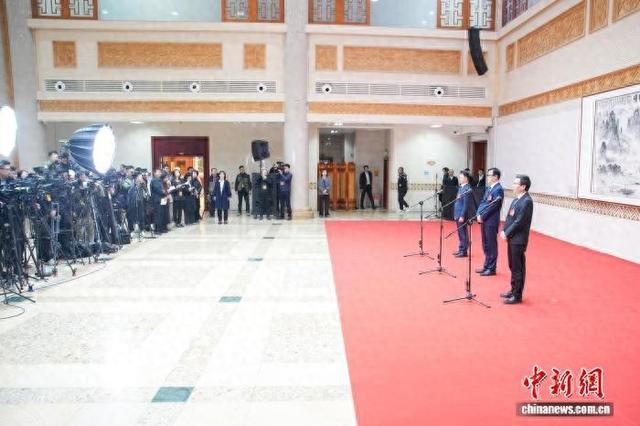
一条“代表通道” 看见广西发展新貌
Zhong Guo Xin Wen Wang· 2026-02-02 10:03
Digital Empowerment - The AI industry in Guangxi is rapidly developing, with a goal to achieve an industry output value exceeding 100 billion RMB by 2027 [3][5] - A collaboration between Guangxi and Malaysian companies has led to the establishment of an AI application cooperation center, successfully launching key applications like the multi-cultural model and certificate integration [3][5] - The implementation of smart traffic and new energy charging solutions is being promoted in the ASEAN market, enhancing operational efficiency in various sectors [3][5] Maritime Development - The North Bay Port has transformed from a throughput of 190,000 TEUs to a major port handling over 10 million TEUs, marking a significant milestone in maritime logistics [5][6] - The construction of a digital bulk cargo yard has improved operational efficiency by over 30%, while the "North Port Network" platform has streamlined processes, saving an average of 20 hours per transaction [5][6] - The upcoming opening of the Pinglu Canal in 2026 is expected to shorten shipping routes by approximately 560 kilometers, facilitating a new channel for cargo transportation [5][6] Green Transformation - The introduction of the "oxygen pressure leaching" process has significantly improved zinc extraction rates from 85% to over 97%, while also enabling the recovery of rare metals [6][8] - The company aims to lead the green development of the non-ferrous metal industry in Guangxi, focusing on high-end, intelligent, and sustainable practices [6][8] Social Welfare - The implementation of a public voting system for livelihood projects has resulted in the completion of 200 out of 203 projects, achieving a completion rate of 98.5% [8][9] - Infrastructure improvements, such as the repair of irrigation channels and road upgrades, have directly benefited local agricultural productivity and community income [8][9] Ethnic Unity - Educational initiatives in ethnic minority areas are fostering unity among diverse groups, with programs integrating local cultural practices into the curriculum [9][10] - The focus on reducing teacher burdens while enhancing cultural transmission through AI in education is being prioritized [9][10] Rural Revitalization - The establishment of a cooperative has enabled local farmers to increase their income by promoting unique agricultural products in larger markets, such as the Guangdong-Hong Kong-Macau Greater Bay Area [11] - Training programs for villagers in e-commerce and product marketing have empowered local women, enhancing community economic participation [11]

争做政企标杆,记山东移动威海乳山分公司“政府行业组”
Qi Lu Wan Bao· 2026-01-19 02:54
Core Insights - The "Government Industry Group" at Shandong Mobile's Weihai Rushan branch is a key driver of high-quality development in the government and enterprise market, focusing on customized services and innovative technologies to enhance competitiveness in sectors like government, finance, education, and healthcare [1] Group 1: Customer-Centric Approach - The team aligns closely with the company's strategic goals, centering on customer needs through a model of "industry deepening + checklist management," effectively addressing the digital upgrade demands of government and enterprise clients [2] - Significant performance breakthroughs have been achieved in key projects such as smart cities, cloud computing, and the Internet of Things [2] Group 2: Professional Collaboration - The team emphasizes capability building and knowledge sharing through mechanisms like "industry special teams" and "project review meetings," continuously enhancing members' expertise in areas like 5G private networks and industrial internet [3] - In a project to build a smart government affairs platform, the team completed design, testing, and deployment in just one week, three days ahead of schedule, earning high praise for their swift response and professional service [3] Group 3: Innovation-Driven Solutions - The team actively implements the company's "innovation-driven" philosophy by proposing optimizations to the "platform + ecosystem" service model, transitioning traditional business assessments to a "solution value contribution" evaluation system [4] - This approach effectively enhances customer loyalty and project implementation efficiency [4] Group 4: Service Empowerment and Responsibility - The team is dedicated to providing high-quality service, demonstrating corporate responsibility and commitment, especially during major events by ensuring round-the-clock communication support [5] - During the pandemic, they established a remote teaching platform for educational institutions, facilitating continuous learning despite school closures [5] - The team also conducts regular "digital empowerment salons" to assist small and medium-sized enterprises with digital transformation challenges, receiving widespread acclaim for their efforts [5]

《主流媒体所办新媒体发展研究报告(二〇二四—二〇二五)》概要
Ren Min Ri Bao· 2025-11-22 22:19
Core Viewpoint - The forum held in Sichuan focused on the theme of "Artificial Intelligence +, Promoting Systemic Transformation in Media," highlighting the importance of innovation and technology in reshaping media practices and enhancing cultural influence [1]. Group 1: Content Production Model - Mainstream media are reshaping content production by launching high-quality, positive media products around significant national events, utilizing internet language and emotional storytelling to engage younger audiences [1]. - The application of artificial intelligence has expanded the creative themes and distribution channels for cultural products, enhancing user experience through numerous AI-generated works [1]. Group 2: Technological Innovation - Digital intelligence technologies are revolutionizing media content production tools, serving as a key driver for the leap in new media productivity [2]. - Media organizations are developing various intelligent applications to improve the efficiency of media products, creating specialized models and enhancing data classification and supply levels [2]. Group 3: Channel and Terminal Layout - Mainstream media are integrating new media platforms to achieve resource sharing and enhance the effectiveness of fusion development [3]. - The use of third-party traffic platforms is being optimized to increase dissemination power and influence, allowing for more targeted and differentiated media expressions [3]. Group 4: Institutional Innovation - Mainstream media are establishing comprehensive production and dissemination mechanisms to facilitate systemic transformation and enhance their presence in the internet space [4]. - Various regions are implementing systemic reform plans to restructure organizations and optimize evaluation systems, fostering the growth of multi-media talent [4]. Group 5: Cross-Industry Integration - Mainstream media are leveraging institutional and resource advantages to expand diversified operational models, enhancing market competitiveness [5]. - In the realm of news and public service, smart governance platforms and integrated service platforms are being developed to promote intelligent and refined public services [5]. Group 6: International Communication - Mainstream media are constructing a multi-channel, three-dimensional international communication framework, enhancing the effectiveness of international dissemination [7]. - The focus is on innovating narrative methods and adapting to rapid technological advancements to improve international communication efficiency [7]. Group 7: AI Development - Breakthroughs in artificial intelligence are providing strong momentum for the rapid development of mainstream media in the new media sector [8]. - There is a call for a comprehensive AI capability framework to connect traditional businesses with new platforms, fostering a content supply ecosystem aligned with socialist core values [8].