
5G专网

Search documents
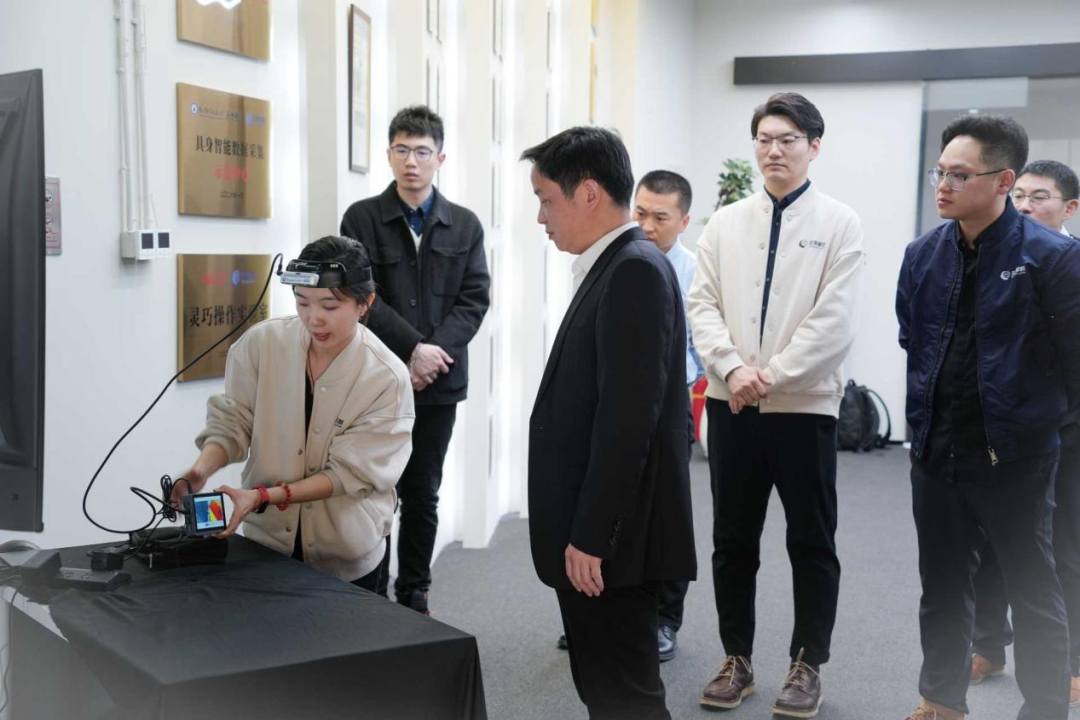
广州移动与深度机智、钛虎机器人签署全面合作协议 共建具身智能协同创新生态
Guang Zhou Ri Bao· 2026-02-12 03:31
Core Viewpoint - The collaboration between China Mobile Guangdong, Deep Intelligence, and Titanium Robot aims to accelerate the application of embodied intelligence technology across various sectors, establishing a benchmark for new productivity in the industry [1][3]. Group 1: Partnership and Objectives - The signing ceremony for the comprehensive cooperation agreement took place at Beijing Zhongguancun College, attended by key representatives from all three companies [1]. - This partnership is a significant manifestation of China Mobile's "industry-investment synergy" strategy, focusing on integrating robotic capabilities with communication infrastructure [1][3]. - The three parties will jointly establish an Embodied Intelligence Empowerment Center to create a collaborative system that integrates robotic bodies, intelligence models, 5G networks, and industry applications [3][5]. Group 2: Technical Collaboration - The collaboration will focus on joint research and development in key areas such as embodied intelligent robot platforms, high-dynamic physical interaction, multi-modal perception decision-making, and remote collaborative control [5]. - The integration of 5G low-latency communication, network slicing, and edge computing will be explored to develop solutions for typical scenarios in research, industrial manufacturing, and energy park operations [5]. - The partnership aims to foster an open and collaborative industrial innovation ecosystem, injecting new momentum into the integration of artificial intelligence and the real economy [5].



新春走基层丨5G赋能智慧绿电 辽宁移动助力清原抽水蓄能电站建设
Xin Lang Cai Jing· 2026-02-09 12:03
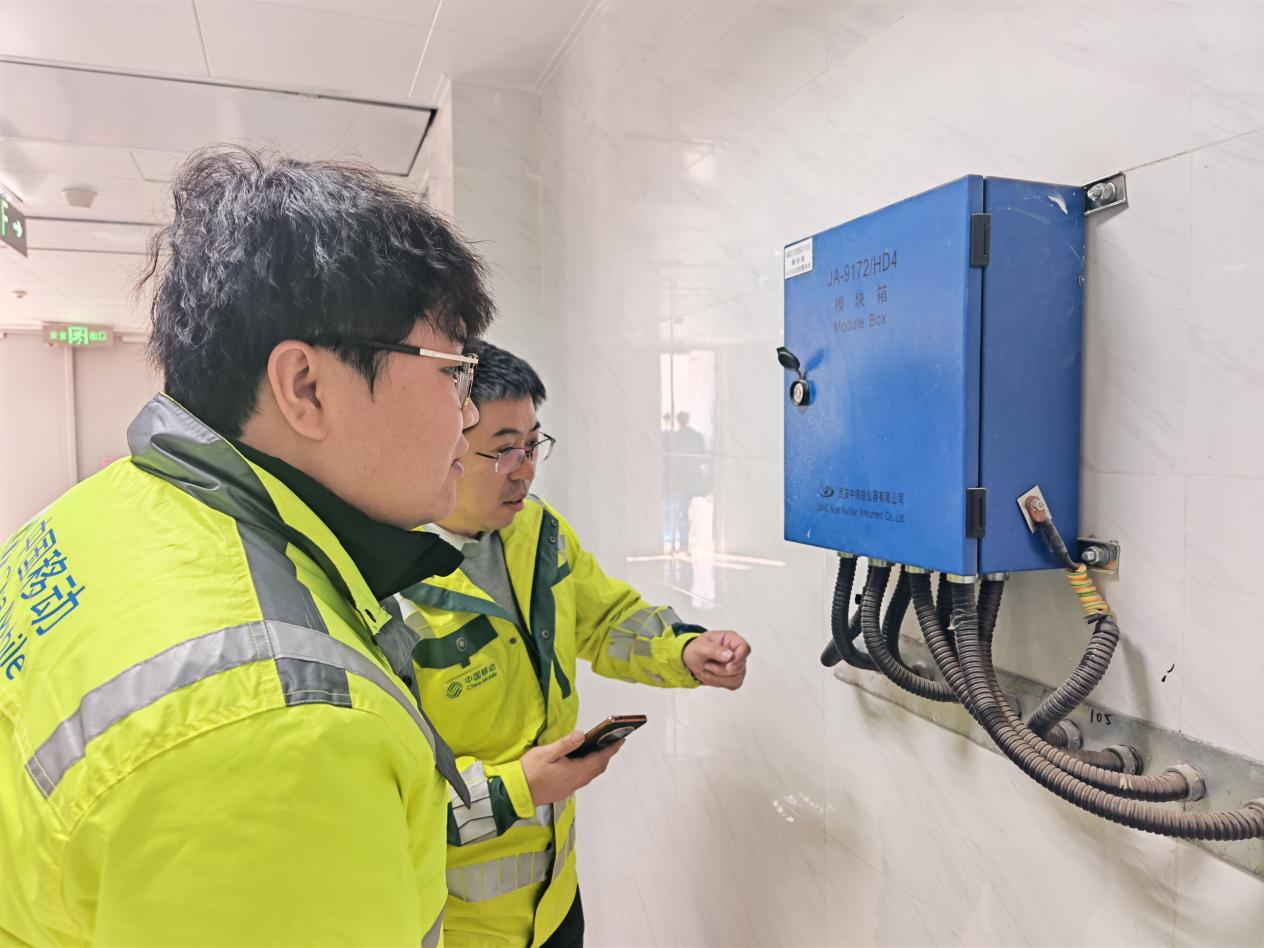
Core Insights - The construction of the Guoneng Xinyuan Liaoning Qingyuan Pumped Storage Power Station, with a total installed capacity of 1.8 million kilowatts, is a key project in China's energy strategy, expected to generate 3 billion kilowatt-hours annually, saving 158,000 tons of standard coal and reducing carbon dioxide emissions by 375,000 tons, thus supporting the "dual carbon" goals [1] Group 1: Project Overview - The power station will serve as a stabilizer for the Northeast power grid, facilitating peak shaving and frequency modulation while contributing to green transformation [1] - The project is positioned as a "super green power charging treasure" and is crucial for the implementation of national energy strategies [1] Group 2: Technological Integration - Liaoning Mobile has successfully implemented a 5G private network project in collaboration with the power station, enhancing operational intelligence and ensuring data security with a customized solution [2] - The 5G network features a three-tier model ("Enjoy, Exclusive, Respect") to meet the stringent requirements for data confidentiality and low latency [2] Group 3: Communication Challenges and Solutions - The construction site faced significant communication challenges due to complex geological conditions, leading to signal coverage issues in four construction tunnels [4] - Innovative solutions included the use of a "700M + reverse 900M frequency band combination" to optimize signal paths and the establishment of local computing nodes for future AI applications [4] Group 4: Operational Support - The core construction area was previously a communication blind spot, with no mobile signal or broadband coverage, complicating equipment transport and operations [5] - Liaoning Mobile addressed these challenges by employing a hybrid power supply model and forming a dedicated support team to ensure continuous communication for construction workers [5] Group 5: Future Prospects - The company plans to deepen the integration of new technologies like 5G-A and AI with the energy sector, expanding the "5G + Smart Power" application scenarios [5] - This initiative aims to provide robust communication networks for major green energy projects, contributing to the revitalization of Northeast China and supporting the national "dual carbon" objectives [5]

追求卓越·改革破局 | 苏州联通到访中核科技共话5G与智能制造融合发展
Xin Lang Cai Jing· 2026-02-03 12:49
Group 1 - The core discussion focused on 5G private networks, industrial internet, and artificial intelligence applications during the meeting between Suzhou Unicom and China Nuclear Technology [3][4][7] - Both parties explored the construction goals of an excellent smart factory, including 5G private network development, industrial internet platform applications, typical scenarios of artificial intelligence, and computing power deployment [4][7] - Suzhou Unicom aims to leverage its technological and service advantages in the fields of 5G, industrial internet, and artificial intelligence to assist in the digital and intelligent upgrade of the company [4][7] Group 2 - The meeting established a solid foundation for deepening cooperation, with both parties agreeing to create a regular communication mechanism [4][7] - Future collaboration will focus on smart manufacturing and new information infrastructure, promoting high-quality development together [4][7]


5G智慧核电站,辽宁移动助力徐大堡核电站建设迈入数字时代
Xin Lang Cai Jing· 2026-01-27 13:43
Group 1 - The construction of the Xudabao Nuclear Power Plant in Huludao is being enhanced by the integration of 5G technology, setting a benchmark for the fusion of digital technology with major national projects [1][3] - Liaoning Mobile has established multiple 5G base stations to achieve seamless coverage of the plant, providing high-speed and stable communication services for over 10,000 construction workers [3] - The implementation of a 5G private network within the nuclear island addresses communication challenges posed by the thick concrete structure, ensuring network security and supporting various internal applications [4] Group 2 - The collaboration between Liaoning Mobile and the Xudabao Nuclear Power Plant is accelerating the digital and intelligent transformation of the nuclear power industry, offering a replicable success model for energy infrastructure upgrades across the country [4] - Future innovations in 5G technology applications in the nuclear power sector will include smart inspections and predictive maintenance, contributing to national energy security and the development of clean energy [5]
争做政企标杆,记山东移动威海乳山分公司“政府行业组”
Qi Lu Wan Bao· 2026-01-19 02:54
Core Insights - The "Government Industry Group" at Shandong Mobile's Weihai Rushan branch is a key driver of high-quality development in the government and enterprise market, focusing on customized services and innovative technologies to enhance competitiveness in sectors like government, finance, education, and healthcare [1] Group 1: Customer-Centric Approach - The team aligns closely with the company's strategic goals, centering on customer needs through a model of "industry deepening + checklist management," effectively addressing the digital upgrade demands of government and enterprise clients [2] - Significant performance breakthroughs have been achieved in key projects such as smart cities, cloud computing, and the Internet of Things [2] Group 2: Professional Collaboration - The team emphasizes capability building and knowledge sharing through mechanisms like "industry special teams" and "project review meetings," continuously enhancing members' expertise in areas like 5G private networks and industrial internet [3] - In a project to build a smart government affairs platform, the team completed design, testing, and deployment in just one week, three days ahead of schedule, earning high praise for their swift response and professional service [3] Group 3: Innovation-Driven Solutions - The team actively implements the company's "innovation-driven" philosophy by proposing optimizations to the "platform + ecosystem" service model, transitioning traditional business assessments to a "solution value contribution" evaluation system [4] - This approach effectively enhances customer loyalty and project implementation efficiency [4] Group 4: Service Empowerment and Responsibility - The team is dedicated to providing high-quality service, demonstrating corporate responsibility and commitment, especially during major events by ensuring round-the-clock communication support [5] - During the pandemic, they established a remote teaching platform for educational institutions, facilitating continuous learning despite school closures [5] - The team also conducts regular "digital empowerment salons" to assist small and medium-sized enterprises with digital transformation challenges, receiving widespread acclaim for their efforts [5]
我国5G工厂超8000家
Ren Min Ri Bao· 2026-01-01 22:10
Core Insights - The industrial economy is expected to achieve qualitative improvements and reasonable quantitative growth by 2025, showcasing strong resilience and vitality [1] - The number of industrial 5G private network projects has exceeded 20,000, with over 8,000 5G factories established [1] Group 1: Manufacturing Sector - The pace of transformation and upgrading in the manufacturing sector is accelerating, with over 7,000 advanced-level and 500 excellent-level smart factories built [1] - A total of 6,430 national green factories and 491 green industrial parks have been cultivated, with the comprehensive utilization rate of major industrial solid waste reaching 57% [1] - Key industrial chains in manufacturing are progressing smoothly, with breakthroughs in several landmark technologies and products [1] Group 2: Technological Innovation - Significant breakthroughs in industrial technological innovation have been achieved through the implementation of national major science and technology projects and key research and development plans [1] - The core industry of artificial intelligence has surpassed 1 trillion yuan, and exports of new energy vehicles have exceeded 2 million units [1] Group 3: Information and Communication Industry - The capacity of the information and communication industry to serve economic and social development has continuously strengthened, with a total of 4.83 million 5G base stations by the end of November 2025 [1] - 5G technology has been integrated into 91 out of 97 categories of the national economy, with enhanced personal information protection and governance of applications [1] - It is projected that by 2025, the total telecommunications business volume and software business revenue will grow by approximately 9% and 12% year-on-year, respectively, while digital industry business revenue is expected to increase by around 9% [1]
中国移动(600941):利润良好增长 AI业务高速增长
Xin Lang Cai Jing· 2025-10-29 00:27
Core Viewpoint - The company maintained stable revenue and good profit growth in the first three quarters of 2025, despite facing pressure in the personal market due to slowing traffic growth. The family market achieved good growth driven by gigabit upgrades and mobile family plans, while mobile cloud and 5G private network businesses continued to grow rapidly. With a continuous decline in capital expenditure, depreciation and amortization are expected to remain stable or decrease over the next three years. The company guides for steady revenue growth and good profit growth for the full year [1][6]. Financial Performance - In the first three quarters of 2025, the company's operating revenue was 794.7 billion yuan, a year-on-year increase of 0.4%. The main business revenue was 683.1 billion yuan, up 0.8%, and the net profit attributable to shareholders was 115.4 billion yuan, an increase of 4.0% [2][3]. - For Q3 2025, the operating revenue was 250.9 billion yuan, a year-on-year increase of 2.53%. The communication service revenue was 216.2 billion yuan, up 0.8%, and the net profit attributable to shareholders was 31.1 billion yuan, an increase of 1.43% [3]. Cash Flow - In the first three quarters of 2025, the net cash flow from operating activities was 161.0 billion yuan, a decrease of 28.13% year-on-year. For Q3 2025, the net cash flow from operating activities was 77.2 billion yuan, down 16.70% year-on-year. However, the decline in cash flow narrowed in Q3 as the company strengthened cash flow management [4]. Market Segments - In the personal market, as of September 30, 2025, the total number of mobile customers reached 1.009 billion, with 5G network customers at 622 million. In the first three quarters, mobile internet traffic grew by 8.3%, and mobile ARPU was 48.0 yuan, a decrease of 1.5 yuan year-on-year. Despite traffic growth, pricing pressure remains due to promotional activities and number portability [5]. - In the family market, as of September 30, 2025, the total number of fixed broadband customers reached 329 million, with a net increase of 14.2 million in the first three quarters. The comprehensive ARPU for family customers was 44.4 yuan [5]. Profitability Forecast - The company expects steady revenue growth and good profit growth for the full year. The forecast for net profit attributable to shareholders for 2025-2027 is 144.6 billion yuan, 149.8 billion yuan, and 154.8 billion yuan, corresponding to PE ratios of 15.88X, 15.33X, and 14.83X, respectively. The investment rating is maintained as "buy" [6].
宁波卓越级智能工厂:5G+AI成就家电行业智能化转型新标杆
Zhong Guo Jin Rong Xin Xi Wang· 2025-10-24 12:07
Core Viewpoint - The collaboration between Zhejiang Mobile and Bull Group has led to the establishment of a smart factory that exemplifies the transformation of the home appliance industry through advanced technologies such as 5G and AI, achieving significant efficiency and productivity improvements. Group 1: Smart Factory Features - The smart factory covers over 300,000 square meters and utilizes an "industrial neural network" for automated production processes, achieving a unit production per hour (UPPH) that is seven times the industry average [1][8] - The factory has implemented a fully automated production line that produces one electrical connection product every two seconds, significantly enhancing production efficiency [8] - The integration of AI technology allows for real-time monitoring and identification of safety hazards, reducing safety incidents by 80% and improving hazard elimination rates by over 90% [9] Group 2: Technological Infrastructure - The factory operates on a 5G private network with a stability rate of 99.99%, ensuring seamless data transmission and operational continuity [4][6] - The deployment of over 1,100 terminals and edge computing nodes supports cross-regional production coordination, enhancing the overall manufacturing process [4][6] - The use of passive IoT technology allows for real-time tracking and management of tools, reducing management costs by over 2 million yuan annually [6] Group 3: Industry Impact and Recognition - Bull Group's smart factory has been recognized as a benchmark for intelligent transformation in the home appliance sector, being selected for the Ministry of Industry and Information Technology's list of exemplary smart factory projects for 2025 [1][10] - The collaboration has resulted in a replicable model for the discrete manufacturing industry, focusing on technology reuse, quantifiable benefits, and scalable transformation solutions [10][11] - The initiative has attracted interest from nearly 100 manufacturing enterprises, showcasing the potential for widespread adoption of smart manufacturing practices [10]

破局中国制造业转型痛点 产业界聚焦开放自动化
Zhong Guo Jing Ying Bao· 2025-10-13 10:05
Core Insights - The article highlights the critical transformation of China's manufacturing industry towards intelligent automation, driven by the dual waves of Industry 4.0 and AI, with 93% of manufacturing enterprises recognizing the core value of digital technologies in building competitive advantages [1] - Despite the promising statistics, the industry faces significant challenges such as data silos and fragmented communication protocols, which hinder the interconnectivity of devices [1][5] - The Chinese government has introduced policies like the "Smart Factory Gradient Cultivation Action Plan" and the "5G + Industrial Internet" initiative to address these challenges and promote the development of open automation technologies [1][10] Group 1: Industry Challenges - Many manufacturing enterprises are struggling with data isolation and inconsistent formats, which complicate the transition to intelligent automation [1] - The existence of various non-standard industrial communication protocols creates barriers to device interconnectivity, making it difficult for traditional PLCs and hardware to adapt to flexible production line upgrades [1][5] - The report emphasizes that the fragmentation of industrial communication protocols severely impacts the interoperability of devices and the efficiency of cross-layer data transmission [5] Group 2: Technological Advancements - The implementation of open automation platforms is essential for overcoming the challenges faced by the industry, as they provide a unified standard and a widely compatible architecture [6] - Schneider Electric's EAE platform exemplifies the integration of IT and OT, offering systematic solutions for various operational challenges in smart factories [6][7] - The collaboration between Schneider Electric and China Unicom has led to significant technological breakthroughs, such as reducing network latency to under 4 milliseconds and achieving 99.999% stability [4] Group 3: Ecosystem Collaboration - The article discusses the importance of ecosystem collaboration in driving the large-scale adoption of open automation, with industrial software service providers playing a crucial role [8] - Companies like Lantu Shujie and Beijing Huasheng Ruiying Technology are focusing on addressing data and computing challenges in manufacturing through innovative solutions [9] - Schneider Electric's "Winning Plan" and the establishment of the Open Automation Organization (UAO) are pivotal in fostering collaboration among over 500 global members to support the scaling of open automation [9][10] Group 4: Policy Support - The Chinese government's supportive policies, including the recent guidelines for industrial upgrades and advanced manufacturing, provide a strong foundation for the rapid development of open automation [10] - The Ministry of Industry and Information Technology has prioritized the research and development of open automation technologies, further solidifying their role in the manufacturing sector's transformation [10][11] Group 5: Empowering SMEs - Schneider Electric aims to assist small and medium-sized enterprises (SMEs) in overcoming barriers to intelligent transformation through modular technology and agile deployment [12] - The company offers standardized modular solutions that simplify the application of open automation technologies, significantly lowering the technical barriers for SMEs [12] - By leveraging local resources and collaborating with various stakeholders, Schneider Electric is enhancing support for SMEs in the manufacturing sector [12][13]

中国移动(600941):利润稳健有力增长,坚定提升派息率
Haitong Securities International· 2025-10-12 13:33
Investment Rating - The report maintains an "Outperform" rating for the company, projecting significant growth in revenue and net profit over the next few years [3][8]. Core Insights - The company is expected to achieve revenues of 1.08 trillion RMB, 1.13 trillion RMB, and 1.17 trillion RMB for the years 2025, 2026, and 2027 respectively, with net profits attributable to shareholders of 145.6 billion RMB, 152.9 billion RMB, and 160.2 billion RMB during the same period [3][8]. - The report highlights a strong profitability trend, with a net profit of 84.2 billion RMB in H1 2025, reflecting a year-on-year increase of 5.0% [3][8]. - The company is expanding its AI capabilities, with self-built AI computing reaching 33.3 EFLOPS in H1 2025, contributing to rapid growth in AI-related revenues [3][8]. Financial Summary - Total revenue for 2023 is projected at 1,009.3 billion RMB, with a year-on-year growth of 7.7% [2]. - Net profit attributable to shareholders for 2023 is estimated at 131.8 billion RMB, reflecting a growth of 5.0% [2]. - The earnings per share (EPS) is expected to increase from 6.10 RMB in 2023 to 7.41 RMB by 2027 [2][3]. Revenue Breakdown - In H1 2025, the company's main business revenue was 467 billion RMB, showing a slight increase of 0.7% year-on-year [3][8]. - The personal market revenue was 244.7 billion RMB, down 4.1% year-on-year, while the government and enterprise market revenue grew by 5.6% to 118.2 billion RMB [3][8]. - Emerging market revenue reached 29.1 billion RMB, reflecting a year-on-year increase of 9.3% [3][8]. Profitability Metrics - The gross profit margin (GPM) for H1 2025 was reported at 31.62%, an increase of 0.80 percentage points year-on-year [3][8]. - The EBITDA margin stood at 39.8%, with a year-on-year increase of 0.5 percentage points [3][8]. - The net profit margin (NPM) was 15.5%, reflecting a year-on-year increase of 0.8 percentage points [3][8]. Capital Expenditure and Dividends - Capital expenditure for H1 2025 was 58.4 billion RMB, with expectations for acceleration in the second half of the year [3][8]. - The interim dividend per share was set at 2.75 HKD, representing a year-on-year increase of 5.8% [3][8].