
智能体(AI Agent)

Search documents
首届“AI+传统产业”实践应用发展论坛在上海举办 探索人工智能产业化路径
Zheng Quan Shi Bao Wang· 2026-01-19 08:20
Group 1 - The forum "AI + Traditional Industry" aims to explore the integration of artificial intelligence into traditional industries to drive high-quality development of the real economy [1][2] - The Vice President of the China Electronics Chamber of Commerce emphasized the importance of focusing on real application scenarios and building a sustainable collaborative ecosystem for AI integration [1] - The founder and CEO of Zhaogang Group highlighted the need for long-term viable application paths for AI in traditional industries, showcasing Zhaogang's efforts in embedding AI capabilities into key operational areas [2][3] Group 2 - The China Electronics Chamber of Commerce released the "2025 Artificial Intelligence Industry Development White Paper," which outlines the global AI industry landscape and key application directions [2] - Various industry leaders shared insights on AI's practical applications, indicating that AI has the potential to transform multiple sectors, including B2B growth and international trade [3][4] - A collaborative initiative was launched to promote standardization and ecological cooperation in AI applications across industries, involving multiple stakeholders from technology companies, academic institutions, and industry platforms [5]
AI泡沫论升温,智能体为何迎来爆发元年?
Xin Lang Cai Jing· 2025-11-27 07:13
Core Viewpoint - The AI industry is experiencing a dual narrative in 2025, with a significant market correction in global tech stocks while the AI agent sector is witnessing explosive growth, particularly in China, where the market size is projected to increase from 4.75 billion yuan in 2024 to 7.84 billion yuan, representing over 60% growth [1][6]. Group 1: Evolution of AI Agents - AI agents are defined as software programs capable of autonomously understanding, planning, and executing complex tasks, fundamentally differing from traditional AI assistants [2]. - The emergence of AI agents is a result of technological advancements, transitioning from early models that were primarily for demonstration to sophisticated systems capable of logical reasoning and multi-modal understanding [3][4]. - The core value of this evolution is transforming intelligence from a cost into a productivity driver, as articulated by industry leaders [5]. Group 2: Major Investments and Market Dynamics - The growth of AI agents is fueled by strategic investments from global tech giants, which are based on clear commercial return expectations, creating a positive cycle of research, implementation, and profitability [6]. - Companies like Baidu and Tencent are leading the charge with innovative AI solutions, such as Baidu's self-evolving AI agent and Tencent's integration within its WeChat ecosystem [7]. - The commercial value of AI agents is evident across various sectors, including healthcare, retail, and finance, where they are significantly enhancing operational efficiency and reducing costs [8]. Group 3: Underlying Factors for Growth - The rapid growth of AI agents is attributed to the convergence of technological maturity, rising demand, and an improved ecosystem [9]. - Breakthroughs in technology have drastically reduced the cost of large model inference by 90% and increased speed by tenfold, addressing previous scalability issues [10]. - The pressing need for cost reduction and efficiency in businesses drives the adoption of AI agents, which offer non-intrusive solutions that integrate seamlessly with existing systems [11]. Group 4: Future Outlook - The future of AI agents is expected to shift from scaling to refinement, ushering in a new era of human-machine collaboration, with predictions indicating that 60% of enterprises will rely on AI agents for core operations by 2026 [12]. - Despite existing challenges such as communication delays and talent shortages, the evolution of AI agents is seen as a necessary phase in technological advancement, distinguishing them from past speculative bubbles [13].



高通CEO安蒙:6G有望2028年大规模部署,智能体将取代手机成核心入口
Feng Huang Wang· 2025-09-24 03:06
Core Insights - Qualcomm's CEO, Cristiano Amon, announced that commercial 6G devices are expected to be deployed on a large scale by 2028 [1] - Amon emphasized that 6G will not only enhance speed and bandwidth but will also create an intelligent network architecture that enables real-time collaboration between edge devices and the cloud, providing foundational support for AI-native applications [1] - The future AI agents are projected to replace smartphones as the primary interface, operating widely across devices such as headphones, glasses, and cars, with the perception and low-latency features of 6G being crucial for realizing this vision [1]

第一波追赶智能体风口的,又是培训?
3 6 Ke· 2025-06-05 13:01
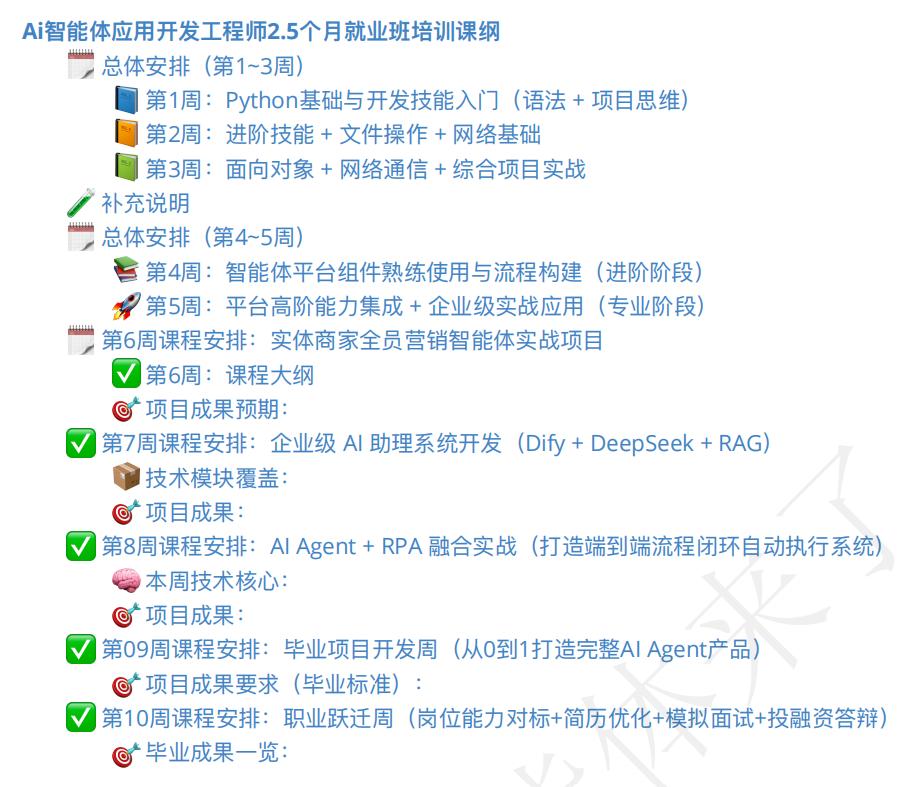
Core Insights - The concept of AI Agents has gained significant attention, with major internet companies competing in this space, indicating a growing market for AI-driven solutions [1][2] - There is a high demand for talent in AI Agent development, with companies offering competitive salaries, reflecting a supply-demand imbalance in the job market [2][3] - The training market for AI Agents is booming, but the quality of training programs varies widely, raising concerns about the effectiveness and legitimacy of many offerings [3][4][5] Group 1: Market Dynamics - AI Agents are likened to digital employees that can execute tasks autonomously, enhancing decision-making processes across various industries [1] - Major players like ByteDance, Tencent, and Baidu are actively developing AI Agent platforms, leading to increased competition [1] - The demand for AI Agent developers is high, with salaries for related positions often exceeding 20,000 yuan per month [2] Group 2: Training Landscape - The surge in interest for AI Agent training has led to a proliferation of courses, but many lack depth and are criticized for being more about marketing than education [3][4] - Some training institutions claim to offer comprehensive programs, but many instructors lack a solid AI background, leading to concerns about the quality of education [4][5] - A specific training company, "智能体来了," claims to provide rigorous training focused on practical skills, distinguishing itself from competitors [5][9] Group 3: Financial Aspects - "智能体来了" anticipates significant revenue growth, projecting earnings of several million this year and over 100 million next year, indicating a lucrative market potential [9][10] - The pricing for training courses varies widely, with online courses starting at 199 yuan and intensive offline courses costing up to 16,800 yuan [9][10] - The company claims a 100% employment rate for graduates of its training programs, suggesting strong demand from employers for trained AI Agent professionals [10][12] Group 4: Future Outlook - The AI Agent sector is expected to remain a significant growth area for the next 3-5 years, with ongoing demand for both application and development roles [17] - Despite the current enthusiasm, there are concerns that if training programs do not evolve beyond basic skills, they may face obsolescence as the industry matures [18]

人工智能,正在颠覆传统互联网丨小白商业观
Jing Ji Guan Cha Wang· 2025-05-29 05:51
Group 1 - The core viewpoint is that AI is fundamentally reshaping traditional internet industries, with significant implications for user-generated content (UGC) ecosystems and traditional business models [2][3][4] - Zhihu, as a representative of traditional internet communities, reported a decline in total revenue from 960 million yuan in 2024 to 730 million yuan in 2025, a decrease of 24%, despite achieving profitability in Q1 [2] - The emergence of AI has transformed content production and user behavior, leading to a redefined search logic and enhanced user experiences across various platforms, including e-commerce [3][4] Group 2 - AI's impact on traditional internet companies is irreversible, prompting a need for rapid transformation to avoid being left behind in the technological wave [4] - Companies must rethink their positioning and development strategies, integrating AI capabilities into existing products or developing independent AI projects [4][5] - The future value of internet companies will still rely on human contributions in complex areas beyond knowledge, such as philosophy and emotional consulting, highlighting the importance of balancing technology with human insight [5]

大模型在会计行业的应用仍处于技术导入期
Xin Hua Cai Jing· 2025-05-25 11:42
Core Insights - The forum hosted by Shanghai National Accounting Institute revealed the top ten information technologies impacting the Chinese accounting industry by 2025, with AI general models ranking first and multimodal data analysis making its debut [1][2] - The five potential impact technologies identified include generative AI (AIGC), financial multimodal vertical models, AI agents, digital employees with intelligent scheduling management, and the integration of finance, taxation, and data [1][2] - The rapid evolution of information technology and the proactive adoption of new technologies by accounting professionals indicate a significant shift in the industry [1][3] Group 1: Current and Potential Technologies - AI general models are currently in the technology introduction phase within the accounting sector, but their disruptive potential is widely recognized by experts and the public [1][2] - Multimodal models are reshaping the entire financial management process by integrating structured and unstructured data [2] - The application of AI technology in the medical sector illustrates the need for balancing safety and ethics, emphasizing the importance of human intervention in intelligent decision-making [2] Group 2: Industry Transformation and Challenges - The emergence of new AI models like DeepSeek is accelerating the digital transformation of the accounting industry, shifting financial functions from traditional accounting to strategic empowerment [2][3] - Financial digital employees are transitioning from pilot testing to large-scale implementation, indicating a significant evolution in the accounting profession [2] - The integration of advanced technologies necessitates a recognition that machines cannot replace human business insight, highlighting the importance of a collaborative future between humans and machines [2]