智能移动设备

Search documents
罗兰贝格展望2026年汽车行业:技术战定胜负 AI战决高下
Xin Hua Cai Jing· 2026-01-08 09:26
Core Insights - The automotive industry in China is expected to achieve significant growth and become a global center for technological innovation by 2026, driven by six main themes: deepening elimination competition, transformation battles, internationalization, technology wars, capital competition, and AI battles [1][3] Group 1: Market Overview - In 2025, China's automotive market is projected to reach approximately 34 million units in sales, with around 7 million units contributing to exports, solidifying its position as the world's largest automotive exporter [2] - The penetration rate of new energy vehicles (NEVs) has stabilized above 50% since mid-2025, reaching over 60% in December, indicating a structural shift from traditional fuel vehicles to new energy vehicles over the past five years [2] - The market share of domestic brands has increased to about 65%, reflecting significant growth compared to five years ago [2] Group 2: Industry Challenges - Despite rapid growth, the industry faces challenges, with an overall profit margin of approximately 4.4%, and more than half of dealers operating at a loss [2] - The average price of passenger vehicles has shown a declining trend year-on-year, indicating a painful restructuring of profits and market dynamics [2] Group 3: Competitive Landscape - The competition in the automotive industry is expected to intensify, with a clear trend towards market consolidation, where leading companies will continue to gain advantages, resulting in a structure of a few leading firms, some mid-tier firms, and many smaller firms [3] - The definition of automotive products is shifting from traditional vehicles to "smart mobility devices," with cross-industry collaboration becoming a focal point for transformation [3] Group 4: Future Directions - Chinese automotive companies will focus on localization in their international operations, transitioning from "export-oriented" to "truly internationalized" enterprises, enhancing their competitive edge globally [3] - The evolution of vehicles into "AI-driven intelligent entities" will be crucial, with emphasis on advanced technologies such as smart connectivity, autonomous driving, and new materials [3] - Efficient capital utilization and operational optimization will be key for maintaining competitiveness, with mergers and acquisitions becoming a new frontier in capital competition [4] - The integration of AI into automotive products will move from concept to high-value commercial applications, reshaping the entire value chain from product development to internal management [4]
恒大汽车:广州聚力由6家中国省级或地方国有企业全资拥有
Zhi Tong Cai Jing· 2025-12-18 13:26
Core Viewpoint - Evergrande Auto has announced that its related subsidiaries have entered bankruptcy reorganization procedures, with a manager appointed to oversee the control, management, and operation of these subsidiaries [1] Group 1: Bankruptcy Reorganization - The bankruptcy reorganization plan has been approved by the relevant local people's court, resulting in the cancellation of the group's equity in the related subsidiaries [1] - The equity of the related subsidiaries has been registered under Guangzhou Juliy Modern Industry Development Co., Ltd. as of November 18, 2025 [1] - The group did not receive any cash consideration as a result of the plan and the change in shareholders [1] Group 2: Financial Details - As of June 30, 2024, the registered capital of New Energy Vehicles Guangdong was RMB 5 billion, with total creditor claims amounting to approximately RMB 7.622 billion and assessed liquidation assets valued at approximately RMB 1.373 billion as reported on April 7, 2025 [1] - As of June 30, 2024, the registered capital of Smart Cars Guangdong was RMB 2.5 billion, with total creditor claims amounting to approximately RMB 5.253 billion and assessed liquidation assets valued at approximately RMB 1.082 billion as reported on April 7, 2025 [1] Group 3: Ownership Structure - Guangzhou Juliy is wholly owned by six provincial or local state-owned enterprises and is a third party unrelated to the company [1]
恒大汽车(00708):广州聚力由6家中国省级或地方国有企业全资拥有
智通财经网· 2025-12-18 12:14
Core Viewpoint - Evergrande Auto has entered bankruptcy restructuring for its subsidiaries, with a manager appointed to oversee the process and develop a restructuring plan approved by local courts [1] Group 1: Bankruptcy Restructuring - The company announced that its subsidiaries have entered bankruptcy restructuring as disclosed in the announcement from August 2024 [1] - A manager has been appointed to take control, manage, and operate the subsidiaries, including formulating a bankruptcy restructuring plan [1] - The restructuring plan has resulted in the cancellation of the company's equity in the subsidiaries, which were registered under Guangzhou Juliy Modern Industry Development Co., Ltd. as of November 18, 2025 [1] Group 2: Financial Details - As of June 30, 2024, the registered capital of New Energy Vehicles Guangdong was RMB 5 billion, with creditor claims totaling approximately RMB 7.622 billion and assessed liquidation assets valued at about RMB 1.373 billion as reported on April 7, 2025 [1] - As of June 30, 2024, the registered capital of Smart Automobile Guangdong was RMB 2.5 billion, with creditor claims totaling approximately RMB 5.253 billion and assessed liquidation assets valued at about RMB 1.082 billion as reported on April 7, 2025 [1] Group 3: Ownership and Stakeholders - Guangzhou Juliy is wholly owned by six provincial or local state-owned enterprises and is a third party unrelated to the company [1] - The subsidiaries primarily engage in the manufacturing of smart mobile devices [1] Group 4: Stock Suspension - The company's shares remain suspended from trading [2]
商米科技闯关港股IPO 营收严重依赖智能设备销售
Mei Ri Jing Ji Xin Wen· 2025-07-14 14:06
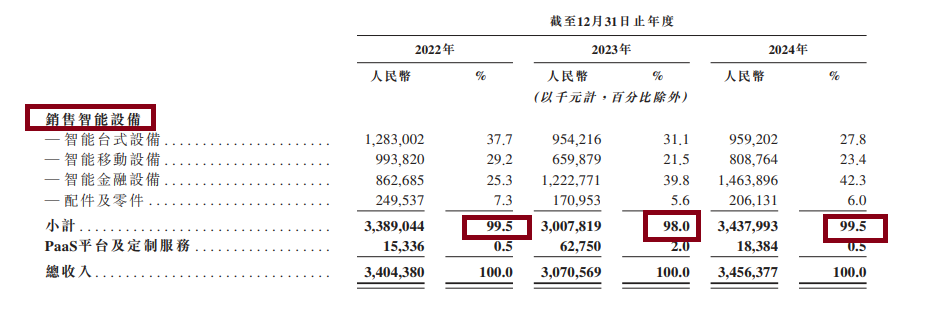
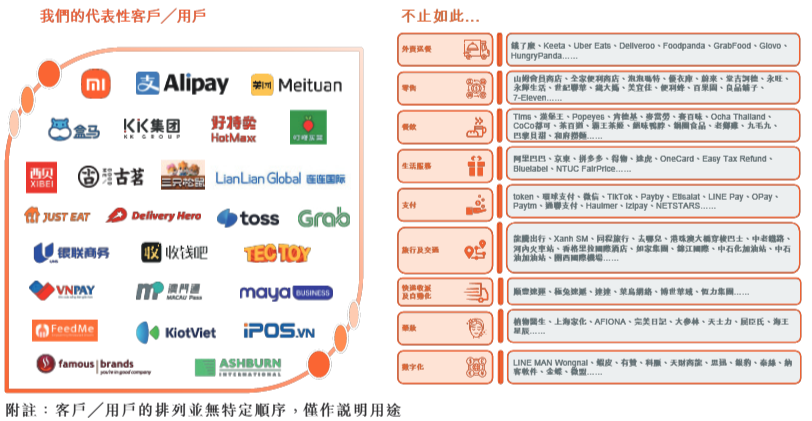
Core Viewpoint - Shanghai Sunmi Technology Co., Ltd. (商米科技) is seeking to go public through an IPO on the Hong Kong Stock Exchange, having appointed a new overall coordinator while maintaining existing sponsors [1][2] Company Overview - Founded in December 2013, the company transitioned from providing delivery solutions for the restaurant industry to becoming a leading provider of Business Internet of Things (BIoT) solutions, with over 10% market share in the global Android-based BIoT solutions market by 2024 [2][3] - As of the application date, the company serves approximately 61,000 commercial partners globally, an increase from about 44,000 at the end of 2022 [2] Financial Performance - The company reported revenues of approximately CNY 34.04 billion, CNY 30.71 billion, and CNY 34.56 billion for the years 2022, 2023, and 2024, respectively, with net profits of CNY 1.59 billion, CNY 1.01 billion, and CNY 1.81 billion [4] - The gross margin fluctuated from 28.1% in 2022 to 26.7% in 2023, then rebounded to 28.9% in 2024, attributed to increased sales in Europe and improved cost management [4] Revenue Structure - The company's revenue heavily relies on smart device sales, which accounted for 99.5%, 98%, and 99.5% of total revenue in 2022, 2023, and 2024, respectively [6] - The concentration of revenue from major clients is significant, with the top five clients contributing 42.3%, 28.8%, and 41.1% of total revenue during the same period [6] Production and Supply Chain - The company primarily operates on an OEM/ODM model, with over 92% of its smart devices produced by third-party manufacturers [7][8] - The company has increased its own production capacity from 52,800 units in 2023 to approximately 290,000 units in 2024, yet this still represents only 8% of the total sales volume for that year [7] Market Position and Challenges - The company has a broad business network across over 100 industry verticals, including restaurants, supermarkets, and logistics [3] - Despite a strong shareholder base, including Ant Group and Xiaomi, there are concerns regarding the company's technological capabilities due to its reliance on the OEM model, which may affect its valuation and growth prospects in the IPO process [8]
商米科技冲刺港股IPO:全球最大安卓端BIoT解决方案提供商,2024年至少有92%的产品为代工生产
Mei Ri Jing Ji Xin Wen· 2025-07-10 06:34
Core Viewpoint - Shanghai Sunmi Technology Co., Ltd. (Sunmi Technology) is seeking to go public on the Hong Kong Stock Exchange, having appointed CMB International as one of its overall coordinators, while its existing sponsors remain unchanged. The company has not yet disclosed the total amount of funds it aims to raise or the number of shares to be issued in this IPO [1]. Group 1: Company Background and Market Position - Sunmi Technology was established in December 2013 and initially focused on providing takeaway solutions for the restaurant industry. After receiving investment from Xiaomi in 2014, the company transitioned to the smart commercial equipment sector and rebranded in 2016 [2]. - As of 2024, Sunmi Technology is recognized as the largest Android-based Business IoT (BIoT) solution provider globally, holding over 10% market share, with approximately 61,000 commercial partners served worldwide [2][3]. Group 2: Financial Performance - The company reported a decline in both revenue and net profit in 2023, with revenues of approximately RMB 30.71 billion, down from RMB 34.04 billion in 2022. However, a recovery is expected in 2024, with projected revenues of RMB 34.56 billion [6][9]. - The gross profit margin fluctuated from 28.1% in 2022 to 26.7% in 2023, before rebounding to 28.9% in 2024, attributed to increased sales in Europe and improved cost management [9]. Group 3: Revenue Structure and Dependency - Sunmi Technology's revenue heavily relies on smart device sales, which accounted for 99.5% of total revenue in 2022 and 2024, with revenues from smart devices being RMB 33.89 billion, RMB 30.08 billion, and RMB 34.38 billion for the years 2022, 2023, and 2024, respectively [9][11]. - The company has a concentrated customer base, with revenues from its top five customers representing 42.3%, 28.8%, and 41.1% of total revenue from 2022 to 2024 [11]. Group 4: Production and Supply Chain - Over 92% of Sunmi Technology's smart devices are produced by third-party manufacturers, indicating a reliance on the OEM/ODM model. The company collaborates with around 30 third-party manufacturers to meet production demands [12][14]. - The company has been increasing its own production capacity, with designed capacity rising from 52,800 units in 2023 to approximately 236,466 units in 2024 [13][14]. Group 5: Future Plans and Use of Proceeds - The funds raised from the IPO are intended for research and development of BIoT hardware and software solutions, strengthening supply chain and production operations, global market expansion, and general corporate purposes [5].

商米科技闯关港股上市:业绩不稳、客户流失,如何将故事讲通?
Sou Hu Cai Jing· 2025-06-28 01:56
Core Viewpoint - Sunmi Technology has submitted its listing application to the Hong Kong Stock Exchange, aiming to capitalize on the growing commercial Internet of Things (BIoT) market, despite facing challenges such as revenue fluctuations and customer attrition [1][3][20] Group 1: Company Overview - Sunmi Technology, established in December 2013, is a provider of commercial IoT solutions, focusing on integrating smart IoT devices with cloud services to create a connected commercial ecosystem [3] - The company has achieved over $100 million in global revenue within three years of launching its first BIOT integrated device, becoming one of the youngest players among the top ten industry participants [4][9] Group 2: Market Potential - The global BIoT solutions market is projected to grow from approximately 189 billion RMB in 2020 to about 235 billion RMB by 2024, with a compound annual growth rate (CAGR) of around 5.6% [5] - The market for Android-based BIOT solutions is expected to expand significantly, with a forecasted growth from 32 billion RMB in 2024 to 92 billion RMB by 2029, reflecting a remarkable CAGR of 23.7% [8] Group 3: Financial Performance - Sunmi Technology's revenue decreased from 3.404 billion RMB in 2022 to 3.071 billion RMB in 2023, before rebounding slightly to 3.456 billion RMB in 2024, indicating a net revenue growth of only 52 million RMB over three years [14] - The company's net profit for the years 2022, 2023, and 2024 was 1.60 billion RMB, 1.01 billion RMB, and 1.81 billion RMB respectively, with gross profit margins of 28.1%, 26.7%, and 28.9% [15][17] Group 4: Customer Base and Challenges - Sunmi Technology serves approximately 61,000 commercial partners globally, with a market share exceeding 10% in the Android-based BIOT solutions sector [9] - The number of customers has declined from 2,506 in 2022 to 2,262 in 2024, highlighting a significant challenge in maintaining customer relationships amid increasing competition [18][20]

商米科技转战港股:自称“全球最大安卓端BIoT提供商” “卖设备”收入占比超98% 九成产品依赖代工
Xin Lang Zheng Quan· 2025-06-27 10:25
Core Viewpoint - Shanghai Shangmi Technology Group Co., Ltd. (Shangmi Technology), a provider of commercial Internet of Things (BIoT) solutions, is transitioning from the Science and Technology Innovation Board (STAR Market) to the Hong Kong Stock Exchange, backed by major investors like Ant Group, Meituan, and Xiaomi. The company has achieved profitability from 2022 to 2024, contrasting with its previous losses during its STAR Market application [1][3][4]. Financial Performance - Shangmi Technology reported revenues of RMB 34.04 billion, RMB 30.71 billion, and RMB 34.56 billion for the years 2022, 2023, and 2024, respectively, with net profits of RMB 1.60 billion, RMB 1.01 billion, and RMB 1.81 billion during the same period [4][6]. - Despite a decline in revenue and net profit in 2023, the company has significantly improved its financial performance compared to its previous application period [4][6]. Business Model and Revenue Structure - The company claims to be the "largest Android-based BIoT provider globally," but over 98% of its revenue comes from hardware sales, indicating a reliance on a single revenue stream [3][6]. - The revenue from smart device sales for 2022-2024 was RMB 33.89 billion, RMB 30.08 billion, and RMB 34.38 billion, representing 99.5%, 98%, and 99.5% of total revenue, respectively [6][10]. Production and Cost Structure - Shangmi Technology relies heavily on OEM and ODM manufacturing, with over 92% of its products produced by third-party manufacturers, which affects its cost control and quality management [7][8][11]. - The gross profit margins for 2022-2024 were 28.12%, 26.74%, and 28.85%, which are lower than the average gross margins of comparable companies [7][11]. Shareholder Activity - Prior to the Hong Kong IPO, existing shareholders, including Ant Group's Yunxin Investment, have begun to reduce their stakes, indicating potential concerns about the company's future valuation and performance [2][13]. - Ant Group reduced its stake from 29.99% to 27.27% as part of a share transfer, reflecting a strategy to realize returns after a prolonged wait for the company's IPO [13]. Market Challenges - Shangmi Technology faces significant challenges in transitioning its business model from hardware sales to a more diversified IoT ecosystem service, which will be crucial for its valuation in the Hong Kong market [12][13]. - The company must address concerns regarding its business moat and the sustainability of its growth strategy amid competition and market dynamics [13].