智能穿戴等

Search documents
全方位创建供求适配机制 引发更强消费增长势能
Guo Ji Jin Rong Bao· 2025-12-19 17:32
Group 1 - The central economic work conference emphasizes the importance of boosting consumption as a primary support for expanding domestic demand, with a plan to create three trillion-level consumption sectors and ten hundred-billion-level consumption hotspots by 2027 [1] - The trillion-level sectors include elderly products, smart connected vehicles, and consumer electronics, while the hundred-billion-level hotspots cover baby products, smart wearables, cosmetics, fitness equipment, outdoor products, pet food, civilian drones, trendy toys, jewelry, and domestic fashion [1] - By 2030, the goal is to establish a high-quality development pattern characterized by a virtuous interaction between supply and consumption [1] Group 2 - The latest data from the National Bureau of Statistics shows that the total retail sales of consumer goods in the first three quarters of 2025 increased by 4.5% year-on-year, contributing 53.5% to economic growth, which is a 9% increase compared to the previous year [3] - There is a noticeable trend towards quality and personalized consumption among residents, shifting from "universal functionality" to "spiritual recognition" [3] Group 3 - The supply side is adjusting in terms of both quantity and quality, with over 230 million types of consumer goods available, and a significant increase in the supply of innovative products such as smart home devices and drones [5] - Despite improvements, there remains a mismatch between supply and demand, particularly in terms of personalized and high-end products, leading to a situation where desired products are not available [6] Group 4 - The current mismatch in supply and demand is characterized by three main issues: standardized products failing to meet personalized demands, a lack of high-end quality supply, and insufficient supply in emerging hotspots [6] - The new plan aims to address these mismatches by enhancing product variety, quality, and responsiveness, marking a shift from passive adaptation to proactive leadership in policy [6] Group 5 - The plan promotes flexible manufacturing and customization, encouraging the establishment of a digital system that connects user demand with intelligent design and flexible production across various industries [9] - The integration of artificial intelligence is highlighted as a key factor in reducing supply-demand mismatches and enhancing consumer experience [10] Group 6 - The plan emphasizes the importance of diversifying and personalizing supply in emerging sectors, particularly in rural areas, where there is a growing demand for high-quality products [12] - Innovations in leisure, sports, and health products are identified as new consumption opportunities, with a focus on multi-functional smart fitness equipment and health management products [13] Group 7 - The plan also aims to enhance the influence of traditional culture by promoting historical classic products and supporting the development of local specialty foods and traditional crafts [14] - New consumer interests in areas such as pets, anime, and trendy products are addressed, with strategies for expanding low-altitude tourism and automotive-related consumption [15]
城市24小时 | 3万亿元,“中部第一城”目标定了
Mei Ri Jing Ji Xin Wen· 2025-12-05 15:07
Core Points - Wuhan aims to achieve a GDP exceeding 3 trillion yuan by 2030, with significant progress expected in the construction of a modernized city [1][2] - The city has already surpassed a GDP of 2 trillion yuan in 2023, marking it as the first city in Central China to reach this milestone [1][2] - The development strategy focuses on high-quality growth, technological innovation, and industrial integration as key drivers for economic advancement [3] Economic Goals - By 2030, Wuhan's economic output is projected to exceed 3 trillion yuan, positioning it as a competitive manufacturing and service hub [1][2] - The city plans to enhance its comprehensive strength and become a significant growth engine for Central China and the nation [1][2] Development Strategies - The roadmap for achieving the GDP target includes deep integration of technological and industrial innovation, alongside enhancing trade logistics and financial empowerment [3] - Wuhan has launched three action plans aimed at establishing itself as an international consumption center, research center, and exhibition center by 2027, with specific targets for retail sales and global research rankings [4] Industry Focus - The province of Hubei is also focusing on emerging industries, including integrated circuits, artificial intelligence, and high-end medical devices, to bolster economic growth [5]

协创数据2025年中报简析:营收净利润同比双双增长,应收账款上升
Zheng Quan Zhi Xing· 2025-08-29 23:43
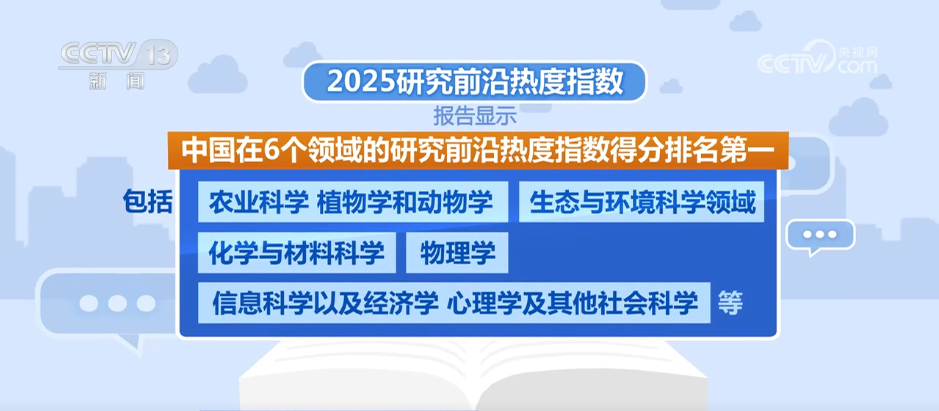
Core Viewpoint - The recent financial report of Xichuang Data (300857) shows significant revenue growth, but also raises concerns regarding cash flow and accounts receivable management [1][2]. Financial Performance - The total revenue for the first half of 2025 reached 4.944 billion yuan, a year-on-year increase of 38.18% [1]. - The net profit attributable to shareholders was 432 million yuan, up 20.76% year-on-year [1]. - In Q2 2025, total revenue was 2.867 billion yuan, reflecting a 57.58% increase year-on-year [1]. - The net profit for Q2 was 263 million yuan, a 34.42% increase year-on-year [1]. - The gross margin was 17.61%, up 0.88% year-on-year, while the net margin decreased by 14.52% to 8.53% [1]. - Total expenses (selling, administrative, and financial) amounted to 165 million yuan, representing 3.34% of revenue, a 91.24% increase year-on-year [1]. - Earnings per share (EPS) was 1.26 yuan, a 20.0% increase year-on-year [1]. Cash Flow and Debt Management - The company's cash flow situation is concerning, with operating cash flow per share at -4.54 yuan, a decrease of 294.27% year-on-year [1][2]. - The ratio of cash and cash equivalents to current liabilities is only 22.64%, and the average operating cash flow over the past three years is just 0.5% of current liabilities [2]. - The interest-bearing debt ratio has reached 53.23%, and the total interest-bearing debt to average operating cash flow ratio is 226.34% [2]. Accounts Receivable - Accounts receivable increased significantly, with a year-on-year growth rate of 62.31% [1]. - The ratio of accounts receivable to profit has reached 354.14% [2]. Business Model and Growth Drivers - The company's return on invested capital (ROIC) was 16.29% last year, indicating strong capital returns [2]. - The business relies heavily on capital expenditures, necessitating careful evaluation of capital projects [2]. - Key growth factors include advancements in cloud services, smart home products, and server remanufacturing, alongside cost control measures through automation [5]. Market Sentiment and Future Expectations - Analysts project a net profit of 1.162 billion yuan for 2025, with an average EPS forecast of 3.36 yuan [3]. - Several funds have increased their holdings in Xichuang Data, indicating positive market sentiment [4].

工作、学习、生活、消费......“AI+”将如何影响你我生活!
Jin Rong Shi Bao· 2025-08-27 04:18
Group 1: Impact on Work - The initiative aims to leverage artificial intelligence to create new job opportunities and empower traditional roles, exploring new organizational structures and management models for human-machine collaboration [2] - It promotes the intelligent integration of all elements in the industrial sector, accelerating the application of AI across design, trial production, manufacturing, service, and operations [2] - The initiative encourages the application of AI in various fields such as software, information, finance, business, law, transportation, logistics, and commerce [2] - There is a strong emphasis on AI skills training to stimulate innovation, entrepreneurship, and re-employment [2] - Employment risk assessments related to AI applications will be strengthened to guide resources towards areas with high job creation potential [2] Group 2: Impact on Education - The initiative integrates AI into all aspects of education, promoting new human-machine collaborative teaching models and shifting the focus from knowledge transmission to capability enhancement [5] - It aims to achieve large-scale personalized education and improve educational quality while promoting equity [5] - The development of intelligent interactive learning environments is encouraged to facilitate more flexible and resource-rich self-learning [5] Group 3: Impact on Daily Life - The initiative focuses on enhancing smart consumption infrastructure to improve the quality of life services such as entertainment, e-commerce, housekeeping, property management, transportation, elderly care, and childcare [6] - It promotes the application of AI in auxiliary diagnosis, health management, and medical insurance services to significantly enhance grassroots healthcare capabilities and efficiency [6] - The initiative aims to foster a more extensive and content-rich intelligent service industry, supporting the development of smart assistants and new service entry points [6] Group 4: Impact on Culture - The initiative seeks to utilize AI to enhance cultural production, communication, and exchange, creating more cultural content that embodies Chinese cultural elements [7] - It emphasizes the role of AI in strengthening interpersonal relationships, providing emotional support, and promoting community health and fitness [7] Group 5: Impact on Consumer Products - The initiative promotes the development of smart products and ecosystems, including smart connected vehicles, AI smartphones and computers, smart robots, smart homes, and wearables [10] - It encourages the integration of AI with emerging technologies such as the metaverse, low-altitude flying, additive manufacturing, and brain-computer interfaces to explore new forms of smart products [10] Group 6: Impact on Agriculture - The initiative accelerates the innovation of breeding systems driven by AI and supports the application of smart technologies in planting and breeding [12] - It promotes the development of smart agricultural machinery, drones, and robots to enhance the intelligence of agricultural production and processing tools [12] - The initiative aims to strengthen the application of AI in agricultural management and risk prevention, helping farmers improve their production and operational capabilities [12]