
智能视觉系统

Search documents
创意长图:人工智能+制造,打造中国高质量发展闪亮名片
Xin Lang Cai Jing· 2026-02-10 11:50
Group 1 - The core viewpoint emphasizes that the integration of artificial intelligence (AI) into the manufacturing sector provides a significant opportunity for industry development and innovation [2][3]. - AI has deeply integrated into production and manufacturing, enabling a two-way empowerment that drives the industrial system towards mutual advancement [4]. - The application of AI in various stages of manufacturing, such as design, production, and operation, significantly enhances efficiency and reduces product development cycles [5]. Group 2 - The deep integration of AI technology across various industries requires ongoing efforts to address technical challenges and ensure compatibility between hardware and software [6]. - Focusing on technical pain points and promoting the collaborative development of intelligent chips can lower the technical barriers for AI implementation, ensuring a stable and reliable supply chain [7]. - To stimulate proactive engagement in AI transformation, it is essential to reduce the costs associated with AI usage and enhance the ecosystem for better adaptability [8].


理响中国|创意长图:人工智能+制造,打造中国高质量发展闪亮名片
Huan Qiu Wang Zi Xun· 2026-02-10 07:41
Group 1 - The manufacturing industry, characterized by its large scale, diverse categories, and wide-ranging applications, provides an excellent platform for the implementation of artificial intelligence [2] - Artificial intelligence has deeply integrated into production and manufacturing, enabling a two-way empowerment that effectively drives the industrial system to achieve quality improvements [3] - AI-assisted design significantly shortens the new product development cycle, while humanoid robots enhance production efficiency [4] Group 2 - To address the complexity of application scenarios, aligning chips with algorithm models is essential to pursue high precision and strong stability, which will lower the technical barriers for AI implementation [5] - The introduction of "computing power vouchers" in various regions provides financial support to eligible enterprises, focusing on application pain points and aiming to reduce the cost of using AI [6] - Building an industrial ecosystem is crucial for accelerating the adoption of AI, as cost reduction will create broader opportunities [7] Group 3 - The establishment of an industrial tier system aims to address transformation challenges by fostering collaboration between leading companies and small to medium enterprises, facilitating efficient supply-demand matching [8]

为中国制造增智赋能
Ren Min Wang· 2026-01-27 01:08
Group 1 - The core viewpoint of the article emphasizes the deep integration of artificial intelligence (AI) into the manufacturing sector, driven by recent governmental initiatives and technological advancements [1][2] - The "AI + Manufacturing" initiative aims to accelerate the application of AI technologies in manufacturing, highlighting the necessity for a robust breakthrough in this area [1][2] - AI is positioned as a key technology in the new round of technological revolution, with manufacturing providing an ideal platform for its application due to its large scale and diverse scenarios [2] Group 2 - AI is expected to significantly enhance the efficiency and quality of manufacturing processes, with applications ranging from design assistance to operational monitoring [2][3] - The article identifies several challenges in AI adoption within manufacturing, including the need for high precision and stability in AI systems, which necessitates alignment between hardware and software [3] - Cost barriers, particularly in computing power and training, are highlighted as major obstacles for small and medium-sized enterprises (SMEs) in utilizing AI effectively [3] Group 3 - The article suggests that fostering an ecosystem for AI in manufacturing is crucial for its successful integration, addressing issues of demand clarity and supply adaptability [3] - The current landscape in China, characterized by strong infrastructure, a complete industrial system, and abundant data resources, is conducive to accelerating AI development [4] - The integration of AI into manufacturing is seen as a pathway to enhance the quality of China's economic development, positioning it as a hallmark of high-quality growth [4]
豪恩汽电:公司在智驾领域的产品主要有超声波雷达系统等
Zheng Quan Ri Bao Wang· 2026-01-05 14:12
Core Viewpoint - The company, Haon Auto Electric (301488), has a diverse range of products in the intelligent driving sector, indicating a strong focus on advanced automotive technologies [1] Product Offerings - The company’s product lineup includes ultrasonic radar systems, millimeter-wave radar systems, in-car monitoring systems, integrated parking systems, front-view active safety systems, domain controllers, intelligent parking systems, intelligent vision systems, visual sensor systems, and electronic rearview mirror systems [1]
湾区质造|走进豪恩汽电,智行未来之路——走进深圳市豪恩汽车电子装备股份有限公司
Quan Jing Wang· 2025-12-03 09:58
Core Insights - The event "Exploring Haon Automotive Electronics, Smart Future Path" was organized by Dongfang Caifu Securities to facilitate direct communication between investors and Haon Automotive Electronics [1] - The activity aimed to provide investors with a comprehensive understanding of Haon Automotive's business layout, technological strength, and development strategy through in-depth research [1] Company Overview - Haon Automotive Electronics is an innovative national high-tech enterprise focused on the research, design, manufacturing, and sales of automotive intelligent driving perception systems [4] - The company's "perception system + decision system" one-stop solution is leading in the industry, with the vehicle-mounted visual perception system accounting for approximately 65% of its main business revenue [4] Product and Technology Insights - The exhibition showcased Haon Automotive's technological development in intelligent driving perception, highlighting the transition from basic perception to integrated intelligence [2] - Products displayed included intelligent vision systems, ultrasonic radar systems, millimeter-wave radar systems, and AI algorithm-based integrated technology solutions, demonstrating their practical applications in driving scenarios [2] Strategic Communication - During the Q&A session, investors engaged with management regarding the company's business development and future strategies, particularly the application prospects of products in the robotics field [7] - The management emphasized that perception technology is a core requirement for various types of robots, with existing products covering both perception and decision-making aspects, and deep collaborations established with leading robotics companies [7] Investor Engagement - The event provided a unique immersive experience for investors to understand the company's value through direct interaction with management and exploration of the company's technological and strategic dimensions [7] - Dongfang Caifu Securities is committed to facilitating direct dialogue between investors and quality enterprises, planning to continue organizing similar in-depth research activities in the future [7]

从图像采集到视联网:AI如何重塑物联网摄像头的万亿级产业价值链
3 6 Ke· 2025-10-17 11:58
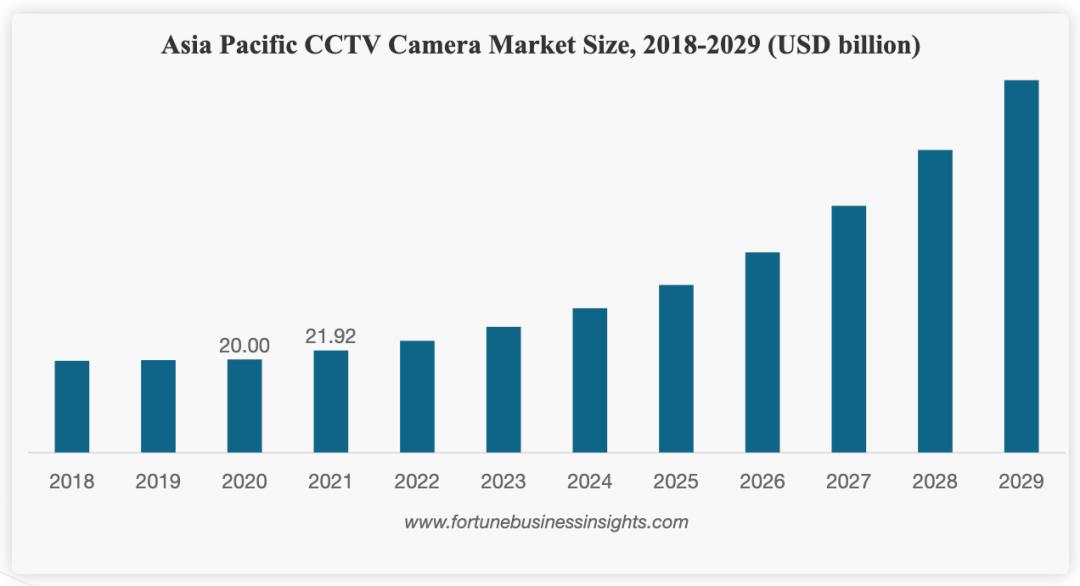
Core Insights - The article discusses the transformation of cameras from passive recording devices to intelligent nodes capable of perception, analysis, and decision-making, marking a significant industrial revolution in the video surveillance market [1][25]. - The global video surveillance market is projected to grow at a compound annual growth rate (CAGR) of 16.8%, reaching $100.2 billion by 2029, with AI-driven intelligent video analytics growing at over 30% annually [1]. Technological Evolution - The evolution of camera technology is categorized into six generations, transitioning from passive recording to intelligent systems capable of real-time analysis and decision-making [6][7][8]. - The first generation involved traditional CCTV systems that required manual playback, while the second generation introduced IP cameras for remote monitoring [6]. - The third generation began with basic intelligent detection, leading to the fourth generation's edge intelligence, where cameras could perform complex functions like facial recognition locally [7][8]. - The fifth generation focuses on multi-modal integration, combining various sensor data to enhance cognitive capabilities, while the sixth generation aims for fully autonomous systems with predictive abilities [8]. Architectural Innovation - The shift from isolated systems to interconnected ecosystems is highlighted, with a hybrid edge-cloud architecture reducing latency to under 500 milliseconds while maintaining 99.8% system availability [11]. - Modern systems utilize multi-modal data fusion, integrating visual, auditory, and environmental data to improve accuracy and reduce false alarms by over 80% [12]. - The introduction of microservices architecture enhances flexibility and scalability, allowing independent deployment and upgrades of system components [13]. Value Restructuring - The value of cameras has evolved from mere surveillance tools to essential components driving digital transformation across various sectors, including public safety, manufacturing, retail, and logistics [18][19][20]. - Intelligent visual systems can now predict and prevent incidents, significantly improving public safety management and operational efficiency in industries [18][19]. - Video data is recognized as a valuable digital asset, enabling insights for urban planning, risk assessment, and business strategy [20]. Future Outlook - The integration of smart visual systems with emerging technologies like the metaverse, 6G, and quantum computing is expected to unlock new possibilities for real-time monitoring and decision-making [21][22]. - The development of brain-computer interfaces and general artificial intelligence (AGI) will further enhance human interaction with intelligent visual systems, leading to unprecedented capabilities [23][24]. - The ultimate goal is to establish a digital civilization infrastructure, positioning intelligent visual systems as the neural network connecting the physical and digital worlds [24][25].
豪恩汽电(301488) - 2025年8月26日投资者关系活动记录表
2025-08-27 02:58
Group 1: Financial Performance - In the first half of 2025, the company achieved a revenue of 805 million CNY, representing a year-on-year growth of 35.79% [3] - The net profit attributable to shareholders, after deducting non-recurring items, was 41.29 million CNY, with a year-on-year increase of 13.75% [3] - The gross profit margin for the first half of 2025 was 20.47%, a decrease of 0.84% compared to the same period last year [3] Group 2: Customer and Product Structure - The top five customers accounted for approximately 70% of the revenue in the first half of 2025, with the new energy business contributing around 50% [3] - The main products generating revenue were automotive intelligent driving perception systems, with revenue shares of 65% for onboard camera systems and 35% for ultrasonic radar systems [3] Group 3: Research and Development - The company invested 103 million CNY in R&D in the first half of 2025, which is 12.85% of its revenue, marking a year-on-year increase of 53.25% [3] - The company plans to expand its R&D team from 400-600 to approximately 1,000 personnel to support its global development strategy [6] Group 4: Global Strategy and Market Expansion - In the first half of 2025, overseas revenue accounted for about 40%, with expectations for further increases as the global strategy is implemented [5] - The company has established long-term partnerships with major automotive manufacturers globally, including Volkswagen, Ford, and BYD [5] Group 5: Future Product Development - The company anticipates significant growth in the sales of its intelligent driving products, particularly the AK2 ultrasonic system and APA automatic parking system [4] - The unit price of the perception systems is expected to rise from below 1,000 CNY to between 3,000 and 4,000 CNY per vehicle as the number of sensors increases [8] Group 6: Order Backlog - The company currently has a robust order backlog, with total project amounts ranging from 20 billion to 30 billion CNY, covering various advanced perception systems [7]