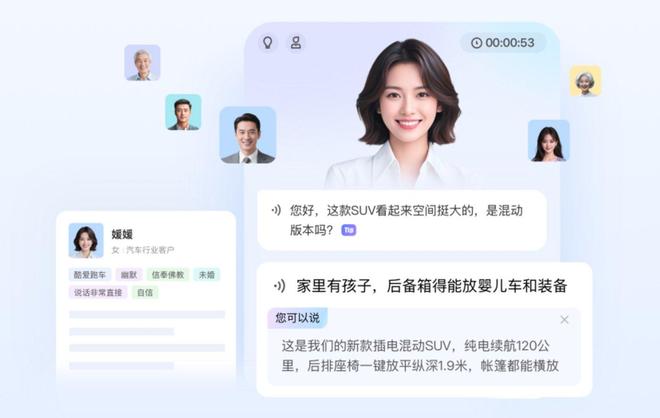
智能陪练系统

Search documents
AI应用落地进展调研-医药
2025-12-03 02:12
Summary of AI Application Progress in the Pharmaceutical Industry Company and Industry Overview - The company is involved in the pharmaceutical industry and is focusing on the application of AI technologies to enhance its operations and efficiency. The company has been investing in AI since 2024 and plans to continue expanding its efforts in this area [1][2][4]. Key Points and Arguments AI Investment and Strategy - The company's AI investment is projected to increase from less than $3 million in 2024 to $6 million in 2025, and to reach $10 million in 2026, primarily focusing on software development [1][4]. - The strategic approach is termed "system plus AI," which involves collaboration with partners like Kingdee to integrate AI capabilities into existing systems [1][9]. Cloud Deployment and Data Security - The shift to private cloud deployment is driven by concerns over data and knowledge security, with plans for potential local deployment in the future [1][5]. - Current business systems are primarily localized, with AI capabilities interacting through a hybrid cloud model, reflecting the high data security and regulatory requirements of the pharmaceutical industry [1][6]. AI Applications and Development - Initial AI applications were tool-based, assisting clinical researchers with tasks such as article writing. The focus for 2026 will be on enhancing system and data-level AI capabilities, including intelligent judgment in bidding systems [1][10]. - The company is building specialized databases for training models in professional knowledge scenarios and creating an internal knowledge base platform for general scenarios [1][11]. Team Structure and Skills Development - An independent AI team was established in 2024, focusing on product management and the internalization of development capabilities, with plans for traditional IT staff to learn programming languages and model training techniques [3][14]. Investment Priorities - The company prioritizes AI applications in sales, followed by supply chain, finance, and human resources. Specific initiatives include AI-driven compliance checks and market analysis tools [3][20]. Supply Chain Management - The end-to-end supply chain project aims to unify data management from sales to production and procurement, enhancing visibility and efficiency [21][22]. Vendor Selection and Collaboration - The company seeks advice from top consulting firms when planning AI projects and prefers partners that can provide comprehensive solutions [23][24]. AI Training and Model Selection - The company utilizes a combination of vector databases and knowledge graphs to improve knowledge recall accuracy, with a focus on multi-modal data processing [3][16]. - Various AI models are evaluated based on their performance in specific business contexts, with a preference for models that demonstrate higher recall rates in clinical applications [30][31]. Additional Important Insights - The company is currently using Alibaba Cloud for GPU server rentals, primarily utilizing NVIDIA GPUs, and is considering domestic GPU options for future resilience [33]. - The development of a smart training system for sales personnel is underway, aimed at reducing the burden of manual training and ensuring certification before onboarding [24][25]. - The distinction between system-level AI and productivity tool AI is highlighted, with system-level AI requiring more integration with existing IT infrastructure [26]. This comprehensive overview captures the company's strategic direction, investment plans, and operational focus within the pharmaceutical industry regarding AI applications.
近2000家企业齐聚服贸会 多款新品首发亮相
Xiao Fei Ri Bao Wang· 2025-09-11 04:22
Group 1: Event Overview - The 2025 China International Service Trade Fair (CIFTIS) is being held from September 10 to 14 at Shougang Park in Beijing, focusing on education, sports, and cultural tourism services [1][2] - A total of 85 countries and international organizations are participating, with nearly 2,000 enterprises, including around 500 Fortune 500 companies, showcasing new products and innovations [2] Group 2: Education Services - The education services exhibition features 55 renowned domestic and international institutions, emphasizing "AI education" and "dual-way study" [3][4] - Beijing's education commission is showcasing the "Jingwa" series of intelligent systems aimed at personalized student development, integrating health and learning data [3] - AI-assisted teaching systems are highlighted, enabling personalized learning experiences for students [4] Group 3: Sports Services - The sports services exhibition spans 7,650 square meters, focusing on interactive experiences and innovations in sports technology [5][6] - Notable exhibits include the "China Eagle Eye" system for multi-sport target tracking and a new gel material for artificial ice and snow [7] - The exhibition features immersive experiences, including esports and various interactive activities, with participation from national athletes [7] Group 4: Cultural Tourism Services - The cultural tourism services section has attracted 425 enterprises, including 83 Fortune 500 companies, showcasing a wide range of cultural and tourism innovations [8][10] - Highlights include the first 8K ultra-high-definition platform for synchronized performances and AI interactive digital humans for visitor engagement [10][11] - The exhibition emphasizes the integration of traditional culture with modern technology, showcasing new cultural products and services [11][12]


18天出师,汽车销售大模型陪练“学、练、考、评”一站式解决 | 创新场景
Tai Mei Ti A P P· 2025-08-25 08:24
Core Viewpoint - The automotive industry faces unprecedented challenges for sales personnel due to prolonged customer decision cycles, complex product parameters, and high demand for competitive comparisons, rendering traditional sales methods ineffective [1] Group 1: Solutions - Zhongguancun Kejin has developed an intelligent training system that integrates advanced technologies such as large models and multimodal AI analysis to enhance the efficiency of product knowledge learning for automotive sales [2] - The system features a dynamic knowledge base that synchronizes real-time product information, providing sales personnel with organized guidance on complex queries [4] - It simulates various customer interaction scenarios to help sales personnel address diverse customer needs effectively [6] Group 2: Challenges in Sales Training - Rapid knowledge iteration and high learning thresholds make it difficult for sales personnel to keep up with frequently updated product parameters and competitive comparisons [5] - Sales personnel often struggle to translate theoretical knowledge into practical responses during real customer interactions, especially when faced with informed customers [5] Group 3: Real-time Feedback and Data Utilization - The system monitors key performance indicators such as communication logic and demand understanding, generating data-driven evaluation reports to provide targeted improvement suggestions [7] - It leverages consultation dialogue data from various marketing platforms to inform product optimization and market insights, allowing brands to respond swiftly to changing customer interests [7] Group 4: Effectiveness - The intelligent training system offers a comprehensive solution encompassing learning, practice, assessment, and evaluation, significantly reducing the training cycle for new hires and improving their ability to handle complex inquiries [8] - After implementing the system, a new automotive company reported a reduction in training time from 45 days to 18 days and a 67% increase in the response rate to difficult questions [8]