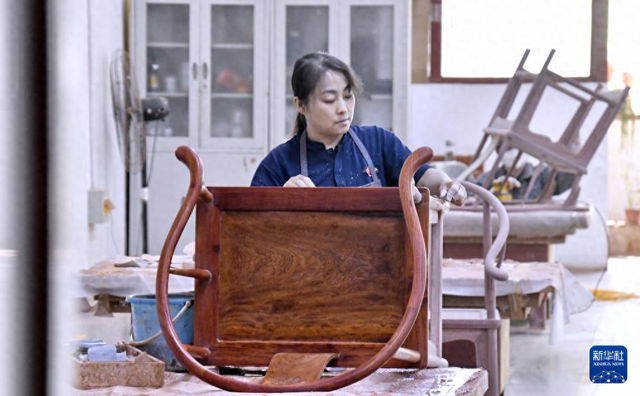
木质文创产品

Search documents
雷军押注,年入超 5 亿,中年男性养不起自己的“泡泡玛特”
Sou Hu Cai Jing· 2025-12-22 13:36
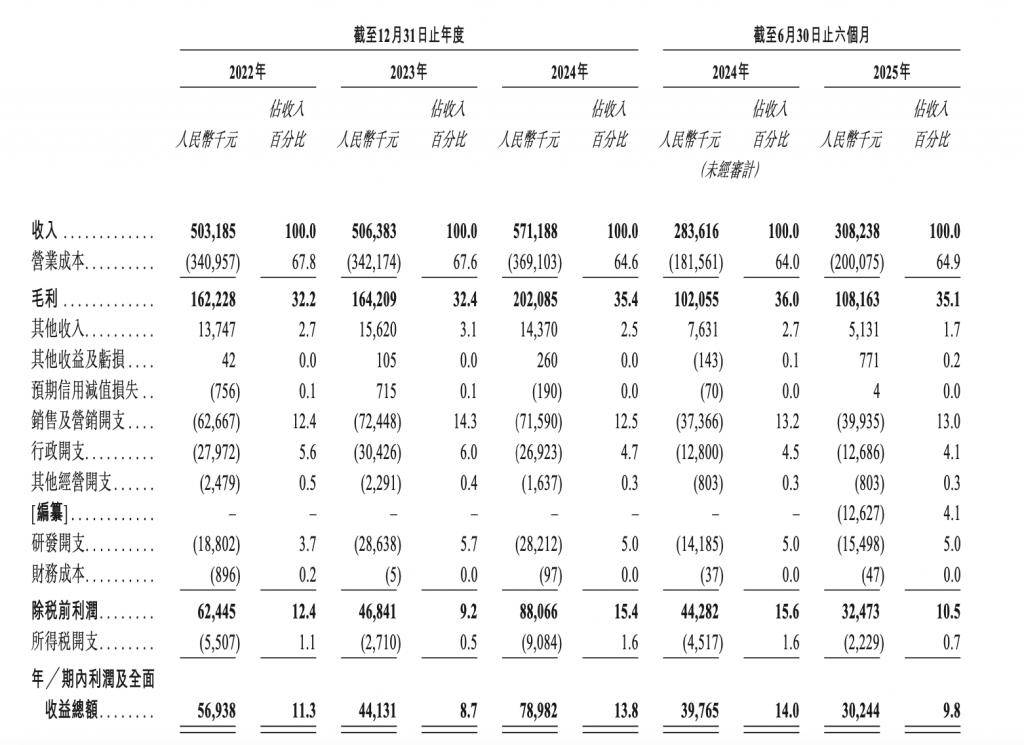
Core Viewpoint - The company Tong Shifu, known for its copper cultural products, is positioning itself as the "Bubble Mart for middle-aged men" and is preparing for an IPO to become the first publicly listed company in the copper cultural sector [1][3]. Market Position - As of 2024, Tong Shifu holds the largest market share in China's copper cultural craft product market at 35% [2]. - The market for copper cultural crafts is relatively small, with an estimated size of 1.58 billion yuan in 2024, projected to grow to 2.3 billion yuan by 2029 [20]. Financial Performance - Revenue from Tong Shifu's copper cultural products is projected to grow from 503.2 million yuan in 2022 to 571.2 million yuan in 2024, with net profits expected to increase from 56.9 million yuan to 78.98 million yuan in the same period [5][6]. - In the first half of 2025, revenue was 292 million yuan, a decrease of 11.2% year-on-year, attributed to strategic resource allocation towards new product development [5]. Product and IP Strategy - Tong Shifu has developed a comprehensive IP matrix, including self-developed and licensed IPs, with significant revenue contributions from self-developed IPs [7][9]. - The company has launched various product lines, including copper, silver, and gold cultural products, with a notable focus on appealing to younger consumers through sub-brands [17][18]. Sales Channels - The company primarily relies on online sales, with online direct sales accounting for approximately 70% of total revenue from 2022 to 2025 [10]. - Tong Shifu is expanding its offline presence, planning to open 50 new stores in major cities over the next three years [11]. Cost and Pricing - The average copper purchase price has increased from 58.6 yuan/kg in 2022 to 65.2 yuan/kg in 2025, impacting profit margins [21][22]. - The company offers a wide range of products, from low-cost items to high-end pieces, with the lowest priced item at 38 yuan and the highest at approximately 80,700 yuan [22]. Brand Perception and Challenges - Despite its growth, Tong Shifu faces challenges in attracting younger consumers compared to competitors like Bubble Mart, as its products lack the same cultural penetration and appeal [20][24]. - The company aims to enhance the cultural value of its products to establish a stronger market position and differentiate itself from competitors [23].


中年男人自己的泡泡玛特,要IPO了
创业邦· 2025-12-04 04:34
Core Viewpoint - The article discusses the rise of "Copper Master," a company specializing in copper crafts, which has gained attention in the market and is preparing for a public listing after previous attempts [5][10][34]. Company Overview - Copper Master, founded in Hangzhou, focuses on copper crafts, offering products that range from popular IP collaborations to traditional items like copper gourds and wealth sculptures [5][10]. - The company has been in the copper cultural and creative industry for twelve years and has established a strong market presence, with annual revenues consistently exceeding 500 million RMB [10][20]. Financial Performance - In 2024, Copper Master achieved a revenue of 571.2 million RMB, with the first half of 2025 generating 308.2 million RMB [10][12]. - The company has maintained a market share of over 30%, positioning itself as a leader in the copper craft industry [17][20]. Market Dynamics - The copper craft market in China is projected to grow from 16 billion RMB in 2024 to 23 billion RMB by 2029, indicating a compound annual growth rate of less than 8% [20]. - Copper Master and its main competitor hold over 70% of the market share, suggesting limited growth potential in a concentrated market [20]. Product Line and Risks - Copper Master relies heavily on its copper cultural products, which account for nearly 95% of its revenue, while other product lines contribute less than 5% [21][23]. - The company faces risks from fluctuating raw material prices, particularly copper, which significantly impacts its cost structure [21][24]. Strategic Initiatives - To overcome growth limitations, Copper Master has opened 11 direct stores, expanded into overseas markets, and launched sub-brands to explore new segments [25][30]. - The company has engaged in collaborations with various IPs to attract consumer interest, although feedback indicates that these efforts may not resonate with all target audiences [31][35]. Future Outlook - The upcoming public listing aims to raise funds for product development, capacity enhancement, and digital upgrades, with the goal of fostering a second growth curve [34]. - However, concerns remain regarding the company's ability to maintain consumer interest and adapt to market changes, particularly in a niche market with limited expansion opportunities [35].

中年男人自己的泡泡玛特,要IPO了
盐财经· 2025-12-03 09:55
Core Viewpoint - The article discusses the rise of "Tong Shifu," a company specializing in copper crafts, which has gained significant market attention and is often referred to as "the Bubble Mart for middle-aged men" [4][6]. Company Overview - Tong Shifu primarily sells copper crafts, including popular IP collaborations and traditional items like copper gourds and wealth sculptures [4][6]. - The company has submitted its application for listing on the Hong Kong Stock Exchange for the third time, following previous attempts that were unsuccessful [6][8]. Financial Performance - Tong Shifu has established itself as a leader in the industry, with annual revenues consistently above 500 million RMB, achieving 571 million RMB in 2024 and 308 million RMB in the first half of 2025 [8][18]. - The revenue breakdown shows that copper cultural products contribute nearly 95% of total revenue, with a significant reliance on a single product line [22][23]. Market Position and Challenges - Despite being a market leader with over 30% market share, the company faces growth limitations due to the small size of the copper craft market, projected to grow from 1.6 billion RMB in 2024 to only 2.3 billion RMB by 2029 [18][19]. - The company's profitability has shown volatility, with a notable decline in net profit in the first half of 2025, raising concerns about its growth sustainability [18][19]. Strategic Initiatives - To overcome growth ceilings, Tong Shifu has expanded its offline presence and is exploring international markets, while also launching sub-brands to tap into different segments [26][27]. - The company has engaged in collaborations with various IPs to attract attention, although there are concerns about the effectiveness of this strategy in meeting core consumer demands [28][34]. Investment and Ownership - The company has received significant backing from Xiaomi's ecosystem, with Xiaomi's capital contributing to its growth and operational strategies [16][18]. - The founder, Yu Guang, has integrated Xiaomi's value proposition of high cost-performance into Tong Shifu's business model, which has been crucial for its rapid rise [16][18]. Future Outlook - The upcoming listing is seen as a way to enhance brand credibility and market presence, although there are questions about the company's ability to maintain its growth trajectory amid market challenges [36][37]. - The focus on maintaining craftsmanship and cultural significance will be critical for Tong Shifu as it navigates the competitive landscape and seeks to expand its consumer base [37].

文化中国行|龙顺成:百年匠心承古韵
Huan Qiu Wang· 2025-05-15 04:12
Core Viewpoint - Beijing Longshuncheng Chinese Furniture Co., Ltd. is a prominent player in the high-end furniture market, specializing in the traditional craftsmanship of Jing-style hardwood furniture, which has deep cultural roots in Chinese history and aesthetics [2][6][10]. Group 1: Historical Background - The Jing-style hardwood furniture craftsmanship evolved during the Ming and Qing dynasties, integrating styles from regional traditions such as "Guangzhou" and "Suzhou," characterized by smooth, dynamic lines and a blend of robust and elegant features [2][6][10]. - The company traces its origins back to 1862 when craftsman Wang Yongshun established the "Longshun" chair shop in Beijing, which later evolved into the Longshuncheng Wood Factory in 1956, consolidating various traditional craftsmanship [2][6][10]. - In 2008, the "Jing-style hardwood furniture craftsmanship" was recognized as a national intangible cultural heritage, and in 2010, the company was awarded the title of "Chinese Time-honored Brand" by the Ministry of Commerce [2][6][10]. Group 2: Craftsmanship and Production - The production process of Jing-style hardwood furniture is intricate and lengthy, involving dozens of steps such as material selection, woodworking, mortise and tenon construction, carving, water grinding, and waxing, each requiring specific skills [3][7][11]. - The company has maintained traditional techniques while also incorporating new technologies and designs to adapt to market changes, thus diversifying its customer base and establishing itself as a high-end brand in the Chinese furniture market [3][7][11]. Group 3: Training and Cultural Preservation - Under the leadership of Liu Gengsheng, a representative inheritor of Jing-style hardwood furniture craftsmanship and a recipient of the National "May 1st" Labor Medal, the company has trained a new generation of skilled craftsmen [3][7][11]. - The company has participated in significant projects such as the construction of the National Version Museum and the restoration of cultural relics in the Forbidden City, ensuring the continuity of this traditional woodworking craft [3][7][11].