
李

Search documents
非洲水果鲜货“上新”中国年
Xin Lang Cai Jing· 2026-02-15 07:28
Group 1 - The import of South African plums marks a significant step in China-Africa trade relations, with 1620 kilograms of these fruits arriving in Shanghai, highlighting the growing economic ties between the two regions [1] - As of now, 24 types of fruits from 9 African countries have gained quarantine access to China, indicating an expanding trade network [1] - In 2025, the import of African agricultural products through Shanghai is projected to reach 10.03 billion yuan, reflecting a year-on-year growth of 25.3% [1] Group 2 - Shanghai Customs has enhanced the efficiency of customs clearance for fresh fruits by digitizing and upgrading regulatory methods, ensuring that imported goods arrive in optimal condition [2] - The city is becoming a primary entry point for newly approved African agricultural products into China, as evidenced by successful imports from countries like Uganda, Ethiopia, and Kenya [2]
南非进出口贸易保持韧性
Jing Ji Ri Bao· 2025-12-18 00:17
Core Viewpoint - South Africa is benefiting from a broad network of trade agreements covering 90 countries, which represent 28% of global GDP, maintaining resilience in its import and export trade despite global trade disruptions [2][3]. Trade Relations and Negotiations - The South African Minister of Trade, Industry and Competition, Ebrahim Patel, highlighted ongoing trade negotiations with the U.S. to reduce tariffs and enhance export competitiveness, following the expiration of the AGOA benefits [3][4]. - South Africa is focusing on diversifying its trade partners and strengthening its industrial base to adapt to the changing global trade environment [3][4]. Trade Statistics - In 2024, South Africa's total trade volume is projected to be $199.7 billion, with exports at $98.6 billion and imports at $101.1 billion [2]. - In October 2025, South Africa recorded a trade surplus of 15.6 billion rand, with exports increasing by 2.8% and imports by 7.2% from September to October [4]. Agricultural Exports - South Africa's agricultural exports have shown strong performance, reaching $11.7 billion in the first three quarters of 2025, a 10% increase compared to the same period in 2024 [5][6]. - The agricultural sector achieved a trade surplus of $2.7 billion in Q3 2025, marking a 28% increase year-on-year [5][6]. Regional Trade Dynamics - Africa accounted for 34% of South Africa's agricultural exports in Q3 2025, with Asia and the Middle East at 25%, and the EU at 23% [6]. - Exports to the U.S. decreased by 11% year-on-year to $14.4 million, highlighting the importance of favorable trade terms with the U.S. for South Africa's agricultural sector [6]. Strategic Recommendations - South Africa's agricultural sector must focus on maintaining existing export markets and exploring new ones, improving logistics efficiency, and enhancing market access within BRICS nations [7]. - Investments in port and railway infrastructure are essential for sustaining export growth and competitiveness [7]. China-South Africa Trade Relations - China remains South Africa's largest trading partner for 16 consecutive years, with trade volume reaching $52.46 billion in 2024, accounting for nearly one-fifth of total China-Africa trade [8]. - Recent policy measures from China, including zero-tariff policies for African countries, are expected to enhance South Africa's agricultural export competitiveness [8].


沉睡2200年的“地下粮仓”重见天日
Qi Lu Wan Bao· 2025-12-13 10:19
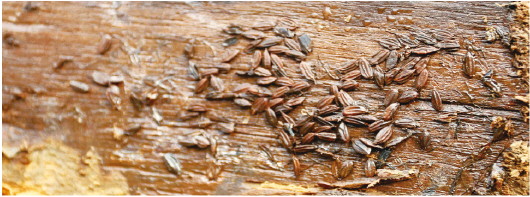
Core Insights - The discovery of well-preserved rice remains in a 2200-year-old tomb in Hubei's Yunmeng Zhengjiahu site represents the earliest and largest instance of grain burial in China, providing insights into ancient agricultural practices and beliefs [2][3] Archaeological Findings - Nearly 100,000 grains of rice from the Warring States period were uncovered, indicating a long-standing tradition of rice cultivation in the Jianghan Plain, dating back to the late Warring States period [3] - The tomb contained not only rice but also remains of various plants such as chestnuts, melons, and jujubes, reflecting the dietary preferences and biodiversity of the region during that era [3] Preservation Techniques - The rice grains were preserved in a waterlogged environment, which acted as a natural preservative, preventing oxidation and damage [5] - Scientific analysis, including carbon isotope studies, is being conducted to trace the irrigation sources and evolutionary paths of the rice varieties found [5] Cultural Significance - The intentional processing of some rice grains before burial suggests a symbolic role in ancient rituals, possibly representing a connection between the living and the afterlife [5] - The findings contribute to understanding the agricultural history and cultural practices of the Warring States period, highlighting the importance of grains in funerary customs [2][5] Broader Implications - The discovery of ancient seeds, like those from Yunmeng, emphasizes the resilience of life and the potential for ancient genetic traits to inform modern agricultural practices [6][8] - The preservation of ancient seeds serves as a vital resource for studying the origins of agriculture and the exchange of civilizations, underscoring the need for biodiversity conservation in agriculture [9]
辽宁再增三处国家林草种质资源库(圃)
Liao Ning Ri Bao· 2025-05-29 00:46
Core Insights - The National Forestry and Grassland Administration has announced the establishment of three new national forest and grass germplasm resource banks in Liaoning Province, enhancing the region's capacity for biodiversity conservation and economic development in specialty forestry [1][2] Group 1: New Germplasm Resource Banks - Liaoning Province has added three national germplasm resource banks: the National Germplasm Resource Bank for Li and Apricot at the Liaoning Fruit Research Institute, the National Germplasm Resource Bank for Liao Dong Fir at the Liaoning Forest Management Research Institute, and the National Ecological Grass Germplasm Resource Nursery at Shenyang Agricultural University [1] - The National Germplasm Resource Bank for Li and Apricot covers an area of 318 acres and has collected 1,840 germplasm resources from various regions including Asia, Europe, America, Oceania, and Africa [1] - The National Germplasm Resource Bank for Liao Dong Fir spans 690 acres and has preserved 252 germplasm resources, with the "Cotton Dragon" variety having passed provincial certification [1] Group 2: Importance of Germplasm Resources - Germplasm resources are crucial for sustainable development and serve as the foundational materials for breeding quality forest species and tree improvement [2] - Liaoning Province has established a total of 12 germplasm resource banks covering 5,999 acres, preserving 5,839 germplasm resources across 162 species [2] - The newly established resource banks will enhance the province's capacity for germplasm resource protection and support the high-quality development of the forest economy [2] Group 3: Future Plans - The province plans to continue improving the germplasm resource preservation system and strengthen the management of national germplasm resource banks [2] - There will be organized efforts to collect, preserve, and evaluate target tree species to enhance the development level of germplasm resource banks in the province [2]