松延动力仿生机器人

Search documents
机器人热销、AI当管家,马年春节这些“黑科技”成了最火年货
Xin Jing Bao· 2026-02-24 14:24
Core Insights - The 2026 Spring Festival consumption market in China showcased strong vitality, characterized by high-tech integration, robust cultural tourism, and the fusion of online and offline shopping, aligning with the "14th Five-Year Plan" focus on boosting consumption and fostering new consumption models [1] Group 1: Robotics and AI Consumption - The demand for robots surged during the Spring Festival, with high-end models like the Galaxy General G1 selling out within minutes, indicating a significant shift in the robotics market towards consumer applications [2] - Online searches for robots increased by over 300% and customer inquiries rose by 460% within two hours of the Spring Festival Gala, highlighting the event's impact on consumer interest [2] - The rental market for robots also saw a full booking during the festival, marking a critical breakthrough in making robotics accessible to the general public [3] Group 2: Changing Consumer Trends - Young consumers are redefining traditional New Year goods, with items like scratch cards and blind boxes becoming popular, reflecting a shift towards products that resonate with contemporary lifestyles [3] - The trend of incorporating diverse culinary options into New Year’s Eve dinners is growing, with hot pot and fusion cuisines gaining popularity among younger generations [3] - The sales of gold, particularly high-aesthetic and culturally significant pieces, have seen double-digit growth, driven by rising gold prices and the appeal of investment-grade gold among young consumers [4] Group 3: AI Integration in Consumer Services - AI has become a key player in enhancing consumer experiences, with a reported 800% increase in AI order volumes during the Spring Festival, demonstrating its role as a travel assistant for consumers [5] - The "one-sentence order" feature gained immense popularity, with nearly 2 billion orders placed during the festival, showcasing a significant shift towards convenience in consumer behavior [6] - AI's integration into various consumer services has led to a dramatic increase in efficiency, allowing users to complete transactions with minimal effort [5][6] Group 4: Offline Consumption Trends - The offline consumption market experienced robust growth, with a 33% increase in businesses operating during the festival and a 65% rise in sales for these businesses [7] - Hotel and accommodation bookings surged, driven by the dual demand of returning home and traveling during the holiday, with significant increases in group purchases for hotels and guesthouses [7] - The film and cultural tourism sectors also thrived, with box office revenues from third and fourth-tier cities reaching a record high, indicating a broadening appeal of entertainment options during the festival [7] Group 5: Policy and Technological Support - Government initiatives, such as the "Happy Shopping Spring" campaign, have provided substantial support for consumer spending through vouchers and subsidies, enhancing overall market activity [8] - The "AI+" strategy outlined in the "14th Five-Year Plan" is facilitating deeper integration of AI technology into consumer scenarios, transforming consumption concepts and industry structures [8]

会交流、能干活的机器人是怎样“练”成的?
Xin Lang Cai Jing· 2026-02-18 04:59
Core Viewpoint - The integration of humanoid robots into the Spring Festival Gala showcases significant advancements in robotics technology, highlighting their transition from mere performance to practical applications in everyday life [8][12]. Group 1: Technological Advancements - The humanoid robots featured in the Spring Festival Gala are equipped with advanced facial expression algorithms and multimodal interaction models, allowing them to perform human-like actions and expressions [5][6]. - The development of these robots involved millions of iterations and optimizations, enabling real-time correspondence of voice, lip movements, and facial expressions [6][10]. - The robots' ability to interact and adapt to human emotions and language is a result of extensive training on vast datasets of human interactions [6][10]. Group 2: Practical Applications - The transition from stage performance to real-world applications is evident, with robots like Galbot G1 already being deployed in service roles such as greeting, ordering, and delivery [10][12]. - The focus of robotics development is shifting from performance to practical deployment, with real-world scenarios being tested in events like the 2025 Robot Olympics [10][12]. - The Spring Festival Gala serves as a testing ground for robotics technology, allowing companies to gain visibility and attract investment, talent, and collaboration opportunities [11][12]. Group 3: Industry Development and Challenges - The humanoid robotics industry in China is at an early stage but shows promise, with the market expected to exceed one trillion yuan by 2035, driving advancements in various sectors [12][14]. - Different regions in China are developing their robotics industries based on local strengths, with Beijing focusing on innovation and collaboration, while the Yangtze River Delta emphasizes policy support and infrastructure [14][15]. - A significant challenge facing the industry is the shortage of skilled talent, particularly those with system engineering capabilities, necessitating collaboration between companies, universities, and research institutions for talent development [15].

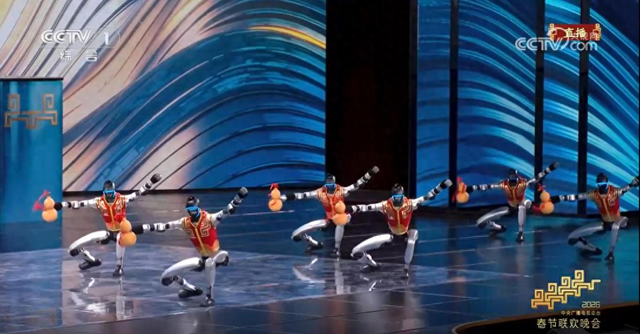
中国人形机器人全面“开挂”
Xin Lang Cai Jing· 2026-02-17 19:44
Core Insights - The 2026 CCTV Spring Festival Gala showcased significant advancements in humanoid robots, with over 200 robots participating in 12 programs, highlighting the evolution of robotics in China [1][4] - The evolution of humanoid robots is marked by breakthroughs in movement control, facial expression simulation, and autonomous decision-making capabilities [2][3][5] Group 1: Technological Advancements - The most notable improvement is in the strength and agility of the robots, with the introduction of high-dynamic, high-coordination cluster control, allowing for complex movements like running, flipping, and martial arts performances [2] - Facial expression simulation has advanced significantly, with robots now capable of mimicking human facial movements and micro-expressions, overcoming previous limitations that led to the "uncanny valley" effect [2][3] - The latest robots are equipped with large-scale embodied intelligence models, enabling them to autonomously perceive their environment and interact with performers without pre-programmed instructions [3] Group 2: Industry Development - Jiangsu province has emerged as a key player in the robotics industry, with companies like Galaxy General and Magic Atom leading the market due to their core technologies and complete industrial chain [4] - The shift from reliance on imported components to domestic production has been significant, with the goal of achieving an 80% localization rate for core components by the end of 2026, supported by national policies [4] - The competition in the robotics sector has evolved from focusing on individual technologies to a holistic system capability, indicating a transition to a new stage of ecological competition [5] Group 3: Future Outlook - The future of humanoid robots is expected to focus on becoming more human-like, understanding human emotions, and being more functional in various applications, including industrial, domestic, and public service sectors [5][6] - The vision is for robots to become as ubiquitous as cars and smartphones, integrating into daily life and addressing challenges such as elderly care and public service efficiency [5][6]
热词看未来丨以人工智能引领科研范式变革
Xin Hua She· 2025-11-29 03:44
Group 1 - The core viewpoint of the article emphasizes the transformative role of artificial intelligence (AI) in scientific research, as outlined in the "Suggestions for Formulating the 15th Five-Year Plan for National Economic and Social Development" by the Central Committee of the Communist Party of China [2][3] - AI is being leveraged to learn scientific principles and build models to address real-world problems, significantly reshaping the fundamental logic and methodology of scientific research [3] - During the 14th Five-Year Plan period, China has made remarkable achievements in AI, with its comprehensive strength in the field experiencing a systemic leap, and the number of AI patents accounting for 60% of the global total [6] Group 2 - The "Suggestions" propose the comprehensive implementation of the "AI+" initiative, aiming to integrate AI with industrial development, cultural construction, social governance, and public welfare, thereby seizing the high ground in AI application [9] - The article highlights the emergence of multiple general large models in China that reach international advanced levels, along with the creation of over a hundred benchmark application scenarios [6] - The 15th Five-Year Plan period is expected to further embrace scenario innovation, facilitating the organic combination of technology and industry, as well as research and market, thus promoting the integration of technological and industrial innovation [11]
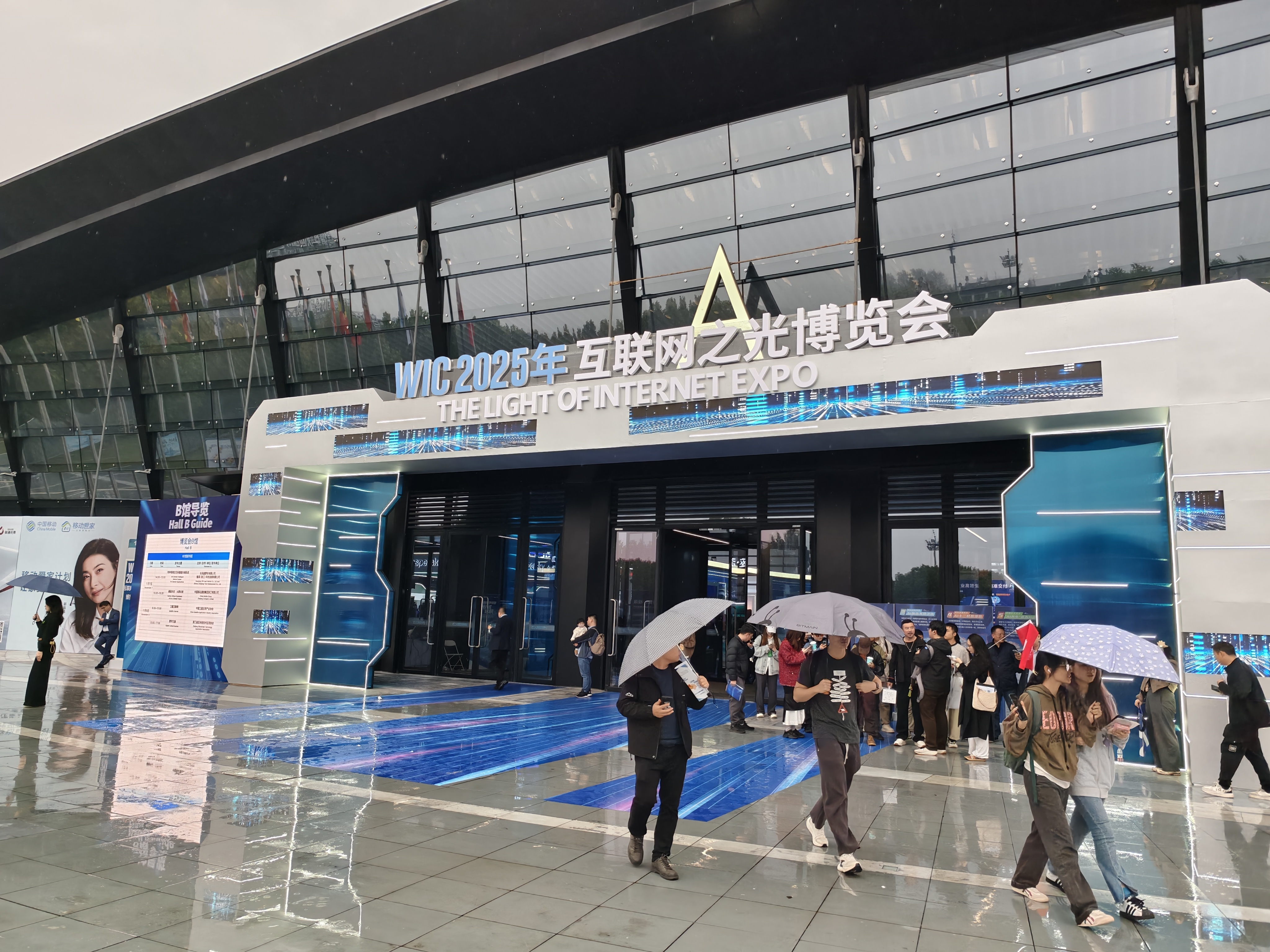
与AI共生 2025年“互联网之光”博览会今日开幕
Zhong Guo Jing Ji Wang· 2025-11-07 00:13
Core Points - The 2025 World Internet Conference "Light of the Internet" Expo opened in Wuzhen, Zhejiang, showcasing innovations in artificial intelligence across various industries [1][3] - The expo features participation from 670 companies and institutions from 54 countries and regions, highlighting the global interest in AI applications [1] Group 1: AI Innovations - The expo includes interactive exhibits such as a bionic robot developed by Songyan Power that can recognize and mimic facial expressions in real-time [5] - Yushu Technology showcased robots performing various dance and martial arts moves, demonstrating advancements in robotics [7] - iFlytek presented a multilingual AI transparent screen capable of facilitating face-to-face communication in multiple languages, applicable in airports, subways, and hospitals [9] Group 2: Payment and Retail Technologies - Alipay introduced innovative payment experiences like "Tap to Pay" and "Look to Pay," allowing users to complete transactions using smart glasses [11] - China Vision Valley displayed an AI photo booth called the "Boundaryless Magic Mirror," which features hundreds of photography templates and advanced image generation capabilities [13] - China Unicom launched an AI virtual fitting room that enhances clothing design cycles through virtual try-ons and style innovations [15]