
松江大米

Search documents
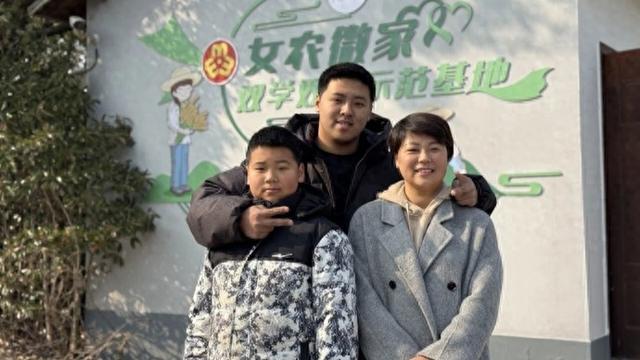
80后主妇变身家庭农场主,“农的一家”日子越过越红火
Xin Lang Cai Jing· 2026-02-26 11:29
Core Insights - The article highlights the transformation of a housewife, Fan Dongying, into a successful family farm owner, showcasing her journey and the impact on her family and community [3][5][9] Group 1: Personal Journey - Fan Dongying, previously a full-time housewife, became the youngest female family farm owner in Xiaokunshan Town after a significant career shift in September 2016 [5] - She faced challenges with poor land conditions and weed issues but demonstrated resilience and a willingness to learn, evolving into a "new type" of professional farmer [5][7] Group 2: Agricultural Practices - Under the guidance of agricultural experts, she effectively managed rice production and controlled the spread of weeds within two years, leading to well-maintained rice fields [7] - Fan obtained licenses for operating tractors and harvesters and adopted drone technology for pesticide application, becoming one of the first in the region to do so [7] Group 3: Business Development - She utilized online platforms to enhance sales, achieving over 200,000 yuan in annual sales for her cooperative and reducing production costs by 30% through digitalization [9] - The cooperative is now recognized among the 18 authorized to operate the nationally protected "Songjiang Rice" product, assisting other farms in obtaining green rice certification [7][9] Group 4: Family Involvement - Her eldest son, Jiao Wei Yi, actively participates in farm activities and is pursuing agricultural studies, aspiring to continue the family farming legacy [9][11] - The younger son, Jiao Nuo Yi, promotes agricultural education among peers and expresses pride in his mother's achievements, highlighting the family's commitment to community support [11] Group 5: Future Plans - Fan plans to expand the farm's offerings by creating a shared vegetable garden, a fruit orchard, and a space for hands-on agricultural experiences, aiming to enhance community engagement and education [11]

侧记|改变,从“进步一点点”和“进步多一点点”开始
Xin Lang Cai Jing· 2026-02-07 11:29
Group 1 - The Shanghai Municipal People's Congress has successfully completed its fourth session, with representatives actively sharing grassroots voices and pushing for social change [1] - Representatives are increasingly open and direct in expressing their views, reflecting a deeper understanding of their responsibilities to the public [1][2] - Suggestions from representatives include improving taxi experiences at Hongqiao Airport and enhancing fire safety measures in high-rise buildings [1][2] Group 2 - Representatives are focusing on small-scale improvements to enhance Shanghai's attractiveness, such as ecological tourism development along the Huangpu River [4] - There is a recognition of structural issues in the agricultural sector, particularly the disconnect between research and market needs, which calls for better agricultural innovation strategies [5]
上海下一个爆点!曾经爱搭不理的这个郊区,正在成为最强潜力股!
Sou Hu Cai Jing· 2025-12-12 18:06
Core Insights - Songjiang has transformed from a perceived remote area to a key engine of Shanghai's innovation, with strategic emerging industries accounting for nearly 60% of its economy, significantly higher than the city average [1] - The region's strong R&D investment intensity of 7.24% is comparable to developed countries, with 92% of this funding coming from enterprises, indicating a robust belief in profitability and effective industry-academia collaboration [1] - Songjiang's economic structure is characterized by a "2+4" system, featuring two trillion-yuan industries in new-generation information technology and high-end equipment, alongside four hundred-billion-yuan industries, including advanced materials and life health [2] Industry Development - The new-generation information technology sector includes smart terminals, intelligent computing services, and satellite internet, while high-end equipment encompasses new energy facilities and instrumentation, indicating vast future growth potential [2] - The region is home to significant advancements in satellite internet, with plans to produce 300 satellites annually by 2027, and it accounts for half of the city's computing power, positioning itself in the "future computing" sector [2] - Songjiang University Town has evolved into a "source of innovation," fostering industry-academia integration, with notable research outputs and rapid technology transfer, including 55 Shanghai Science and Technology Awards from 2023 to 2024 [2] Infrastructure and Investment - A major transportation hub is being developed in Songjiang, expected to handle 21 million passengers annually, enhancing connectivity to over 80% of cities in the Yangtze River Delta [4] - Vanke has invested 2.5 billion yuan in the second phase of the Songjiang Impression City project, aiming to create Shanghai's largest single commercial complex, reflecting confidence in Songjiang's development prospects [4] - Songjiang has been recognized as a national model for rural revitalization, achieving top assessments for five consecutive years, with its rice brand gaining national geographical indication protection [4] Future Outlook - The five-year goal for Songjiang is to establish itself as an internationally influential innovation corridor and a comprehensive node city in the Yangtze River Delta, emphasizing the importance of industrial vitality and innovation [6] - The transformation of Songjiang serves as a case study for other suburban areas, highlighting that development should focus on internal dynamics rather than geographical location [8] - The narrative of Songjiang illustrates a story of transformation, innovation, and opportunity, encouraging other regions to seek similar paths to success [8]

上海市松江区 全力推进“四区”建设,澎湃发展新动能
Ren Min Ri Bao· 2025-09-16 21:54
Core Viewpoint - The article highlights the transformation of Songjiang District in Shanghai into a hub for advanced manufacturing and innovation, emphasizing its strategic initiatives to enhance industrial development, education, and rural revitalization. Group 1: Industrial Development - Songjiang aims to build an advanced manufacturing development cluster, with industrial output accounting for 1/7 of the city's total since becoming the first city-level industrial district in 1992 [1] - The district has established a "2+4" modern industrial system, focusing on two trillion-level leading industries: new generation information technology and high-end equipment, along with four hundred-billion-level characteristic industries [2] - By 2024, Songjiang is projected to have 1,718 industrial enterprises above designated size, maintaining the top position in the city for three consecutive years [1][2] Group 2: Education and Talent Development - Songjiang is enhancing the integration of education, technology, and talent, with a focus on building a new quality productivity development zone [3] - The district hosts eight universities and over 120,000 students, fostering a rich research environment and facilitating the transformation of original research outcomes [3][4] - A comprehensive talent service network has been established, including over 100 academic and expert workstations, to match industry needs effectively [4] Group 3: Urban Development - Songjiang is committed to creating a modern city that integrates industry and urban living, with a focus on transportation, education, and healthcare improvements [6] - The district is developing a comprehensive transportation system that includes high-speed rail, metro, and bus networks, enhancing connectivity and urban functionality [6][7] - Urban planning emphasizes the protection of historical areas while promoting new developments, ensuring a balance between preservation and modernization [7] Group 4: Agricultural Modernization - Songjiang is advancing agricultural modernization and rural revitalization, focusing on key products like rice and crab, and achieving the highest brand development index in the city for three consecutive years [8][9] - The district has implemented infrastructure upgrades in rural areas, enhancing connectivity and quality of life for residents [9][10] - Innovative reforms in collective asset management and land use are being pursued to stimulate rural economic growth and support comprehensive revitalization efforts [10]