极狐阿尔法S先行版

Search documents
智驾不是 “功能竞赛”!独家对话北汽研究总院副院长郑新芬:行业已进入 “体系竞争” 阶段
Mei Ri Jing Ji Xin Wen· 2025-10-30 11:03
Core Insights - The automotive industry's competition has evolved from manufacturing and configuration to a comprehensive focus on intelligent driving, necessitating a systematic organization and technological framework for sustainable innovation [1][3] - The penetration rate of L2-level intelligent driving is expected to exceed 60% this year, but the industry faces increasing homogenization, leading to a competitive landscape characterized by iterative improvements rather than genuine differentiation [1][6] - Regulatory frameworks are tightening, emphasizing safety and standardized development in intelligent driving, which presents a challenge for companies to achieve technological breakthroughs within compliance [1][2] Industry Trends - The shift from a focus on functional competition to a balance between safety and innovation is becoming evident, requiring companies to enhance their technical reserves to ensure quality and speed in mass production [2][7] - The integration of intelligent driving with smart cockpit and electronic architecture is essential for long-term competitive advantage, as seen in the "Yuanjing Intelligent System" developed by BAIC [3][11] - The adoption of intelligent driving features in the domestic new energy passenger vehicle market has increased significantly, with L2-level and above installation rates surpassing 82.6% in the first half of the year, indicating a growing consumer demand for these technologies [6] Safety and Innovation - Establishing a consensus on safety as a foundational principle is crucial for balancing innovation and safety, necessitating multi-dimensional support from regulations, standards, and industry collaboration [7][8] - The development of a comprehensive safety verification system is vital, with BAIC implementing a "one core, three rings" safety development framework to enhance testing efficiency and coverage [8] - Companies are encouraged to share testing resources to avoid redundant investments and foster innovation at a higher safety baseline [8] Strategic Approaches - Companies must choose between "full-stack self-research" and "ecosystem collaboration" based on their capabilities and goals, with many opting for a hybrid model that combines core self-research with strategic partnerships [9][11] - BAIC's strategy emphasizes maintaining control over product definition and system integration while collaborating with leading firms like Huawei and Pony.ai to enhance their technological capabilities [9][11] - The depth of technological reserves directly influences the speed and quality of mass production, with BAIC focusing on data-driven safety validation and foundational capabilities to ensure compliance with stringent regulations [11]


享界爆款潜质凸显,北汽新能源向上冲量
Ge Long Hui· 2025-05-19 01:25
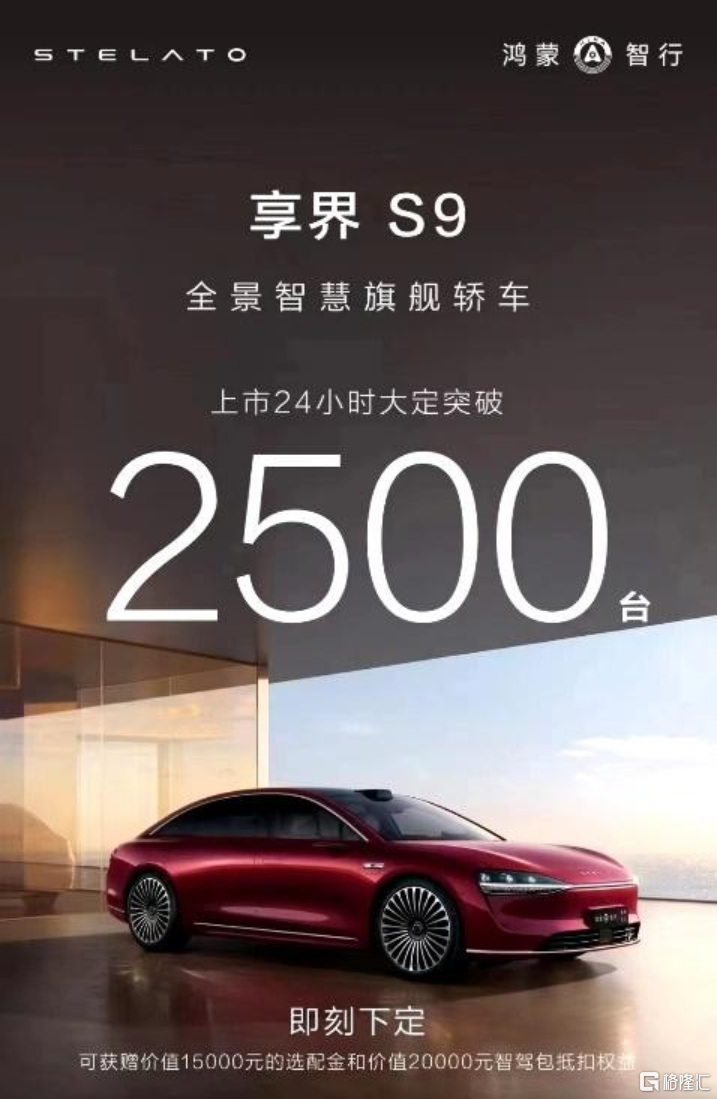
Core Viewpoint - The launch of the "Xiangjie S9" by BAIC New Energy in collaboration with Huawei marks a significant milestone in the luxury electric vehicle market, with strong initial demand indicated by 2,500 pre-orders within 24 hours of its release [1][5]. Group 1: Product Launch and Market Impact - The Xiangjie S9 Max is priced at 399,800 yuan, while the Xiangjie S9 Ultra is priced at 449,800 yuan [1]. - The vehicle is positioned as the first luxury flagship sedan from Beijing Automotive, filling a gap in the market [5]. - The launch is seen as a test of Huawei's "Intelligent Selection" model, especially in light of the success of the AITO M7 and M9 models [5][10]. Group 2: Strategic Collaboration - The partnership between BAIC and Huawei leverages the full spectrum of BAIC's resources in vehicle development, production, and service, emphasizing a strategic commitment to the Xiangjie S9 [3][12]. - The collaboration has a long history, dating back to 2017, focusing on high-level intelligent driving technology [13][17]. Group 3: Market Potential and Competitive Landscape - The penetration rate of domestic brands in the luxury sedan market is only 8.3%, indicating significant growth potential for the Xiangjie S9 [6][7]. - The luxury sedan market is dominated by established brands, with Audi holding over 60% market share in the 400,000 to 500,000 yuan segment [6]. Group 4: Technological Advancements - The Xiangjie S9 features advanced technologies such as the HarmonyOS 4 smart system, high-end suspension systems, and the HUAWEI DriveONE 800V platform, aimed at enhancing user experience [9][10]. - The vehicle incorporates innovative design elements like the "OneBox" design and zero-gravity rear seats, showcasing a focus on comfort and aesthetics [7][9]. Group 5: Financial Projections and Performance - Analysts predict that the sales of the Xiangjie S9 will significantly boost BAIC New Energy's overall performance, with revenue projections for BAIC Blue Valley reaching 15.1 billion yuan in 2023, 30.7 billion yuan in 2024, and 60.3 billion yuan in 2025 [10][12]. - The successful launch and sales of the Xiangjie S9 are expected to contribute to a recovery in BAIC New Energy's overall business performance [10].